IT’S DAY ONE OF THE WILLIAM CASTLE BLOGATHON– I FEEL SOMETHING EERIE AND YET PLEASANT CRAWLING UP MY SPINE! I THINK IT’S EXCITEMENTSO SCREAM, SCREAM FOR YOUR LIVES!!!!! HAPPY 54TH ANNIVERSARY TO THE TINGLER
Here at The Last Drive In -We’re kicking off the celebration with some very spine tingling, toe tapping tales in celebration of the great William Castle.
Aurora over at Once upon a screen… is hiding under the sheets as she talks about The Night Walker (1964) starring Barbara Stanwyck, Robert Taylor and Lloyd Bochner.
So don’t be afraid my fearless friends- head over to the dungeon and see Terri’s cheeky tribute to the July 29, 1959 54th anniversary nod to our little pal… The Tingler plus…her fun with gifs!-you won’t be able to take your eyes off ’em
Terri atGoregirl’s Dungeonwill be hosting folks at her lair with bars on the windows and vats of boiling acid; so go there and be thrilled to your bones!
Furious Cinema, Lindsey at The Motion Pictures, Forgotten Films, Barry at Cinematic Catharsis
And me at The Last Drive In, showing some love to my favorite Castle fun house fright ride- House on Haunted Hill (1959). Good old Mrs Slydes still scares the hell out of my cat… okay maybe me…. when she glides through the dark wine cellar.
Disembodied screams, rattling chains, and ghoulish groans amidst creaking doors- all a delicious mixture of frightful sounds that emanate from a jet-black screen.
Suddenly Watson Pritchard’s floating head narrates the evening’s spooky tale…
“The ghosts are moving tonight, restless… hungry. May I introduce myself? I’m Watson Pritchard. In just a moment I’ll show you the only really haunted house in the world. Since it was built a century ago, seven people including my brother have been murdered in it, since then, I own the house. I’ve only spent one night there and when they found me in the morning, I… I was almost dead.” -Watson Pritchard
The marvelously dashing face of Vincent Price or for the film’s purposes, Frederick Loren’s head sporting a plucky mustache and highbrow tone introduces himself in front of the imposing Modern-Ancient structure.
“I’m Frederick Loren and I’ve rented the house on haunted hill tonight so my wife can give a party. A haunted house party"¦ She’s so amusing. There’ll be food and drink and ghosts and perhaps even a few murders. You’re all invited. If any of you will spend the next twelve hours in this house, I’ll give you each $10,000. Or your next of kin in case you don’t survive. Ah, but here come our other guests…”“It was my wife’s idea to have our guests come in funeral cars… She’s so amusing. Her sense of humor is shall we say, original. I dreamt up the hearse. It’s empty now but after a night in the house on haunted hill"¦ who knows.”“Lance Schroeder a test pilot, no doubt a brave man but don’t you think you can be much braver if you’re paid for it?”“Ruth Bridges the newspaper columnist. She says the reason for her coming to the party is to write a feature article on ghosts. She’s also desperate for money. Gambling.”“Watson Pritchard a man living in mortal fear of a house and yet he’s risking his life to spend another night here"¦ I wonder why? He says for money.”“Dr. David Trent a psychiatrist. He claims that my ghost will help his work on hysteria. But don’t you see a little touch of greed there around the mouth and eyes?”“This is Nora Manning- I picked her from the thousands of people who work for me because she needed the 10,000 more than most. Supports her whole family… Isn’t she pretty?”“The parties’ starting now and you have until midnight to find the house on haunted hill.”
Von Dexter’s music, a mixture of solemn strings, and a sustained and queasy Hammond organ & Theremin greet us with an eerie funeral dirge while the shiny black gimmicky funeral cars pull up in front of the quite sinister post-modern structure.
And this is just the opening fanfare of William Castle’sclassic House on Haunted Hill!
White’s story is quirky and wonderfully macabre as it works at a jolting pace delivering some of the most memorable moments of offbeat suspense in this classic B&W B-Horror morsel from the 50s!
The success of the film inspired Alfred Hitchcock to go out and make his own low-budget horror picture- Psycho 1960.
Much of the style and atmosphere can be attributed to the unorthodox detail by art director Dave Milton and set designer Morris Hoffman. The exterior of the house is actually The Ennis Brown House in Los Angeles, designed by Frank Lloyd Wright, built in 1924, and now listed on the National Register of Historic Places.
There’s a pervasive sense of dread in House on Haunted Hill, that makes the house itself a ‘spook.’
Whether the house is haunted or not, its forbidding presence tells us that it just doesn’t matter. The history of the house itself, its violent past is enough to give one chills. While not in the classic sense like that of RobertWise’s diseased and imposing Hill House, William Castle does a fabulous job of inventing a parameter to tell a very cheeky and pleasurable little scare story. As David J Skal puts it succinctly “The real, if unintentional spook in House on Haunted Hill is postwar affluence.”
The narrative is fueled by the creepy atmosphere of the house itself. Not using a claustrophobic Old Dark House trope but rather a modern Gothic construction that swallows you up with odd motifs and a sense of malignancy within the fortress walls. The starkness of the wine cellar and it’s empty minuscule dark grey rooms with sliding panels is almost more creepy than black shadowy corners with cobwebs and clutter. Director of Photography Carl E Guthrie  (Caged 1950) offers some stunning and odd perspective camera angles and low lighting which aid in the disjointed feeling of the sinister house’s magnetism.
The constant explorations into the viscera of the house by the guests is almost as titillating as the criminal set-up and conspiracy that is afoot propelled by Von Dexter’s tantalizingly eerie musical score with deep piano notes and eerie wispy soprano glossolalia.
House on Haunted Hill works wonderfully, partly due to the presence of the urbane master of chills and thrills, the great Vincent Price who plays millionaire playboy Frederick Loren. Vincent Price was a versatile actor who should not be pigeonholed as merely a titan of terror, given his too numerous layered performances in great films like Otto Preminger’sLaura ’44, Joseph L. Mankiewicz’sDragonwyck ’46, etc. Vincent Price did however make his mark on the horror genre with House on Haunted Hill. The New York Herald-Tribune praised Price’s performance as having “waggish style and bon-vivant skepticism.”
As David J Skal puts it in his, The Monster Show {Vincent Price} “Could bring an arch elegance to the most insipid goings-on…“
The omnipresent Elisha Cook Jr. is superb as Watson Pritchard, the neurotic sot who is riddled with fear, spouting anecdotes about the house’s grisly history.
I adore Elisha Cook, from his cameo in Rosemary’s Baby, his performance as George Peatty in Kubrick’s masterpiece The Killing ’56 to his very uniquely intense role as Cliff the sexually jazzed up drummer in Phantom Lady ’44.
Elisha Cook Jr as the doomed George Peatty in Stanley Kubrick’s The Killing ’56.
The strikingly beautiful Carol Ohmart plays Loren’s treacherously seductive wife Annabelle who is sick of her husband’s irrational jealousy. Has she already tried to poison him once but failed? The story alludes to as much. Annabelle wouldn’t be happy with a million-dollar divorce settlement, she wants ALL her husband’s money! Annabelle is Loren’s fourth wife, the first wife simply disappeared.
Of all the notorious rivalries identified with Hollywood celebrities, the most enduring in the public consciousness is that of legendary Bette Davis and Joan Crawford. As the documentary ‘Bette and Joan: Blind Ambition‘ (2005) insightfully decries ‘Betty Davis was the screens great Sadist and Crawford was the screen’s great Masochist.’
“If equally matched adversaries are bound to create sparks and flames of conflict, then Bette Davis and the late Joan Crawford should offer a good battle.” -Â Publisher’s Weekly
Bette Davis on Joan Crawford:Â “Her eyebrows are like ‘African caterpillars’ and her best performance was "Crawford being Crawford."
Joan Crawford on Bette Davis:Â "She's phony, but I guess the public really likes that."
I want to preface this piece by qualifying something. With all that’s been written about the infamous feud, there are also those who try to dispel it as a myth, stating that rather than loathing each other Bette and Joan were actually cordial to each other-even chatting on the phone occasionally from the 30s until the making ofBaby Jane? And that contrary to what’s been asserted, Davis wasn’t threatened by Joan’s coming to Warner Bros because she felt they were suited to playing different types of roles so there was no conflict there.
Bette Davis, photographed by Maurice Goldberg in 1935 for Vanity Fair.the gorgeous Joan Crawford.
When Joan Crawford started to gain momentum with her best melodramas at the studio where Bette Davis’ was queen, Davis was already planning an exodus anyway. Finally in regards to Hush…Hush, Sweet Charlotte when Joan Crawford saw that Bette Davis was acting more like the director taking control and adding more of her own presence in the script while cutting Crawford’s dialogue to shreds, she decided to bow out of the picture claiming illness so she could be let out of the contract.
Some people assert that while they never became close friends, the two stars only wound up being not so friendly to each other in the end. But, for the sake of my theme of the feuding divas, I felt like putting the more sordid version of the saga out there.
The notable feud, fueled by rumor, gossip, falsehoods, and dished-up dirt, drew so much juicy attention to these fierce Divas whose careers and lives often traversed each other in ironic and titillating ways giving us a peek into the tumultuous allure of Hollywood.Â
Both were incredibly talented, super ambitious, independently driven, and possessing strong personalities. They were each on divergent paths to stardom, Crawford gaining her power remote from the proverbial casting couch "She [Joan Crawford] has slept with every male star at MGM except Lassie." –Bette Davis. Most of Crawford’s leading men found her sexual magnetism hard to resist.
But she proved she could command the screen with an invincible vigor and facility to emoteand Davis who had a determined streak of flair manifested itself into an unyielding spirit and incomparable depth. Both are ironically similar indomitable, independent, and possessing great fortitude. Both married four times, and both were at the receiving end of hostile and vengeful children ultimately ending up as reclusive alcoholics.
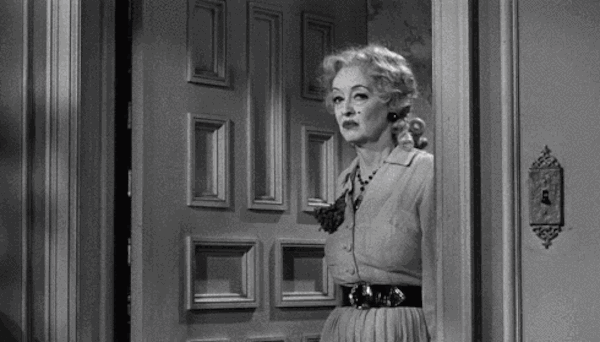
Aldrich’s iconic offbeat Gothic thriller What Ever Happened to Baby Jane? (1962) brought these two legends together culminating in the classic pairing of two bitter adversaries not only on screen but behind the scenes as well. Baby Jane? would forever consign their iconic images engaged in dramatic conflict and defining their rancorous relationship for an eternity.
The film cannily exploited the genuine animosity between both stars who had been competing for good roles in the 40s. Michael Musto of the Village Voice says this – “They just didn’t get along. Bette thought of herself as a real actress she thought of Joan as just kind of a flashy movie star without any depth.”
Crawford and Tone
Was their long drawn-out public war due to Crawford’s marrying co-star Franchot Tone allegedly stealing him away from Bette? Or was it the competitiveness for good roles in the 40s that drew a wedge between them? These two women were the most illustrious female stars of their day, successful at playing ordinary working-class gals with at times questionable reputations. But good roles were something they both had to fight to get. So was it a case of unrequited love or fierce competition? Either way, for both stars it was a genuinely personal and delicate affair.
On Davis’ last trip to London two years before her death, she revealed that the love of her life was Franchot Tone, but she could never marry him because he was Crawford’s second husband. “She took him from me,” Davis said bitterly in 1987. “She did it coldly, deliberately, and with complete ruthlessness. I have never forgiven her for that and never will.” Crawford already dead for ten years, was still the recipient of an eternal hatred on the part of Davis now 80 years old and desiccated from her stroke.
Bette Davis and Franchot Tone in Dangerous ’35.
Bette Davis was filming Dangerous 1935 a role that would win her first Best Actress Oscar. Warner Bros. cast her to play opposite the handsome Franchot Tone. In this fabulous melodrama, Davis portrays Joyce Heath an egomaniacal actress considered to be box office poison living in obscurity in the throws of alcohol addiction. Tone plays Don Bellows a playwright who tries to rehabilitate her. The story is loosely based on Broadway star Jeanne Eagels who died of a drug overdose at the age of 35
Davis wound up falling in love with her leading man, unaware that he was already involved with Joan Crawford who was recently divorced from the dashing Douglas Fairbanks Jr. This began the legacy of love jealousy, and possession. At the time Davis was married to musician Ham Nelson. Everyone on set could see that Davis was attracted to co-star Franchot Tone.
Years later she recalled “I fell in love with Franchot, professionally and privately. Everything about him reflected his elegance, from his name to his manners.”-Bette Davis
Crawford first entertained FranchotTone at her Hollywood home. When he arrived he found her tanned and completely naked in the solarium. According to friends and neighbors, he did not emerge from the seductive sojourn until nightfall.
Franchot Tone and Joan Crawford.
“He was madly in love with her,” Davis confessed, “They met each day for lunch… he would return to the set, his face covered with lipstick. He made sure we all knew it was Crawford’s lipstick.”-Bette Davis
“He was honored that this great star was in love with him. I was jealous, of course.”-Bette Davis
Franchot Tone and Joan Crawford-a dynamic couple.
But instead of Crawford retaliating she reached out to Davis hoping to be friends, but it was too late by then her heart was broken, and she was furious. Crawford announced her engagement to Tone during the filming of Dangerous and they married soon after the film wrapped.
Both actresses were present at the Oscar ceremonies. Davis was nominated for Best Actress. The hostility showed its ugly face when Bette wearing a modest navy blue dress stood up when they announced she’d won the award. Franchot Tone enthusiastically embraced Davis calling her ‘darling”which caused his wife to take notice. Crawford wearing a spectacular gown herself, looked Davis over and coldly said “Dear Bette! What a lovely frock.”
"Joan Crawford and I have never been warm friends. We are not simpatico. I admire her, and yet I feel uncomfortable with her. To me, she is the personification of the Movie Star. I have always felt her greatest performance is Crawford being Crawford."
Interestingly if you consider the inherent veracity of unrequited love that was systemic to their discord we may also consider the allegations that Crawford was herself a promiscuous bisexual in love with Davis, supposedly making several sexual advances toward Davis which were rebuffed with expressed amusement. Davis was an avowed heterosexual. “Gay Liberation? I ain’t against it, it’s just that there’s nothing in it for me.” “I’ve always liked men better than women.” –Bette Davis
Davis also proposed that Crawford used her body and sex to get ahead in Hollywood, “She slept with every star at MGM” she alleged later “of both sexes.”
Some of the women that allegedly were Crawford’s lovers included Greta Garbo, Marlene Dietrich, her friend Barbara Stanwyck & Marilyn Monroe.
The years of hostility and jealousy were only galvanized later by the battle that ensued on the set of Baby Jane? where Davis upended Crawford by endearing herself to director Aldrich. Davis got the Oscar nomination for Best Actress, but Crawford did not. only to have Crawford undermine Davis at the award ceremony sabotaging Davis by accepting the award for Ann Bancroft who won for The Miracle Worker.
Allegedly Joan shoved Bette aside to grab the coveted statue at the podium. Shaun Considine’s book ‘Bette & Joan The Divine Feud’ relates how when Ann Bancroft’s name was announced Davis felt an icy hand on her shoulder as Crawford said, “Excuse me, I have an Oscar to accept.”
Davis recalls“I will never forget the look she gave me.”It was triumphant. It clearly said ‘You didn’t win, and I am elated!”
Making matters worse the newspapers paraded the image of Crawford holding the golden idol that Davis failed to win. According to Bette Davis,Joan was bitter and conspired to keep her from winning the Oscar.
Crawford managed to insinuate herself into accepting the Oscar for Ann Bancroft in case Ann won. The night of the awards Bette Davis shows up fairly confident she could take home the Oscar. She was waiting in the wings with her purse ready to walk on stage when they announced the winner. But Joan Crawford was also hovering in the wings waiting to take her revenge.
From an interview in ’87 -“I was furious. She went to all the New York nominees and said if you can’t get out there, I’ll accept your award. And please do not vote for her. She was so jealous.” Crawford’s scheme worked, it was a terrible slap in the face for Bette Davis.
“The best time I ever had with Joan Crawford was when I pushed her down the stairs in Whatever Happened to Baby Jane?”
“There may be a heaven, but if Joan Crawford is there, I’m not going.”– Bette Davis
And how much does the media fuel this rivalry? Is it partly the paradigm of a film industry that engenders a climate of sexism and ageism that feeds tabloid culture devaluing women’s self-worth and antagonizing the rift that already existed between the two actresses? Consider the symbiosis that occurs between the press and female celebrities, their exploitative and predatory hunger to devour them whole, and the co-dependent dysfunction pervasive in the film industry. You have to wonder how much of the nasty fodder that kept the feud burning was fact and how much of it was a myth the media created.
It isn’t hard to see how both these aging stars were forced to fight for screen supremacy. An irreconcilable difference that put Aldrich in the sad and awkward position of having to fire Joan Crawford from her role as Cousin Miriam in his second feature with the dynamic duo in his Gothic thriller Hush… Hush, Sweet Charlotte.
Davis & Crawford on the set of Baby Jane.Davis & Crawford on the set of Hush… Hush, Sweet Charlotte with Aldrich.
Despite their feud the box office success of Baby Jane? encouraged Aldrich to change the story and characters but reunite the same controversial and quarrelsome stars. Originally called “What Ever Happened to Cousin Charlotte?” written once again by Henry Farrell. Crawford agreed to get back on the screen with her familiar enemy. But when Aldrich asked Bette to star in a second picture with Joan she loathed the idea of ever acting with Crawford again.
“I wouldn’t piss on Joan Crawford if she was on fire.”
Davis used to say that she and Crawford had nothing in common. She considered Crawford “a glamour puss” who depended on her fabulous looks alone, though Crawford did wind up working with some of my favorite auteurs like Michael Curtiz, George Cukor, Robert Aldrich, Nicholas Ray, Otto Preminger, and Jean Negulesco.
Both were very strong women who had to scratch and claw their way through a mire of misogyny to achieve their stardom. Crawford was always playing the formulaic vulnerable ‘girl from the wrong side of the tracks. Born in poverty she reaches for a dream and strives through hard work to make good. Stories reflecting the struggles of the Depression Era and World War II appealed to audiences of the 30s & 40s.
Based on Bette’s early stage performances critics said she was made of lightning filled with fantastic energy. It was George Arlisswho decided Bette would be perfect for his next film The Man Who Played God 1932. He became a bit of a mentor, Bette said he played god to her. In September 1931, she felt finished with her career in Hollywood and was packing her things with her mother ready to return to New York when George Arliss came along and saved her.
Bette Davis and George Arliss’s The Man Who Played God.
Joan Crawford had been married to Douglas Fairbanks Jr. at the time and learned everything about Hollywood royalty and how to become pretentious. When Crawford first arrived in Hollywood she was a dancer, an it-girl flapper for MGM throughout the late silent & early sound eras working alongside Clark Gable.
She didn’t have those signature eyebrows yet. At some point in the 30s, she started changing her look which embraced the heavily arched eyebrows, the wider mouth, and the notorious shoulder pads which became her iconic trademark. She left MGM and joined Warner Bros in 1943.
Crawford before her legendary eyebrows took over her face.Bette and those big beautiful blues.
Bette Davis and Joan Crawford on the set of What Ever Happened to Baby Jane?
Robert Aldrich is one of my favorite directors with numerous memorable films that transcend a restrictive genre tag. He always brings us a cynical and gritty story with very flawed characters who are at the core ambiguous as either the protagonist or the antagonist. Aldrich took economics in college, then dropped out and landed a very low-paying job at first as a clerk with RKO Radio Pictures Studio in 1941.
He studied with great directors like Jean Renoir. It was his training in the trenches that made him the auteur he is, delving inside the human psyche and questioning what is morality.
Aldrich has a flair for the dramatic. He likes to break molds and cross over boundaries. He also has a streak of anti-authoritarianism running through the veins of his films. There aren’t just traces of his ambivalence toward the Hollywood machine in his film philosophy; he also conflates the ugly truths beneath the so-called American Dream and the “real” people who inhabit that world.
He died in 1983, and while he remained inside the Hollywood circle, he maintained an outsider persona. In his work, he memorialized the misfits and outcasts by making them the anti-heroes, all of whom ultimately were destined to fall because they refused to play the conformity game.
In 1961, Aldrich partnered with Joseph E. Levin to purchase the rights to the British writer John Farrell’s Hollywood horror book, but at first, no one seemed interested. Aldrich got Seven Arts Pictures curious about the film, and so Warner Bros. agreed to distribute it but didn’t allow it to be made on the Warner lot.
Bette Davis, Jack Warner, Joan Crawford, and Robert Aldrich.Robert Aldrich with Bette Davis and Joan Crawford.
Aldrich relates in an interview that “Eliot Hyman at Seven Arts read the script, studied the budget, and told him candidly: “I think it will make a fabulous movie, but I’m going to make very tough terms because it’s a high-risk venture.”
Baby Jane? was not an easy sell, even with the double billing, both the actress’s box office draw had diminished by then. Later on, Aldrich said that the problem with Jane was that “the topic was perceived as controversial and not a built-in moneymaker which would alienate portions of the public.”
Jack Warner was quoted as saying he “Wouldn’t give a plug nickel for either one of those old broads.”Warner was an asshole!
Warner Studio head Jack Warner with 2 two star ‘broads’ Bette Davis & Joan Crawford.
In interviews with Aldrich, it has been noted that his working relationship with Crawford was already very good, having worked with her on Autumn Leaves (1959). However, with Bette Davis, he had to do a little more convincing. Eventually, she was on board with the project.
By the time Aldrich bought out Levine, the story price had gone from $10,000 to $85,000, and no one seemed interested. But Aldrich relates in an interview that “Eliot Hyman at Seven Arts read the script, studied the budget, and told him candidly: “I think it will make a fabulous movie, but I’m going to make very tough terms because it’s a high-risk venture.”
It was Aldrich’s persistence and his faith in the project that made Davis enthusiastic about the film. Crawford had already expressed a desire to work with Bette Davis in a film. Bette taking on such an unattractive role was pretty gutsy for her.
I choose to focus on Baby Jane? and Sweet Charlotte, as they are not only my favorites of his, but also they are 2 incredible pieces of film art with the allure of the dynamic pairing of two of THE most legendary actresses from the silver screen.
What’s most fabulous about the film is that it has both Bette and Joan, which gives it such a dynamic double billing. The film really was a seminal work because nothing quite like it had been done earlier. Films like Sunset Boulevard (1950)and Autumn Leaves (1959) set some groundwork for older actresses to wax crazy dramatic in film. But ultimately the pot boiled over with Baby Jane?and Hush… Hush, Sweet Charlotte.
Joan Crawford has the more glamorous role of an aging movie starlet, while BetteDavis must inhabit the role of the decrepitude has-been child of vaudeville.
And while Aldrich has a notable filmography to his credit, like his Cold War scare noir masterpiece Kiss Me Deadly, his film that exposes the flawed Total Institution of the penal system, The Longest Yard with Burt Reynolds, and his iconic war ensemble, The Dirty Dozen 1967. There’s his other psychological thriller with Joan Crawford playing wife to the psychotic Cliff Robertson in Autumn Leaves 1956 and the two Hollywood ventures exposing the darker side, The Big Knife 1955 with Jack Palance, and of course, Kim Novak in The Legend of Lylah Clare 1968.
Joan Crawford and Cliff Robertson in Aldrich’s Autumn Leaves ’56
What Ever Happened to Baby Jane?Directed by Robert Aldrich is based on the novel by Henry Farrell with a screenplay by Lukas Heller. Cinematography by Ernest Haller (Gone With the Wind 1939, Mildred Pierce 1945, Rebel Without a Cause 1955), Art Direction by the fabulous William Glasgow, Norma Kotch won an Oscar for her costume design on Baby Jane? and Hush… Hush, Sweet Charlotte as well as Aldrich’sThe Flight Of The Phoenix (1965).
Co-starring: The main players–Victor Buono as Edwin Flagg, Marjorie Bennett as Dehlia Flagg, Anna Lee as Mrs.Bates, Maidie Norman as Elvira Stitt, and Barbara Merrill (Bette’s daughter) as Liza Bates.
The film premiered on October 26, 1962. and released on Halloween of 1962. Davis was nominated for Best Actress and Victor Buono for Best supporting actor.
What Ever Happened to Baby Jane?is filled with grotesque melancholy, the wasteland of forgotten womanhood, and abject psychosis drenched within the portrayal of a repressed woman-child born of rage and delusion. It’s also a striking condemnation of the rampant sexism and ageism in Hollywood. Another reason I want to talk about Aldrich’s two seminal Grande Dame Guignol films is that both motion pictures set the tone for a whole cycle of films to follow.
For the 50s and 60s, melodramas consisting of plots about mental illness weren’t typically conventional, and a film as extremely grotesque as Baby Jane? could be considered very disturbing. Even as groundbreaking as Hitchcock’s Psycho (1960) was, released the same year as Baby Jane?,Psycho’s narrative veiled Norman Bates as a mild-mannered young man with an Oedipus complex. In Baby Jane? her flagrant derangement is glaring.
Perhaps films like Val Lewton’s Bedlam 1946, Anatole Litvak’s The Snake Pit 1948, and Sam Fuller’s Shock Corridor 1963addressed the systemic institutional problems surrounding mental illness, but Aldrich’s films are very intimate ventures.
This lurid pulp melodrama of abject madness is superb, particularly because of the uninhibited performances by Bette Davis and Joan Crawford. It was pretty courageous of both starlets to leave the glamor behind for such a ghastly and unpleasant ceremony.
Image of glamorous Davis & Crawford courtesy AMC’s Backstory.
First of all, I LOVE Bette Davis with a passion, the actress and the woman herself. Have you ever seen the fabulous Dick Cavett interview? If not, you should track down a copy. Bette is an enduring icon and one of a kind. She has a distinct style, a unique “hitch to her git along”, as Andy Griffith would say, and is a true Hollywood legend, thoroughly intrepid, dynamic, and just downright glorious!
And I adore Joan Crawford as well. She was unbelievably beautiful when she first started out in motion pictures, before her signature crazed galvanized eyebrows took over her face and those shoulder pads in her wardrobe. It makes me sad to think that these women might have truly despised each other. It’s truly a shame.
Aldrich directed this film with crude veracity, leaving us to dwell on some feelings of ambivalence toward these particular characters. I was with Jane even at her cruelest, although I pretend that the bird died of natural causes and the rat was found that way. I never warmed up to Blanche, even though she was an invalid; I got the sense from her that she was not what she appeared to be.
Reducing Davis’s performance in histrionic camp would diminish the moments when she is in stark control of the serious meter of Jane’s growing madness. The oscillation between Jane’s childish tantrums and musings and the all-out fury and retaliations is an artful feat delivered by Davis quite masterfully. She must have enjoyed the role immensely. It must have also been challenging. Jane’s dissipated drunken swagger, the way she literally slouches around the house, and her irritable disposition might be the culmination of not only 30 years of taking care of Blanche, but also a sign that she is inappropriately uninhibited by her years of the undigested bile of animosity, hostility and ultimately her malicious outbursts of paranoia, that lead to her aggression and violence.
In the end, Jane’s macabre corpse’s white makeup, painted like a mask with a heart-shaped beauty mark, Kewpie-doll lipstick, and blond wig of a massive ringlet gives Jane an extra bizarre persona. While Jane is supposedly a vain character, ironically, she is under the impression that she is fashionable; she is a vaudeville clown with caked-on face powder and slouchy dresses that are adult versions of the Baby Jane stage outfits she wore as a child. When Jane goes out in public wearing fur, wilted corsage, and antique jewelry, it represents her attachment to the past, although it is not flattering to her at all, when, in fact, she is perceived as pitiful. Apparently, Davis herself created the chalky, pale, freakish makeup that Jane puts on when she starts to plan her comeback. It’s almost a decrepit version of the artist-painted face of Geisha culture. In Peter Shelley’s book Grande Dame Guignol Cinema- A History of Hag Cinema from Baby Jane to Mother, he compares the way Blanche looks at the end, with her pasty death mask and dark rings to the actress Irene Papas. It was definitely the dark, imposing eyebrows.
Director José Mojica Marins inhabits the role of Zé do Caixão, better known as Coffin Joe, a diabolically creepy gravedigger with wicked nails like claws who sports a top hat and cloak as he terrorizes the villagers with his evil desires. Set in a small, superstitious village, the film follows the blasphemous undertaker Zé, who is obsessed with finding the “perfect woman” to bear his child and continue his bloodline, scorning religion and morality along the way.
Zé’s reign of terror includes murder, sexual violence, and relentless cruelty, all justified by his nihilistic, Nietzschean worldview.
His lover, Lenita, can not bear him a child. He begins to pursue Terezinha de Oliveira (Magda Mei), who is engaged to his friend, Antonio. Zé do Caixão murders Lenita & Antonio. He rapes Terezinha, hoping to get her pregnant, but she commits suicide instead. Comes the Day of the Dead, as he mocks the supernatural and torments the townsfolk, he is warned by the local gypsy that his deeds will come back to haunt him and the spirits of his victims will avail themselves at midnight and send him to hell! The film climaxes in a nightmarish sequence of ghostly revenge, with Zé pursued by the dead and ultimately destroyed by his own guilt and paranoia.
Zé do Caixão: “What is life? It is the beginning of death. What is death? It is the end of life! What is existence? It is the continuity of blood. What is blood? It is the reason to exist!”
At Midnight I’ll Take Your Soul (1964) is a landmark in horror cinema, recognized as the first Brazilian-produced horror film and the debut of the infamous Coffin Joe (Zé do Caixão). Marins’s film is a brutal and surreal journey into a nightmarish landscape… shocking audiences with its violence, blasphemy, and transgressive themes, launching Coffin Joe as a cult icon and opening the door for a new era of Brazilian horror.
5 Down, 145 to go! – Your EverLovin’ Joey, formally & affectionately known as MonsterGirl, is on a mission to keep it short!
Abbott and Costello Meet Frankenstein (1948) is a horror-comedy that brilliantly combines the comedic talents of Bud Abbott and Lou Costello with Universal’s iconic monsters. The film follows baggage clerks Chick Young (Abbott) and Wilbur Grey (Costello) as they become entangled with Dracula, the Wolf Man, and Frankenstein’s Monster. The comedy stems from the duo’s classic dynamic: Abbott is the duo’s straight man as usual, maintaining a cool demeanor, while Lou Costello, as the funny man, is growing increasingly agitated. Their humor relies on their signature clever wordplay and witty banter, not to mention the brilliant physical comedy of Costello’s exaggerated reactions to the scary yet campy situations.
The film showcases their trademark routine of Costello witnessing frightening events, only for Abbott to miss them and dismiss Costello’s claims. This creates a humorous contrast between Costello’s terror and Abbott’s skepticism.
The Universal monsters are portrayed by their iconic actors: Bela Lugosi as the most mesmerizing of Draculas, Lon Chaney Jr. as the sympathetic Wolf Man. This time, after Boris Karloff decided to retire his beloved character, Glenn Strange takes up the mantle of Frankenstein’s Monster.
The movie successfully merges Universal’s horror and comedy franchises, using familiar horror tropes as a backdrop for Abbott and Costello’s comedic antics. It serves as both a parody and a continuation of Universal’s monster films, creating a unique blend of humor and traditional horror elements. Lenore Aubert co-stars as Dr. Sandra Mornay, a mad scientist who partners with Dracula to reactivate Frankenstein’s monster, and Jane Randolph plays Joan Raymond, a romantic interest and one of the main characters who helps unravel the mystery. Special appearance, in velvet voice only, of Vincent Price introducing himself as The Invisible Man in a hilarious twist ending!
YOUNG FRANKENSTEIN 1974
Mel Brooks’s Young Frankenstein is one of the most preciously hilarious spoofs on the Universal classics of the 1940s. It’s a masterclass in affectionate parody, a film that manages to both lampoon and lovingly resurrect the spirit of the Universal monster movies it pays tribute to. Released in 1974, the film is a riotous blend of Brooks’ signature anarchic humor and a meticulous, almost reverent recreation of the Gothic style and atmosphere of James Whale’s Frankenstein (1931) and Bride of Frankenstein (1935).
Brooks, never one for half-measures, insisted on shooting in black and white, using high-contrast lighting and even borrowing original Strickfaden lab equipment from the 1931 classic, all to ensure that every bolt of lightning and every shadowy corridor felt like it had been plucked straight from the golden age of horror.
At the heart of the film is Gene Wilder’s Dr. Frederick Frankenstein—sorry, that’s “Fronkensteen”—a man desperate to distance himself from his infamous grandfather’s legacy, only to be drawn inexorably into the same madcap quest to reanimate the dead. Wilder, who co-wrote the script with Brooks, delivers a performance that is both manic and deeply sincere, veering from wild-eyed hysteria to moments of genuine pathos. His comedic timing is impeccable, whether he’s wrestling with his own tongue-twisting name or leading the Monster in a show-stopping rendition of “Puttin’ on the Ritz.”
The supporting cast is a gallery of comic brilliance. Marty Feldman’s Igor (what hump?) is a bug-eyed, fourth-wall-breaking delight, his every line and physical tic a wink to the audience. Teri Garr’s Inga is all exuberant, wide-eyed innocence and sly innuendo, while Cloris Leachman’s Frau Blücher (cue the neighing horses) is a deadpan marvel, her every utterance dripping with Gothic menace and secret longing. Peter Boyle, as the Monster, brings a surprising tenderness to the role, his lumbering physicality offset by moments of childlike vulnerability and, in one of the film’s most famous scenes, unexpected showbiz flair. Madeline Kahn, as Frederick’s high-strung fiancée Elizabeth, is a comic force of nature, her every entrance and exit a study in escalating absurdity and sublime genius.
Brooks’s brand of humor is on full display throughout: irreverent, physical, and unafraid to mix highbrow references with lowbrow gags. He delights in wordplay, slapstick, and the kind of running jokes (the horses’ reaction to Frau Blücher’s name, the ever-shifting hump on Igor’s back), the brain in the jar that says Abnormal – (you know, Igor tells Frederick the brain he sent him to get came from Abby someone – Abby Normal) from that reward repeat viewings.
However, what sets Young Frankenstein apart from lesser parodies is its genuine affection for its source material. Brooks and Wilder don’t just poke fun at the old horror films—they inhabit their world, recreating their look, sound, and even their pacing so that the comedy feels organic rather than imposed. After all, we’re in the presence of comedic genius firing on all cylinders—improvisation so sharp it could slice through a graveyard fog!
The film’s style is a loving pastiche: Gerald Hirschfeld’s cinematography bathes the sets in the same expressionistic shadows and fog that defined the Universal classics, while the sets themselves are filled with Gothic arches, cobwebs, and flickering candlelight. The special effects, from the crackling lab equipment to the elaborate reanimation sequences, are both a send-up and a celebration of the practical magic of early horror cinema.
Young Frankenstein is more than just a collection of gags; it’s a film with real heart, exploring themes of legacy, acceptance, and the search for connection—albeit through a lens of gleeful absurdity. As Mel Brooks himself put it, he wanted to capture not just the silliness but also “the haunting, beautiful quality that James Whale got with Boris Karloff.” The result is a comedy that, fifty years on, still feels fresh, smart, and—like the Monster himself—very much alive.
#4 with 146 days left to go! Your EverLovin Joey, formally and affectionately known as MonsterGirl!
In one of Amicus’s best offerings, directed by Roy Ward Baker, Asylumis a campy portmanteau horror anthology based on several tales by master storyteller Robert Bloch (Psycho 1960). When Dr. Martin (Robert Powell), a psychiatrist looking for employment, arrives at the asylum for the criminally insane, he doesn’t know quite what he’s stepping into. Patrick Magee plays Dr. Rutherford, who gives him the odd assignment of figuring out which one of the patients is actually a former psychiatrist gone mad. Martin is sent to talk to four separate inmates, who then relate their own bizarre personal experiences of the macabre and how they ultimately landed in the asylum. This is one of the best Amicus productions, with a slew of fantastic actors filling out the cast. It’s cheeky and eerie and most definitely a contender for some of the Hammer horror anthologies with its horrific shock value and campy dark humor. The cast includes icon Peter Cushing in ‘The Weird Taylor,‘ Britt Ekland and Charlotte Rampling in ‘Lucy Comes to Stay,’ and one of my favs, Barbara Parkins (Valley of the Dolls 1967), Richard Todd, and Sylvia Syms in ‘Frozen Fear.’ The last segment is entitled ‘Manikins of Horror’ with Herbert Lom.
Tales from the Crypt (1972) is a British horror anthology film directed by Freddie Francis and produced by Amicus Productions. A chilling portmanteau consisting of five separate segments based on short stories from EC Comics’ series “of the same name. The film opens with five strangers stumbling into a crypt during a tour, where they encounter the mysterious Crypt Keeper (Ralph Richardson). He proceeds to reveal how each of them will die.
“…And All Through the House” Stars Joan Collins as Joanne Clayton, playing a woman who murders her husband on Christmas Eve and must fend off a deranged psychotic killer dressed as Santa Claus.
“Reflection of Death” Features Ian Hendry as Carl Maitland, A man who experiences a nightmarish time loop after surviving a car crash.
“Poetic Justice” Stars Peter Cushing as Arthur Edward Grimsdyke, A kind but eccentric old man who is tormented by his cruel neighbors
“Wish You Were Here” Features Richard Greene as Ralph Jason, A variation on “The Monkey’s Paw” story, dealing with the consequences of three wishes,
and “Blind Alleys” Stars Nigel Patrick as Major William Rogers and Patrick Magee as George Carter. Residents of a home for the blind revolt against their abusive administrator.
5 Down, just 145 to go!-Your EverLovin’ Joey formally & affectionately known as MonsterGirl
“I think he was a wonderful director. He followed his dreams, and after all he was right.”–Marcel Marceau
On July 29th 1959 American Producer/Director & Screenwriter William Castle premiered (click on link to read my past post) The Tinglerin the US to theater goers. The audience had the underside of their seats rigged with electric buzzers which were activated at the moment Vincent Price cautions them “Ladies and gentlemen, please do not panic. But scream! Scream for your lives! The stunt was named ‘Percepto’ and once the projectionist got his cue to let the current rip, people in the audience got a mild jolt to their tuchus and their money’s worth of chills and thrills!
The urbane Vincent Price plays Dr. Warren Chapin a man driven by a curiosity to find out the source of the mysteriously evil force that creates the SENSATION of fear. He discovers an organism called"¦ The Tinglerwhich manifests itself at the base of the spine when one is experiencing abject fear. The Tinglercan only be subdued by the act of screaming.
In his memoirs Step Right Up! I’m Gonna Scare the Pants Off America he talks about the people who got their gluteus maximus’ buzzed with a small electric shock. Castle went as far as to hire fake “screamers and fainters” that he planted in the audience who would then be carted away on a gurney by “nurses” who were situated out in the lobby ready to put them in an ambulance parked outside the theater. This gimmick definitely outshines the last publicity scheme for his first chiller film touted with fanfare in which he offered a certificate for a $1,000 life insurance policy from Lloyd’s of London in case they should die of fright during his picture Macabre (1958) a film he felt inspired to make after seeing the success of Henri-Georges Clouzot’sDiabolique (1955)Â
Growing up in the 60s and 70s my childhood was filled with the sort of wonderful attractiveness William Castle’s shenanigans fostered in my yearning imagination. His films wouldn’t really be considered frightening by anyone’s standards today, but if you were a kid watching television on a rainy Saturday afternoon way back when, and suddenly you were thrust into a world where wearing whacky goggles would allow you to see wild ghosts wreaking havoc in an old eerie mansion in 13 Ghosts, or a disembodied hand rising up from a bath of brilliant red blood in an otherwise black and white landscape in The Tingler, or that moment when Nora Manning sees Mrs.Slydes the blind housekeeper who glides past her, a crone like harbinger of death, or those jaunty little party favors in the shape of coffins containing guns for the guests in House on Haunted Hill, with the added sensational musical scores and atmospherics you’d know the thrill and nostalgic glow that washes over you because William Castle made himself a presence quite like Hitchcock who was invested in bringing us into their world of fear and getting us excited about it!
Castle’s films have left an indelible mark on so many of us, not to mention the incredible movie stars and character actors who inhabited his memorable films, like Vincent Price, Joan Crawford, Barbara Stanwyck, Shelley Winters, Sid Caesar, Ann Baxter, Robert Ryan, Richard Conte, Julie Adams, Rock Hudson, Rhonda Fleming Robert Taylor, Guy Rolfe, Janette Scott, William Prince, Judith Evelyn, Audrey Dalton, Margaret Hamilton, Tom Poston and Elisha Cook Jr. and so many more…
Keep in mind, he produced my favorite film of all time, which I’ve been planning to do a major feature on down the road. The transcendent mind blowing tribute to paranoia and motherhood, Rosemary’s Baby 1968, thank god he decided to let Polanski direct, but still he was the man behind the masterpiece.
And Castle didn’t just do scary campy joyrides, if you look at his filmography you’ll see an array of film noir & mysteries like Hollywood Story (1951),The Fat Man (1951) Undertow (1949) series’ like The Crime Doctor & The Whistler, adventures like Serpent of the Nile (1953), with Rhonda Fleming. Westerns, television series and screwball comedies too like The Busy Body (1967) starring Sid Caesar, Robert Ryan and Ann Baxter , so if you’re a scaredy cat no worries there’s plenty to cover for everybody!
William Castle is one of THE most recognizable showman of film camp, purveyor of cheap chills, the maestro of gimmickry! In a time when the censors were becoming more lax and psycho-sexual themes were infiltrating the cinematic frontier, the trumpets were hailing Castle to step right up and create his own uniquely tacky ballyhoo! Sometimes kitschy, at times quite jolting and paralyzing, so many of us were marvelously effected by the collective tawdry Schadenfreude.
And so I got to thinking– geez it’ll be the 54th anniversary of that Spine-Tingling fun house ride of B-Movie schlockery and what better way to tribute the P.T. Barnum of Classic B-Movie fanfare than to co-host a blogathon with the witty and well versed Terri McSorley of Goregirl’s Dungeon.Â
Castle opens up The Tingler with this fabulous warning to the audience:
I was going to wait and announce the blogathon officially on May 31st which will be the anniversary of Castle’s death in 1977, but we all seem so excited about this, I thought I better get on it and post the details and start the Tingler climbing up our proverbial collective spines! And what a great bunch contributing too!
In honor of The Tingler’s 54th anniversary
The William Castle Blogathon runs from July 29th through August 2nd, 2013 and is Co-hosted by Joey (MonsterGirl) of The Last Drive In and Terri of Goregirl’s Dungeon.
The list of films and contributors are below: We’ll narrow down the dates each person will publish their post a little further down the road. I don’t want to be too restrictive about films being covered twice as everyone has their own unique perspective. There’s still a bunch of films not chosen yet so please consider widening the scope of our celebration by tackling a lesser known film of Bills! All are welcome, if you’re interesting in joining the ride, please contact me!
Please grab any banners for the blogathon and use them on your site if you’d like!
There’s also no constraints on how long your piece should be. As you know I tend to be really long winded myself. If you have any questions at all, like if you’d prefer your name displayed differently please always feel free to drop me a line at ephemera.jo@gmail.com or leave a comment here:
(Joey-MonsterGirl!) The Last Drive In –House on Haunted Hill(1959) & Johnny Stool Pigeon (1949) & Back Story: What Ever Happened to William Castle’s Baby? (Rosemary’s Baby)
Directed by Robert Fuest (The Abominable Dr. Phibes 1971, The Devil’s Rain 1975) and written by Brian Clemens. Pamela Franklin plays Jane, and Michele Dotrice is the ill-fated Cathy, two English twenty-somethings touring around the rural French countryside. The two argue about the route and become split up; Cathy vanishes without a trace. Jane begins to search for her friend and stumbles into a world of alienation and the very real threat of a sex murderer on the loose. Who can she rely on as she desperately tries to find her disappeared girlfriend while she is being stalked by a crazed killer.
3 down, 147 to go!- Your EverLovin’ Joey, formally and affectionately known as MonsterGirl
Director/Screenwriter Alfred Sole’s brutal tale of murder and madness draws heavily on Catholic symbolism, the dark underbelly of American religious zeal, and childhood trauma. Incredibly atmospheric and disturbing, as the backlash of the supposed sacred and holy premise of family and church becomes a nightmarish landscape of psychological paroxysm. Paula E. Sheppard plays the very troubled Alice Spages, a 12-year-old girl who doesn’t quite seem to fit in. She lives with her mother, Catherine (Linda Miller), and beautiful younger sister Karen (Brooke Shields), whom Catherine dotes on. One day, Karen is murdered in a horrific manner and left inside the church on the day of her holy communion. Of course, all eyes are on the disturbed, emotionless Alice. Soon, more murders are committed by a savage, knife-wielding killer in a grotesque, clear plastic mask and bright yellow raincoat. One of the best psychological horrors of the 70s! Cat lovers, be warned, a kitten is killed in this film…
2 down, 148 left to go!-Your EverLovin Joey, formally and affectionately referred to as MonsterGirl