Bernard Herrmann: The Sound of Suspense

“I always think that film music expresses what the actor can’t show or tell.”
—Bernard Herrmann, interviewed by Ted Gilling, Sight and Sound, 1971–72

“I feel that music on the screen can seek out and intensify the inner thoughts of the characters… It can propel narrative forward or slow it down. It often lifts mere dialogue into the realm of poetry,”So wrote Bernard Herrmann for a 1972 London recording

“My feelings and yearnings are those of a composer of the 19th century. I am completely out of step with the present.”
-Bernard Herrmann in a letter to his wife

“He depends on music and often photographs a scene knowing that music will complete it.”—Bernard Herrmann, interviewed by Ted Gilling, Sight and Sound, vol. 41, no. 1 (1971/72), pp. 36–39; by Cinescores. “He” refers explicitly to Hitchcock in the preceding sentence.

On music as Hitchcock’s weapon of suspense:
“I think that Hitchcock’s films depend enormously on music to build his nutcracker of suspense, and to impose on him a kind of pop culture is to deprive him of one of the greatest weapons in his arsenal.”

—From the same Ted Gilling interview. This is the full sentence as reproduced in the transcript. Herrmann was discussing the end of their collaboration and his objection to the pressure for pop-oriented music.

On Hitchcock adapting his editing to the score:
“Hitchcock, for example, is very anxious for you to tell him when you see a rough cut where you plan to use music, because if you’re using music, he’ll cut it differently.”

—From the same interview. This gives you a specific account of how the collaboration worked: the planned music could affect Hitchcock’s editing, rather than simply being added to a finished sequence.

On their break—sharper and more confrontational:
“Because … he only finishes a picture 60 percent. I have to finish it for him.”

—Bernard Herrmann, interviewed by Royal S. Brown in August 1975. The ellipsis appears in the published transcript; The interview first appeared in High Fidelity in September 1976 and was revised for Brown’s Overtones and Undertones (1994). The Bernard Herrmann Society reproduces it with a note explaining that the original recording was consulted to restore deletions and some of Herrmann’s original wording.

In the Gilling interview, Herrmann also recalls Hitchcock saying, about Vertigo: Alfred Hitchcock, as recalled by Bernard Herrmann.
“If we’re going to have music, we won’t have one word of dialogue; we’ll just have the camera and you.”

Composer Miklos Rozsa reportedly said:
“Herrmann was a Gulliver among the film music Lilliputians.”

“The thing about Herrmann was that he was a forceful personality and that force in his personality found its voice in those hammering, repetitive themes of his, which you can’t get out of your ear. – Composer John Williams

Before the Image, a Voice- Bernard Herrmann and the music beneath the surface

I often feel that Bernard Herrmann’s music reaches a character’s inner life before the film has found the words for it. It doesn’t merely accompany danger or alert us to the fact that danger is near; it draws us into and lets us also feel their dread, longing, obsession, or loneliness. Before we know its name, we know the sound.

A shower curtain opens, and violins turn into an assault. A woman emerges through a ghostly green light, and the orchestra swells with an obsessive love so desperate that it can no longer distinguish a person from a beautiful phantasm. A taxi moves through Manhattan steam, and the music offers two versions of the city: one is seductive, the other already burning.

These are not merely memorable musical textures or the voices of films like Psycho, Vertigo, and Taxi Driver. They are part of what those films mean. Bernard Herrmann could make an orchestra reveal something that a character would never admit, or that a director preferred to leave unresolved. His music did not always tell us what was happening, but it did tell us what happening felt like, from somewhere dangerously far inside.

Bernard Herrmann’s biographer Steven C. Smith, the author of A Heart at Fire’s Center: The Life and Music of Bernard Herrmann, finds much of Herrmann’s genius in his ability to evoke psychological nuance, and in the way he brought together just the right instruments to give each film its own emotional undercurrents and draw us closer to the characters’ fear and desires.

You may know Bernard Herrmann’s music whether you realize it or not. Think of the dark snarling brass that opens Citizen Kane, the spiraling arpeggiated phrases of Vertigo, or the headlong rush of North by Northwest. Those strings that slash the air in Psycho, the saxophone drifting through Taxi Driver, and, of course, each belongs so completely to its film that it is hard to imagine the images without it in the realm of modern cinema.
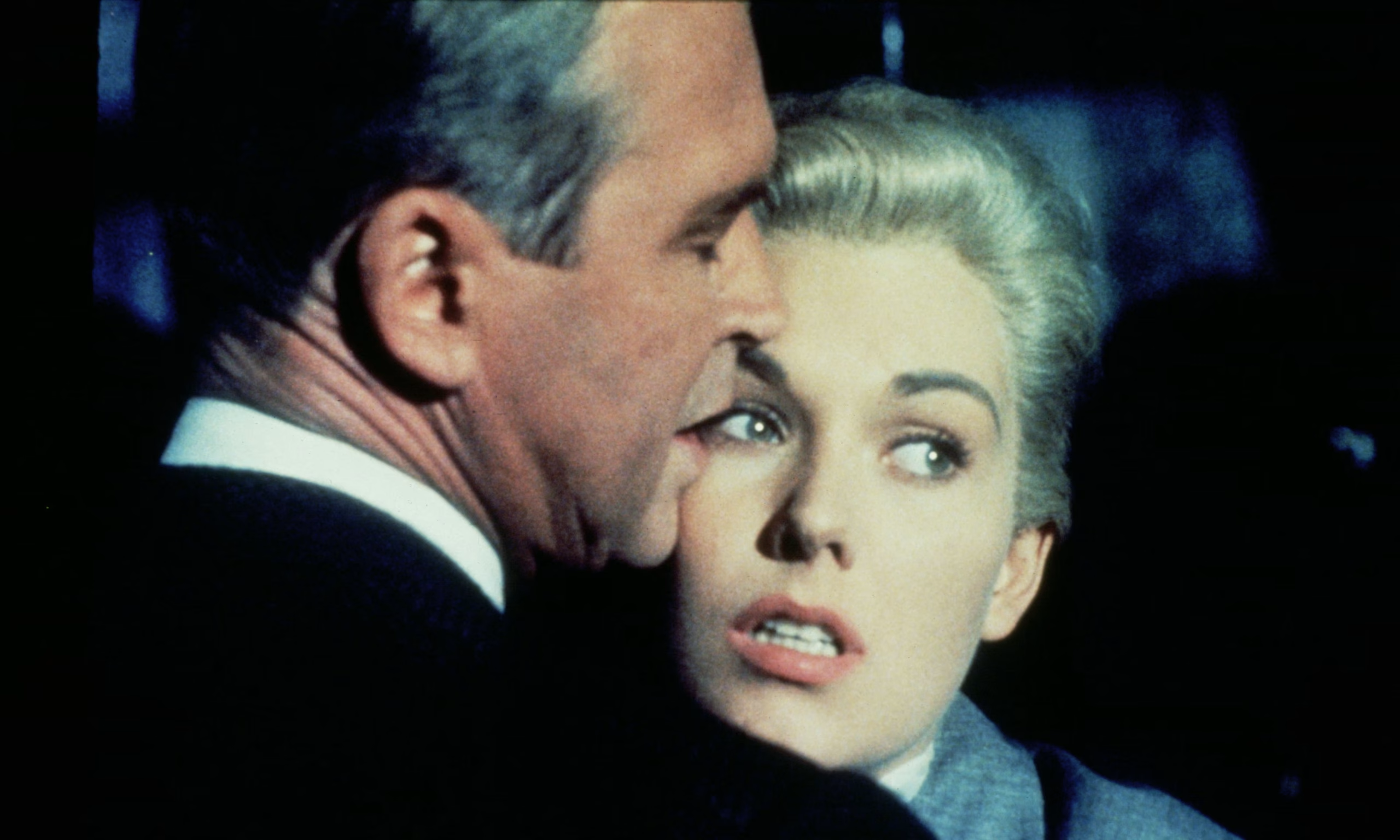
Yet there is much more to Herrmann than menace. He could give The Magnificent Ambersons a tenuous elegance, then summon the enormous forces that seem to shake the ground beneath Mysterious Island. Across that range, you can still hear his signature: short phrases that won’t let go, chords that seem suspended in midair, and moments when the music opens unexpectedly into longing. Listen to brass voices plunging in Cape Fear or the sinister whistling theme from Twisted Nerve. The music leaves us unsettled, waiting for a resolution that never quite arrives.

The title The Sound of Suspense fits him, but suspense is only the beginning. Herrmann also understood solitude, tenderness, grief, and the peculiar terror of wanting something that could save you in the end or finally bring you relief, while the threat that you might never attain it feels all too real.

But his music could just as readily open its arms to romance, catch the exhilaration of an adventure, or give us the wonder of stepping into a world we had never imagined. He had room for the whole sweep of feelings, from the smallest private hope to the grandest leap into the unknown. Maybe beneath the famous shocks lies a composer of longing: for lost childhoods (Citizen Kane), unreachable lovers (the heartbreaking separation between Lucy Muir and the ghostly sea captain in The Ghost and Mrs. Muir), vanished worlds (The Magnificent Ambersons – the family’s privileged world gives way to industrial change. His soundtrack captures the loss of an entire social order, not simply one person’s happiness) Herrmann’s score belongs to that story of decline and displacement, and human contact that arrives too late (Taxi Driver, On Dangerous Ground) or at a price. His reputation for terror can overshadow the yearningly romantic side of his music, particularly in North by Northwest and The Ghost and Mrs. Muir. All of it belongs to the emotional territory of his work. He could also make room for love fulfilled, horizons opening, and the sheer joy of being swept into something larger than ourselves.

Bernard Herrmann might have preferred to be celebrated for his opera Wuthering Heights, his symphonies, his cantata Moby Dick, and his other concert works. Yet, according to fellow film composer John Williams, Herrmann’s greatest ambition was to earn recognition as a conductor. Whatever recognition he hoped for, the movies became the place where his imagination left its deepest mark. He helped change not just how films sounded, but what they could say through music, and generations of composers have been listening ever since. That was “his great skill—his understanding of the psychology of the character,” fellow film composer Howard Shore said. Herrmann could hear what was happening beneath a character’s words and actions, then give it musical expression. His scores brought us closer to the fears, desires, and contradictions driving the people on screen.

Herrmann’s music could stir a feeling, resist it, or give it an unexpected gravity. The psychology was in the encounter—not only in the person, but in what happened when that person met the world.

Continue reading “Bernard Herrmann: The Sound of Suspense” →

MonsterGirl’s 150 Days of Classic Horror #125 Sisters 1972

Through Splintered Glass, Darkly: Voyeuristic Shadows, Mirror Twins, the Dance of Identity, Haunted Gazes, and Watching the Obsessive Psyche Unravel in Sisters:

As dusk falls at the drive-in, I can already feel that unique buzz—the anticipation of watching Sisters unfurl on the big outdoor screen or the big screen in my living room.

This is yet another film I’ll be delving deep into, drawn by its blend of Hitchcockian suspense and De Palma’s feverish visual style. What makes this film so darkly compelling to me is how it intertwines the voyeuristic scrutiny that runs through De Palma’s suspenseful narrative, fractured identities, and psychosexual tension and disquiet, sinking us into a relentless atmosphere where every frame teeters between paranoia and revelation.

For me, Sisters isn’t just another suspense thriller; it’s a hypnotic plunge into unsettling obsession, psychological horror, identity, and twisted sibling bonds that have gripped me since my first viewing.

“You know, there are so few people that I have any feeling for. Not just men, you know. Ever since my sister left. We have had such a close bond.” – Danielle Breton

What keeps me coming back is how De Palma masterfully turns the act of watching and psychological unraveling into a disorienting trip, making every split-screen and nervous glance feel intensely personal. Watching the fractured lives of Kidder’s character play out, I can’t help but get sucked into the relentless tension, each revelation and reversal echoing the messy, unresolved questions that make the film impossible to shake off.

Inside De Palma’s reel, obsessions bloom in shadows: A sister cleaved from a sister—one longing, one ebbing, two sisters’ souls stitched with binding that aches and cuts underneath the knife point intimacy.

Brian De Palma’s Sisters (1972) is a master class in suspense, a film that wears its Hitchcockian worship with sly confidence but also pulses with De Palma’s emerging, unmistakable identity.

The surface tricks—split-screens, voyeuristic camera moves, the shrill glory of Bernard Herrmann’s score, immediately evoke the great suspense maestro, but as the narrative coils into psychological horror and social satire, Sisters becomes its own strange animal: a tale of madness, violence, and the unnerving bond of twins, shot through the psyhco- sexual ambiguity and pulpy humor.

De Palma, at this early juncture in his career, was evolving from a director of brash comedies into the architect of stylish thrillers; Sisters marks the first time he plunges totally into the genre. The film’s mood is bleak, jittery, and darkly comic; even the opening credits (with their clinical photographs of embryos and twins) set an uneasy, off-kilter tone. The influence of Hitchcock is overt, especially in the split-screen sequences, voyeuristic motifs, and the air of wrongness that permeates every frame, but De Palma’s signature emerges in the audacious visual flourishes, narrative reversals, and a willingness to let violence erupt with a startling sense of the grotesque.

The acting is anchored by Margot Kidder in a bravura performance as Danielle Breton, a French Canadian model, charming and mysterious but haunted, shimmering between vulnerability and danger. Kidder doubles as Dominique, her psychically tethered twin, capturing the duality with unnerving conviction. Jennifer Salt embodies Grace Collier, a feisty, idealistic reporter whose career aspirations and tenacity draw her into the film’s web of murder and gaslighting; Salt gives Grace both grit and relatability. William Finley is profoundly creepy as Emil Breton, Danielle’s ex-husband and the story’s ambiguous puppet-master, at once menacing and pathetic. Charles Durning’s private investigator, Larch, supplies a bit of world-weary comic relief. The casting, so precisely etched, serves to ground the film’s often feverish style.

Cinematographer Gregory Sandor crafts Sisters with a raw Big Apple grit—shot in New York and Staten Island, the milieu transmits the shabbiness and chaos of early-1970s urban life. The film’s visual inventiveness is relentless: De Palma utilizes split-screens to heighten tension (showing, for example, the cleanup of a crime on one side while police, on the other, bumble through their investigation), and executes long, fluid tracking shots that both echo Hitchcock’s Rope and push the viewer into the maze of deception. Herrmann’s score is its own character, shrieking and brooding with similar aesthetic precision and nuance, a worthy descendant of his work on Psycho and Vertigo.

Psycho-sexual implications slither through every narrative turn. The film is less interested in Freudian diagnoses than in the spectacle of desire and repression splitting along gendered, bodily, and psychic lines. The conjoined twins’ forced separation, Danielle’s oscillation between sexual activity and trauma, Emil’s proprietary control, and Grace’s struggles as a woman in a man’s world all entwine in a dizzying exploration of identity, repression, and violence.

The murder scenes themselves derive a queasy charge from their positioning: groin-stabbings literalize castration anxiety, while the entangled twins interrogate the boundaries of self, sexuality, and madness. Voyeurism is everywhere, from the opening game show (involving hidden cameras and pranks) to Grace’s obsessive surveillance, and even the audience itself is implicated as a spectator of questionable morality.

The plot is a delicious labyrinth, moving with icy precision from set-piece to set-piece. It begins with advertising exec Philip Woode (Lisle Wilson) winning a meal for two on a hidden camera show, where he meets Danielle, the alluring French Canadian model.

“I don’t know what to do, so I just stand there and, uh, I feel very stupid and about, uh, then I said to the photographer—I said something so terrible you can’t even put it in the French movie. But, he deserved that, you know. He’s a—how you say that word? He’s a—he’s a son of a bastard.”?— Danielle Breton

“Son of a bitch.”— Phillip Woode

“Yes, he was that too. Son of a bitch. But I’m not, you know—I’m not like you Americans’ women’s liberation. I don’t, uh, I don’t spend my life to hate the men. I don’t like that. But this man, he have deserve what I tell him.”— Danielle Breton

After dinner, Danielle, nervy and radiant, invites Philip back to her Staten Island apartment; her ex-husband Emil’s jealous intrusion outside is managed by trickery, and Philip and Danielle sleep together. In the morning, Danielle, disturbed and agitated, tells Philip it’s her birthday and that her twin, Dominique, has arrived. Philip runs errands for her: getting her medication (her supply of mysterious red pills is dwindling) and a birthday cake. Meanwhile, ominous hints of Dominique’s bitterness flare up during Danielle’s phone calls to Emil.

Upon Philip’s return, he is savagely stabbed by Dominique, it seems, in a fit of psychotic rage. His desperate attempt to scrawl “help” in his own blood on the window is witnessed by Grace, the tenacious journalist who lives across the courtyard. Grace phones the police; Emil arrives and, with grotesque calm, helps Danielle hide the body in the sofa bed before the authorities arrive. Grace, frustrated by the police’s dismissiveness and coded racism, vows to investigate the murder herself, convinced Danielle is guilty.

“I saw a murder, and I’m going to prove it.” Grace Collier

Grace’s personal investigation quickens: she hires Larch, a private detective, and uncovers a medical file on the Blanchion Twins, conjoined twin girls separated only recently. Dominique, she learns, supposedly died in the operation. Grace trails Danielle and Emil to a bleak mental hospital, running into a sequence of surreal, increasingly nightmarish complications.

At the hospital, Emil manipulates the staff into believing Grace is a delusional new patient named Margaret; she is sedated and left vulnerable. He then drugs Grace and Danielle, plunging Grace into a black-and-white dream-like hallucinatory state. Under Emil’s influence and drugs, she relives elements of Danielle and Dominique’s traumatic past, in which she dreams herself into the role of Dominique, haunted by memories of meshed identity, psychic invasion, and sexual betrayal.

The truth, as revealed in this fever dream, is bleak: Danielle and Dominique, orphaned and conjoined, were separated by Emil, but not before Dominique, jealous, marginalized, and traumatized, lashed out violently, stabbing Danielle in the stomach when Danielle became pregnant by Emil.

The trauma left Danielle barren; Dominique died in the surgery, but lives on as a split personality that emerges at moments of sexual intimacy and stress, producing catastrophic violence.

As tension peaks, Emil attempts to summon “Dominique” from Danielle through sexual manipulation, but is himself murdered, slashed to death in a grisly inversion of the earlier crime’s violence. Emil subjects Grace to hypnotic suggestion, feeding her a false narrative and having her repeat that there was never a murder in Danielle’s apartment.

Grace ultimately awakens, still under the effects of this hypnosis, witnessing Danielle mourning over Emil’s dead body. Danielle/Dominique kills Emil after he pushes her to split into her violent “Dominique” persona.

When questioned by Detective Kelly, Grace, still under Emil’s hypnotic programming, robotically recites the false story that Emil implanted, denying there was ever a murder or that she witnessed anything important.

She is left confused and silenced, unable to tell her story or expose the truth. Grace, drugged and powerless, is left babbling Emil’s scripted denials to police, effectively silenced, robbed of agency, her story discounted, and her memory broken.

Meanwhile, the investigation trails off with Larch following the sofa-bed (with Philip’s body hidden inside) to a rural train station, a bleak final punchline emblematic of the film’s bitter humor and skepticism about authority and truth.

Sisters ends on a note of dark ambiguity worthy of its Hitchcockian heritage. The monstrous, split self remains unpunished; the moral order is not restored; and the final shots leave us awash in doubt, perverse empathy, and suspicion of everything that calls itself “normal.” De Palma’s film is as much a meditation on the impossibility of knowing the other as it is a stylish shocker — a dazzling, disturbing portrait of violence, madness, and the mutilated ties that bind.

#125 down, 25 to go! Your EverLovin’ Joey formally & affectionately known as MonsterGirl!