Bernard Herrmann: The Sound of Suspense

“I always think that film music expresses what the actor can’t show or tell.”
—Bernard Herrmann, interviewed by Ted Gilling, Sight and Sound, 1971–72

“I feel that music on the screen can seek out and intensify the inner thoughts of the characters… It can propel narrative forward or slow it down. It often lifts mere dialogue into the realm of poetry,”So wrote Bernard Herrmann for a 1972 London recording

“My feelings and yearnings are those of a composer of the 19th century. I am completely out of step with the present.”
-Bernard Herrmann in a letter to his wife

“He depends on music and often photographs a scene knowing that music will complete it.”—Bernard Herrmann, interviewed by Ted Gilling, Sight and Sound, vol. 41, no. 1 (1971/72), pp. 36–39; by Cinescores. “He” refers explicitly to Hitchcock in the preceding sentence.

On music as Hitchcock’s weapon of suspense:
“I think that Hitchcock’s films depend enormously on music to build his nutcracker of suspense, and to impose on him a kind of pop culture is to deprive him of one of the greatest weapons in his arsenal.”

—From the same Ted Gilling interview. This is the full sentence as reproduced in the transcript. Herrmann was discussing the end of their collaboration and his objection to the pressure for pop-oriented music.

On Hitchcock adapting his editing to the score:
“Hitchcock, for example, is very anxious for you to tell him when you see a rough cut where you plan to use music, because if you’re using music, he’ll cut it differently.”

—From the same interview. This gives you a specific account of how the collaboration worked: the planned music could affect Hitchcock’s editing, rather than simply being added to a finished sequence.

On their break—sharper and more confrontational:
“Because … he only finishes a picture 60 percent. I have to finish it for him.”

—Bernard Herrmann, interviewed by Royal S. Brown in August 1975. The ellipsis appears in the published transcript; The interview first appeared in High Fidelity in September 1976 and was revised for Brown’s Overtones and Undertones (1994). The Bernard Herrmann Society reproduces it with a note explaining that the original recording was consulted to restore deletions and some of Herrmann’s original wording.

In the Gilling interview, Herrmann also recalls Hitchcock saying, about Vertigo: Alfred Hitchcock, as recalled by Bernard Herrmann.
“If we’re going to have music, we won’t have one word of dialogue; we’ll just have the camera and you.”

Composer Miklos Rozsa reportedly said:
“Herrmann was a Gulliver among the film music Lilliputians.”

“The thing about Herrmann was that he was a forceful personality and that force in his personality found its voice in those hammering, repetitive themes of his, which you can’t get out of your ear. – Composer John Williams

Before the Image, a Voice- Bernard Herrmann and the music beneath the surface

I often feel that Bernard Herrmann’s music reaches a character’s inner life before the film has found the words for it. It doesn’t merely accompany danger or alert us to the fact that danger is near; it draws us into and lets us also feel their dread, longing, obsession, or loneliness. Before we know its name, we know the sound.

A shower curtain opens, and violins turn into an assault. A woman emerges through a ghostly green light, and the orchestra swells with an obsessive love so desperate that it can no longer distinguish a person from a beautiful phantasm. A taxi moves through Manhattan steam, and the music offers two versions of the city: one is seductive, the other already burning.

These are not merely memorable musical textures or the voices of films like Psycho, Vertigo, and Taxi Driver. They are part of what those films mean. Bernard Herrmann could make an orchestra reveal something that a character would never admit, or that a director preferred to leave unresolved. His music did not always tell us what was happening, but it did tell us what happening felt like, from somewhere dangerously far inside.

Bernard Herrmann’s biographer Steven C. Smith, the author of A Heart at Fire’s Center: The Life and Music of Bernard Herrmann, finds much of Herrmann’s genius in his ability to evoke psychological nuance, and in the way he brought together just the right instruments to give each film its own emotional undercurrents and draw us closer to the characters’ fear and desires.

You may know Bernard Herrmann’s music whether you realize it or not. Think of the dark snarling brass that opens Citizen Kane, the spiraling arpeggiated phrases of Vertigo, or the headlong rush of North by Northwest. Those strings that slash the air in Psycho, the saxophone drifting through Taxi Driver, and, of course, each belongs so completely to its film that it is hard to imagine the images without it in the realm of modern cinema.
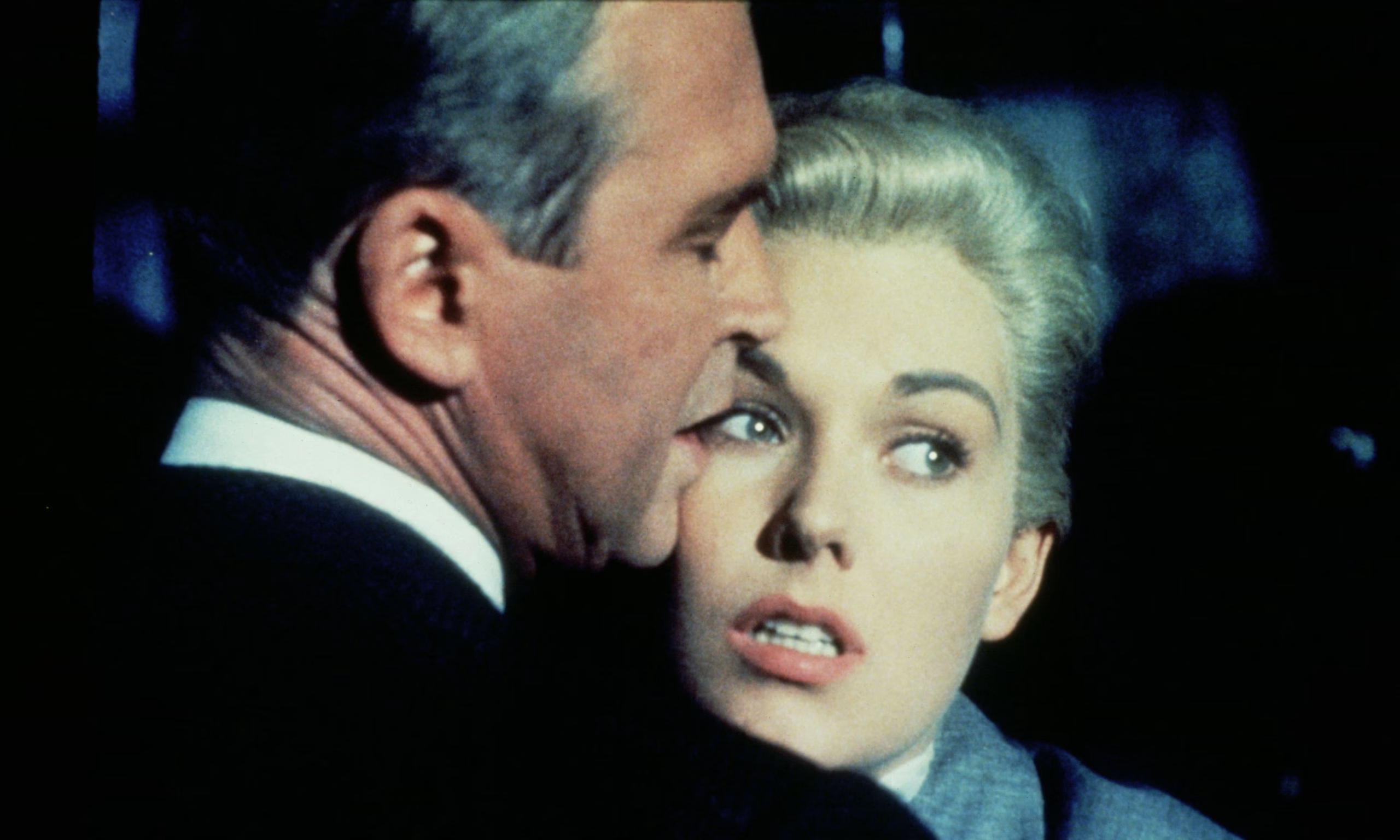
Yet there is much more to Herrmann than menace. He could give The Magnificent Ambersons a tenuous elegance, then summon the enormous forces that seem to shake the ground beneath Mysterious Island. Across that range, you can still hear his signature: short phrases that won’t let go, chords that seem suspended in midair, and moments when the music opens unexpectedly into longing. Listen to brass voices plunging in Cape Fear or the sinister whistling theme from Twisted Nerve. The music leaves us unsettled, waiting for a resolution that never quite arrives.

The title The Sound of Suspense fits him, but suspense is only the beginning. Herrmann also understood solitude, tenderness, grief, and the peculiar terror of wanting something that could save you in the end or finally bring you relief, while the threat that you might never attain it feels all too real.

But his music could just as readily open its arms to romance, catch the exhilaration of an adventure, or give us the wonder of stepping into a world we had never imagined. He had room for the whole sweep of feelings, from the smallest private hope to the grandest leap into the unknown. Maybe beneath the famous shocks lies a composer of longing: for lost childhoods (Citizen Kane), unreachable lovers (the heartbreaking separation between Lucy Muir and the ghostly sea captain in The Ghost and Mrs. Muir), vanished worlds (The Magnificent Ambersons – the family’s privileged world gives way to industrial change. His soundtrack captures the loss of an entire social order, not simply one person’s happiness) Herrmann’s score belongs to that story of decline and displacement, and human contact that arrives too late (Taxi Driver, On Dangerous Ground) or at a price. His reputation for terror can overshadow the yearningly romantic side of his music, particularly in North by Northwest and The Ghost and Mrs. Muir. All of it belongs to the emotional territory of his work. He could also make room for love fulfilled, horizons opening, and the sheer joy of being swept into something larger than ourselves.

Bernard Herrmann might have preferred to be celebrated for his opera Wuthering Heights, his symphonies, his cantata Moby Dick, and his other concert works. Yet, according to fellow film composer John Williams, Herrmann’s greatest ambition was to earn recognition as a conductor. Whatever recognition he hoped for, the movies became the place where his imagination left its deepest mark. He helped change not just how films sounded, but what they could say through music, and generations of composers have been listening ever since. That was “his great skill—his understanding of the psychology of the character,” fellow film composer Howard Shore said. Herrmann could hear what was happening beneath a character’s words and actions, then give it musical expression. His scores brought us closer to the fears, desires, and contradictions driving the people on screen.

Herrmann’s music could stir a feeling, resist it, or give it an unexpected gravity. The psychology was in the encounter—not only in the person, but in what happened when that person met the world.

Continue reading “Bernard Herrmann: The Sound of Suspense” →

Postcards From Shadowland: no. 15

Anna The Rose Tattoo
Anna Magnani in Tennessee William’s The Rose Tattoo (1955) directed by Daniel Mann
Blood of a Poet 32 Cocteua
director Jean Cocteau’s The Blood of the Poet (1932) starring Enrique Rivero
Broken-Blossoms-Gish
Lillian Gish stars in Broken Blossoms in D. W. Griffith’s (1919) visual poetry
kongo1932
Kongo (1932) Lupe Velez torments Virginia Bruce in this remake of West of Zanzibar (1928)
GIULETTA MASINA in Fellini's masterpiece oneric journey Juilet of the Spirits 1965
Guiletta Masina is brilliant in Juliet of the Spirits (1965) Fellini’s masterpiece oneric journey
kuroneko
director Kaneto Shindô’s Kuroneko (1968) a beautifully disturbing ghost story
Anita Louise as Titania
Anita Louise as Titania Queen of the Faeries in A Midsummer Night’s Dream 1935
Brando and Schneider The Last Tango in Paris
Marlon Brando and Maria Schneider in The Last Tango in Paris 1972
Ohmart and Franz The Wild Party
Arthur Franz, Anthony Quinn and Carol Ohmart in The Wild Party 1956
Annex - Alexander, Katharine as Alda Death Takes a Holiday)_01
Death Takes a Holiday (1934) Katherine Alexander as Alda with Fredric March as Prince Sirki/Death
curtis-strangler
Richard Fleischer directs Tony Curtis in The Boston Strangler 1968
Dead of Night
Part of several segments of this classical ghost story, Alberto Cavalcanti directs Michael Redgrave in perhaps one of the most famous frightening tales in “The Ventriloquist’s Dummy” Dead of Night (1945)
Shock Corridor
Peter Breck is attacked by Nymphomaniacs in Sam Fuller’s Shock Corridor (1963)
Brighton Rock Dick Attenborough as Pinkie Brown with Carol Marsh
Film noir thriller Brighton Rock (1947) starring Richard Attenborough as Pinkie Brown co-stars with Carol Marsh
Clementine
John Ford’s epic western drama -My Darling Clementine 1946 starring Henry Fonda and Linda Darnell
The Maids 1933 men in drag
Charles Busch, left, and Peter Francis James in a 1993 Classic Theater Company production of "The Maids" (1933) in which the sisters were men in drag
The Living Dead Man 1926-Michel Simon Jérôme Pomino
The Living Dead Man 1926-Michel Simon as Jérôme Pomino
the-bride-wore-black
François Truffaut’s tribute to Alfred Hitchcock with The Bride Wore Black (1968) starring the incomparable Jeanne Moreau
The Sea Hawk 1924
The Sea Hawk (1924) directed by Harold Lloyd starring silent film idol Milton Sills
through a glass darkly
Harriet Andersson in Through A Glass Darkly (1961) director Ingmar Bergman
The notorious Last Supper sequence in Luis Buñuel's VIRIDIANA.  Credit: Janus Films.  Playing 4/24 - 4/30.
The notorious Last Supper sequence in Luis Buñuel’s VIRIDIANA Janus Films. 

Postcards From Shadowland No. 14

12_angry_men_1957
12 Angry Men (1957) Directed by Sidney Lumet Lee J. Cobb, E.G. Marshall, Jack Klugman, Edward Binns, Jack Warden, Henry Fonda, Joseph Sweeney, Ed Begley, George Voskovec… also stars John Fiedler, Martin Balsam and Robert Webber
Broken Blossoms
Broken Blossoms (1919) Starring Lillian Gish as Lucy the girl.
C cigarettegirl
The Cigarette Girl from Mosselprom (Moscow) 1924 Directed by Yuri Zhelyabuzhsky -starring Yuliya Solntseva as Zina Vesenina- the cigarette girl
Christmas Holiday
Christmas Holiday (1944) Directed by Robert Siodmak-starring Deanna Durbin & Gene Kelly
Curse-of-the-Demon-2
Curse of the Demon (1957) Directed by Jacques Tourneur-Starring Dana Andrews, Peggy Cummins and Niall MacGinnis
Diana-Dors-My-Wifes-Lodger-28310_5
Diana Dors as Eunice Higginbotham in My Wife’s Lodger (1952)
harry-woods-call-of-the-savage
Directed by Lew Landers Harry Woods is Borno in- Call of the Savage (1935)
Hi Dante's Inferno devil
L’Inferno 1911, Dante Alighieri “A Divina Comédia”, Directed by Giuseppe de Liguoro.
seaHawkmers-1924-02-g
The Sea Hawk 1924 Directed by Frank Lloyd
Hodiak and Bankhead in Lifeboat
Alfred Hitchcock’s Lifeboat (1944) cinematic stage play with the vast scope of the Ocean and the claustrophobic air of desperation. Brilliant performances by Tallulah Bankhead and John Hodiak looking his hunkiest best…
Ingmar Bergman's Virgin Spring
The Virgin Spring (1960) directed by Ingmar Bergman-disturbing journey of revenge
J Gilda
Gilda (1946) directed by Charles VIdor and stars the magnificent Rita Hayworth in the title role Gilda Mundson Farrell, here dancing with Glenn Ford. A film noir classic
Last Tango in Paris
Last Tango in Paris 1972 directed by Bernardo Bertolucci-stars Marlon Brando and Maria Schneider as a pair of angst filled lovers whose relationship is based on sex & death
ManMadeMonster2-1
Man Made Monster 1941 starring Lionel Atwill as the deranged Dr Rigas
monsieur Verdoux
Monsieur Verdoux 1947 directed by and starring Charles Chaplin-brilliant dark comedy of murder and anti-conformity.
Night of the Hunter Gish & Co.
Charles Laughton’s oneric fable of childhood terrors, the bonds of friendship and the plight of Love vs Hate… Beautifully filmed- starring Lillian Gish as Rachel Cooper and Robert Mitchum as the diabolical Harry Powell in Night of the Hunter (1955)
Peggy+Ann+Garner_jane+eyre
Jane Eyre 1943 directed by Robert Stevenson starring Peggy Ann Garner is young Jane.
Plunder Road
Plunder Road (1957) directed by Hubert Cornfeld, perhaps one of the most edgy crime story film noirs headed up Gene Raymond and Elisha Cook Jr.
Robert Ryan in The Set Up
The Set-Up (1949) Robert Ryan stars as boxer Stoker in Robert Wise’s extraordinary noir film centered around the boxing ring and a down on his luck fighter that still has a lot of fight left in him. One of my favorite film noir classics, much to do with Ryan’s performance and Milton R. Krasner’s cinematography…
saboteur norman-lloyd-
the Wonderful Norman Lloyd in Alfred Hitchcock’s Saboteur 1942
Seconds
Rock Hudson is psychologically and physically spun around on his head in Seconds 1966 by John Frankenheimer- A story about that precious commodity… one’s identity
Seeds of Sin 1968 Andy Milligan
SEEDS (1968) Directed by Andy Milligan- it’s seedy and low budget and the perfect exploitative indulgence…
Shack Out on I0I
Shack Out on 101 (1955) different styled film noir starring Lee Marvin as Slob.. directed by Edward Dein and co-stars Terry Moore and Frank Lovejoy
ship of fools
Stanley Kramer directs this incredible ensemble of actors in Ship of Fools (1965) Here showing George Segal, Michael Dunn and Lee Marvin
somwhere in the night john hodiak
John Hodiak tries to remember in Somewhere in the Night (1946) -a taut amnesia themed noir with great characters. Directed by Joseph L. Mankiewicz. Here with Fritz Kortner as Anzelmo or Dr Oracle.
streetwithnonamebmp
Street With No Name (1948) starring Mark Stevens and directed by William Keighly -This film noir also stars Richard Widmark and Lloyd Nolan…
sunrise
Sunrise (1927) directed by F.W. Murnau starring Janet Gaynor and George O’Brien-Beautifully filmed silent masterpiece
t-nightbirds
Nightbirds 1970 Andy Milligan’s gritty cult journey about two miscreants in London.
Terror From the Crypt
Terror in the Crypt aka Crypt of the Vampire 1964 directed by Camillo Mastrocinque based on the Karnstein saga with Adriana Ambesi and Ursula Davis and the immortal Christopher Lee
The Fiend Who Walked the West
The Fiend Who Walked the West (1958) directed by Gordon Douglas and starring Hugh O’Brian and a really psychotic Robert Evans.
The Scavengers 1959
The Scavengers 1959 starring Carol Ohmart directed by John Cromwell -an obscure film noir also starring Vince Edwards
The Secret Garden Margaret O'Brien
The Secret Garden 1949 starring Margaret O’Brien and a wonderful cast Herbert Marshall, Dean Stockwell, Gladys Cooper, Elsa Lanchester, Reginald Owen, Brian Roper, Aubrey Mather isobel Elsom and George Zucco fill out this fantasy drama directed by Fred M. Wilcox
the seventh sin
The Seventh Sin (1957) directed by Ronald Neame and Vincente Minnelli starring Eleanor Parker and Françoise Rosay Françoise Rosay as Mother Superior
The Soft Skin 1964 Francoise Dorleac
The Soft Skin 1964 Françoise Dorléac directed by François Truffaut
The Stranger 1946
The Stranger 1946 directed by Orson Welles
the terrible_people_1
The Terrible People (1960) directed by Harald Reinl adapted from the story by Edgar Wallace stars Joachim Fuchsberger
The Wild Boys of the Road thirty three
The Wild Boys of the Road 1933 directed by William Wellman
The Young One 1960
The Young One 1960 directed by Luis Buñuel starring Key Meersman as Evalyn. Also stars Zachary Scott and Bernie Hamilton
The-Exterminating-Angel
The Exterminating Angel (1962) directed by Luis Buñuel
The-Twilight-Girls
The Twilight Girls (1957) by André Hunebelle
To Kill a Mockingbird Jim and Dill
To Kill a Mockingbird 1962 directed by Robert Mulligan -John Megna as Dill and Phillip Alford as Jem. adapted from Harper Lee’s masterpiece

See you soon… Your EverLovin’ MonsterGirl!