Bernard Herrmann: The Sound of Suspense

“I always think that film music expresses what the actor can’t show or tell.”
—Bernard Herrmann, interviewed by Ted Gilling, Sight and Sound, 1971–72

“I feel that music on the screen can seek out and intensify the inner thoughts of the characters… It can propel narrative forward or slow it down. It often lifts mere dialogue into the realm of poetry,”So wrote Bernard Herrmann for a 1972 London recording

“My feelings and yearnings are those of a composer of the 19th century. I am completely out of step with the present.”
-Bernard Herrmann in a letter to his wife

“He depends on music and often photographs a scene knowing that music will complete it.”—Bernard Herrmann, interviewed by Ted Gilling, Sight and Sound, vol. 41, no. 1 (1971/72), pp. 36–39; by Cinescores. “He” refers explicitly to Hitchcock in the preceding sentence.

On music as Hitchcock’s weapon of suspense:
“I think that Hitchcock’s films depend enormously on music to build his nutcracker of suspense, and to impose on him a kind of pop culture is to deprive him of one of the greatest weapons in his arsenal.”

—From the same Ted Gilling interview. This is the full sentence as reproduced in the transcript. Herrmann was discussing the end of their collaboration and his objection to the pressure for pop-oriented music.

On Hitchcock adapting his editing to the score:
“Hitchcock, for example, is very anxious for you to tell him when you see a rough cut where you plan to use music, because if you’re using music, he’ll cut it differently.”

—From the same interview. This gives you a specific account of how the collaboration worked: the planned music could affect Hitchcock’s editing, rather than simply being added to a finished sequence.

On their break—sharper and more confrontational:
“Because … he only finishes a picture 60 percent. I have to finish it for him.”

—Bernard Herrmann, interviewed by Royal S. Brown in August 1975. The ellipsis appears in the published transcript; The interview first appeared in High Fidelity in September 1976 and was revised for Brown’s Overtones and Undertones (1994). The Bernard Herrmann Society reproduces it with a note explaining that the original recording was consulted to restore deletions and some of Herrmann’s original wording.

In the Gilling interview, Herrmann also recalls Hitchcock saying, about Vertigo: Alfred Hitchcock, as recalled by Bernard Herrmann.
“If we’re going to have music, we won’t have one word of dialogue; we’ll just have the camera and you.”

Composer Miklos Rozsa reportedly said:
“Herrmann was a Gulliver among the film music Lilliputians.”

“The thing about Herrmann was that he was a forceful personality and that force in his personality found its voice in those hammering, repetitive themes of his, which you can’t get out of your ear. – Composer John Williams

Before the Image, a Voice- Bernard Herrmann and the music beneath the surface

I often feel that Bernard Herrmann’s music reaches a character’s inner life before the film has found the words for it. It doesn’t merely accompany danger or alert us to the fact that danger is near; it draws us into and lets us also feel their dread, longing, obsession, or loneliness. Before we know its name, we know the sound.

A shower curtain opens, and violins turn into an assault. A woman emerges through a ghostly green light, and the orchestra swells with an obsessive love so desperate that it can no longer distinguish a person from a beautiful phantasm. A taxi moves through Manhattan steam, and the music offers two versions of the city: one is seductive, the other already burning.

These are not merely memorable musical textures or the voices of films like Psycho, Vertigo, and Taxi Driver. They are part of what those films mean. Bernard Herrmann could make an orchestra reveal something that a character would never admit, or that a director preferred to leave unresolved. His music did not always tell us what was happening, but it did tell us what happening felt like, from somewhere dangerously far inside.

Bernard Herrmann’s biographer Steven C. Smith, the author of A Heart at Fire’s Center: The Life and Music of Bernard Herrmann, finds much of Herrmann’s genius in his ability to evoke psychological nuance, and in the way he brought together just the right instruments to give each film its own emotional undercurrents and draw us closer to the characters’ fear and desires.

You may know Bernard Herrmann’s music whether you realize it or not. Think of the dark snarling brass that opens Citizen Kane, the spiraling arpeggiated phrases of Vertigo, or the headlong rush of North by Northwest. Those strings that slash the air in Psycho, the saxophone drifting through Taxi Driver, and, of course, each belongs so completely to its film that it is hard to imagine the images without it in the realm of modern cinema.
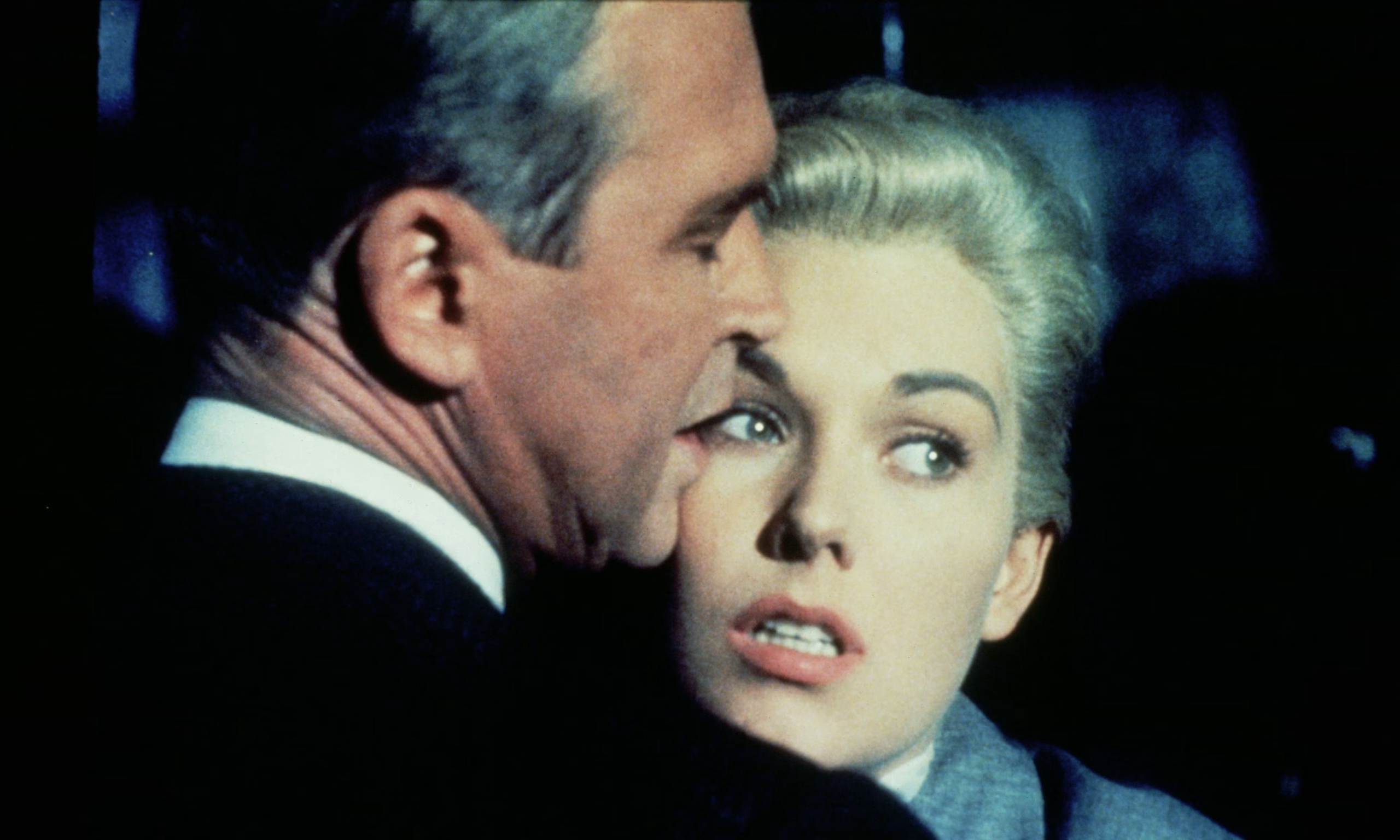
Yet there is much more to Herrmann than menace. He could give The Magnificent Ambersons a tenuous elegance, then summon the enormous forces that seem to shake the ground beneath Mysterious Island. Across that range, you can still hear his signature: short phrases that won’t let go, chords that seem suspended in midair, and moments when the music opens unexpectedly into longing. Listen to brass voices plunging in Cape Fear or the sinister whistling theme from Twisted Nerve. The music leaves us unsettled, waiting for a resolution that never quite arrives.

The title The Sound of Suspense fits him, but suspense is only the beginning. Herrmann also understood solitude, tenderness, grief, and the peculiar terror of wanting something that could save you in the end or finally bring you relief, while the threat that you might never attain it feels all too real.

But his music could just as readily open its arms to romance, catch the exhilaration of an adventure, or give us the wonder of stepping into a world we had never imagined. He had room for the whole sweep of feelings, from the smallest private hope to the grandest leap into the unknown. Maybe beneath the famous shocks lies a composer of longing: for lost childhoods (Citizen Kane), unreachable lovers (the heartbreaking separation between Lucy Muir and the ghostly sea captain in The Ghost and Mrs. Muir), vanished worlds (The Magnificent Ambersons – the family’s privileged world gives way to industrial change. His soundtrack captures the loss of an entire social order, not simply one person’s happiness) Herrmann’s score belongs to that story of decline and displacement, and human contact that arrives too late (Taxi Driver, On Dangerous Ground) or at a price. His reputation for terror can overshadow the yearningly romantic side of his music, particularly in North by Northwest and The Ghost and Mrs. Muir. All of it belongs to the emotional territory of his work. He could also make room for love fulfilled, horizons opening, and the sheer joy of being swept into something larger than ourselves.

Bernard Herrmann might have preferred to be celebrated for his opera Wuthering Heights, his symphonies, his cantata Moby Dick, and his other concert works. Yet, according to fellow film composer John Williams, Herrmann’s greatest ambition was to earn recognition as a conductor. Whatever recognition he hoped for, the movies became the place where his imagination left its deepest mark. He helped change not just how films sounded, but what they could say through music, and generations of composers have been listening ever since. That was “his great skill—his understanding of the psychology of the character,” fellow film composer Howard Shore said. Herrmann could hear what was happening beneath a character’s words and actions, then give it musical expression. His scores brought us closer to the fears, desires, and contradictions driving the people on screen.

Herrmann’s music could stir a feeling, resist it, or give it an unexpected gravity. The psychology was in the encounter—not only in the person, but in what happened when that person met the world.

Continue reading “Bernard Herrmann: The Sound of Suspense” →

Quote of the Day! My Darling Clementine (1946)

MY DARLING CLEMENTINE (1946)

“Mac, you ever been in love?”– Wyatt Earp (Henry Fonda)

“No, I’ve been a bartender all my life.”– Mac the Barman (J. Farrell MacDonald)


I’ve come late to the party, but I finally got my formal introduction to legendary director John Ford by good friend and notable blogger Aurora at Once Upon a Screen. While I’ve always felt that The Grapes of Wrath (1940) to be a cinematic triumph with memorable performances–  one such is the ubiquitous John Carradine as Jim Casy who also appeared in Ford’s Stagecoach is one of my favorites– I didn’t really focus my attentions to the director himself.  My first real exposure to John Ford was through his immensely beautiful film of pure visual poetry How Green Was My Valley (1941), the poignant story by way of voice-over reflected upon through the eyes of young Huw played by Roddy McDowall. The narration is told by a now grown-up Huw, recounted using the voice of actor/director Irving Pichel, who tells of the lives of a resilient and decent family in a Welsh mining town, who struggle to get by in the midst of often brutal hardships. It is truly one of the most aesthetically moving films I’ve ever seen.

Donald Crisp, Roddy McDowall, and Sara Allgood in How Green Was My Valley (1941).

Ford on the set of My Darling Clementine (1946).

Recently we celebrated Ford’s work by watching an exciting western-themed double feature, Stagecoach (1939) and My Darling Clementine (1946). Both are striking in their composition as I’m learning how Ford frames everything we see with explicit detail and thoughtful determination. What strikes me as another essential style of Ford is how the peripheral characters –particularly notable in Stagecoach (1939)– fill out the visual narrative with their presence and their valuable expressions as akin to the material faces found in a classical painting. Character actor Jane Darwell who plays Ma Joad in Ford’s The Grapes of Wrath (1940) makes an appearance in My Darling Clementine.

Jane Darwell plays dance hall owner Kate Nelson, which was her second appearance in a John Ford film. Before Clementine, she previously worked with the director who used her as a voice-over actor alongside Henry Fonda in the war documentary The Battle of Midway (1942). Darwell worked with Ford in 3 Godfathers (1948) as Miss Florie and was cast in several other of his films. Her last appearance as a Ford regular was in The Last Hurrah (1958).

My Darling Clementine deserves a more thoughtful eye and I can see why it is considered one of the greatest movies of all time. I read that this was his last collaboration with Darryl F. Zanuck at Fox, who unfortunately chopped off a half hour of the film. It is included in the AFI’s list of the 400 movies nominated for the Top 100 Greatest American Movies.

Ford paints each scene of his poetic, folkloric romanticism with vast open spaces and fantastical clouds for miles, that are in contrast and simultaneous to intervals of intimacy in shots that appear like still life. If we are not bathed in the bright sky, we witness carefully orchestrated motion or transfixed images through frames within frames lit by glowing sources of light, like fireflies it enhances figures silhouetted in the darker spaces.

each frame, a photograph…

Ford and MacDonald bring about a fairytale-like realism that is meticulously designed to draw your eyes to each frame, capturing a sense of thoughtful contemplation.

While both Stagecoach and My Darling Clementine are considered his masterpieces, the unhurried pacing of Henry Fonda’s Wyatt Earp leads My Darling Clementine through an astonishingly blithe journey, for such a dark story. Fonda’s quietly measured self-assurance and nonchalant humor work as a buoy to ensure that the film is never bogged down by a gloomy spirit.

Ford took liberties with the re-telling of the legend of Wyatt Earp -Doc Holliday partnership and the infamous feud between Marshal Wyatt Earp and the ornery Clanton clan (a young John Ireland as Billy Clanton, Grant Withers as Ike) led by monstrous and malicious patriarch Old Man Clanton (Walter Brennan) whose expressions and mean as spit sparse commentary are as potent as a snake bite.

The boundless, dusty panorama of My Darling Clementine is striking with its haunting skies, incomparable rocky buttes and the vast open isolation of the Old West filmed in Monument Valley, Utah. Cinematographer Joseph MacDonald (Panic in the Streets 1950, Pickup on South Street 1952, The Young Lions 1958, Walk on the Wild Side 1962, The Carpetbaggers 1964, The Sand Pebbles 1966) paints a melancholy landscape depicting the American wilderness of the late 1800s.

Wyatt Earp (Henry Fonda) and his brothers Morgan (Ward Bond) and Virgil (Tim Holt) head into the unruly fatalism of Tombstone, leaving their younger brother James to watch over their herd of cattle. When they get back to the site, the cattle have been stolen and they find James murdered, shot in the back. Wyatt winds up accepting the job of Marshal, with his brothers as deputies. He is determined to hunt down the men who killed his brother. Shortly after taking over as Marshal he meets the bad-tempered Doc Holliday (Victor Mature) who drowns himself in booze, has an unrelenting cough, and spreads his brooding disposition around Tombstone. Regardless of Doc Holliday’s heavy-hearted yet sympathetic personality, the two become allies.

each frame, a picture…

From the beginning Wyatt strongly suspects the ruthless Clanton gang of killing his brother, especially after he finds James' medallion on Doc’s current lover, the sensuous saloon gal Chihuahua (Linda Darnell).

Clementine Carter (Cathy Downs) Doc's former fiancé comes all the way to see her beau but sadly discovers he has moved on. Wyatt falls in love with the sweet-mannered girl while he sets out to quietly avenge his youngest brother’s murder, culminating in the iconic shoot-out with the Clantons at the O.K. Corral.

IMDb Trivia

John Ford, who in his youth had known the real Wyatt Earp, claimed the way the OK Corral gunfight was staged in this film was the way it was explained to him by Earp himself, with a few exceptions. Ford met Earp through Harry Carey.

Walter Brennan disliked John Ford so much that he never worked with him again. One time when Brennan was having a little trouble getting into the saddle, Ford yelled, “Can’t you even mount a horse?” Brennan shot back, “No, but I got three Oscars for acting!”

John Ford wanted to shoot in Monument Valley, UT, which had proven to be the perfect site for Stagecoach (1939) and would quickly become his favorite location and the landscape most closely associated with his vision of the Old West. The real town of Tombstone, AZ, however, lies at the southern end of the state, closer to the Arizona-Mexico border. So he had a set for the complete town built at a cost of $250,000. Ford also chose Monument Valley because he wanted to bring some business to the economically depressed Navajo community there

Jeanne Crain was scheduled to play Clementine. Studio head Darryl F. Zanuck ruled against her, writing in a memo that the part was so small that Crain fans might be disappointed by not seeing her in more scenes. That’s how contract player Cathy Downs got the part instead.

Walter Brennan, John Ireland, and Grant Withers were required to do their own riding and shooting in the scene where the clan rides into town during a dust storm. John Ford used a powerful wind machine and told the actors to fire their guns close to the horses’ ears to make them ride wild.

Vincent Price was considered for the role of Doc Holliday.

The movie was featured in the TV series M*A*S*H episode M*A*S*H: Movie Tonight (1977). It was said to have been the favorite movie of Col. Sherman Potter.

Henry Fonda was John Ford’s first and only choice to play Wyatt Earp.

Tyrone Power was an early possibility for Doc Holliday, but for some unknown reason his name was dropped from consideration early in the pre-casting stage. John Ford was enthusiastic about Douglas Fairbanks Jr., telling Darryl F. Zanuck in a memo, “He might be terribly good in it. He would look about the same age as Henry and as it’s a flamboyant role it is quite possible he could kick hell out of it. Think it over well.” He was not happy with Zanuck’s choice, Victor Mature, and he began pressing for Vincent Price instead. However, after meeting with Mature, Ford told Zanuck he was not at all worried about the actor’s performance. He was never very happy, however, with Linda Darnell as Doc’s Mexican spitfire lover.

Sam Peckinpah considered this his favorite Western and paid homage to it in several of his Westerns, including Major Dundee (1965) and The Wild Bunch (1969).

Two actresses considered for the part of Clementine were Fox contract players Anne Baxter and Jeanne Crain. Instead, John Ford was given Cathy Downs, who was an unknown at the time.

This is your everlovin’ Joey sayin’ I’m not lost and gone forever my darlings! See ya soon back at The Last Drive In…

Postcards From Shadowland No. 14

12_angry_men_1957
12 Angry Men (1957) Directed by Sidney Lumet Lee J. Cobb, E.G. Marshall, Jack Klugman, Edward Binns, Jack Warden, Henry Fonda, Joseph Sweeney, Ed Begley, George Voskovec… also stars John Fiedler, Martin Balsam and Robert Webber
Broken Blossoms
Broken Blossoms (1919) Starring Lillian Gish as Lucy the girl.
C cigarettegirl
The Cigarette Girl from Mosselprom (Moscow) 1924 Directed by Yuri Zhelyabuzhsky -starring Yuliya Solntseva as Zina Vesenina- the cigarette girl
Christmas Holiday
Christmas Holiday (1944) Directed by Robert Siodmak-starring Deanna Durbin & Gene Kelly
Curse-of-the-Demon-2
Curse of the Demon (1957) Directed by Jacques Tourneur-Starring Dana Andrews, Peggy Cummins and Niall MacGinnis
Diana-Dors-My-Wifes-Lodger-28310_5
Diana Dors as Eunice Higginbotham in My Wife’s Lodger (1952)
harry-woods-call-of-the-savage
Directed by Lew Landers Harry Woods is Borno in- Call of the Savage (1935)
Hi Dante's Inferno devil
L’Inferno 1911, Dante Alighieri “A Divina Comédia”, Directed by Giuseppe de Liguoro.
seaHawkmers-1924-02-g
The Sea Hawk 1924 Directed by Frank Lloyd
Hodiak and Bankhead in Lifeboat
Alfred Hitchcock’s Lifeboat (1944) cinematic stage play with the vast scope of the Ocean and the claustrophobic air of desperation. Brilliant performances by Tallulah Bankhead and John Hodiak looking his hunkiest best…
Ingmar Bergman's Virgin Spring
The Virgin Spring (1960) directed by Ingmar Bergman-disturbing journey of revenge
J Gilda
Gilda (1946) directed by Charles VIdor and stars the magnificent Rita Hayworth in the title role Gilda Mundson Farrell, here dancing with Glenn Ford. A film noir classic
Last Tango in Paris
Last Tango in Paris 1972 directed by Bernardo Bertolucci-stars Marlon Brando and Maria Schneider as a pair of angst filled lovers whose relationship is based on sex & death
ManMadeMonster2-1
Man Made Monster 1941 starring Lionel Atwill as the deranged Dr Rigas
monsieur Verdoux
Monsieur Verdoux 1947 directed by and starring Charles Chaplin-brilliant dark comedy of murder and anti-conformity.
Night of the Hunter Gish & Co.
Charles Laughton’s oneric fable of childhood terrors, the bonds of friendship and the plight of Love vs Hate… Beautifully filmed- starring Lillian Gish as Rachel Cooper and Robert Mitchum as the diabolical Harry Powell in Night of the Hunter (1955)
Peggy+Ann+Garner_jane+eyre
Jane Eyre 1943 directed by Robert Stevenson starring Peggy Ann Garner is young Jane.
Plunder Road
Plunder Road (1957) directed by Hubert Cornfeld, perhaps one of the most edgy crime story film noirs headed up Gene Raymond and Elisha Cook Jr.
Robert Ryan in The Set Up
The Set-Up (1949) Robert Ryan stars as boxer Stoker in Robert Wise’s extraordinary noir film centered around the boxing ring and a down on his luck fighter that still has a lot of fight left in him. One of my favorite film noir classics, much to do with Ryan’s performance and Milton R. Krasner’s cinematography…
saboteur norman-lloyd-
the Wonderful Norman Lloyd in Alfred Hitchcock’s Saboteur 1942
Seconds
Rock Hudson is psychologically and physically spun around on his head in Seconds 1966 by John Frankenheimer- A story about that precious commodity… one’s identity
Seeds of Sin 1968 Andy Milligan
SEEDS (1968) Directed by Andy Milligan- it’s seedy and low budget and the perfect exploitative indulgence…
Shack Out on I0I
Shack Out on 101 (1955) different styled film noir starring Lee Marvin as Slob.. directed by Edward Dein and co-stars Terry Moore and Frank Lovejoy
ship of fools
Stanley Kramer directs this incredible ensemble of actors in Ship of Fools (1965) Here showing George Segal, Michael Dunn and Lee Marvin
somwhere in the night john hodiak
John Hodiak tries to remember in Somewhere in the Night (1946) -a taut amnesia themed noir with great characters. Directed by Joseph L. Mankiewicz. Here with Fritz Kortner as Anzelmo or Dr Oracle.
streetwithnonamebmp
Street With No Name (1948) starring Mark Stevens and directed by William Keighly -This film noir also stars Richard Widmark and Lloyd Nolan…
sunrise
Sunrise (1927) directed by F.W. Murnau starring Janet Gaynor and George O’Brien-Beautifully filmed silent masterpiece
t-nightbirds
Nightbirds 1970 Andy Milligan’s gritty cult journey about two miscreants in London.
Terror From the Crypt
Terror in the Crypt aka Crypt of the Vampire 1964 directed by Camillo Mastrocinque based on the Karnstein saga with Adriana Ambesi and Ursula Davis and the immortal Christopher Lee
The Fiend Who Walked the West
The Fiend Who Walked the West (1958) directed by Gordon Douglas and starring Hugh O’Brian and a really psychotic Robert Evans.
The Scavengers 1959
The Scavengers 1959 starring Carol Ohmart directed by John Cromwell -an obscure film noir also starring Vince Edwards
The Secret Garden Margaret O'Brien
The Secret Garden 1949 starring Margaret O’Brien and a wonderful cast Herbert Marshall, Dean Stockwell, Gladys Cooper, Elsa Lanchester, Reginald Owen, Brian Roper, Aubrey Mather isobel Elsom and George Zucco fill out this fantasy drama directed by Fred M. Wilcox
the seventh sin
The Seventh Sin (1957) directed by Ronald Neame and Vincente Minnelli starring Eleanor Parker and Françoise Rosay Françoise Rosay as Mother Superior
The Soft Skin 1964 Francoise Dorleac
The Soft Skin 1964 Françoise Dorléac directed by François Truffaut
The Stranger 1946
The Stranger 1946 directed by Orson Welles
the terrible_people_1
The Terrible People (1960) directed by Harald Reinl adapted from the story by Edgar Wallace stars Joachim Fuchsberger
The Wild Boys of the Road thirty three
The Wild Boys of the Road 1933 directed by William Wellman
The Young One 1960
The Young One 1960 directed by Luis Buñuel starring Key Meersman as Evalyn. Also stars Zachary Scott and Bernie Hamilton
The-Exterminating-Angel
The Exterminating Angel (1962) directed by Luis Buñuel
The-Twilight-Girls
The Twilight Girls (1957) by André Hunebelle
To Kill a Mockingbird Jim and Dill
To Kill a Mockingbird 1962 directed by Robert Mulligan -John Megna as Dill and Phillip Alford as Jem. adapted from Harper Lee’s masterpiece

See you soon… Your EverLovin’ MonsterGirl!