Postcards From Shadowland’s Big Fat No.10

Alexandra Schmidt in Mother Kraus' jounrey to happiness mutter-krausens-fahrt-ins-gluck-schmidt
Alexandra Schmidt in ‘Mother Krause’s Journey to Happiness’ (1929)
all-about-eve-anne-baxter-bette-davis-marilyn-monroe-richard carlson-george sanders-celeste holm
Director Joseph L. Mankiewicz’s brilliant satire- All About Eve (1950) starring the inimitable Bette Davis as Margo Channing and Ann Baxter as the cunning Eve Harrington.
All's Quet on the Western Front
Director Lewis Milestone’s All’s Quiet on the Western Front-(1930) starring Lew Ayres
anatomy of murder scene
Otto Preminger’s riveting court room noir Anatomy of a Murder (1959)
battleship-potemkin-odessa-steps-sergei-eisenstein
Battleship Potemkin (1925) Sergei Eisenstein’s masterpiece about the great Russian naval mutiny.
Brute Force
Jule’s Dassin’s brutal noir masterpiece Brute Force (1947)
Cat-on-a-Hot-Tin-Roof-elizabeth-taylor-scene
Richard Brooks adaptation of Tennessee William’s Cat on a Hot Tin Roof (1958)
DameJudith:MrsDanvers
Alfred Hitchcock’s adaptation of Daphne Du Maurier’s Rebecca 1940
janet-leigh-touch-of-evil-charlton-heston
Orson Welles’ film classic Touch of Evil (1958)
notre-dame-hunchbackLaughton
William Dieterle’s adaptation of Victor Hugo’s The Hunchback of Notre Dame 1939
kiss of death
Henry Hathaway’s disturbing noir classic Kiss of Death 1947
Laura
Otto Preminger’s quintessential noir Laura (1944)
Lee Remick in Experiment in Terror 1960
Blake Edwards Experiment in Terror 1960
Earth Vs The Spider
Bert I. Gordon’s Earth Vs The Spider 1958
Dracula's Daughter
Lambert Hillyer’s understated yet powerfully erotic horror classic Dracula’s Daughter 1936
Linda darnell no way out
Joseph L. Mankiewicz’s taut and thought provoking social noir No Way Out 1950
little-caesar-edward-g-robinson
Mervyn LeRoy’s gangster odyssey Little Caesar 1931
Day the earth stood still robert wise
Robert Wise’s Science Fiction masterpiece The Day the Earth Stood Still (1951)
long dark hall
Reginald Beck and Anthony Bushell’s suspenseful The Long Dark Hall 1951
loretta-young-lon-chaney-laugh-clown-laugh
Herbert Brenon’s beautiful Laugh, Clown, Laugh 1928
m-peter-lorre-
Fritz Lang’s notorious psychological thriller M (1931)
Monday Nights with Oscar
Otto Preminger’s noir masterpiece about addiction The Man with the Golden Arm 1955
allison hayes Attack of the 50 foot woman
Nathan Juran’s iconic 50s campy sci-fi romp Attack of the 50 Foot Woman (1958)
marsha-hunt-actress-raw-deal-john-ireland
Anthony Mann’s noir classic Raw Deal (1948)
Mother Joan of the Angels
Jerzy Kawalerowicz’s surreal and transcendent Mother Joan of the Angels 1961
Nancy Kelly in The Bad Seed
Mervyn LeRoy’s naughty tale about a child psychopath. The Bad Seed (1956)
naked kiss2
Samuel Fuller’s irreverent noir gem The Naked Kiss (1964)
odd+man+out+1947
Carol Reed’s intense noir thriller Odd Man Out (1947)
Norma Desmond
Billy Wilder’s iconic film noir masterwork of grand proportions Sunset Blvd (1950)
orphee-jean-marais
Jean Cocteau’s stunning Orpheus (1950) Orphée
outofthepas
Jacques Tourneur’s hauntingly mesmerizing noir Out of the Past (1947)
Peggy Cummings Gun Crazy
Joseph E. Lewis Gun Crazy or Deadly is the Female (1950)
penny_serenade
George Steven’s sadness and joyful Penny Serenade (1941)
frankenstein
James Whale’s campy take on Mary Shelley’s Frankenstein 1931
the+black+cat
Edgar G. Ulmer’s sadistic and transgressive journey into horror The Black Cat 1934
vampyr
Carl Theodor Dreyer’s masterful vision of quiet uncanny horror Vampyr (1932)
prowler-tale
Joseph Losey’s titillating noir The Prowler ((1951)
photo-Les-Diaboliques-1954-3
Henri-Georges Clouzot’s brilliantly chilling Les-Diaboliques-1955
Seance
Bryan Forbes’ compelling suspense thriller Seance on a Wet Afternoon (1964)
Seven Chances
Buster Keaton’s fantastic Seven Chances (1925)
SCARFACE (1932)
Howard Hawks and Richard Rosson’s SCARFACE (1932)
sparrows-mary-pickford
William Beaudine’s haunting Sparrows (1926)
Bride of Frankestein
James Whales even campier and finest work The Bride of Frankenstein 1935
streetcar-named-desire-leigh-brando
Elia Kazan’s volatile theme of desolation and passion based on Tennessee William’s play A Streetcar Named Desire 1951
SUNSET BOULEVARD
some more divine SUNSET BOULEVARD 1950
the nymph ward shock corridor
Samuel Fuller’s edgy Shock Corridor (1963)
old-dark-house-karloff-stuart
Jame’s Whale’s The Old Dark House 1932
They-Live-By-Night
Nicholas Ray’s incredibly beautiful film noir journey They Live By Night (1948)
Theo and Eleanor
Robert Wise’s uncompromising ghost story adapted from Shirley Jackson’s novel The Haunting (1963)
white-heat-james-cagney-600x450
Raoul Walsh’s iconic crime thriller White Heat (1949)

Postcards From Shadowland no. 9

1933 das testament der dr. mabuse
The Testament of Dr. Mabuse 1933 Fritz Lang
Ace In The Hole
Ace in The Hole – Billy Wilder
Aroused 1966
Aroused 1966 Anton Holden
Bayou 1957
Poor White Trash aka Bayou 1957-Harold Daniels
Blues in the night
Blues in the Night 1941-Anatole Litvak
Edward G Robinson-Little-Caesar with Douglas Fairbanks jr. and Glenda Farrell
Directed by Mervyn LeRoy-Edward G Robinson is Little-Caesar (1931) with Douglas Fairbanks jr. and Glenda Farrell
Experiment in Terror Ross Martin as Red Lynch
Experiment in Terror – Blake Edwards directs -Ross Martin as Red Lynch
Gene Tierney Tobacco Road 1941
Gene Tierney Tobacco Road 1941 directed by John Ford
George Pujouly  Brigitte Fossey Forbidden Games Jeux interdits 1952 René Clément
George Pujouly Brigitte Fossey Forbidden Games (Jeux interdits) 1952 directed by René Clément
Granny-The Southerner
Granny-The Southerner-Jean Renoir
Jeux Interdits
Jeux Interdits
knock on any door
Knock On Any Door 1949 Nicholas Ray
Lena Cabin in The Sky
Lena Horne-Cabin in The Sky 1943- Vincente Minnelli
Lon Chaney in He Who Gets Slapped
Lon Chaney in He Who Gets Slapped 1924 Victor Sjöström
Modern Times Charlie Chaplin
Modern Times Charlie Chaplin 1936
Never Take Sweets From A Stranger
Never Take Sweets From A Stranger 1960 Cyril Frankel
Night of The Demon-Tourneur
Curse of The Demon- 1957 Jacques Tourneur
Peter Lorre in The Man Who Knew Too Much1956
Peter Lorre in Alfred Hitchcock’s The Man Who Knew Too Much 1956
Rashomon
Rashomon 1950 -Akira Kurosawa
Repulsion
Roman Polanski’s Repulsion 1965 Catherine Deneuve
The Cobweb
The Cobweb-1955- Vincente Minnelli
The Last Laugh-letzte mann and emil-jannings in
The Last Laugh 1924-with emil-jannings directed by F.W Murnau
the sweet smell of success
The Sweet Smell of Success 1957-directed by Alexander Mackendrick written by Clifford Odets
Viva Zapata with Marlon-Brando and Jean Peters-
Viva Zapata 1952 with Marlon-Brando and Jean Peters-Elia Kazan directs

A Few More Neglected Characters from Classic Film.

Henry Jones
Henry Jones as the slimy, snoopy and salacious Leroy in Mervyn LeRoy’s The Bad Seed 1956

henry jones

Agnes in Hush Hush
Agnes Moorehead as Charlotte’s fierce protector Velma in Aldrich’s Hush Hush Sweet Charlotte 1964

Agnes Moorhead Hush Hush

Jack Warden "¦And Justice for All
Jack Warden as Judge Francis Rayford in Norman Jewison’s… And Justice for All (1979)

Jack Warden

Maidie Norman as Elvira in Baby Jane
Maidie Norman as the righteously concerned, Elvira Stitt in Robert Aldrich’s What Ever Happened to Baby Jane? (1962)

Maidie Norman Elvia

Miriam Hopkins in The Childrens Hour
Miriam Hopkins as Mrs. Lily Mortar in Lillian Hellman’s in The Children’s Hour 1961 directed by William Wyler
William Wyler and Miriam Hopkins on the set of The Children's Hour
William Wyler and Miriam Hopkins on the set of The Children’s Hour (1961)
Aunt Rose Comfort Baby Doll- Mildred Dunnock
Mildred Dunnock as Aunt Rose Comfort in Elia Kazan’s Baby Doll (1956) with the screenplay by Tennessee Williams

Mildred Dunnock as Aunt Rose in Baby Doll

CapturFiles
Michael Pate as Detective Chris Gillespie in The Killer is Loose 1956

Michael Pate in The Killer is Loose

Michael J Pollard Bonnie and Clyde
Michael J. Pollard as C.W. Moss in Bonnie and Clyde 1967

Michael J Pollard

The FilmScore Freak Recognizes:Jerry Goldsmith’s Hauntingly Poignant Score: The Other (1972)

“When does the game stop and the terror begin?”

THE OTHER (1972)

other

Directed by Robert Mulligan

Robert Mulligan
Director Robert Mulligan
To Kill A Mockingbird Robert Mulligan
Director Robert Mulligan’s masterpiece, based on Harper Lee’s To Kill A Mockingbird.

the+other+tryon

Based on actor/author Thomas Tryon’s best-selling novel, about the duplicity of innocence and evil in the incarnation of twin boys. Set in the Depression era during a hot and dusty summer of 1935. The atmosphere of rural quaintness is painted beautifully by cinematographer Robert Surtees.

Niles and Holland Perry (Chris and Martin Udvanoky) live with their extended family on a rural farm. The boys are looked after by their old-world loving Russian Grandmother Ada (the extraordinary icon Uda Hagen).

The Other Uta Hagen

The sagely mysterious and angelic Ada has taught the boys a special and esoteric gift from the old country, she calls ‘the game.’

When several inextricably grotesque accidents beset the town, the clues start to point toward Niles’ wicked brother, Holland, who may be responsible for the gruesome deaths.

theother

Also starring Diana Muldaur as the boy’s hapless mother, Alexandra.

Diana Muldaur

Norma Connolly plays Aunt Vee, Victor French co-stars as the drunken swarthy handyman Angelini, Lou Frizzell is Uncle George, Portia Nelson as the uptight Mrs. Rowe, Jennie Sullivan as Torrie, and a young John Ritter as Rider.

other+03

Tryon’s story is a most hauntingly mysterious journey through the eyes of a child, a macabre and provocative psychological thriller from the 70s that has remained indelible in triggering my childhood fears, filled with wonder and the impenetrable world of the supernatural. I plan on doing a broader overview of this film as I am prone to being long-winded. But for now, The Film Score Freak would like to focus on the film’s hauntingly poignant score contributed by one of my favorite and in my opinion one of THE BEST composers of all time, Jerry Goldsmith.

other+02

In Dreams-MonsterGirl

Hysterical Woman of The Week: Nancy Kelly as Christine Penmark, from The Bad Seed (1956)

“For little Rhoda, murder is child’s play.”

THE BAD SEED (1956)

The Bad Seed film poster

Mervyn LeRoy’s bold psychological thriller adapted from Maxwell Anderson’s play.

Nancy Kelly confronts her crispy clean dress wearin’ skipping little psychopathic child Rhoda (Patty McCormack) in a scene where both mother and child devolve into the realm of ‘hysterical’ over the truth behind poor Claude Daigle’s brutal death, prompted by his winning the penmanship medal.

Nancy Kelly as Christine Penmark

Little Rhoda Penmark

I have the prettiest mother
“I have the prettiest mother in the world”

A basket of evil hugs

I was going to use Eileen Heckert’s compelling performance as the besotted mournful Hortense Daigle, but I couldn’t resist this climactic scene instead…

Eilleen Heckert as Hortense Daigle The Bad Seed

What’ll you give me for a basket of kisses?, I’ll give you a basket of hugs -MonsterGirl

The Todd Killings (1971) -The Oedipal Minstrel Killer of Tuscon and the Cult of Anti-Hero Worship

“Another Kill. Another Thrill”

The_Todd_Killings-lobby card

The Todd Killings (1971)

Directed by Barry Shear, (Wild in the Streets 1968,Across 110th Street 1972) written by Joel Oliansky, Dennis Murphy and Mann Rubin. It stars Robert F. Lyons  as the infamous true life serial killer (Charles Schmid) Skipper Todd. The film hosts an incredible cast of actors, Richard Thomas, Belinda Montgomery, Sherry Miles, Joyce Ames, Holly Near, James Broderick, Gloria Grahame, Fay Spain, Edward Asner, Barbara Bel Geddes, Michael Conrad and Meg Foster.

The_Todd_Killings-802010589-large

It’s a bit of rare 70s THRILLER genre vérité, which is brutally stripped bare of self consciousness or moral ambiguity. Director Barry Shear shows no pretense with this film, it’s bleak and graphic and stars the fresh scrubbed American youthfulness of Robert F Lyons who is chilling as he inhabits the persona of Steven ‘Skipper’ Todd with the acuity of an anti social archetypal socio-path, a foreshadowing doppelgänger of serial killers to come.

CapturFiles

CapturFiles_2

CapturFiles_3

CapturFiles_5

CapturFiles_6

Based on the real life character of 60s thrill killer, Charles Schmid also dubbed the Pied Piper of Tucson who was found guilty of murder in 1966 and sentenced to death, but wound up getting 50 years to life, when the state of Arizona temporarily abolished the death penalty in 1971. Eventually Schmid himself was murdered in prison.

CapturFiles_7

Lyons worldly ruthlessly inhospitable persona channels a charismatic young philosophical misanthrope who embodies the 60s attitude of the anti establishment credo, taking it to a violent level of psychotic abandon. Todd becomes an anti- hero to the local youth who worship him, in particular the very young women he easily beds, who treat him like a deity. He exhibits the qualities of a Svengali as he manipulates both male and female devotees. Todd is cool and urbane, charming his way into the lives of several high school teenagers in a small California town. There is a jaundiced atmosphere to this community, as the complacency and rumbling undercurrent of disturbed restlessness paint a very uneasy portrait of American life off kilter.

When the film opens, Todd has killed a 16 year old girl named Sue Ellen Mack, having recruited two other teenagers to help cover up the crime by burying the body in the vast and ceaseless desert, the perfect place to lose a body. One teen is an overweight girl Norma (Holly Near) who hangs on Skipper like a minion, clinging to him like a swooning groupie and the other a scraggy termite called Andy.

the-todd-killings

Shear directs each scene with a heartless realism. The three while leaving the desert just having buried Sue Ellen, pick up Billy Roy ( Richard Thomas) who is hitchhiking, just having been released from reform school. There is the sensibility to the film that exposes a mob mentality. This heightened sense of a younger fringe craving to dwell aimlessly outside of society, the phrase used often to signify an opposition to society or being a ‘citizen’ is prevalent in sub genre films, such as the biker genre. In this environment it is feasible that an awakening adolescence would be mesmerized by an outlier, a bad boy, and therefore aide in concealing the crime. It’s conceivable that a flock of youths could be present at the scene of a murder, not only do nothing to stop it, and in fact, help in it’s surreptitious design to cover it up, and allude the police. The unrepentant complicity to the crimes bares a similarity to the working dynamic of the 1986 film The River’s Edge

Robert F Lyons as Skipper Todd
Robert Thom wrote Angel Angel Down We Go. He envisions the anti hero as a guitar strumming Svengali-Here Robert F.Lyons is the songwriting/psychopath Skipper Todd
capturfiles_721
Jordan Christopher portrays the similarly brutal misanthropic sociopath Bogart Peter Stuyvesant in Robert Thom’s Angel Angel Down We Go 1969. Both peddlers of sex and death, wielding guitars as their weapon of seduction.

Skipper Todd manipulates Richard Thomas‘ character Billy like a master puppeteer, dangling the potential for romance with his former classmate Amata. Billy has been obsessed with Amata since High School. Unfortunately Amata only has eyes for Skipper, and poor naive Billy is so easily influenced and blinded by his attraction to this girl that he doesn’t see how Todd is using him as yet another pawn in his coterie.

Belinda Montgomery plays Roberta a pretty 16 year old girl from an affluent family, who is less pliant and impressionable at first. It is her rebellious attitude and her blatant defiance toward Skipper’s malevolent magnetism, which charge his advances which become more potent, as he becomes drawn to her the more she resists.

She’s the one female who appears immune at first to Skipper’s charms. Although she restrains from falling into the same infatuated vapidness like the other girls, ultimately after Skipper breaks into her house one night, beats and rapes her, she finally breaks down and succumbs to his control and decries that she loves him. The manifest use of violence against women as sexual stimulation, and the tenet of annihilating women’s power through control, not love is another inherent trope of the story. Skipper mother as a role model only teaches him to take, to make money, and skews the boundaries of love for him by bestowing upon him an odd, underlying sexualized affection.

We are clued into Skipper Todd’s evolution as a misogynist, as an Oedipal nightmare, who fancies himself an elitist an Übermensch, Friedrich Nietzsche’s superman who poses as anti-hero, bemoaning the state of society and it’s lemmings who conform, yet ironically depending on the very thing he condemns in order to suck the life force out of it. This he needs for his egoist dogma to be able to thrive, feeding off the susceptible, and violating the vulnerable, just as Mrs. Todd picks the bones clean of the elderly men she is charged to take care of.

Lyons and Bel Geddes lobby card

Though living as an outsider, he needs followers to facilitate his crimes. To help him bury the bodies. He espouses that people have ‘stale dreams’ and that society is riddled with lying and selfishness. In this he is a true Sociopath, as he is the most selfish phony of them all. As self deluded as was Charles Manson who consider himself to be a songwriter and profit, Todd also writes songs on his guitar, recording himself singing glorifying lyrics about his strangulations of the girls he kills. A minstrel madman, strumming and fucking his way through Tucson.

As I’ve said earlier, Todd’s followers include a young Richard Thomas as Billy Roy a guileless yet loyal young man, who unwittingly enables Todd to continue his blood lust and ravaging of young girls. Billy remains naive until the end, when he finally sees the true evil nature of his friend Skipper Todd, and ultimately turns on him.

Shear’s The Todd Killings conveys the feeling of hopelessness and hollow confinement which pervade much of the film and the collective scenes of impulsive brutality. Whether or not the story is historically accurate to the events that led up to Scmid’s capture is unclear, regardless the narrative is a somber, chilling mood piece about society and the attractive monsters it sometimes breeds.

The film creates an eerie, often brutally unsettling tone that unleashes a sense that there is no way out of conformity. You either live an existence of an ugly sterile complacency or wind up being sacrificed on the altar of individual freedom.

The use of the desert as a playground/killing field for Todd and his followers creates an alienating environment. Todd’s compulsion sets the tone for a fraying wire of isolation, in which a barren land of free love and reckless idolatry ultimately lead Todd and his followers to devolve by the film’s tragic end.

At the root of Todd’s twisted nature lies that hint of Oedipal fixation, as his relationship with his mother portrayed by Barbara Bel Geddes bares the reflections of an incestuous partnership. Todd’s conflation of sex and violence, his natural adeptness at manipulation and psycho-sexual violation ultimately make him a serial killer who thrives on destroying that which he is fixated on. The film provides us with an insight into his hatred of women, American motherhood, and the society that engenders both to be simple offerings for the slaughter.

CapturFiles_9

CapturFiles_10

CapturFiles_12

Bel Geddes as Mother Todd –“I could use a little of your help around here you know”
Skipper-“robbing the cadavers?”
CapturFiles_13
Mrs. Todd’s unbounded greed in one single minute-“now that juice comes to forty cents a quart young man so drink up “
CapturFiles_14
Mrs Todd-“the lord put me on this earth, just to support you”"¦.
Skipper “If I do not get my allowance in four seconds flat I’ll (he whispers in her ear, then she smiles )
Mrs Todd- “uh hum, I think you’re capable of that.”
CapturFiles_15
Mother giving her little angel his milk money for the week

Mrs. Todd’s, Skipper’s money hungry mother owns a nursing home for elderly men running it like a military complex, all of who’s family members never visit. She manages this ‘institution’ like a waiting room for decaying livestock, providing minimal comforts, she’s more militant in her administrations than compassionate as a care giver. For her this is nothing but a business arrangement that supports her simple lifestyle. She shows no emotional connection to the elderly men in her care, nor for her son, who visits periodically, skulking around for hand outs. No emotional maternal outpouring, yet a queer romantic sort of banter.

Skipper tells her that he would  ‘rather die than make my living that way.’ She tells him that he is in fact ‘living off them…We all make our lives that way, that’s what life is all about.”

Skipper treats her more like one of the many girlfriends he uses in order to cop some ready spending money. Mrs Todd spouts off about life like an unemotional puritanical hen, urging him to find employment or at least help her out there at the home, which he violently rejects.

The entire atmosphere of the old age home and the town, is disparaging of the human condition and gives us a little insight into Skipper Todd’s lack of empathy, largely pronounced by the contrasting verve of the youth culture shown asphyxiating by the small -town’s conservatism.

CapturFiles_17

Todd’s mother is a clinically acidic detached, and cold-blooded ‘mother figure’ and a reminder that though Skipper seems repulsed by the way the old men have been abandoned by their families, it is still their money that he virtually parasites off of when he comes calling for a hand out from his confederate mother.

Without giving away the climax of the film, I will say that there is a particular scene towards the end that is so savage, framed with such a starkly simple realism, that it is utterly jarring.

CapturFiles_23

CapturFiles_21

CapturFiles_22

CapturFiles_26

CapturFiles_27

The Todd Killings creates a story telling that fuses together our very real fears of the social boogeyman who lurk amidst all us ‘normal’ seeming folk, and although filmed in the 70s, it makes a timeless leap into a contemporary arena without loosing any of its thrust. It tells the story of a monster like Charles Schmid, without feeling outdated or hazy around the edges due to lack of a more graphic or gore drenched narrative.

CapturFiles_28

CapturFiles_29

CapturFiles_30

CapturFiles_31

CapturFiles_32

CapturFiles_33

The film also doesn’t rely on police procedural to fill us in on the details, it is told partly from the perspective of Todd’s own dystopian psyche and partly from the victims themselves. In particular Montgomery’s portrayal of Roberta which is nuanced, strikingly dramatic and ultimately heart wrenching.

The film also stars one of my favorite unsung actresses Gloria Grahame as Billy Roy’s mother. It also co-stars the wonderful Edward Asner, Fay Spain, James Broderick, Michael Conrad as Detective Shaw, and good old Holly Near as Norma ( just can’t forget her in Angel, Angel Down We Go 1969) as one of Skippers nubile sycophants.

CapturFiles_1
Holly Near as Norma

from LIFE magazine-

“Teenage girls looking for the body of Alleen Rowe, in connection with murderer Charles Schmid.” Photo from LIFE magazine., via Sweetheart of the Rodeo’s blog post: Hell among the yearlings

On March 10, 1975, Schmid was stabbed 47 times by two fellow prisoners, he died almost a month later.

charles schmid
Notorious Pied Piper of Tucson killer of teenage girls-Charles Schmid

CLICK BELOW FOR:

Fantastic photos and blog entry by Sweetheart of the Rodeo: Hell among the yearlings

QUOTES:

CapturFiles_8

Police Officer: Do you have relations with men?

Skipper Todd: I try not to. But sometimes there’s a guy who’s really sweet… it’s so easy. We’re both men… we both know where it’s at. Personally, you’re not giving anything away.

Police Officer: What’s your feeling’s towards girls?

Skipper Todd: I can sleep with them once because it degrades them. It makes them dirty. The worst thing about it is… you meet a chick who isn’t… bad. You can’t screw her because you don’t want to make her “dirty.”

Belinda J Montgomery
Belinda J Montgomery 70s staple television actress and film star. Giving a brilliantly nuanced performance as Roberta, the object of Skippers affection/annihilation desire.

Roberta: You actually came to see me without any of your baby-pimps? Wow. How do I rate that honor?

Skipper Todd: I just loved your performance at the pool.

Roberta: So, you’re the one who rides the dune buggy and “services” the little girls huh?

Skipper Todd: Oh yes… and speaking of little girls, how old are you?

Roberta: 16. Just about your speed too, isn’t it?

Skipper Todd: Ha-ha! It’s a good age. It’s a little over the hill these days, but it will do.

Roberta: How old are you?

Skipper Todd: 23

Roberta: Why don’t you do something besides hang around the pool.

Skipper Todd: I’m a songwriter. I’m gonna immortalized all of us here.

Roberta: Wanna drink?

Skipper Todd: Uh… sure.

Roberta: It’s interesting what turns on the little girls. What do you think it is? Is it because you’re a creep? Or is it because you’re dangerous?

Skipper Todd: It’s some of each.

“Skipper Todd digs girls. It’s his idea of killing time…”

I dig you all- genre fans, so stay with me while killing some time -Eternally yours -MonsterGirl

Suddenly Last Summer (1959) Part I -The Devouring Mother, the Oedipal Son & the Hysterical Woman

“I know it’s a hideous story but it’s a true story of our time and the world we live in”- Catherine Holly

SUDDENLY LAST SUMMER (1959)

Suddenly Last Summer

Suddenly, Last Summer was a one-act play by Tennessee Williams. It opened off-Broadway on January 7, 1958. It was part of a double bill with another one-act play of Williams’ called Something Unspoken. Suddenly, Last Summer is considered one of Williams’ starkest and most poetic works, and I tend to agree.

tennessee-williams

Tennessee Williams
American Playwright Tennessee Williams

Directed by Joseph L. Mankiewicz (All About Eve, 1950, A Letter to Three Wives, 1949), based on Tennessee Williams’ play, with additional work on the screenplay by Gore Vidal.

While writing this post, I discovered the same story surfacing about the working atmosphere on the set of the film, concerning the tensions between film stars Katharine Hepburn as well as Liz Taylor toward Mankiewicz’s abominable treatment of actor Monty Clift who had been struggling on the set with alcohol and drug use due to a car accident that disfigured his face. The actors had grown increasingly disgusted with the director’s blatant homophobic abuse of Clift.

Clift was not openly gay during his lifetime, as Hollywood’s climate in the 1940s and 1950s made it nearly impossible for stars to be publicly out without risking their careers. While Clift was an intensely private person and maintained close friendships (notably with Elizabeth Taylor), his same-sex relationships and sexuality were well known within certain Hollywood circles and among some friends and family. After his death, it became public knowledge—supported by statements from those close to him and thorough biographical research—that Clift was gay or bisexual. He took great care to keep this aspect of his identity private during his career, although he was less guarded about it in trusted company.

joseph-l.-mankiewicz-06
Film director-Joseph L. Mankiewicz.
Montgomery Clift in I Confess (1964).
Dr Cukrowicz and Cathy
Dr. Cukrowicz talks with Catherine at the convent.
ElizabethTalyor-MontgomeryClift-PlaceInTheSun-1950-ParamountLot
Liz and Monty on the set of Place In The Sun, 1950.

Apparently, this tension culminated in a moment of rebellion by Ms. Hepburn, who waited til the final scene was shot, and then proceeded to spit in Mankiewicz’s face. I have to say that while Hepburn is not on my list of actors that I idolize, nor whose film career I follow closely, I commend her intrepid defense, and would have expected more of a face slap with a long white linen glove. The revelation saddens me, though it doesn’t surprise me, if it is accurate, that Mankiewicz was a homophobe. I just finished watching his film, Letter to Three Wives, 1949, with 3 of my best-loved actresses, Ann Southern, Jeanne Crain, and Linda Darnell. Not to mention his contribution to All About Eve 1950. It’s often hard to separate the person from the work, and while I will always admire his work as a director, it does taint the waters to think that Mankiewicz could be a Neanderthal in his thinking.

letter-to-three-wives-sothern-darnell-crain
Letter to Three Wives (1949) starring Ann Southern, Linda Darnell, and Jeanne Crain.
anne baxter, bette davis, marilyn monroe & george sanders - all about eve 1950
All About Eve 1950.
Joseph L. Mankiewicz
Joseph L. Mankiewicz on the set of Suddenly Last Summer with Elizabeth Taylor.

Producer Sam Spiegel submitted Gore Vidal’s screenplay to the MPAA’s review board before production began, the board having expressed objections to the story’s subject matter. Spiegel wanted to let Joseph Mankiewicz shoot the film as it was intended. Although the board first refused to approve the film, they gave the go-ahead after a few minor changes were made. Thus, the word homosexual never materialized at any time in the film.

The movie supposedly differs from the stage version, using added scenes, and characters. Also adding a few subplots. Due to the strict Hollywood Production Codes that were enforced, they had to cut out any explicit references to homosexuality.

ist edition cover SuddenlyLastsummer

first meeting convent

CapturFiles_23

Elizabeth Taylor conjures the psychically injured Catherine Holly with a volatile poignancy, Katharine Hepburn icy and filled with misconstructions about the relationship with her son Sebastian, emerges from her gilded elevator like a throne, as Mrs.Violet Venable. Both stars were up for Academy Awards for Best Actress in A Leading Role that year, but both lost to Simone Signoret for her role in Room at The Top (1959).

Elizabeth Taylor as Catherine

Continue reading “Suddenly Last Summer (1959) Part I -The Devouring Mother, the Oedipal Son & the Hysterical Woman”

Postcards from Shadowland No. 8

Ace in The Hole 1951
Billy Wilder’s Ace in The Hole (1951) Starring Kirk Douglas and Jan Sterling
Brute Force
Jules Dassin’s prison noir masterpiece-Brute Force 1947 starring Burt Lancaster, Hume Cronyn, and Charles Bickford
citizen kane-
Orson Welles- Citizen Kane (1941) also starring Joseph Cotten
devil and daniel webster
William Dieterle’s The Devil and Daniel Webster 1941
hangover square
Directed by John Brahm-Hangover Square 1945 starring Laird Cregar , Linda Darnell and George Sanders
House by The River
Fritz Lang’s House By The River 1950 starring Louis Hayward, Lee Bowman and Jane Wyatt.
i cover waterfront-1933
I Cover the Waterfront 1933- Claudette Colbert, Ben Lyon and Ernest Torrence
Jewel Mayhew and Wills Hush Hush Sweet Charlotte
Robert Aldrich’s Hush Hush Sweet Charlotte 1964 starring Bette Davis, Olivia de Havilland, Joseph Cotton, Mary Astor, Agnes Moorehead and Cecil Kellaway
Key Largo
John Huston’s Key Largo 1948 Starring Edward G Robinson, Humphrey Bogart and Lauren Bacall
Killers Kiss
Stanley Kubrick’s Killers Kiss 1955 Starring Frank Silvera and Irene Kane.
Lady from Shanghai(1947)
Orson Welles penned the screenplay and stars in iconic film noir The Lady from Shanghai 1947 featuring the sensual Rita Hayworth, also starring Everett Sloane
lady in cage james caan++billingsley
Lady in a Cage 1964 directed by Walter Grauman and starring Olivia de Havilland, James Caan, and Jennifer Billingsley.
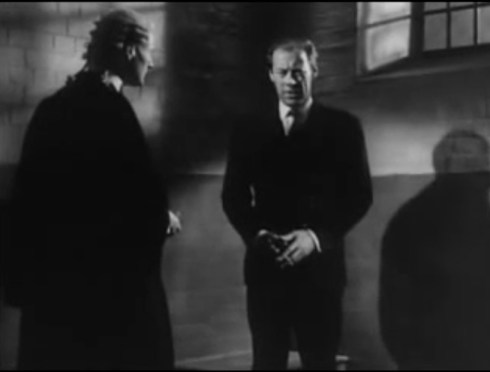
long dark hall
The Long Dark Hall 1951 Starring Rex Harrison and Lilli Palmer
lorre M
Fritz Lang’s chilling M (1931) Starring Peter Lorre
Mark Robson The Seventh Victim
Mark Robson directs, Val Lewton’s occult shadow piece The Seventh Victim 1943 Starring Kim Hunter, Tim Conway and Jean Brooks
Meeting leo-Ace in the hole with leo 1951
Kirk Douglas in Ace In The Hole 1951 written and directed by Billy Wilder
mifune-and-yamamoto in Drunkin Angel 48
Akira Kurosawa’s film noir crime thriller Drunken Angel (1948) starring Takashi Shimura and Toshiro Mifune
Panic in the Streets
Elia Kazan’s socio-noir Panic in The Streets 1950 starring Jack Palance, Richard Widmark, Paul Douglas, Barbara Bel Geddes and Zero Mostel
persona
Ingmar Bergman’s Persona 1966 starring Liv Ullmann and Bibi Andersson
Queen of Spades
The Queen of Spades 1949 directed by Thorold Dickinson and starring Anton Walbrook, Edith Evans and Yvonne Mitchell
Saint Joan of the Angels 1
Director Jerzy Kawalerowicz’s beautifully filmed Mother Joan of The Angels 1961 starring Lucyna Winnicka.
shanghai express
Josef von Sternberg’s Shanghai Express 1932 Starring Marlene Dietrich, Clive Brook and Anna May Wong
The Devil and Daniel Webster
The Devil and Daniel Webster 1941
The Haunting
Robert Wise’s The Haunting 1963. Screenplay by Nelson Gidding based on the novel by Shirley Jackson. Starring Julie Harris, Claire Bloom, Richard Johnson, and Russ Tamblyn
the Unsuspected_1947
Michael Curtiz’s The Unsuspected 1947 starring Claude Rains, Joan Caulfield and Audrey Totter
Viridiana
Luis Bunuel’s Viridiana 1961 Starring Silvia Pinal, Fernando Rey and Fransisco Rabal
What Ever Happened To Baby Jane?
Robert Aldrich’s cult grande dame classic starring Bette Davis and Joan Crawford-What Ever Happened To Baby Jane? 1962

Twelve Neglected Characters from Classic Film.

nightmare-alley-edmund-goulding1947
1) The tragically poetic Pete Krumbein in Edmund Goulding’s Nightmare Alley 1947 played by Ian Keith.
Franzi
2) The flamboyant Franzi Kartos in Caught 1949 portrayed by Curt Bois ‘darling’
Fred Foss- The Dark Corner 949
3) Stauffer, alias Fred Foss in The Dark Corner 1946-played by the wonderful William Bendix in the white linen suit…
Jan Sterling in Women's Prison -Brenda
4) Good-hearted kite hanger, Brenda Martin in Women’s Prison 1955 – the eternal pixie Jan Sterling.
Brute Force Jeff Corey Freshman Stack
5) Jeff Corey, as the cringing, cowardly informer ‘Freshman’ Stack in Brute Force 1947.
Granny Tucker
6) Beulah Bondi as spiittin’ Granny Tucker in Jean Renoir’s The Southerner 1945 ‘Ah shuckity’
Ma Stone- Jane Darwell, The Devil & Daniel Webster
7) Ma Stone in William Dieterle’s The Devil and Daniel Webster 1941– the grand Jane Darwell.
Wills and Jewel talk at tea-Hush Hush Sweet Charlotte
8) Cecil Kellaway as Harry Wills and Mary Astor as Jewel Mayhew in Hush Hush Sweet Charlotte 1964.
Elisha Cook Jr. Jazz wild drummer Cliff-phantom ladyjpg
9) Cliff the jazz sexed drummer in Phantom Lady 1944– the ubiquitous Elisha Cook Jr.
(Ladies in Retirement)
10) Quirky sisters Louisa and Emily Creed in Ladies in Retirement 1941Edith Barrett & Elsa Lanchester.
11) The wonderful stoolie Mo whose saves for her headstone and plot out on Long Island played with that razor-sharp wit of Thelma Ritter in Pickup on South Street (1953).
12) Jack Oakie as Slob in Jules Dassin’s realism masterpiece Thieves’ Highway (1949).


From The Vault: The Long Dark Hall (1951)

the long dark hall 1951 film poster

THE LONG DARK HALL 1951

CapturFiles

CapturFiles_2

Directed by Reginald Beck, and Anthony Bushell. Written by Nunnally Johnson, Edgar Lustgarten is based on his book “A Case To Answer” and W.E. Fairchild. With cinematography by Wilkie Cooper (Stage Fright 1950, Jason and The Argonauts 1963), granting wisps of shadowy montages that are equally noirish, suspenseful, and simply splendid.

CapturFiles_3
Patricia Cutts gets no sympathy from me after slipping him a mickey and letting loose that darn Tingler on poor unsuspecting Vincent Price.

Yielding and obsessive Rex Harrison plays Arthur Groome a London gentleman married to the devoted and lovely Mary (Lilli Palmer.)Unfortunately, Arthur becomes consumed by a flirtatious showgirl Rose Mallory (Patricia Cutts), who winds up being brutally knifed in her boarding house room, and left for the credulous Groome to become suspect one. First gets the splatter of Rose’s blood on his jacket, but then fails to prove his innocence in a sea of circumstantial evidence.

Condemned to hang, this allows the real serial killer played by the tall and eerie Anthony Dawson who looks frightened all the time, a destroyer of wanton women who sees himself as ‘an instrument of justice‘, still lurking about, first at the trial spouting off about his obvious philosophy on sexually independent women, and then creepily shadowing poor Mrs. Groome, whom he idealizes as the perfect woman.

CapturFiles_7

CapturFiles_8

CapturFiles_9

CapturFiles_10

CapturFiles_11

CapturFiles_12

CapturFiles_13

CapturFiles_14

CapturFiles_15

CapturFiles_16

CapturFiles_17

CapturFiles_18

CapturFiles_19

I’ll be up the long dark hall til next time! -Yours always- MonsterGirl