Fantasy Melodrama based on Sutton Vane’s play Outward Bound. with a stellar ensemble cast directed by Edward A. Blatt starring John Garfield, Paul Henreid, Sydney Greenstreet, Eleanor Parker, Edmund Gwenn, George Tobias, George Coulouris Faye Emerson, Sara Algood, and Isobel Elsom.
A group of passengers aboard a ship are bound toward their destinies as they come to realize that they are all recently deceased…
“Ancient traditions, when tested by the severe processes if modern investigation, commonly enough fade away into mere dream; but it is singular how often the dream turns out to have been a half-waking one, presaging a reality.”
-T.H.Huxley; The Book of Beast
“Men! The beasts! God would show wisdom if he took the hands from all of them!” –Nanon Zanzi
or… Mad Love Among the Limbless!
The Unknown(1927 USA 49mins)
Lon Chaney Sr as Alonso the Armless
Directed by Tod Browning with a screenplay by Waldemar Young (Island of Lost Souls, 1932). Story by Tod Browning, based on a novel by Mary Roberts Rinehart. (The Bat 1959). Cinematography by Merritt B. Gerstad (Watch on the Rhine 1943). Edited by Harry Reynolds and Errol Taggart. Art Direction by Cedric Gibbons and Richard Day (On the Waterfront, A Streetcar Named Desire) and Lucia Coulter, wardrobe.
Cast: Lon Chaney immortalizes the role of Alonzo the Armless, Joan Crawford plays Nanon Zanzi, Norman Kerry plays the strongman Malabar, John George is Alonzo’s sidekick Cojo, and Frank Lanning plays Costra, Nick De Ruiz as the circus owner and Nanon’s ruthless father, Zanzi.
Lon Chaney’s The Unknown is a dark, poetic ballet of obsession and transformation set beneath the lurid tents of a gypsy circus. In this silent masterwork, Chaney becomes Alonzo, a fugitive who masquerades as an armless knife-thrower, his uncanny dexterity with feet masking both his hidden arms and his criminal past. The heart of the film is Alonzo’s feverish love for his assistant, Nanon (Joan Crawford), whose pathological fear of men’s arms locks her heart away from ordinary affection.
When Nanon’s father discovers Alonzo’s secret and is murdered, Nanon glimpses only a telltale mark, a double thumb, unaware that her protector is the killer. In hopes of forever binding her to him, Alonzo submits to the ultimate sacrifice: the amputation of his own arms. But while he is gone, Nanon’s phobia is cured by the strongman Malabar, shattering Alonzo’s mad delusion. The film’s anguish crescendos in a bravura close-up, as the irony and heartbreak of his irreversible devotion contort Chaney’s face into a silent howl. A story of grotesque yearning and self-destruction, The Unknowndistills the wildest excesses of love into a nightmarishly intimate tragedy, where the boundaries of flesh and feeling dissolve beneath a mask of illusion
The Unknown is a beautifully disturbing film that gains a savage momentum the more you peer into the face of its poetically ugly story. As writer/historian David J. Skal states of the stage contraption at the film’s climax, “the Unknown itself is a perfectly constructed torture machine and arguably Browning’s most accomplished film.”
I want to use the term “Gothic embodiment” from Lina Wånggren’s May 22, 2013 article Gothic Embodiment: Lon Chaney and Affective Amputation because of her astute insight into the overreaching theme of The Unknown, which taps into the fear of castration and the horrific aspect of this bizarrely sensational L’amour Fou, which is both grim and grotesque. a French phrase meaning “mad love” or “crazy love,” referring to an intense, uncontrollable, and often self-destructive passion or infatuation that can be irrational and all-consuming.
Lon Chaney and Joan Crawford.Alonzo and Cojo enter the operating room. The sterile environment envelopes the two men.
Alonzo blackmails the surgeon for the mob into amputating both his arms and showing him his signature double thumbs.
For me, it was an unnerving, disquieting piece of the puzzle when I first watched Alonzo enter the stark surgical room to blackmail the surgeon into amputating both his arms and thereby cutting off his ability to embrace Nanon, his arms an extension of his maleness—the castration anxiety – fulfilled.
Lina Wånggren asks what is a Gothic body? Here she cites a few examples-
“Various scholars have theorized Gothic embodiment and physical difference in Gothic works, such as Judith Halberstam’s Skin Shows: Gothic Horror and the Technology of Monsters (1995) Recently, the collection Demons of the Body and Mind: Essays on Disability in Gothic Literature (2010), edited by Ruth Bienstock Anolik, fruitfully employs the framework of disability studies to study monstrosity in the Gothic. The collected essays focus on the ways in which Gothic texts respond to “˜human beings who are figured as inhuman because they do not align with the physical or mental standards of their society’.
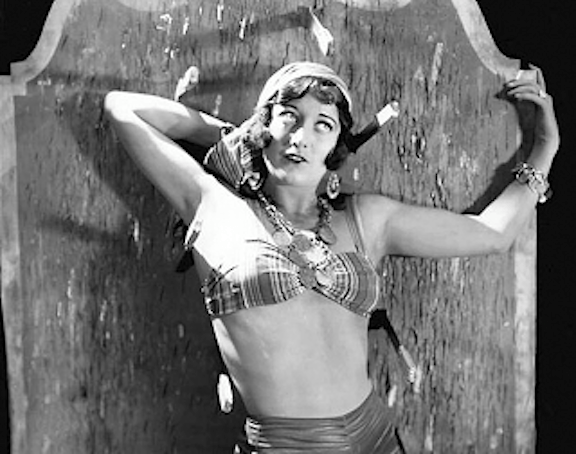
The beautiful Joan Crawford, all of eighteen, and Lon Chaney Sr. in Tod Browning’s striking, disturbing The Unknown, 1927. The circus performer Alonzo the Armless goes to the extremes of amputation so that Joan Crawford’s character Nanon won’t feel threatened by his touch.
Lon Chaney has inhabited so many memorable roles, using theatrically exaggerated Gothic embodiment or characters who are ‘other’ on screen. What quickly comes to mind, of course, is Erik in Phantom of the Opera 1925, Quasimodo in 1925 as The Hunchback of Notre Dame 1923,and of course, the cruel yet redemptive Phrozo in The Penalty 1920.
Lon Chaney as Quasimodo in The Hunchback of Notre Dame 1923.
Chaney possessed the ability to express his innermost desires not only through intuitive emotional expressiveness, alongside his elaborate make-up, but also through the commanding physicality his roles asked of his body.
Alonzo the Armless is showing his arms.
Chaney was heavily inspired by clowns as a young man, fascinated by their personae’s duality. Alonzo is a remarkably complex character as Chaney offers us, with most of his performances, a man who can be simultaneously loathed and yet often wears a complex strata of sympathy as we see into his intricate psyche, A soul torn between tender shadows and stormy wrath. Alonzo is a violent misanthrope, yet he finds tenderness in his love for Nanon, ironically a woman who repels any love from men. The duality of the character exists in this… Chaney deftly balances his ill-spirited belligerence toward the world and his emotional undercurrents within, for the object of his love, the elusive and troubled Nanon.
Side-Kick Cojo is the only one privy to Alonzo’s secret identity, hiding out in the gypsy circus, and the fact that he does, in fact, have two good arms.
Chaney is drawn to these roles like moths to the flame — of men who suffer their differences at the hands of societal norms, exacting a sort of rule of vengeance. While completely cruel, he still manages to convey a deep and abiding pathos.
In one of my other favorite performances, he brings to life the complex Blizzard in The Penalty 1920. Both legs had been amputated as a child by an inept surgeon. This propels his character toward a harsh and unforgiving fate, a descent into a merciless void, one of cruelty, abuse, and a life of crime due to the hardship he endured by being an amputee.
A scene from the hat factory, Chaney as the cruel Blizzard in The Penalty.
His foes refer to him as ‘the cripple from hell.’ Blizzard’s pursuit is to exact revenge on the man who left him a cripple and the absolute objectification of evil. Blizzard’s body has been left imperfect, filling him with a taste for vengeance for those ‘mangled years’ of his childhood, years of being forced to live with his ‘physical difference.’
It is this desire for retribution, a burning ember that fuels the restless heart, seeking justice in the shadows where old wounds bleed, that drives the narrative so strongly. In this story of Gothic difference through the embodiment of amputation, amputation is manifested as a living symbol, a representation of sacrifice, loss, or transformation. Blizzard conceives of a grotesque way of punishing the doctor who rendered him rootless as a broken tree by having him amputate the legs of the daughter’s fiancé, then attach them to his own body.
Ethel Grey Terry and Lon Chaney in The Penalty 1920)- Chaney wearing fitted leather stumps that were painful in order to hide his legs.
While Chaney’s performance as Blizzard cultivates a nuanced portrayal of a criminally unhinged man molded by years of bitterness and an insatiable lust for retribution, it is his performance as Alonzo that truly hits the mark for me.
The Unknown creates a bizarre romantic notion that Alonzo the Armless can choose to have his arms removed for the object of his desire, Nanon, which elevates this Gothic Embodiment into the realm of what contemporary critics and filmmakers like David Cronenberg would cinematically cultivate as ‘body horror.’
Alonzo is also maliciously encouraged by his minion Cojo (John George), who acts like a devil imp, egging Alonzo on, down a more dangerous path of self-destruction. Many classical horror films use the expressly contemptuous ‘little’ evil sidekick as nefarious as the monster itself.
Cojo is the personification of the characteristic little evil sidekick.Cojo reminds Alonzo that he doesn’t have to use his feet in private to do all the things he can do with his two good hands.
The Unknown explores a profoundly unsettling and twisted dimension of love that transcends simple romantic tragedy, entering the realm of grotesque sacrifice and psychological torment. The film’s central act—our antihero Alonzo’s voluntary amputation of his own arms—is not merely a physical mutilation but a symbolic crucible forged by the wild, paradoxical demands of love shaped by fear and desire.
Nanon’s carnal phobia—an intense, almost primal terror of physical touch- renders ordinary expressions of affection impossible. This visceral repulsion creates a cruel paradox: Alonzo’s love cannot find safe harbor within her body unless the very tools of human intimacy, his arms, are rendered powerless. His self-amputation embodies an extremity of devotion, a grotesque mutilation meant to reassure and conquer her deepest fears. It’s a sacrifice that denies his own wholeness in a desperate attempt to claim her love, or at least her presence.
This love story differs radically from The Penalty, which also features physical disfigurement and vengeance but centers more decisively on themes of power lost and regained, and a more straightforward quest for personal justice. The Unknown, by contrast, investigates the darker, more labyrinthine corridors of the human psyche—how obsession mutates love into something both beautiful and horrifying, how the body becomes a battleground for emotional survival.
What emerges is a tale not just of sacrifice but of self-effacement and identity distortion. Alonzo’s mutilation is an anguished corporeal language that speaks to the impossible conditions of loving someone incapacitated by fear. It portrays love as something that can contort, deform, and even destroy the self in its extreme, revealing the grotesque beauty in that madness.
Ironically, he is rejected at the end of this queasy and grim story of unrequited love that turns on itself.
The Unknowncan be considered an allegory of sexual repression and traumatized masculinity. Going all Freudian on the film, one could relate the act of Alonzo’s amputation to that which is Freud’s castration anxiety.
Professor & Author Rick Worland refers to The Unknown and the idea of Alonzo’s amputation, both faked and eventually actualized, as “a fantastic work of psycho-sexual grotesquerie’ its amputation plot presenting a ‘fever dream of phallic symbolism, castration anxiety, and sexual terror.” Alonzo has rendered himself virtually impotent in a sexual way in order to satisfy Nanon’s need to be untouched.
Essentially, the idea of Gothic Embodiment and the fetishistic use of amputation in a psycho-sexual context can not overlook the idea of the act of simple ‘touch.’ The idea of Gothic Embodiment or ‘difference’ is inextricably linked to the act of touching and therefore an indirect link to frustrated intimacy. The human hands best embody this dual nature of touching and the sense of ‘feeling’. Both explore the way we touch and act as tools to explore or express our emotions in kind with another human. What I’d like to call ‘body dialogue.’
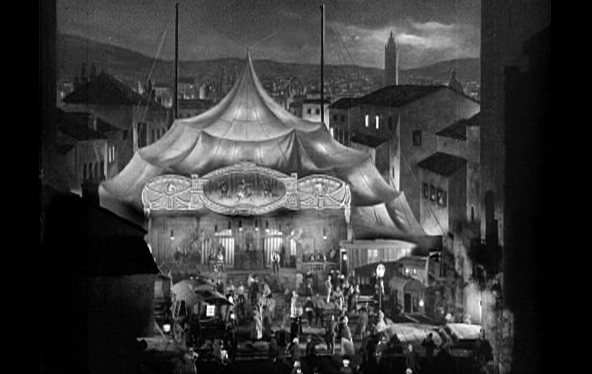
The Unknown released by MGM in 1927 and directed by Tod Browning in the horror genre popularly known for (Dracula 1931, & Freaks 1932) takes place at Antonio Zanzi’s ‘gypsy circus’ in old Madrid. The story unfolds as a bizarre love triangle between circus folk Alonzo the Armless, Nanon Zanzi, and Strongman Malabar the Mighty. Alonzo uses his feet to fire guns and throw knives at Nanon as part of their act.
The circus act itself is a destructive spectacle of masochism as Nanon Zanzi assists Alonzo in his death-defying act. Nanon is the daughter of the circus owner, Antonio Zanzi. Alonzo secretly desires Nanon. As part of their dangerously erotic performance that resembles contact, furthermore, penetration. But only in its flair for tease and excitement, the moving target Nanon is strapped to a board that spins. With each shot of the gun, the bullets remove one more article of Nanon’s clothes. Next, with his feet, Alonzo throws the penetrating knives that outline Nanon’s bikini-clad body perfectly.
Alonzo the Armless – the devil to his left side.
Alonzo the Armless can use shotguns to fire bullets that disrobe the beautiful Nanon.
Alonzo is described by the circus owner as “the sensation of sensations!’, and as the“wonder of wonders!”
Chaney collaborated with real-life armless double Paul Dismute, whose dexterity in the remarkable scenes where he uses his feet to handle objects such as strumming guitars, pouring wine, throwing knives, or lighting cigarettes. Tod Browning and cinematographer Merritt Gerstad (who also worked on Freaks) would use Chaney’s upper body and face within the shot frames. It was a brilliant choreography of the body and timing to give the illusion that Chaney was manipulating these objects by himself, while Dismute remained off-camera, handling the objects.
“Reflecting the growing public alarm over the moral tone of films in the late twenties The Unknown was the first film to be frankly and aggressively attacked in the press for it’s melodramatic  morbidity.”The New York Sun assured readers that “the suspicion that the picture might have been written by Nero, directed by Lucretia Borgia, constructed by the shade of Edgar Allan Poe and lighted by a well-known vivisectionist was absolutely groundless….The Sun admitted that The Unknown “may be just what the public wants. If it is- well, the good old days of the Roman Empire are upon us”The New York Daily Mirror suggested that “if you like to tear butterflies apart and see sausage made you may like the climax to The Unknown. … typical Chaney fare spiced with cannibalism and flavored with the Spanish Inquisition.”
The New York Evening Post observed that “Mr Chaney has been twisting joints and lacing himself into strait-jackets for a long time- so long, in fact that there is almost nothing left for him now but the Headless Horseman. The Evening Post called The Unknown ‘a remarkably unpleasant picture.{…} a visit to the dissecting room in a hospital would be quite as pleasant and at the same time more instructive.”
Flesh and Blood- Lon Chaney.
Richard Watts Jr of The New York Herald Tribune said of the film, “The case of Mr. Tod Browning is rapidly approaching the pathological. After a series of minor horrors that featured such comparatively respectable creations as murderous midgets, crippled thieves and poisonous reptiles, all sinister and deadly in a murky atmosphere of blackness and unholy doom… the director presents us now with a melodrama that might have been made from a scenario dashed off by the Messrs. Leopold and Loeb in a quiet moment”
Watts conceded that given cinema otherwise so completely devoted to red blooded values and ‘general aggressive cleanliness’ films of the sort Browning championed might provide a ‘valuable counteracting influence”Obviously he felt repulsed by The Unknown.
The conservative Harrison’s Reports wrote “One can imagine a moral pervert of the present day, or professional torturers of the times of the Spanish Inquisition that gloated over the miseries of their victims on the rack and over their roasting on hot iron bars enjoying screen details of the kind set forth in The Unknown. but it is difficult to fancy average men and women of a modern audience in this enlightened age being entertained by such a thoroughly fiendish mingling of bloodlust, cruelty and horrors. … Of Mr. Chaney’s acting it is enough to say it is excellent of it’s kind. Similar praise might well be given the work of a skilled surgeon in ripping open the abdomen of a patient. But who wants to see him do it?”
Both Tod Browning as a director and Lon Chaney as an actor occupy a unique space in early cinema where grotesque physicality becomes a potent metaphor for deeper human truths. Their films do not merely showcase eccentric or monstrous characters for shock value; rather, they probe the complex interplay of identity, desire, alienation, and the human condition’s darker recesses.
In The Unknown, Browning and Chaney invite us to confront a paradoxical vision of love and sacrifice—a vision that challenges conventional notions of heroism and romantic fulfillment. The physical mutilation (Alonzo’s self-amputation of his arms) is not merely a plot device but a corporeal symbol of profound psychological sacrifice and self-negation. It reflects a profound empathy for the fracture between human longing and the psychological, physical, and social barriers that exclude authentic connection.
Both Browning and Chaney, in all their work together and separately, are fascinated by “the other,” those who are physically marked, emotionally alienated, or psychologically fractured. Their characters embody the struggle of marginalized individuals who live on society’s edges yet possess rich, intense interior lives. The films illuminate how these outsiders grapple with pain, desire, and identity, often through literal bodily transformations or distortions.
Chaney’s mastery lies in translating inner turmoil into visceral, visible form, through prosthetics, makeup, and expressive physicality, to call it a psychological language. Browning’s direction reinforces this by presenting the body as both a site of narrative action and symbolic meaning. Amputation or deformity serves as an allegory for emotional wounds, fractured identity, and the incommunicability between individuals.
Their films portray love as volatile, consuming, and often self-destructive rather than pure or redemptive. In The Unknown, love becomes a force that demands abandonment of self and body, where sacrifice blurs into suffering, and devotion becomes madness. Browning and Chaney dissect the extremities of human emotion—the ways love can turn monstrous when entwined with fear, control, and forbidden desire.
The central conflict in The Unknown—Nanon’s phobia and Alonzo’s desperate self-mutilation—is an exploration of the limits and conditions of empathy. The film asks: How far will one go to bridge the gulf separating two tormented souls? What price does love demand when confronted with psychological barriers that cannot be easily overcome? Their films suggest that connection is fraught with ambiguity, pain, and sacrifice, sometimes demanding catastrophic gestures.
Rather than reading The Unknown and similar Browning-Chaney collaborations simply as stories of tragic physical impairment or melodramatic love, it is more compelling and accurate to see them as profound meditations on:
The intertwining of flesh and psyche, where the body’s alterations mirror emotional and existential fractures. The agonies of unfulfilled desire, where love is as much about yearning and loss as about possession or joy. The psychology of marginalization, portraying characters who are both monstrous and deeply human, forced to negotiate intense passions within alienating circumstances. The philosophy of sacrifice, not just physical but spiritual and psychological, revealing how identity is mutable and contingent upon the painful choices we make to survive or love.
In their collaborations, Tod Browning and Lon Chaney delve beyond mere spectacle or grotesque spectacle, crafting profoundly unsettling meditations on the human condition where the physical body becomes a vivid language of psychological and existential torment. The Unknown stands as a stark embodiment of this vision, where Chaney’s horrific self-amputation transcends literal mutilation to become a corporeal metaphor for the excruciating sacrifices demanded by love’s darker, often unbearable dimensions. This is not a simple narrative of loss or tragedy but a complex exploration of alienation, desire, and the fractured self.
Chaney’s Alonzo exists on the margins of society, a figure whose bodily disfigurement mirrors his tortured interior world, shaped by obsessive love for Nanon, whose phobia of touch erects near-impossible barriers to intimacy. In response, Alonzo’s radical act of self-mutilation is a desperate attempt to bridge the chasm between two haunted souls, a gesture that enacts the limits of empathy and the monstrous lengths to which love can drive a person. Here, the body is not simply a vessel but a battleground where identity warps and fractures in the torment of unfulfilled yearning and profound psychological strife.
Browning and Chaney do not romanticize this sacrifice—rather, they expose love’s capacity to consume, distort, and defy redemption. Their films reveal the paradox of “otherness”: the yearning for connection shadowed by alienation, the collision of fragile humanity with grotesque exteriority. The characters embody liminality, simultaneously monstrous and deeply human, caught in an agonizing dance where flesh and psyche entwine, and where sacrifice is both an act of devotion and a form of self-annihilation. In this world, love is not merely a source of comfort but an existential crucible, demanding anguish and disfigurement as payment for even the smallest glimmers of tenderness.
Ultimately, Browning and Chaney’s artistry compels us to confront love’s most unsettling demands—the violent, ambiguous, and often monstrous interplay of fear, desire, and identity. Through their lens, The Unknown transcends melodrama or physical spectacle to become a haunting, poetic inquiry into the human soul’s desperate quest for connection amid the shadows of alienation and loss. It is a work where beauty and horror coexist, the body speaks its own tragic language, and the pursuit of love unfolds as a fierce, transformative, and deeply precarious journey.
Joan Crawford eighteen at the time recalled Chaney’s ordeal with wearing the leather harness as agonizing a self punishing behavior. Mr Browning would say to him, “Lon, don’t you want me to untie your arms?” ‘No, the pain I am enduring now will help with the scene. Let’s go!” That’s how he was able to “convey such realism” and emotional agony that made it shocking and fascinating.“Chaney projected the image of physical suffering as both the definition and price of his stardom; exactly why he chose to is not so clear and since he left no revealing journals or correspondence on the matter, may forever remain obscure”Crawford said about Chaney, “When he acted, it was if God were working, he had such profound concentration. It was then I became aware for the first time of the difference between standing in front of a camera, and acting.”
“Armless Wonders” were among the most spectacular and well-paid performers in turn-of-the-century American freak shows who would perform tasks and feats (no pun intended) to entertain the onlookers.
Violetta, the limbless beauty.Frances Belle O’Connor was featured in Freaks.
While Freud had his pseudoscience fix for every mental ailment, Tod Browning favored themes of a visceral, sexually charged plot surrounding resentment and revenge. He screened overt manipulation of disturbing sexual symbolism in order to shock his audience into consciousness. The threat of castration is a particularly violent notion and a repressed emotional impulse. Freud’s Uncanny, the idea of disembodied limbs, severed heads, and hands cut off at the wrists, all have something particularly unsettling about them. Especially when they are shown as capable of independent movement, it all springs from the castration complex. Browning’s fascination with sexually motivated mutilation, like that of Cleopatra being turned into a chicken or ‘duck’ lady in Freaks, annihilating her beauty, that quality which she used to lure Hans.
Olga Baclanova as Cleopatra, the trapeze beauty turned into the Chicken Lady by the avenging Freaks.
In Freaks, Francis is an armless woman, and there are two armless girls- Martha Morris and Francis O’Connor. Richard Watts Jr, film critic for the New York Herald Tribune, said of Browning– “Browning is the combination of Edgar Allan Poe and Sax Rohmer of the cinema. Where every director, save Stroheim, breathes wholesomeness. Out-of-door freshness and the healthiness of the clean-limbed, Tod revels in murkiness… His cinematic mind is a creeping torture chamber, a place of darkness,deviousness, and death.”
After Freaks, “In Browning’s next project, the Freudian theory would be bizarrely literalized into a weird and spectacular circus attraction. Based on an original story by Browning. Alonzo the Armless was a vehicle for Lon Chaney that would prove to be one of the darkest carnivals of the entire Browning canon.”
Boxing Helena is a 1993 modern-day, grotesquely romantic melodrama that was directed by Jennifer Chambers Lynch (daughter of David Lynch). The film utilizes the mechanism of amputation as what I’ll call ‘seductive symbology’. Seductive symbology can animate art, literature, film, or even everyday rituals, stirring the imagination and luring the voyeur, the watcher, the witness, us, into deeper contemplation or desire. The film stars Julian Sands and Sherilyn Fenn as the object of his desire, a surgeon who will keep his love closest to him by any means.
David Lynch’s daughter astoundingly subverted my expectations of horror in Surveillance (2008), weaving an audacious blend of grotesque violence and eroticism that marks a remarkable departure from Boxing Helena—a film I met with unsettling, visceral angst. The haunting image of the little girl in pajamas wandering the desert in Surveillancestrikes me as a deliberate, evocative homage to the iconic scene in Them! (1954), underscoring Lynch’s gift for embedding subtle yet powerful nods within his chilling narrative. Her work pulses with genuinely dynamic moments of horror that defy easy categorization, though the film’s ingenious plot twists and mechanisms demand my discretion to preserve its impact should you want to see the film.
In considering contemporary explorations of eroticism intertwined with physical mutilation, Alejandro Jodorowsky’s Santa Sangre (1989) stands as a modern masterpiece. Once again, the Gothic embodiment unfolds within the eerie milieu of a traveling circus, where Concha’s violent amputation of both arms—inflicted by her volatile, sword-throwing, and philandering Neanderthal of a husband, portrayed by Guy Stockwell—becomes a potent symbol of psycho-sexual trauma. The merging of mythic imagery and raw sexual violence, fused with the motif of armless saints, conjures a nightmarish, baroque wonderland through the eyes of their son, Fenix, where horror and desire fuse into a singular, unsettling experience.
Guy Stockwell in Alejandro Jodorwosky’s Santa Sangre.The illusory masterpiece that is Santa Sangre.
The circus features an armless entertainer named Alonzo. He is a knife thrower who could split the hairs on two flies dancing in unison. His claim to fame is that he handles both bullets and blades with his bare feet. In the film’s opening scene, Alonzo performs, showing confidence in his perfect aim by flinging phallic knives at his beautiful assistant Nanon, who is at the receiving end of his knife throwing while seated on a rotating platform. With each delivery, he picks off one more article of Nanon’s clothing that dangles there, boasting of his sexual competence. Through this performance, Alonzo can sublimate his own feverish sexual urges for Nanon.
The secret lies in the fact that Alonzo actually does have two strong, capable arms, a fact that only his dwarf assistant Cojo (John George) is privy to. Each day, Cojo laces Alonzo into a punishing leather corset. Alonzo dons this apparatus to create the appearance of amputation. A disguise he perpetuates because he is on the run from the law, and it also brings him closer to the object of his fixation, the beautiful but sexually constrained Nanon. Nanon is consumed with a phobia surrounding the male anatomy, in particular their hands. She is repulsed by men’s upper extremities, “Men! The beasts! God would show wisdom if he took the hands from all of them!”
What frightens her more is the ‘ideal’ of Malabar’s physique. To Nanon, the object of Gothic horror seems to be the normative body, and strangely enough, not the body that is emphasized as different. Malabar’s body encompasses an extremely forceful ideal of the masculine body. Nanon is traumatized by Malabar’s aggressive touch and grasping hands. She finds him abhorrent.
She finds comfort in Alonzo, who poses no threat to her as he has no arms or hands that can either challenge her desire or harm her.
Although Alonzo possesses arms, he exhibits a freakish anomaly, as he has a double thumb on one hand. In the original story, Browning and screenwriter Waldemar Young had envisioned a claw as his deformity. However, the phallic charge of the double thumb is more in keeping with the influence that Freud’s The Uncanny had made on cinema. According to writer/historians Skal & Savada, ‘doubling’ is viewed by Freud as an imaginative defense against the feared loss of the self, or a part of the self.
Alonzo suffers in silence over his immortal love for Nanon, keeping their relationship strictly platonic, but he still attracts negative attention from Nanon’s father, the circus owner. On a dark and rainy night, Alonzo strangles the man, as Nanon peers outside her window yet does not see the killer’s face. The one thing that she does notice is the unmistakable double thumbs as it grips her father’s throat.
While Alonzo quietly broods over his unrequited love, the strong man Malabar (Norman Kerry) pursues her with all the traditional male prowess of a proud peacock. Of course, this sends Alonzo into fits of irrational jealousy. He blackmails a surgeon into actually removing his arms so that Nanon would assuredly run to him, being the safe male.
Malabar’s sexual advances only push Nanon closer to Alonzo’s friendship. But Alonzo’s sidekick Cojo ( John George, whom Browning used several times throughout his career) warns his friend that he shouldn’t let Nanon get so close as to be able to feel that he truly does have arms that are strapped down.
But when he returns to the circus after the surgery he discovers that Nanon has miraculously overcome her fear of manly chests, bulging muscles, and arms with which to hold her in ecstatic embrace. And the two are also engaged.
There is a sad, ironic scene when Nanon asks Alonzo if he is thinner before she tells him of her love for Malabar. The moment is filled with a typical Tod Browning sense of timely perversity, misdirection, and emotional pain.
She declares to her old friend that she even LOVES Malabar’s hands: “Remember how I used to be afraid of his hands? I am not anymore. I love them now.”
I’ll leave the climax to those who haven’t seen this violently intoxicating film yet.
The film is filled with cruelty, irony, and obsession. While the story is more like a wickedly grotesque fairytale, it observes a journey of its own, nightmarish reasoning, intricate as it is repulsive.
What is Nanon’s strange and horrible fixation on men’s hands? She is terrified by the thought of their hands on her!
“Alonzo, all my life, men have tried to put their beastly hands on me to paw over me.”
Malabar approaches Nanon.
She has “grown so that [she] shrink[s] with fear when any man touches [her]” with their “beastly hands.” Nanon’s fear becomes apparent when she is courted by the circus weight-lifter or strongman Malabar.
When Malabar boasts to Nanon of incredible strength, flexing his arm muscles and grabbing at her hands and her wrists while telling her of how his “hands that long to caress you,” Nanon struggles to get away, experiencing sheer terror.
The surgeon has no choice but to do Alonzo’s gruesome bidding.
Nanon tells Alonzo that he feels thinner.
Nanon’s father, Zanzi, the hard-edged circus owner, grows increasingly suspicious of Alonzo’s presence and motives, repelled by the peculiar intensity of his interest in Nanon. One charged evening, Zanzi’s suspicions crystallize and, by chance, he stumbles upon Alonzo in a compromising moment—witnessing not the spectacle of an armless performer but the shocking reality: Alonzo, unbound and very much in possession of arms, the infamous double thumb unmistakable. The truth arrives with the force of revelation and panic; in that instant, Zanzi realizes he stands face to face not with a broken sideshow oddity, but with a wanted man and a master of deception.
Cornered by exposure, Alonzo reacts with ruthless survival: propelled by fear, rage, and the desperate need to shield both his secret and his last hope for Nanon, he lunges forward and strangles Zanzi with his bare hands, silencing him forever outside the circus wagons. As fate would have it, Nanon glimpses the murder from her window, not the killer’s face, but the damning deformity: a double thumb pressed around her father’s throat, burned into her memory by a bolt of lightning. It is this fragment of a moment, violence half-seen, identity obscured, that sets the final tragedy of the film in motion, leaving Nanon haunted, the crime unsolved, and Alonzo bound even more tightly to a destiny of obsession and doom.
After Alonzo undergoes the gruesome amputation of his arms, driven by the catastrophic logic that this sacrifice will secure Nanon’s love and keep his murderous secret safe, he disappears for weeks to recover, leaving the circus and Nanon behind. In his absence, Malabar’s persistent care and genuine affection for Nanon help her overcome her lifelong fear of a man’s arms. By the time Alonzo, truly armless now, returns to the circus, he rushes to Nanon, uncertain but expectant. Instead of the reunion he imagined, he finds her radiant with newfound happiness; Nanon greets him with the euphoric news that she and Malabar are to be married.
Struck by the cruel irony of his sacrifice, Alonzo is at first hysterical with laughter, then collapses into inconsolable anguish as the reality sinks in: he has maimed himself for nothing. Nanon and Malabar are perplexed by the outburst, Nanon innocently mistaking his tears for happiness at their engagement.
Trying to compose himself, Alonzo discovers that Malabar and Nanon have devised a new circus act: Malabar is tied between two wild horses running on treadmills, each straining in opposite directions, a spectacle of strength and danger. Seized by jealousy and rage, Alonzo, still posing as a friend, secretly sabotages the act. —a horrific fate that mirrors Alonzo’s own self-inflicted mutilation.
During the tense performance, he stops one of the machines, threatening to have the wild horses pull Malabar’s arms from his body—a scene of climactic terror that reflects Alonzo’s own disfiguring obsession.
When Nanon tries to intervene and calm the frantic horses, Alonzo, desperate and unhinged, threatens her with a knife, but instinctively pushes her out of harm’s way at the last instant. In the ensuing chaos, one of the horses knocks Alonzo down. Fatally trampled, he dies as the act is halted, and Malabar is saved from disaster.
Thus, Alonzo’s journey, marked by secrecy, mutilation, and obsession, collapses in a flash of violence and futile longing—a finale as stark and haunting as anything silent cinema ever dared to show.
In this crucible of shadow and flesh, The Unknowninterrogates the paradox of love’s power to both wound and redeem. It demands an almost mythic reckoning with the body’s limits and the emotional scars they inscribe.
The Unknown (1927)-The Armless Wonder.
By MORDAUNT HALL.
Published: June 13, 1927
“Although it has strength and undoubtedly sustains the interest, “The Unknown,” the latest screen contribution from Tod Browning and Lon Chaney, is anything but a pleasant story. It is gruesome and at times shocking, and the principal character deteriorates from a more or less sympathetic individual to an arch-fiend. The narrative is a sort of mixture of Balzac and Guy de Maupassant with a faint suggestion of O. Henry plus Mr. Browning’s colorful side-show background.{…}
“The rôle of Alonzo, who poses as the Armless Wonder with a Spanish circus, is one that ought to have satisfied Mr. Chaney’s penchant for freakish characterizations, for here he not only has to go about for hours with his arms strapped to his body…{…}
“This tale is prefaced as if it were a circus legend, and soon one realizes that Alonzo is not only expert in the use of his feet when serving himself, but he is also supposed to be a crack shot and an unerring knife thrower. The girl who risks her life daily before Alonzo’s bullets and knives is Estrellita, impersonated by Joan Crawford. She becomes interested in Alonzo because most men in the circus without provocation invariably want to caress her.”
You could say that Evelyn Ankers is still the reigning queen of classical 1940s horror fare turned out by studios like RKO, Universal, and Monogram. But there was a host of femme scream tales that populated the silver screen with their unique beauty, quirky style, and/or set of lungs ready to wail, faint, or generally add some great tone and tinge to the eerie atmosphere whenever the mad scientist or monster was afoot. Some were even monstrous themselves…
For this upcoming Halloween, I thought I’d show just a little love to those fabulous ladies who forged a little niche for themselves as the earliest scream queens & screen icons.
I’m including Elsa Lanchester because any time I can talk about this deliriously delightful actress I’m gonna do it. Now I know she was the screaming hissing undead bride in the 30s but consider this… in the 40s she co-starred in two seminal thrillers that bordered on shear horror as Mrs. Oates in The Spiral Staircase1945 and a favorite of mine as one of Ida Lupino’s batty sisters Emily Creed in Ladies in Retirement 1941
I plan on venturing back to the pre-code thirties soon, so I’ll talk about The Bride of Frankenstein, as well as Gloria Holden (Dracula’s Daughter, Frances Dade (Dracula) and Kathleen Burke (Island of Lost Souls) Gloria Stuart and Fay Wray and so many more wonderful actresses of that golden era…
Elsa Lanchester as Mrs.Oates in director Robert Siodmak’s The Spiral Staircase 1945The Sister Creed in Ladies in Retirement 1941 starring Elsa Lanchester, Ida Lupino, and the wonderful Edith Barrett (right)
the playfully pretty Anne Nagel.Anne Nagel & Lon Chaney Jr in a promo shot for Man Made MonsterAnne Nagel was strapped to the slab and at the mercy of the ever-mad Lionel Atwill. Here comes the glowing Lon Chaney Jr! in his electric rubber suit in Man Made Monster!
The depraved mad scientist Lionel Atwill working with electro biology pins gorgeous red-headed Anne Nagel playing June Lawrence, to his operating slab in Man Made Monster 1941. Lon Chaney Jr. comes hulking in all aglow as the ‘Electrical Man’ which was his debut for Universal. He carries Anne Nagel through the countryside all lit up like a lightning bug in rubber armor. Man Made Monsterisn’t the only horror shocker that she displayed her tresses & distresses. She also played a night club singer named Sunny Rogers also co-starring our other 40’s horror heroine icon Anne Gwynne in the Karloff/Lugosi pairing Black Friday in 1940.
She played the weeping Mrs.William Saunders, the wife of Lionel Atwill’s first victim in Mad Doctor of Market Street 1942. And then of course she played mad scientist Dr Lorenzo Cameron’s (George Zucco’s) daughter Lenora in The Mad Monster 1942. Dr. Cameron has succeeded with his serum in turning men into hairy wolf-like Neanderthal monsters whom he unleashes on the men who ruined his career.
Anne Nagel and Lionel Atwill Mad Doctor of Market Street.
Poor Anne had a very tragic life… Considered that sad girl who was always hysterical. Once Universal dropped her she fell into the Poverty Row limbo of bit parts. Her brief marriage to Ross Alexander ended when he shot himself in the barn in 1937, and Anne became a quiet alcoholic until her death from cancer in 1966.
Dr. Cameron’s daughter Lenora (Anne Nagel) discovers the wolf-like man in his laboratory in The Mad Monster.Glenn Strange as Petro the Hairy man in The Mad Monster 1942.
the sultry Anne Nagel and Bela Lugosi in Black Friday 1940 photo courtesy Dr. Macro.
Martha was in noir favorites The Big Sleep 1946 & Alimony1949. This beauty played an uncredited Margareta ‘Vazec’s Daughter’along side Ilona Massey as Baroness Elsa Frankenstein and the marvelous older beauty Maria Ouspenskaya as Maleva the gypsy! in Frankenstein Meets the Wolf Man 1943.Then she played heroine Dorothy Coleman in Captive Wild Woman 1943 and Miss McLean in The Mummy’s Ghost 1944.
Originally Martha MacVickar she started modeling for photographer William Mortenson. David O Selznick contracted the starlet but Universal took over and put in her bit parts as the victim in Frankenstein Meets the Wolf Man and in other ‘B’ guilty pleasures like Captive Wild Woman &The Mummy’s Ghost. She was also the pin-up girl for WWII magazines.
Martha also starred in other noir features such as Ruthless 1948 and The Big Bluff 1955. She was Mickey Rooney’s third wife.
Martha Vickers and Humphrey Bogart in The Big Sleep photo courtesy of Dr. Macro.Martha Vickers and Lon Chaney in Frankenstein Meets the Wolf Man.Martha Vickers and John Carradine in Captive Wild WomanI just can’t resist Vicker’s sex appeal here she is again… Wow!
Though Logan made very few films including Opened By Mistake 1940, her contribution to women who kick-ass in horror films and don’t shrink like violets when there’s a big bald baddie coming after you with a net and a bottle of chloroform, makes you a pretty fierce contender even if you are only 7 inches tall! As Dr. Mary Robinson (Janice Logan), Logan held it all together while the men were scattering like mice from the menacing google eyed Dr. Cyclops played superbly by Albert Dekker.
Fay Helm as Nurse Strand with John Carradine in Captive Wild Woman.
Fay Helm played Ann Terry in one of my favorite unsung noir/thriller gems Phantom Lady1944 where it was all about the ‘hat’ and she co-starred as Nurse Strand alongside John Carradine in Captive Wild Woman. Fay played Mrs. Duval in the Inner Sanctum mystery Calling Dr. Death with Lon Chaney Jr. 1943
Ella Raines and Fay Helm in Phantom Lady.
Fay Helm plays Jenny Williams in Curt Siodmak’s timeless story directed by George Waggner for Universal and starring son of a thousand faces Lon Chaney Jr in his most iconic role Larry Talbot as The Wolf Man 1941
Fay as Jenny Williams: “Even a man who is pure in heart and says his prayers by night, may become a wolf when the wolfbane blooms and the autumn moon is bright.”
Fay was in Night Monster 1942. Directed by Ford Beebe the film starred Bela Lugosi as a butler to Lionel Atwill a pompous doctor who falls prey to frightening nocturnal visitations. I particularly love the atmosphere of this little chiller with its swampy surroundings and its metaphysical storyline.
Dr. Lynn Harper (Irene Hervey- Play Misty For Me 1971) a psychologist is called to the mysterious Ingston Mansion, to evaluate the sanity of Margaret Ingston, played by our horror heroine Fay Helm daughter of Kurt Ingston (Ralph Morgan) a recluse who invites the doctors to his eerie mansion who left him in a wheelchair.
Fay gives a terrific performance surrounded by all the ghoulish goings on! She went on to co-star with Bela Lugosi and Jack Haley in the screwball scary comedy One Body Too Many (1944).
Irene Hervey as Dr. Lynn Harper –Night Monster 1942.
Fay Helm in Night Monster.Fay Helm with Bela the gypsy in The Wolf Man.
Bela Lugosi as half ape half man really needed a shave badly in The Ape Man 1943, and Louise Currie and her wonder whip might have been the gorgeous blonde dish to make him go for the Barbasol. One of the most delicious parts of the film was its racy climax as Emil Van Horn in a spectacle of a gorilla suit rankles the cage bars longing for Currie’s character, Billie Mason the tall blonde beauty. As Bela skulks around the laboratory and Currie snaps her whip in those high heels. The film’s heroine was a classy dame referred to as Monogram’s own Katharine Hepburn! She had a great affection for fellow actor Bela Lugosi and said that she enjoyed making Poverty Row films more than her bit part in Citizen Kane! And I would be remiss if I didn’t mention that she appeared in several serials, from both Universal & Republic like The Green Hornetand Captain Marvel.
Tom Weaver in his book Poverty Row HORRORS! described The Ape Man as “a Golden Turkey of the most beloved kind.”
Louise Currie followed up with another sensational title for Monogram as Stella Saunders in Voodoo Man 1944 which again features Lugosi as Dr. Richard Marlowe who blends voodoo with hypnosis in an attempt to bring back his dead wife. The film also co-stars George Zucco as a voodoo high priest and the ubiquitous John Carradine as Toby a bongo-playing half-wit “Don’t hurt her Grego, she’s a pretty one!”
Pat McKee as Grego, Louise Currie, John Carradine, and Bela Lugosi in Monogram’s Voodoo Man 1944.the outrageous Voodoo Man 1944
I thought it appropriate to offer you this peek into Roger Corman’s slant on H.P. Lovecraft’s short story “The Case of Charles Dexter Ward”,using an Edgar Allan Poe title…Starring Vincent Price and… screenplay by Charles Beaumont!
Co-staring our very special man of the month Lon Chaney Jr. as Simon Orne.
“Carrying on a family tradition of masterful motion picture horror!”
Photo courtesy of Wrong Side of the Art Lon Chaney Jr with Vincent Price in The Haunted Palace 1963
Photo of the great William Castle -courtesy of Spine Tingler.
“The film is frightening because it forces us to examine the kinds and bases of belief. We confront the idea that the Christian myth is certainly no more believable that its mirror image, and possibly less so. And beyond this, we are also forced to realize that our mode of believing in Christianity is quite different from the one with which we perceive ‘real’ things –In other words, while Polanski’s film is determinedly realistic, it is at the same time a challenge to realism, locating the ordinary world of plausible social interaction within a wider and more primitive universe of magic, sorcery, and supernatural forces.” –Hollywood Hex, -Makita Brottman
Rosemary’s Baby is my favorite film. I plan on doing one of my long-winded major features on this masterpiece in its entirety but for the sake of celebrating William Castle this week, I’d like to strictly focus on his contribution to an iconic tour de force that would not have been filmed if not for him. Rosemary’s Baby premiered in June 1968.
Roman Polanski on William Castle: “He was an excellent technician who understands filmmakers’ problems and doesn’t have the usual worries other producers have. He made a constant effort to make me happy in my work. I can’t think of a better producer.”
After many years of William Castle slaving over B movies and programmers like The Whistler and The Crime Doctor, he found his niche in horror. He saw Henri-Georges Clouzotle Diaboliquein 1955 and it lit a fire in his belly to create his own Gothic creepy storytelling that would lure the audience under its spell. Thus sung Macabre in 1958. While certainly not Diabolique,Macabre put Castle on the path toward creating engaging & frightening landscapes that would entertain millions!
That same year, thanks to his very successful House on Haunted Hill and his 12-foot plastic glow-in-the-dark skeleton deemed ‘Emergo’ that flew over theatre audiences, he was now dubbed the ‘King of Gimmicks.’Â Castle went on to chill us with The TIngler in ’59, 13 Ghosts in ’60, Homicidal and Mr Sardonicus in ’61, Strait-Jacket in ’64, and I Saw What You Did in ’65 both landing Joan Crawford at the helm.
William Castle’s Homicidal ’61starring Jean Arless (Joan Marshall)
With all the ballyhoo and commercial success, Bill was craving respect. He thought he’d find that admiration in Rosemary’s Baby, a novel by Ira Levin(A Kiss Before Dying, The Stepford Wives, Boys From Brazil) about an unassuming pretty little housewife chosen by a coven of New York City witches to be the mother of Lucifer’s only begotten son and heir.
What is remarkable about the film is the realism. It is so careful to remain dedicated to the naturalistic tone of Levin’s novel showing us a set of ordinary characters in an apparently common world. Then they gradually become introduced to extraordinary elements of dark forces, both magic and fantasy that begin to overwhelm the narrative. We as spectators are now caught up in Rosemary’s plight and her utter sense of powerlessness. This story is less about witches and more about paranoia and the lack of control over our own bodies and destiny. However explained in supernatural terms, it’s still about losing trust with those closest to us, the people we depend on to protect us from harm. We watch as Rosemary’s world turns upside down.
I saw Rosemary’s Baby during its theatrical release in New York in June 1968. It was billed as a double feature with The Mephisto Waltz. We won’t get into how either really enlightened or truly nutty, depending on your perspective, my mom was for taking her 6-year-old little girl to see two very intense horror pictures dealing with adult and subversive themes.
I was an extremely mature child and the film not only didn’t traumatize me, but it also opened up a world of desire for me to see as many intellectual horror stories without fear of nightmares. Although I must admit when I used to watch Robert Wise’sThe Haunting in broad daylight on a Saturday afternoon, I did manage to lock the basement door and shove the large gold (the color of Archie Bunker’s favorite chair) loveseat in front of it to keep any boogeyman from coming up the basement stairs into the den when I was alone in the house.
I also just saw Rosemary’s Baby remastered on the big screen at the Film Forum a few weeks ago. I have to admit, that as soon as Christopher Komeda’s music starts playing and the bird’s eye view of the Dakota emerges on screen the electricity started flowing up my legs, this time not my usual RLS, I began weeping. Not only is Rosemary’s Baby my favorite film, but I also recognize the confluence of perfectionism in each and every scene that makes it a flawless masterpiece, from the vibrant performances to the exquisite storytelling. Every detail is magical and I don’t mean devilish, I mean artfully.
Something else wonderful happened during the screening that day. Amidst all the other film geeks like myself, and aside from the audible pleasure the audience let out when the magnificent Ruth Gordon and Sidney Blackmer walk on the screen where we all laughed and silently cheered for their strolling entrance as the iconic quirky and eccentric devil-worshiping senior citizens. When Bill Castle did his Hitchcock walk on by the phone booth, I realized that it wasn’t only me smacking my partner Wendy’s knee with childhood excitement, “There’s Bill, there he is!!! We both chuckled with glee to see his wide warming grin. Suddenly we heard others in the crowd stirring and murmuring “there he is, that’s Bill Castle!!!” Amidst all the appurtenances Rosemary’s Baby has to offer, so many of us fans were thrilled to catch sight of Mr.Castle with his fat cigar standing by the phone booth. We were collectively excited to see the man who had entertained us all these years. It was heartwarming. I did tear up.
I recognize Roman Polanski as the auteur that he is, but that is not what I want to dwell on here. I want to stress that Rosemary’s Baby would not have been made if it weren’t for William Castle and his perseverance, passion, and eye for intellectual property. William Castle acknowledged that The Lady From Shanghai was a work of art because of Orson Welles‘ direction, however, it was Castle who first discovered and purchased the rights to If I Should Die Before I Wake, only to have Orson Welles turn around and pitch it to Harry Cohn as his own idea.
It was Rosemary’s Baby that Bill chose to elevate his status from B movie maker to respected filmmaker in a very fickle industry. Let’s pay tribute to one certain fact: Rosemary’s Baby would not be the film it is after 45 years without William Castle’s imprint on it.
Bill’s memoirs Step Right Up, I’m Gonna Scare the Pants Off America (which is a fantastic read for any enthusiast about the golden age of Hollywood and just a darn good bit of storytelling) describes how William Castle’s literary agent Marvin Birdt, the person who found the script and insisted Bill read the galleys immediately. Castle looked at the title and dismissed it saying “It’s probably some story about an unwed mother… cheap exploitation. Who the hell wants to make a picture like that?”Â
Bill Castle thought the film just wasn’t for him at that point. It was 1968 and the film industry wasn’t really embracing horror films anymore. He was so overwhelmed with the lousy books and manuscripts that were piling up that he just couldn’t fathom wasting any time with yet another piece of junk. But, it took him all of three hours to finish the story, as he said, ‘bathed in sweat and shaking.’ Castle saw the magnitude of Ira Levin’s story when it was still in unpublished manuscript form: “I made up my mind when I read the novel Rosemary’s Baby that it was the greatest novel that would translate into a screenplay that I had ever read. That just lent itself to a brilliant movie. And I loved the property and I brought the property because I wanted to prove to the industry and my fellow peers that I could do something really brilliant.” (Step Right Up, 2010) He told Ellen, his wife, that it was one of the most powerful books he’d ever read, and that it would be an incredible picture to make. When Ellen finished reading it, she told him “It’s disturbing… frightening and brilliant.”(SRU, 2010) But Ellen also warned that he’d have trouble with the Church.
William Castle and the love of his life, his beautiful wife Ellen courtesy of Spine Tingler.
Castle’s agent Birdt tormented him about other studios and directors interested in the story and making offers. Later, Castle found out that the book had actually been offered to Alfred Hitchcock first. One wonders what it might have looked like if Hitch had been behind the camera, storyboarding Levin’s work.
Bill Castle was worried that he was going to lose the picture, but where was he going to get the quarter of a million Birdt demanded to finance the rights to the film? He asked Birdt to offer one hundred thousand dollars upfront and then fifty thousand if the book became a bestseller with five percent of one hundred percent of the net profits. His agent wasn’t very encouraged that they’d accept the offer. The waiting to hear back was excruciating, but Castle did get the rights to Rosemary’s Baby. Now he had to come up with the money!
In Step Right Up, Bill describes how Robert Evans, in charge of Paramount Pictures, called to check in, not sure William Castle could handle such a serious motion picture. But, Charles Bluhdorn, owner of Paramount, wanted to meet with Castle personally to discuss the picture, saying “I have big plans for Paramount, and they include you.” Castle found Bluhdorn’s persona magnetic. He told him that Bob Evens had informed him about Castle’ obtaining Rosemary’s Baby.“Would you like to make the picture for us?” Of course, Castle told him, yes.
head of Paramount Robert Evans
“Your services as producer, how much would you want?” Bill Castle corrected Bluhdorn by adding the word ‘director’… trying to avoid negotiating with this man without his lawyer. Bluhdorn wasn’t having any of that. He told Castle that he would not negotiate with lawyers on the making of Rosemary’s Baby. It’s either between Castle and him, or Donnenfeld and Castle’s attorney. Castle decided he had the ego to take on this financial genius and told him he’d negotiate with him directly. But first, Bill asked him if he had read the story. Bluhdorn had not. Bill thought that worked to his advantage as the story was intensely disturbing so the less Bluhdorn knew about the story the better.
Robert Evans and Roman Polanski
When Bill Castle finally blurted out that he’d want to produce and direct, Bluhdorn laughed at him and called him a ‘big ridiculous clown.’ He tried to offer Bill only one hundred fifty thousand for the film plus thirty percent of the profits. Bill told him no way. It was a hard bargaining session. Bluhdorn didn’t know what he was dealing for and Bill did, Bluhdorn was also dropping the phony niceties and getting close to bowing out of any deal. “If I walk through that door, Rosemary’s Baby is finished at Paramount. No one -and I mean no one- will renegotiate!” Castle finally composed his inner panic and came back at the austere blowhard with an offer of two hundred fifty thousand and fifty percent of the profits. It was a deal. (Step Right Up, 2010)Â
Bill Castle courtesy of Spine Tingler.
Bill’s daughter, Terry Castle remembers, “He had to do whatever he could and it was his time. Mom and Dad mortgaged the house and they bought the rights for a substantial amount of money.” (Spine Tingler: The William Castle Story)
With that he asked Castle’s age and if he’d heard of director Roman Polanski, or seen any of his pictures. Castle had seen Repulsion and Knife in the Water. Bluhdorn sang Polanski’s praises calling him a genius. He impressed upon Castle that with the director’s youth and Castle’s experience as a producer, they could both learn from each other. Bill Castle started to find his fire, “Look Mr. Bluhdorn, the reason I bought Rosemary’s Baby with my own money was to direct the film… It’s going to be an important motion picture and I’m not going to miss the opportunity of directing.” (Step Right Up, 2010)
Bluhdorn told him that Polanski directs Rosemary’s Baby or no deal, and asked Bill to at least meet the young director. Castle says “I had made up my mind to hate him on sight"¦ and that he wasn’t going to direct the picture I said absolutely no way. I bought the picture, I bought the book. I own it, I’m going to direct it..{…} I worked all my life to get something worthwhile on the screen and so at first sight I hated him.” He’d sent Polanski the galleys to read and if after meeting him he decides he doesn’t want him directing the movie then fine. Bill Castle says in his memoirs that while Bluhdorn was a tough negotiator he was at least an honorable and fair man whose handshake was better than a written contract.
Castle and Polanski courtesy of Spine Tingler
InStep Right Up, 2010Castle describes his first impression of Roman Polanski was that he was a little cocky vain narcissist who liked to look at himself in the mirror a lot. Bill asked if he liked the story, “I like it very much… It will make a great picture.” Polanski spoke in his Polish accent. “You would like to direct Rosemary?”Bill asked. “That’s why I’m here. Nobody will be able to direct it as well as Roman Polanski.” And Bill Castle’ felt that Ira Levin’s book was perfect for the screen, needing absolutely no changes whatsoever in adapting it. This was something he felt passionately about. He posed the question to Polanski.“The book is perfect… no changes must be made,” Bill says that Polanski was so intense about this that it was quite jarring. “It’s one of the few books I have read that must be translated faithfully to the cinema.” (Step Right Up, 2010)
And having read Levin’s book, I can tell you that reading each line of every page is exactly like watching the story unfold on screen. It is the most faithful adaptation I’ve ever read, more like reading the script after the fact.
Then Castle posed a trick question to Polanski to see what his vision was for filming the narrative, suggesting to him that the camera should not only move around a lot but use strange shots to tell the story. Polanski was empowered by his convictions and told Bill, “No, I don’t Mr. Castle. Actors tell a story… like peeping through the keyhole of life. I do not like crazy tricks with the camera… must be honest.” That was exactly how Bill Castle saw the film being made. When Polanski told Bill to start calling him Roman, Bill couldn’t help but start to like this man who truly did share a special vision for a very special story. Polanski went on to tell him, “Bill, we can make a wonderful picture together. I have been looking for a long time for a Rosemary’s Baby. To work with you would be my privilege.” (Step Right Up, 2010)
Terry Castle, Bill’s daughter, remembers: “Polanski came over to the house and he was this young wild guy, just this incredibly wily dynamic man with this very thick accent talking about cameras and light he was just incredibly dynamic himself and my dad totally got him. He wanted to get Rosemary’s Baby made and he wanted to produce it"¦ and yet he wanted to direct it. But I think once he met Roman Polanski I think he understood he could bring something incredibly special to the project. And I think it was okay for Dad to give that up to him because I think he saw the brilliance in this man. […] Even though he wasn’t going to be directing it at least his name was going to be on it as a William Castle production and he was making for the first time in his life an important studio film.” (Spine Tingler: The William Castle Story)
The last thing Bill Castle needed to know was who he’d pick to write the screenplay and why. Polanski told Bill he would do it himself because he would stick strictly to the book. They spent the rest of the time discussing the film, Bill finding Polanski brilliant and extremely open. He immediately called Bluhdorn and told him that he was right Polanski was the only one who could direct Rosemary’s Baby. Bill Castle had the wisdom and grace to understand that Polanski would make a great film, but to be fair to Bill Castle. it’s also only after his careful facilitation and thoughtful know-how that helped bring Ira Levin’s story to life.
Polanski kept his word, he wrote the screenplay and adhered strictly to the book as promised. Polanski asked Bill to help him find a house by the beach to work and that he’d send his fiance over to help him look for one. On a Sunday morning, Sharon Tate was standing at Bill Castle’s door. They found the perfect beach house for the couple, owned by Brian Aherne who was in Europe.
Polanski wanted to use Richard Sylbert to do the set design for the film. Sylbert had just finished working on Mike Nichols’ The Graduate. Roman Polanski thought his work was brilliant. Polanski suggested Tuesday Weld in the lead as Rosemary. Bill agreed that she was a fine actress but said, “I think the role was written for Mia Farrow” Polanski watched her in several episodes of Peyton Place and didn’t agree. He thought Tuesday Weld would be better. Jane Fonda, Julie Christie, Elizabeth Hartman, and Joanna Pettet were also considered for the part. Evans asked about the casting of Rosemary, and they both gave their choices. Evans told them that he didn’t think Mia Farrow was available because she was working with George Cukor, he’d check with Zanuck at Fox and in the meantime try and get a reading with Weld.
Tuesday Weld
Now the buzz was all over Hollywood and every actress in town felt they would be just perfect for the lead role, but Polanski was still stubborn about Tuesday Weld. When Zanuck called Bill and told him the Cukor picture fell through, and Mia was available. Bill set up a meeting with Mia and Polanski over lunch and Polanski wound up being completely mesmerized by her. He finally agreed she would play Rosemary. The rest is history.
Roman Polanski actually developed a wonderful working relationship with Mia Farrow on the set. She didn’t bring any preconceived motivations to her role as Rosemary Woodhouse. Supposedly he had some difficulties with Catherine Deneuve on the set of Repulsion, but he found Mia very amenable to work with. Mia followed Polanski’s directions very well, which might explain some of her childlike and innocent air in her performance of the blithe and charming Rosemary.
No ballyhoo, gimmickry, shenanigans, hucksters or PT Barnum Hoopla– just one huge wave of gratitude washing over us as we conclude this incredible week. There have been a lot of words to sum up William Castle’s legacy here but somehow I’m speechless and humbled by all the amazing efforts, dedication, witty nuggets of facts hidden deep deep within the back story of the thing, all the heartwarming camaraderie, sense of community, mutual admiration, fair play, unique approach and prolific vision that each of you brought to the event just sort of blows my mind.
When I first dreamt up this blogathon honoring Mr. Castle, I never imagined in my wildest fancies that it could be this spectacular! And that’s because of all of you…
It just makes me feel such satisfaction to see how much of yourselves you put into each feature. How humorous, informative and unique you approached your version of Castle’s style and body of work. All I can seem to say is THANK YOU Goregirl ( I couldn’t have done this without you my brilliant & cheeky friend) and THANK YOU all… I am delighted and honored and really really proud that everyone had such a grand time… With tremendous gratitude your MonsterGirl- Joey
JUST A REMINDER THAT WE’RE EVER GRATEFUL TO DAVID ARRATE AND WENDY CHRISTENSEN FOR FOR THEIR INCREDIBLE BANNERS WHICH MADE THIS WHOLE SHINDIG A SMASHING SUCCESS
Maybe we can scare up Mr Castle himself with all the love we’ve been showing him-now concentrate and let’s see if we can communicate with his spirit-Sshhh I think I hear some chains Rattl-O-a go-go!
This is the last gasp of air we’ll all be able to settle down from the week’s excitement! No more buzzers under your seats, or skeletons in the cellar. No more Ballyhoo and Fanfare… at least until the next time… You’ve all been so swell, I feel all tingly inside… uh oh. Nah it’s just the warm glow of appreciation to so many wonderful and brilliant bloggers who turned out to help Terri and I celebrate the greatest showman of em all… I hope you all had fun. I know we did. And please, keep William Castle in your hearts and every once in a while dust off one of his fabulous motion pictures and make a night of it with the entire family. He lived to entertain you, I hope we did the same…
Today-the last day: Goregirl features: Vinnie from Tales of the Easily Distracted, Jenna Berry of Classic Movie Night, Sam at Wonders in the Dark, Kristen from Journeys in Classic Film,Toby Roan from 50 Westerns from the 50s &
This has been a killer Blog-O so far. I am so thrilled to my ever lovin’ bones to all of you who have participated in this memorable celebration. And a truly grateful heartfelt thanks to my partner in crimeGoregirl.This amazing event would not have been possible without her imagination, determination and sense of fair play. She’s a class act and I owe her a debt, which in her case might be my left kidney, a life time supply of Fireball Whiskey or a date with Tom Savini. I think I could swing the booze.
So… This is day 4 and we’ve got lots more thrills and chills in store for all of you guests and ghouls, gangsters and gun molls, and generally just a great gang of git alongs. Today I am as glowing as a PERCEPTO skeleton flying over a rowdy audience of teenagers- And I know that Bill Castle would be so proud to see how many fantastic writers and film buffs have turned out to pay tribute to his legacy!
AND SAY… DON’T WAIT TOO LONG TO DIVE INTO ANY OF THESE INCREDIBLY THRILLING FEATURES OR YOU MAY JUST WIND UP LIKE THIS POOR FELLA!
Mr. Sardonicus’ dear old dad
AND IF YOU’RE READING AT NIGHT MAKE SURE TO USE A LIGHT… YOU DON’T WANT TO RUIN YOUR EYES!
So… When you’re ready, just grab your pants (the one’s we’ve already scared off ya’ll ) and head over to Goregirl’s Dungeon as she features:
David Arrate of My Kind of Story, Ivan from Thrilling Days of Yesteryear, Stacia from She Blogged by Night, Steve of Anti-Film School, John from The Droid You're Looking For & Scenes from the Morgue
We’re so thrilled to see you again. Even this guy is filled with exuberance can’t you tell!
It’s now three days since we’ve all got caught up in the ballyhoo, gimmickry, thrills and chills of the wonderful man that is William Castle! Today- I’m pleased (as Ruth at the house on haunted hill would say) as ‘Scotch and…’ to offer you these fabulous bloggers for your consideration…
IT’S DAY ONE OF THE WILLIAM CASTLE BLOGATHON– I FEEL SOMETHING EERIE AND YET PLEASANT CRAWLING UP MY SPINE! I THINK IT’S EXCITEMENTSO SCREAM, SCREAM FOR YOUR LIVES!!!!! HAPPY 54TH ANNIVERSARY TO THE TINGLER
Here at The Last Drive In -We’re kicking off the celebration with some very spine tingling, toe tapping tales in celebration of the great William Castle.
Aurora over at Once upon a screen… is hiding under the sheets as she talks about The Night Walker (1964) starring Barbara Stanwyck, Robert Taylor and Lloyd Bochner.
So don’t be afraid my fearless friends- head over to the dungeon and see Terri’s cheeky tribute to the July 29, 1959 54th anniversary nod to our little pal… The Tingler plus…her fun with gifs!-you won’t be able to take your eyes off ’em
Terri atGoregirl’s Dungeonwill be hosting folks at her lair with bars on the windows and vats of boiling acid; so go there and be thrilled to your bones!
Furious Cinema, Lindsey at The Motion Pictures, Forgotten Films, Barry at Cinematic Catharsis
And me at The Last Drive In, showing some love to my favorite Castle fun house fright ride- House on Haunted Hill (1959). Good old Mrs Slydes still scares the hell out of my cat… okay maybe me…. when she glides through the dark wine cellar.