From The Vault: Edge of Fury (1958)

A night of tension… a moment of madness… and now he is at the edge of fury.

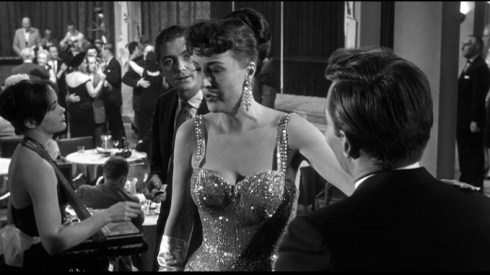
Michael Higgins plays a very disturbed young man named Richard Barrie who after being released from an institution, insinuates himself into the Hackett family. Edge of Fury is a very taut and disturbing thriller based on the book “Wisteria Cottage” by Robert Coates. Higgins plays a remorseless young beachcomber with psychopathic tendencies who assumes the guise of a friend to a mother and her two daughters who reside in their summer cottage.

“Edge of Fury” (1958) is a crime /noir film that takes viewers on a twisted journey into the mind of a psychopathic young man named Richard, brilliantly portrayed by Michael Higgins. who is a beachcomber with a troubled past, cunningly befriends a mother and her two daughters who are enjoying their summer at a picturesque seaside home.

Under the guise of friendship, Richard insinuates himself into their lives, gradually revealing his sinister intentions. As his true nature begins to surface, tensions rise, and a deadly game of manipulation ensues. The once-idyllic summer home becomes a battleground where survival is at stake.

Driven by a chilling performance from Michael Higgins, “Edge of Fury” delves into the dark recesses of the human psyche, exploring the depths of Richard’s psychopathy and the unsuspecting family’s fight for survival. With each twist and turn, the film keeps audiences on the edge of their seats, weaving a thrilling tale of suspense, deception, and the terrifying consequences of crossing paths with a disturbed mind.

Directed by Irving Lerner, “Edge of Fury” stands as a classic noir thriller, offering a gripping exploration of the disturbing complexities of human behavior and the destructive power of a psychopath’s manipulation.

Directed by Irving Lerner & Robert J Gurney Jr. Also stars Lois Holmes as Florence Hackett, Jean Allison as Eleanor Hackett, and Doris Fesette as Louisa Hackett.

“If anything should happen tonight, if anything should happen, don’t blame me…if anything should happen, darling.”

See it for yourself, MonsterGirl!

A Trailer a day keeps the Boogeyman away! Girls on The Loose (1958)

Girls on The Loose 1958

Directed by Paul Heinreid and Starring Mara Corday, Lita Milan, Barbara Bostock, Joyce Barker  Abby Dalton, and Mark Richman as Lt Bill Hanley.

They were tough, hard as nails…mean!

Vera, the brain, who was a sucker for any man!

Agnes who is chicken!

Maria who had sticky fingers and a thirst like a fish!

Joyce… strong as an ox!

and Helen, singing and dancing Helen. Who fell in love with a cop and made the mistake of wanting to go straight?

“If you ever say that again, if you ever think it!… I’ll ram these scissors right through you, you thick ugly slob!”

MonsterGirl now in Jersey bids you all a warm, I’m back!

A Trailer a day keeps the Boogeyman away! The World The Flesh and The Devil (1959)

THE WORLD, THE FLESH AND THE DEVIL 1959

This is a film by writer, and director Ranald MacDougall who wrote screenplays for such films as The Unsuspected 1947, Possessed 1947, Mildred Pierce 1945, and The Naked Jungle 1954.

With writing credits to M.P. Shiel from their novel “The Purple Cloud”, Ferdinand Reyher’s “End of The World” and co-written by MacDougall. Harry Belafonte is an uncredited producer of the film.

With an incredibly evocative score by Miklós Rózsa (Spellbound 1944, Double Indemnity 1945) and a Noirish framework by cinematography Harold Marzorati, it’s an edgy adventure for Noir and Sci-fi fans alike.

This could be considered a Socio-Noir experience, as it deals at times frankly with the issue of race and gender, while not as critically as it might be dealt with today, for its time, it approaches the subject matter with a narrative that starts the conversation.

Filmed with gritty realism, set in an urban milieu with characters who are flawed and in conflict with each other and their surroundings.

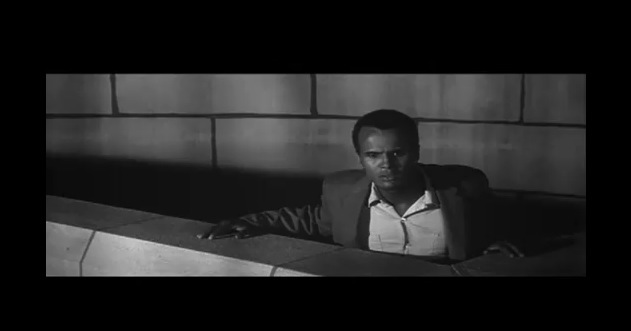
Harry Belafonte plays Ralph Burton a miner trapped under the city for several days as a result of a cave-in. After days of isolation and deprivation, he manages to dig himself out of his underground grave.

Soon after he discovers that the entire population of Earth has been destroyed by nuclear holocaust.

He ventures to New York City and stumbles upon a once thriving metropolis that is now a desolate urbane wasteland, not unlike the landscape that Charlton Heston’s Neville faced in post-apocalyptic L.A.

Much like Neville, Ralph sets up a home for himself but is suddenly thrown into flux by the discovery of Inger Stevens as Sarah Crandall, the last surviving female on Earth.

The World, The Flesh and The Devil is an allegorical journey about desolation, survival, human nature, sacrifice, and the evolution of men and women trying to define themselves.

Thrown into the mix of this newly formed friendship between the only living black man and white woman, intrudes a third character Mel Ferrer who plays Benson Thacker a white entitled privileged male who has somehow navigated a small boat into the NYC harbor.

The triangle is formed and the tensions play out in a script that might have been penned by Rod Serling, who often took on the issue of race, class, and at times, but less so, gender with his thoughtful philosophical Sci-fi television show The Twilight Zone.

The two men struggle over who will be the dominant male suitor… who will take ownership of Sarah as if she weren’t already the last female on earth, her sexuality becomes amplified, her body thus systematically objectified to the nth degree, and does she even have a say in choosing neither of the men at all…white or black!

Try and catch this lesser-known post-apocalyptic tale filmed way back in the late 50s!

“The only problem we have is that there are two of us and only one of her!”
“Why don’t you toss a coin!”

“This is New York, as no man has ever seen it. Empty, deserted, it’s teaming millions gone…! This is the setting for the most unusual picture ever filmed. The most daring idea or attempted in motion picture entertainment. The last three people alone in the world. What are the emotions of this girl? Facing a future that no woman before her has ever known. What of the man torn by basic human emotion as they stand on the brink of the unknown? Here is the film that crashes through time and the future. It may stun you, and shock you, but above all, it will grip your imagination as no film has ever done!”

“What would you do if you were one of the last three people on earth!”

Benson Thacker: I have nothing against negroes, Ralph.
Ralph Burton: That’s white of you.

Stay real! – MonsterGirl

Ida Lupino: The Iron Maiden of Prison Noir: Part One ‘Women’s Prison’ (1955)

Ida Lupino: Actress/Director – The Iron Maiden of Prison Noir

“State’s prison, all prisons look alike from outside, but inside each has a different character. In this one"¦ caged men"¦ separated only by a thick wall. From caged women"¦

The system is wrong but it goes on and on and on"¦”

WOMEN’S PRISON 1955

Directed by Lewis Seller, and written Crane Wilbur, (He Walked By Night 1948, The Bat 1959, House of Wax 1953) with the screenplay and story by Jack DeWitt.

Ida Lupino plays Amelia van Zandt the sadistic borderline, psychotic Warden/Matron of a co-ed women’s prison. She is a total institutionalist, exerting strict regulations, with no gray area for sentimentalism. For van Zandt it’s about the cold hard road to rehabilitation… her way… the hard way.

Lupino has described herself as “the poor man’s Bette Davis.” Ida Lupino moved to Hollywood from England, after filming I Lived with You starring the beautiful Ivor Novello. (The Lodger 1927). She started to make some noise as the hard-edged dame in the 40s, starring in 2 powerful Noir films They Drive by Night (1940) and High Sierra (1941), both starring opposite one of my all-time favorites, Humphrey Bogart.

She starred in two other memorable films which are great contributions to classic Film Noir, Road House 1948 and On Dangerous Ground 1952. For more info about Ida Lupino, the actress, and how she got started as a prolific director of film and television you can read more about her here.

Lupino, while a uniquely beautiful woman, has a face that can convey heartlessness, a hollow shell of a woman, and a militant spinster. ‘The Iron Maiden’, is what I’ve dubbed Lupino for these two particular interchangeable roles.

Women’s Prison is swathed with an ensemble of various Noir Femmes as the rough and weathered inmates. Jan Sterling, Audrey Totter, and Hugo Haas regular Cleo Moore.

There’s also the wonderful Juanita Moore, Vivian Marshall, Mae Clarke, Gertrude Micheal as Chief Matron Sturgess, and one of my favorites, Phyllis Thaxter as the ‘nice girl’ thrust into a ‘bad situation’ who almost loses her mind from the claustrophobic and oppressive iron grip van Zandt keeps on her and the rabid choke hold she keeps on the jugulars of the other female inmates.

And don’t let Thaxter’s role fool you, I’ve seen her play ruthless psychotics in her own right on Boris Karloff’s Thriller episode air date Nov. 6th, 1961  The Last of The Sommervilles as the conniving sociopath Ursula Sommerville. Interesting connection…Ida Lupino not only wrote the script for the episode but directed it as well!

Thaxter is the cunning Ursula with Martita Hunt as the eccentric Celia Summerville.

Although a gritty Noir ‘women in prison film…  could easily sway into the campy territory, Lewis Seller’s Women’s Prison stays very steady on a course of lensing the social implications of a corrupt and brutal institution that extols credit for keeping the female riff-raff out of the community while perpetuating the hard line, and struggle that many of these women face on the outside. Beating them down, and objectifying them as sexless social misfits who need to be kept away from ‘men’ and out of a ‘decent’ society.

Amelia van Zandt is the hyper-exemplification of what can happen when too much power is given agency and allowed to culminate into a destructive force. van Zandt is the linchpin of brute force, and the submission required in order to control a group or perpetuate an ideal. The fact that she is female illustrates that it does not only have to be a patriarchal institution that can break a women’s spirit. It is here that elements of class and social capital come into focus and play a role in predetermining their fate.

Lupino’s character is similar to Hume Cronyn’s sadistic and unempathetic Capt. Munsey in Jule’s Dassin’s Brilliant Brute Force 1947:

Is that a lead pipe Captain Munsey or are you just REALLY happy to see me?

In a way, van Zandt is just another Boogeyman created by an institution that dehumanizes its individuals.

Women’s Prison illustrates what happens when absolute control is given to a person or persons and that control goes unchecked, allowing their private or misguided motivations, mental health, ability to lead, and quite simply the lack of understanding about the human equation to dictate the terms of the human condition in/of an isolated/insulated environment.

Continue reading “Ida Lupino: The Iron Maiden of Prison Noir: Part One ‘Women’s Prison’ (1955)”

MonsterGirl’s Quote of the Day! The Glass Key (1942)

The Glass Key 1942

CLYDE MATTHEWS: “Isn’t all this beating likely to be fatal?

NICK VARNA: “Not unless we want it to be

Directed by Stuart Heisler (Tulsa 1949, The Star 1952), penned for the screen by Jonathan Latimer based on the novel by Dashiell Hammett.

Alan Ladd is Ed Beaumont who sets out to find the truth behind his friend’s murder, and the divine sylph Veronica Lake is Janet Henry in this classic Noir Crime Drama!

Brain Donlevy (Kiss of Death 1947, Dangerous Assignment 1952)plays Paul Madvig who decides to clean up his past while running for re-election. He refuses to take any muscle from gangster Nick Varna (Joseph Calleia Gilda 1946, Touch of Evil 1958) Instead he throws his support behind politician Ralph Henry (Moroni Olsen)

Things heat up when Ralph’s gambling son, Taylor Henry played by Richard Denning,  who loves Paul’s sister Opal Madvig, (Bonita Granville)is murdered.

Nick Varna takes advantage of the dire financial situation of The Observer to strong-arm publisher Clyde Matthews (Arthur Loft) to use his newspaper to crucify and create suspicion around Paul Madvig’s involvement in the murder. Also starring William Bendix.

A special trailer of the day keeps the Boogeyman away! In honor of Mother’s Day- Psycho (1960)

Psycho 1960

Alfred Hitchcock’s seminal Horror/Thriller/Noir masterpiece transformed the meaning of the word ‘Mother‘ in cinema and devoted it to an entirely new significance. Starring Anthony Perkins as the molly-coddled Norman Bates, who couldn’t even hurt a fly. He runs The Bate’s Motel, while caring for his aged, dominating to the point of suffocating and devouring mother.

Janet Leigh plays Marion Crane, a frustrated office worker in Phoenix Arizona, who is tired of meeting her lover Sam Loomis played by the hunky John Gavin, during her lunch breaks to squeeze in quickies, and who can’t afford to marry her, because he is buried under by alimony payments to his ex-wife.

A woman doomed to a horrible fate for her sexual freedom and being in the wrong place at the right time!

In a fevered moment of revolt, she steals $40,000 that is entrusted to her to deposit in the bank and heads out for Sam’s place in California. Caught in a rain storm, she pulls off the main highway and comes upon The Bates Motel and the very dark and looming house that sits atop the hill overlooking the little motel.

Marion starts out wearing black lace undergarments while in the throws of lust and greed but is transformed in one night by a pang of conscience.

Having stopped at the Bate’s Motel for a respite, she meets the lonely and odd Norman who wants to share his cheese sandwich and a glass of milk, or perhaps his love of taxidermy with Marion. He’s definitely aroused by Marion’s kindness and curves, and that makes ‘mother’ VERY unhappy!

Marion decides to put the money back, symbolically she is adorned in virginal white underwear again…unfortunately for Marion, it’s too late for redemption…She winds up stabbed to death by a butcher while in the shower within the first 20 minutes of the film. It’s one of the most iconic scenes in horror film history that set the pace for slasher films to follow!

Though a stunning moment in film history, there is very little blood.

Killing off a major star at the beginning of a film had not been done before. The audience was also asked not to reveal the ending of the picture.

The scene is not only an iconic one but remains branded in the psyche, for its brutal tone of alienation and its savage simplicity.

During Marion’s murder scene, the camera frames the blood-stained water, draining out of the tub, as Marion’s life force is reckoned so insignificant as to be washed down the rusty pipes forever. The focus is on her one lifeless open eye, staring back at us. A death scene that is memorable… shocking… historically transformative.

Life down the drain…

At this point in our culture, I can’t imagine anyone not knowing the story, or not having used a reference to the Bates Motel or Norman. I still have a fear of small motels off the beaten path, somewhat like how I feared swimming in the ocean after having seen the theatrical release of Jaws in the 70s.

The story is based on Robert Bloch’s novel, and penned for the screen by Outer Limits writer, Joseph Stefano and acts as a sort of composite or embodiment of legendary Serial Killer Ed Gein, Norman remains truly one of the most infamous horror characters in film history for his sympathetic yet terrifying derangement.

The film also stars one of my favorite actresses Vera Miles as Marion’s sister Lila, who does not believe that Marion ever left the Bates Motel. She and Sam Loomis elicit the help of Martin Balsam as Detective Milton Arbogast. With appearances by Lurene Tuttle, the spirited Simon Oakland, and John McIntire.

“I think I must have one of those faces you can’t help believing.”-Norman Bates

“We all go a little mad sometimes” -Norman Bates


Happy Mother’s Day – MonsterGirl!

Screaming Mimi 1958 Part II: “The way he looks after her, you’d think a bossom was something unique”

Part II in the series. See also Part 1: Ripper vs Stripper"¦

Screaming Mimi (1958) Part 1: Ripper vs Stripper…

Yolanda splayed out on the stage, ‘the penis rope’ stroking her naked legs, she is captivating and captive!

The character of Joann Gypsy Masters refers to Yolanda as her “my new cupcake,” and proclaims her to be “the greatest thing in the history of nightclub entertainment.

Gypsy Rose Lee..the exotic ecdysiast (Come see what we mean!)  ECDYSIAST-noun: Humorous Origin 1940 coined by U.S. journalist and social critic, H.L Mencken -A striptease performer. ECDYSIS-noun: Zoology-The process of shedding the old skin or the outer cuticle.

Yolanda’s erotic act is presented in a stark black silhouette, her curvacious body supine and defenseless against a backdrop of primal shadow. She begins to pose, her body rhapsodizing and rapturous, in white shredded tatters, her wrists shackled by handcuffs, a slave in bondage to the beat of Red Norvo’s orchestrations. A beautiful captive moving to the rhythm, clinging to a rope, a dangling phallus begging to be gripped by her manacled hands. On the first night of her debut, she catches the eye of ‘night beat’ reporter, the tall and imposing Bill Sweeney who covers the social sewer “everything from who’s playing footsie with who this week, on up to who’s murdering who.”

After Bill introduces himself to Yolanda in her dressing room, Yolanda is attacked once again by a mysterious maniac who slashes her across the belly, in much the same way as an earlier murder committed by the city’s ‘Ripper’ murderer who killed another dancing blonde, Lola Lake.

Devil, Yolanda’s fiercely devoted Great Dane by her side, wards off the attacker, but not before she is injured and sent to the hospital.

In the muffle of voices in the crowd of onlookers at the crime scene, one news reporter says ‘A great dame and a Great Dane!’

 Bill is savvy and has great instinct, although he is drawn to Yolanda physically, he senses that not only is her name phony but there’s too much of a coincidence that she owns the same small statue identical to the one found by the first victim Lola Lane. Of course, the statue is that of the ‘Screaming Mimi‘, a ‘weird-looking dame‘ or ‘the frightened girl’

Even Mac, Bill’s editor tells Bill “You’re getting hot pants for a real story aren’t you junior?” But Bill is on a mission to protect and bed Yolanda and solve the ‘Ripper’ murders. Mac tells him ‘Wear some protection around your gut, at least after dark.’ The scene frames a headline ‘Police Seek Gorilla Man Slayer‘ perhaps this sideline suggests that it is neither strange nor unfamiliar for bizarre crimes to occur in this town.


The film penned for the screen by Robert Blees is as grisly as it is provocative for 1958 theatergoers. Predating Psycho 1960 by two years, the idea of having your belly ripped open or slashed is quite horrific for a decade of films that were supposed to epitomize the American Dream and social moral codes that were stark in contrast to the characters in this story.

Much like Constance Towers’ character of Kelly in Sam Fuller’s Naked Kiss 1964, Kelly tries to run from her past, and relocate to a freshly scrubbed community, only to find that its dark secrets brewing below the surface, just waiting to scorch her for her efforts. Yolanda…in trying to escape her brutal attack and mental breakdown, winds up right in the midst of a very dangerous landscape herself.

Aside from the presence of Red Norvo’s live musical arrangements, the full-of-shade fluidity and dynamic scoring by Mischa Bakaleinikoff ( The Big Heat 1953 Earth vs The Flying Saucer 1956) adds much to the layers of schadenfreude. With additional contributions of stock music by composers, Leonard Bernstein, George Duning, and several others.


You can see traces of the genius of Gerd Oswald’s direction over the camera work in the iconic television sci-fi/philosophical series The Outer Limits. 1963-1965. Aided by the cinematography of Burnett Guffey-

(From Here To Eternity 1953, Birdman of Alcatraz 1962, Bonnie and Clyde 1967) The dark and disturbing Film Noir frames under his direction create an environment where no one seems wholesome, faces are either skewed anonymous or ominous, lecherous, dispirited, melancholy, despairing, pining, or perverted.

Part II

A resounding tremor from a gong cymbal and we’re thrust into the black screen for a brief moment. Suddenly a sea of faces, it’s the audience gazing back at us. Then applause. The lights come up.

Gypsy tells everyone to get up on their feet. “This’ll give us a good chance to empty the ashtrays.” She’s cocky and jovial, sassy and all lit up with sequins and a cheap sort of polished aloofness.

“Sweetie!, the press” She walks over and puts her silver gloved hands behind a brill cream head. Happy she remarks, “Freeload, and they don’t spell our names right, but we love em anyway”
Bill responds, ” I love you two Joanie"¦nice to see you haven’t been raided yet.”

” Yeah,” she crosses her fingers in warding off the very thought then tells Paul the bartender, never give this guy a check"¦.never!

Gypsy goes on to ask Bill, “Dropped in to catch my new cupcake ay? I tell you, Bill, she is the greatest thing in the history of nightclub entertainment”


A nightclub girl comes around selling matches and cigarettes behind Gypsy and Bill and a guy asks her what time she’s getting off.

Suddenly, like a Hawk zeroing in on a predator first, warns him “Uh Uh, don’t touch the candy junior.”
Bill asks where did this chick come from, and Gypsy tells him ‘out of left field.”She walked in here absolutely cold"¦would you like to meet her?” Bill smiles agreeably “Yeah"¦I gotta go to work sooner or later.”


Gypsy grabs Bill’s hand and starts leading him back toward Yolanda’s dressing room.

There are many instances where we see the image of Virginia/Yolanda in a mirror. Is this preparing us for a revelation that she has two very distinct parts of her psyche?

Virginia Wilson gazes at Yolanda Lange in the mirror.

Yolanda is sitting with her legs up on a table, staring at her image in the mirror. Her bare legs are like two strong legs of a stallion. She looks like a goddess awaiting her maidens. A cigarette hangs freely from her right hand. There is a curious gaze she holds, as she handles her hair brushing it slightly away from her face. Her image is static in the mirror framed by brick on either side. Such a soft visage enclosed within a wall with two small lights to light her dressing table. She’s about to sip her drink, when ‘Gypsy’ knocks on the door and calls out her name “Yolanda” “Yes” “I want you to meet a friend of mine"¦Bill Sweeney"¦he does a nightclub column for the Times.” Yolanda says how do you do. Looking pleasantly at the tall man in the doorway.

Bill tells her, “That’s quite an act you have,” She tells him to thank you. Gypsy interrupts, “Boy I thought tonight was the best ever.”She moves around toward Yolanda who is still sitting at her dressing table.

Bill goes to pet the top of Devil, the Great Dane’s head, now present in mid-screen. We hear his low growls. Yolanda tells him, “He doesn’t like to be patted,” She says softly, “Lye down Devil” This dog is slightly more imposing than her first dog Rusty the little terrier.

I think there is not only the relevance of the size of the dog being a sexual compendium fetish, a hint of bestiality but more as symbolic of the change as Yolanda’s inner fears lay open to future jeopardy emerging, materializing as a giant canine id.

She is guarding herself with ‘bigger dogs‘ since the first attack. Also reflecting how her Id has become more mistrustful and aggressive.

“Well, maybe we can have that drink tonight after the show if you’re not too tired,” Joann ‘Gypsy’ hints that she’d like her to say yes. But Yolanda looks on from behind her changing screen…guarded. She says alright, with exhaustion and disdain as if it’s too much effort even to say those few words.

‘Gypsy ‘now turns to Bill and tells him “You could always mention me in that column of yours if there’s any room left over"¦(she laughs a little) at least El Madhouse.” Both are grinning, flashing their mutual abiding smiles of hobnobbing, a faint drift of pleasure and amusement. All the niceties that come with the territory. Bill says “That’s a promise Joannie.”

‘Gypsy’ leaves the dressing room, closing the door. As Bill walks around the room, he asks the question. “Yolanda Lange?”

She answers him softly by repeating her name, but with her accent it sounds like a faint admonishment for questioning such a thing. He asks “Who made up a name like that?” She tells him, “Does it matter?” Still smiling he tells her “Not to me"¦even if your name was Suzy Swartzkapf I’d uh…I’d like to take you out and see what trouble we could find"¦pure research you understand.”

Yolanda looks over at him, divinely stoic, her beautiful lips and dreamy eyes studying him, tilts her head and says, “Of course.” She is still framed by the camera, Bill asks her, “How tall are you, Yolanda?”

She snaps back ” With heels?” A smile crosses her mouth. She will not give an inch yet. But Bill comes back sharper. “With anybody"¦me for instance.”With heels, I’m 5’10” without, I”m 5′ 7.”

“And you’re Norwegian?” She looks downward, and her guard softens a bit, but she doesn’t answer him. He then points his cigarette at her"¦”Swedish” he smiles. She answers him “Originally.” He puts his cigarette out and tells her that nobody could accuse her of talking too much.

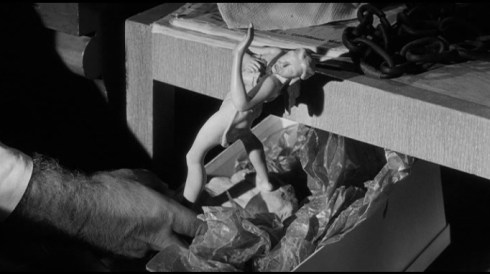
She tells him, “I’ve never found it necessary” All the while a subtle violin is courting their little exchange until Bill reaches down to put his cigarette out in the ashtray and finds a statue of the Screaming Mimi in a box. The distant caution of horns tells us something has shifted with this discovery. Devil the dog begins to growl and bark as Bill removes the statue from the tissue-papered box and holds it out in the middle of the screen. It looks like a goddess being struck down by an unseen force. Clutching at her chest. As Bill studies the piece, Devil becomes increasingly agitated.

Devil acts as the primal gatekeeper of Yolanda’s rage and desires to lash out or destroy that which reached out and has destroyed her innocence. Devil seems like a destructive force. He is an extension of Yolanda’s aggressive nature now, and her primal rage. An id with fangs, much like Morbius‘ monster in Forbidden Planet 1956.

Yolanda now tells him to be careful. Bill asks, “Sure…What is it?” She answers, “It’s just a figure” She brushes off the question. He sets it back in its box. “Weird looking dame isn’t she” Yolanda looks distant, Bill continues to probe"¦”Ah, you’ve never worked around here have you?”

She starts to lighten again, “Well ah, just a little bit around.” As she starts to finish her sentence, Dr. Greenwood comes into the dressing room, calling on her, but sees Bill in the room.

Continue reading “Screaming Mimi 1958 Part II: “The way he looks after her, you’d think a bossom was something unique””

The Film Score Freak Recognizes Jo Gabriel’s ‘Once’ and Robert Aldrich’s ‘What Ever Happened To Baby Jane'(1962)

Here I’ve taken the last scene of What Ever Happened To Baby Jane (1962) and added my little piece called ‘Once’ which appears on my double album retrospective Hunting Down The Ceremony Vol.1 The Hidden Voice

Here’s to Bette Davis and Joan Crawford and Robert Aldrich for getting these Grand Dames together, to kick the ever loving crap out of each other on and off screen!!!!!!

Lovingly Joey (MonsterGirl)

Coming soon to The Last Drive-In “Ida Lupino:The Iron Maiden – “Women’s Prison (1955) & Women in Chains (1972)

Who doesn’t love a good teeth grinding ‘Women in Prison’ movie! I know I can’t resist. And so I thought I’d pay a little tribute to two fabulous guilty pleasures of mine starring actress/director Ida Lupino!

The incredible Ida Lupino

I’ll go further in depth as to Ida Lupino’s extraordinary contributions to film and television when I do the full post!

The first film Women’s Prison 1955 is a taut Prison Film Noir piece starring the ineffable Ida Lupino who gives a stunning portrayal of a brutally sadistic prison warden Amelia van Zandt who holds sway over these chained women, slowly exposing herself to be a psychotic, as she institutes her savage brand of rehabilitation!

The film stars Jan Sterling as Brenda Martin

 Cleo Moore

Audrey Totter as Joan Burton

Phyllis Thaxter  (One of my favorite character actresses)as Helene Jensen a nice girl in prison on the verge of an irreversible nervous breakdown!

Juanita Moore as Polly Jones

Mae Clarke as Matron Saunders

and Lupino’s real life  husband Howard Duff as the sympathetic Dr. Crane and Warren Stevens as Glen Burton the man who can’t keep his mitts off his fellow inmate wife!

“Sensational scandal rocks women’s prison!

Women’s Prison (1955)

Then once again…now in that glorious made for tv color!!!!!!

Lupino reprises her role as the equally brutal Claire Tyson in THE ABC MOVIE OF THE WEEK !!!!!!!

The film stars 70s tv and drama staples Lois Nettleton , Jessica Walter, and Belinda Montgomery

Lois Nettleton plays parole officer Sally Porter who goes undercover to expose prison brutality at the hands of the vicious matron Clair Tyson! The film also stars Neile Adams, Hazel Medina, Kathy Cannon, BarBara Luna and the great Lucille Benson.

Women in Chains (1972) tv movie

Also coming here at the Drive-In Part 2 of Screaming Mimi and MonsterGirl Asks Film Scholar Aviva Briefel

Screaming Mimi (1958) Part 1: Ripper vs Stripper…

Screaming Mimi 1958 starring Anita Ekberg


Anita Ekberg-Actress, Goddess and kitten lover!

Yolanda and her Great Dane known as “DEVIL” ouch!!!!!!!!!!

Screaming Mimi 1958 A psycho-sexual KINKY/ FILM NOIR, Starring the Swedish Love Goddess Anita Ekberg, Phil Carey, Gyspsy Rose Lee, Harry Townes, and features the music of The Red Norvo Trio

Screen Play by Robert Blees Based on the book by pulp writer,  Frederic Brown.

Frederic Brown- Mystery Pulp Novelist

Frank A.Tuttle is responsible for the ultra realism set direction (From Here To Eternity, Guess Who's Coming To Dinner, Elmer Gantry ,The Caine Mutiny, Straight Jacket and Dead Heat on A Merry Go Round, Marooned and Thriller's Dark Legacy episode "˜61) Not to be confused with director Frank W. Tuttle This Gun For Hire 1942, A Cry in The Night 1956. The musical score is conducted by Mischa Bakaleinikoff.

This film to me falls under my definition of the noir canon. It's extremely stark use of counter black and white space. The distinctive style that uses prominent shadow and brightly contrasting whites. The crime theme, psycho-sexual component with several unsavory or damaged personality types. The coded gay characters, such as her step brother Weston and Gypsy Rose Lee's character “Joann ‘Gypsy’ Masters and younger lover, who waits tables at El Madhouse. The Identity crisis. These are all methods of the film noir canon, especially the beautiful black-and-white noir cinematography of Burnett Guffey, And a shower scene that predates Hitchcock’s Psycho 1960 by 2 years!

It is said that Dario Argento’s iconic Giallo film Bird With The Crystal Plumage 1970 is loosely based on Brown’s book. The Screaming Mimi is a mystery novel by pulp writer Fredric Brown. It was first published in 1949.

  • Describing a female individual who screams a lot.
  • A nickname for the Nebelwerfer, a piece of German World War II rocket artillery.

A Quick Overview:

Exotic dancer Virginia Wilson almost dies at the hands of an escaped maniac with a big knife. He attacks her while she is in the outside shower stall on her step-brothers property. Brother Charlie Watson sees what’s happening and shoots the killer dead in front of the traumatized Virginia. She is put into an institution under the care of Dr. Greenwood a psychiatrist who tries at first to administer therapy until he becomes obsessed with his beautiful patient.

He falls in obsessive/love with her and begins to takes over her life, having a Svengali like hold over her consciousness. After changing her name to Yolanda, she insists on continuing her career and winds up as the newest rage at the El Madhouse nightclub. The club’s sassy owner is portrayed by Gypsy Rose Lee who plays ‘Gypsy’. The traumatized Virginia is suspected of a series of murders with one common theme. There is an element of fetish as, each victim had purchased a contorted sculpture of a woman called the Screaming Mimi. This sculpture happens to have been created by her step-brother Charlie, you know, the one who was also responsible for shooting her attacker. Now enter the picture  handsome columnist Bill Sweeny who falls for Virginia/Yolanda, knowing that she is hiding a deep dark secret, and sets out to uncover the truth! And so the film goes, with all it’s fabulous cheap thrills and B-Movie appeal. And a Great Dane known as ‘Devil”….!

The Ocean crashes against the rocks, the foamy surf is narrated by satiny whispering flutes and French horn. A contorted statue of a highly stylized feminine form, overemphasizing her breasts and what Jung considered her anima, the inward subconscious primal essence, thrusts itself to the forefront of the screen! A bluesy jazz trail of horns bring the credits along. Directed by Gerd Oswald (The Outer Limits original series 1963, A Kiss Before Dying 1956 and Crime of Passion 1957) This is an interesting period in film making of the 50s that is fresh because Gerd Oswald allows the film’s direction to touch on several kinky items such as perversion, Fetish, bondage, homosexuality and a Lesbian subtext, amour fou and serial killers. The film creates several varying viewpoints, the Male Gaze, the female Gaze and the Collective Voyeur.

The waves break against shore, bringing with the tide, the figure of a beautiful blonde goddess, emerging from the water, as if being spit out of the primordial blue rapturous ocean's mouth. Running up the sands to greet her little terrier who stands waiting patiently then running along side his girl, up the stone stairway from the sandy beach, now in the lead.

The mood is blissful, hazy, and untroubled. He leads her to the outdoor wooden shower stall. She is glistening, washed by the recent swim, her gorgeous white teeth bare a maiden's smile. Her little dog in a pointer's stance, becomes rigid in the brush, sensing something or someone rustling in the bushes. He starts to bark at the unseen presence. She laughs and tells Rusty not to get so excited, that it's just a rabbit. But we can see far left of the screen a shadowing figure at first a black form, and then starting to emerge. As Rusty starts to confront the figure, the screen switches back to the girl. Off-screen the little dog cries out in distress, and her beautiful face begins to tighten.

The dark form, becomes a grimy, grubby, sweaty man, now straightening up from a crouch, a wildly disheveled fiend who stands up but makes no sound, apparently just having killed Rusty, now setting his burning stare upon naked Virginia with merely the beach worn wooden shower between her and her attacker. She screams in abject terror, framed by the shower, her black swimsuit, and lace panties hang over the edge, her underthings dangling there, letting us know that she is vulnerable. She is laid bare. He begins to move closer unaffected by her screams. In the foreground a shorter, older-looking gentleman is aroused by the screams, and walks out onto the front porch, realizing what is happening we see him run back into the house. As the attacker draws closer to Virginia, we see the back of his soiled shirt read HIGHLAND SANITARIUM. He is an escapee from the local lunatic asylum, and now he's wielding a large butcher’s knife about to strike out at the defenseless girl.

The Screen shot shows us a hairy hand puddled with blood as he holds the knife as close to her face. The screams still escaping her beautiful lips, her blonde hair still salt curled from the ocean.Is the blood from her little dog Rusty? He again thrusts the large blade toward her, but we are shielded by the wooden shower stall. She tries to push herself out of the stall. Pushing toward her attacker still screaming, oblivious to the blood stained knife, pushing pushing the door, trying to flee.

This shower scene actually predates Alfred Hitchcock’s Psycho by 2 years!

Suddenly the other man on the porch Charles Weston, Virginia’s half-brother, comes out holding a rifle. He aims his gun, but the fiend manages to plunge the knife into Virginia’s chest. We see her face conform to the pain, a little weakened and stunned by the actual blow.

Out in broad daylight this horrific slaughter box on the beach, under the sun’s rays, burning the blood from red to burnt sienna, we can only imagine in this black and white film noir of twisted psychosexual regression and utter senseless barbarity. With her white creamy face, and her beautiful full lips, she sinks downward inside the wooden stall like a coffin. The musical direction is dire. The horns cry out for release.

We hear a gunshot, the shot is framed from the man’s knees down to the wooden planking of the floor, as he falls into a huddled lump of institutional denim and crazed sweat. As his back remains to us, stiff and lifeless, we see the bare feet of Virginia standing next to him. She comes out of the stall wrapped in a white robe. Clutching her head, her fingers grasping in between strands of her fear-soaked hair. The man in white approaches her. Realizing that she is holding the bloodied knife now, she drops it onto the floor, hands open and up in the air, staring down at the weapon. The man in white stands there still holding the rifle. She holds her hands up to her face and then collapses into shock.

Continue reading “Screaming Mimi (1958) Part 1: Ripper vs Stripper…”