Sunday Nite Surreal-A Reflection of Fear-William Fraker’s Directorial Foray Beyond The Outer Limits into a Psycho-Sexual Miasma

A REFLECTION OF FEAR 1973

Reflection+of+Fear

If a movie lingers, if it stays with you for hours, days, then it has done something right. I think this film is perhaps as uniquely disturbing as it is underrated & thoughtfully done. The subject matter is perverse and a potent yet slightly murky thriller. A provocative, revolting little psychodrama. One with an eerie, queasy moodiness amidst the ornate set design and restrained performances.

A Reflection of Fear Locke

The ’70s were so good for giving us these kinds of surreal, sinisterly captivating, and unsettling themes. The House That Screamed 1963, Let’s Scare Jessica to Death 1971, Silent Night, Bloody Night 1972, Lemora” A Child’s Tale of the Supernatural 1973, Blood and Lace 1971, What’s The Matter With Helen 1971, so many, too many to mention. Narratives rife with taboos, power struggles, psychosis, ritual murders, and deviance.

Directed by William Fraker (cinematographer on Rosemary’s Baby 1968, Bullitt 1968 uncredited on Incubus 1966 for Roger Corman, and The Day of The Dolphin 1973, Looking for Mr Goodbar 1977).

A Reflection of Fear 1973 was hacked to pieces in order to receive a PG rating for Columbia Pictures. Fraker made his feature debut as cinematographer on one of my favorite psychological thrillers – Curtis Harrington’s cat and mouse thriller GAMES 1967 with Simone Signoret. He was the camera operator for my beloved fantasy ’60s series The Outer Limits TV series 1963-1965. No wonder that this film’s atmosphere is a hazy, dreamy landscape that transcends the outward appearance of reality.

There is nothing wrong with your television set… Do not attempt to adjust the picture, we are controlling transmission: The Transendental Heartbeat of The Outer Limits 1963-1965

László Kovács (Easy Rider ’69, That Cold Day in the Park ’69) enhances the look and feel of the film as director of Photography. A Reflection of Fear is based on a novel by Stanton Forbes called Go To Thy Deathbed with a screenplay by Lewis John Carlino (Seconds 1966, The Mechanic 1972, The Sailor Who Fell From Grace with the Sea 1976).

Blogger David Furtado from his fabulous Wand’rin’ Star cites in a post from Sondra Locke’s autobiography The Good, The Bad and The Very Ugly- A Hollywood Journey

“Then came a film which was a landmark, professionally and personally: A Reflection of Fear, directed by promising filmmaker William A. Fraker, who had been nominated for several Oscars as a director of photography, and who had directed Monte Walsh with Lee Marvin and Jeanne Moreau, one of the last great and underestimated westerns. Sondra Locke plays the mysterious and unbalanced “ ˜Marguerite’, a girl of sixteen.

As Marguerite in A Reflection of Fear (released in 1973).

“Once again, Gordon and her plotted a scheme to get Fraker interested, since they both thought the role was almost perfect for her. Gordon Anderson even played the “voice” of “˜Aaron’, Marguerite’s alter-ego. Unfortunately, the film was butchered by Columbia since it dealt with themes deemed too strong for the general public. Locke found the attitude ridiculous, even more so because, at that time, “audiences were enthralled with the young girl in The Exorcist, spewing vomit and masturbating with crucifixes”. Nonetheless, she became longtime friends with the director and his future wife Denise, who was very supportive when Locke had serious health problems.”

This is the first film of underrated cult star Sandra Locke. She was perfectly unorthodox, as the odd Agatha Jackson alongside Colleen Camp in DEATH GAME 1977, where they held actor Seymour Cassel hostage and played mind games with him. As Marguerite, she is perfectly chilling in her debut.

Sandra Locke is the captivating young sylph, Marguerite, and Robert Shaw portrays her estranged father, Michael. Mary Ure  (Shaw’s real-life wife at the time) plays her mother, Katherine. Swedish actress Signe Hasso lurks as Marguerite’s sinister grandmother, Julia. This harpy-like matron seems to be the locus of the askew matriarchy that treats Marguerite like a sickly princess caught in a closed universe. It plays like a dark fairy tale where, initially, she appears to be at the mercy of wicked women.

CapturFiles_1

Mary Ure is absolutely gorgeous, seductive, and refined. Signe Hasso is a marvelous actress I’ve admired for a while now; she’s elegant and quite regal though imposing as her character called for. Both Ure & Hasso exude an unsavory perfume.

Look Back in Anger with Richard Burton & Mary Ure
Richard Burton and Mary Ure in Look Back In Anger, 1959

Quirky and affable Sally Kellerman plays Michael’s fiancé, Anne, who worked with Fraker on The Bellero Shield with Martin Landau, airing on Feb. 10th, 1964—one of my favorite The Outer Limits episodes with the Bifrost alien. Fraker also worked on the set with Signe Hasso on The Outer Limits  Production and Decay of Strange Particles, which is yet another superb entry in the short-lived yet transcendently brilliant series.

The Bellero Shield
Chita Rivera, Sally Kellerman, and Martin Landau in The Bellero Shield- The Outer Limits- William Fraker was on the camera crew.
Hasso & George Macready in The Outer LImits
George Macready and Signe Hasso in Production and Decay of Strange Particles -as part of  The Outer Limits 60s TV series.

Gordon Anderson (also the voice of Ratboy 1986) is the voice in the film of the imperceptible Aaron, doll or boy I won’t tell …

Fred Myrow (Soylent Green 1973, Scarecrow 1973, Phantasm 1979)  is responsible for the haunting musical score that is dizzying with lilting harps and mandolin, low muted French horn, music box shimmer, and eerie wavelengths of noise. Joel Schiller is the art director (Rosemary’s Baby 1968, The Muppet Movie) and Phil Abramson (Bullitt 1968, Close Encounters of the Third Kind 1977 and Raging Bull 1980) does the creepy and suffocating set design which is perfect for the sense of repression, dread, and decay.

A Reflection of Fear has been referred to as a proto-slasher. There is the use of a caped hooded ‘masher.’ Perhaps this film set off a slew of slashers to come, but several reviews have cited a correlation between this film and Hitchcock’s Psycho ’60. Perhaps it’s the bright child with a mother complex who likes horticulture instead of taxidermy. Anyhoo, as an obscure ’70s psycho-sexual thriller, it has its universe to spin in.

If I were to disclose anything because I love a good hint- I could say the closest the film’s storyline comes to is actually an episode of the 1968 TV series  Journey to the Unknown“Miss Belle” with George Maharis and Barbara Jefford, but that’s all I’m sayin’… if you know the episode I mean, I’ve just given you a golden crumb to nibble on.

CapturFiles

CapturFiles_1

The multi-layered narrative surrounds a disturbed and alienated sixteen-year-old girl named Marguerite (Sondra Locke), who exists in a private world of dolls that she talks to and who in voice-over – talks back in the quietude and opulent isolation with her affluent mother (Mary Ure) and grandmother (Signe Hasso) at an exclusive Inn somewhere in Canada. Marguerite is not only held captive by her mother and grandmother but, to my impression, is seemingly a willing recluse who yearns for the love of the father she’s only known by the various books he sends her on art, flowers, etc.

CapturFiles_5

Katharine (Ure) and Grandmother (Hasso) read a letter from Michael.

CapturFiles_6

Grandma Julia-“I hardly think he’s coming again for you my dear she’s his daughter after all” Mother Katherine-“We’ve been so careful Mother” Julia-“A glimpse would perhaps satisfy him for another fifteen years” Katharine-“A glimpse would hardly satisfy Michael of Marguerite” Julia- “Would you stir his curiosity? And… Marguerite seeing Michael might tempt her to certain idolatry of the man.”

CapturFiles_35

Sandra Locke’s intense eyes.

Something is not right within the family dynamic. When Marguerite’s father Michael (Robert Shaw) finally arrives this particular languid summer to ask his wife for a divorce so he can marry Anne (Sally Kellerman), the vitriol comes out as Grandmare “turns the knife in” as Michael exclaims. Mary refuses to set him free unless he agrees to never see Marguerite ever again.

Once Michael sees his wisp of a daughter, whom he’s never known in the flesh, his peculiar gaze becomes transfixes on her. He finds her enchanting. He actually says so several times. Yet he is concerned about the way his wife and mother-in-law are holding the child prisoner. As he considers rescuing the child, the dynamic starts to invade Anne’s future life with Michael, and the brutal murders begin to ensue.

CapturFiles_15

Katharine see Michael again after many years.

CapturFiles_16

Michael returns to meet his daughter.

CapturFiles_17

CapturFiles_19

CapturFiles_22

reflection of fear dinner table

One of the central mysteries is whether Marguerite is being driven mad by her mother and grandmother, is she delusional, or if there truly is an Aaron – her mysterious unseen playmate? Either way, the concept is provocative and malefic. Always lensed in darkness, it adds to the creepiness of the matter at hand. “You keep me cooped up in here like one of the dead dolls in your trunk,”- whispers Aaron a mere shadow.

portrait of Aaron with his killer staff
The painting of the figure in black with a large staff looks similar to the life-size doll of Aaron that Marguerite keeps in her bedroom.

The local police come to investigate. Mitchell Ryan plays the cop who suspects the father, Michael, of the murders. The lovers, Michael and Anne (Kellerman), are to remain close to the crime scene, so they move into the estate as sort of an unspoken house arrest.

CapturFiles_40

Mitchell Ryan interviews Robert Shaw about the murders.

Sondra Locke manages to catch my interest with curiosity at her queer sort of whimsical prettiness, more odd than sensual. Here as childlike, gaunt,and pale as schoolhouse chalk, which works for the character of Marguerite. She carries on creepy Socratic dialogues with her decrepit dolls.

CapturFiles_4

Marguerite’s presence is both disturbing and sympathetic as she plays at being a fay prisoner, kept isolated by her grandmother and mother while exhibiting extraordinary intelligence and a primal burgeoning sexuality.

CapturFiles_23

CapturFiles_24

CapturFiles_25

CapturFiles_26

CapturFiles_27

CapturFiles_33

CapturFiles_36
The image of Aaron slowly arises in the frame in pure shadow- it’s a very powerfully eerie moment in the film.

Marguerite lives in a fantasy world, she’s brilliant, owns microscopes, a pond filled with amoebas, has full knowledge of horticulture, stamen and pistils and all that, has rooms filled with a myriad of creepy dolls in tatters and decay, a specie of cannibal fish which she finds quite natural in the natural order of things.

CapturFiles_3

Something that Michael’s girlfriend Anne will invoke when describing how Marguerite is trying to “devour” her father. Consume him, which he allows, as part of the odd liturgy of perverse underpinnings of the narrative. Incest, sexual repression, sexual mutilation, castration anxiety, oedipal lust, castrating females-misandry (women hating men) “Don’t ever let a man touch you, it’ll mean death.” Her mother tells Marguerite in a flashback through voice-over.

CapturFiles_59

Marguerite’s main confidant is a doll… or is he… named Aaron, a very belligerent spirit either way, who is quite possessive of Marguerite and seems to be destructive, antagonistic, and malevolent. Neither the mother nor grandmother believe he is anything more than a doll. Or perhaps they know more than they are willing to disclose to Michael when he comes to visit after 15 years. He wants to marry the lovely Anne, but Marguerite’s mother refuses to give him a divorce as a way of punishing him and using it as a weapon to keep him from seeing his daughter again.

During his visit, the odd relationship is shown, depicting father and daughter in a sexualized framework. It’s painful to watch as Michael doesn’t discourage Marguerite’s advances, not even in front of Anne.

CapturFiles

The cringy relationship between father and daughter.

Aaron begins to become more violent as the father and Anne intrude on the opulent, isolated netherworld these women seem to inhabit. Fraker, who was the director of photography on D.H Lawrence’s story The Fox 1967 directed by Mark Rydell, is really good at capturing the visual sense of place surrounding alienation, repression, and the immortal triangle. A quiet world, when all at once an intruder turns everything into chaos.

CapturFiles_37

Katharine is destroyed by Michael’s presence.

CapturFiles_38

The film is rather brutal and grotesque even within the kaleidoscopic colors and hazy shadows that both Fraker and Kovács manifest to murk and lurk and obscure what we see. This heightens the horror of the thing rather than impinges on it. The incandescent lighting and subdued colors of cinematography by the great László Kovács using filters and gels create a hazy, shadowy landscape that’s as enigmatic as the story.

The murders are savage, phallus-driven mutilations and speak of sexual repression and hatred toward women.

Marguerite is referred to as “enchanting” more than once. Her skin is translucent, and her Alice in Wonderland exterior purposefully dresses her up to look as if she’s falling through the rabbit hole at any minute. This might be a way to draw attention to the underlying turmoil of growing sexual awakening. Once her mother and grandmother are out of the way, she begins to wear more adult clothing. She also injects bottles of what is supposed to be insulin, but the labels have been removed from the bottles: Curiouser and curiouser.

At one point, she asks her father to give her the injection so that it won’t hurt as much. In retrospect, I think this is a pretty clear allusion to Marguerite’s desire to have her father penetrate her.

Sandra Locke’s performance is quite chilling, with her childlike, almost sociopathic lack of affect, it comes across as an eerie sexualized pubescent blonde droid, rather than a child who has been secreted away by the older women in her life, in a clandestine garden paradise with malevolent forces afoot.

Her voice is a frail, wispy spirit with no earthly substance, dressed in little girl finery, spouting factoids about sea life and flowers but bearing no resemblance to a real child of this world. Initially, her dolls have more breadth to them. But Marguerite begins to awaken by the presence of her father.

CapturFiles_50
Marguerite’s dolls represent her closed world; some even mimic the people in her sheltered life… Herself, Grandmare, and Father…

CapturFiles_51

CapturFiles_5

Marguerite’s mother and grandmother are cold and uncommunicative. There’s no sign of nurturing, although her mother calls her chéri.

The two women obviously hate men and have done a good job of keeping little Marguerite from coming in contact with anyone of the male species. Even the male fish get eaten by the stronger female of the species.

Sally Kellerman is the one character that buoys us to the normal ‘outside’ practical world. She sees all the subversive deeds and perversions that are rampant around the old estate but still refuses to walk away from the man she loves. She is the one stable witness to the madness as it unfolds.

CapturFiles_45

William Fraker and screenwriters Edward Hume and Lewis John Carlino (who also wrote the screenplay for The Sailor Who Fell From Grace With the Sea in ’76 interesting enough this too dealt with disturbed children with higher intelligence), allow the repulsive sexualized relationship between father and daughter to flourish til we’re as completely uncomfortable as Anne is.

In a very edgy scene where Marguerite, whose room is next to her father and Anne, masturbates while the couple is making love. Marguerite calls out “father’while she climaxes so that the couple can hear her cries. Anne finds this entire experience vile, though by now, she shouldn’t be surprised by the odd child’s behavior and finally almost leaves Michael yet still remains in this sick environment.

CapturFiles_47

CapturFiles_48

Anne and a day at the beach with Michael and Marguerite.

CapturFiles_49

The film is apparently heavily cut due to censorship in order to secure a ‘PG’ rating for its original U.S. theatrical release in the early ’70s. I’d love to see the unedited version someday.

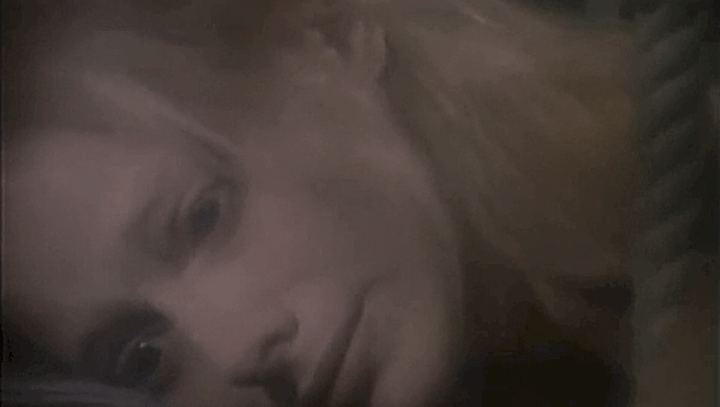
The shocking twist ending was a bit muddled in terms of its visual revelation, but finding out that the film was badly modified due to censorship might explain some of the jagged continuity. I don’t mind the obfuscation of various key scenes as they add to the sense of mystery and concealment. The reveal at the end comes to full fruition like a gut punch.
CapturFiles_57

Sadly, Mary Ure died suddenly in her sleep in 1975 after an accidental overdose of pills and booze. The imposing and ever larger-than-life actor Robert Shaw suffered a massive heart attack in 1978 and so joined her in death.

This film is not for everyone, especially those that find psycho-sexual thrillers objectionable because their pathology is usually based on some kind of subversive wiring in the brain or dysfunctional or arrested development of the family structure. But if you’re like me, who just can’t devour enough obscure 70s dark and delectable lunacy, then try and catch this one night… bring your favorite doll. And if it is your cup of arsenic-laced tea, you might also try Secret Ceremony 1968 starring Elizabeth Taylor, Mia Farrow, and Robert Mitchum. It also promises to disturb!

This has been a reflection of -Your EverLovin’ MonsterGirl

A Symphony of Dark Patches- The Val Lewton Legacy 1943

This post is a feature…As part of the CLASSIC MOVIE HISTORY PROJECT BLOGATHON hosted by the fantastic gang over at- Movies Silently, Silver Screenings & Once Upon a Screen– Visit these wonderful blogs during this historic event and fill your head with a collection of fascinating movie memories.

classic-movie-history-project-the-mummy-banner

tcm-promo-image-lewton-500

From Dreams of Darkness-Fantasy and the films of Val Lewton by J.P. Telotte:
“{The audience} will populate the darkness with more horrors than all the horror writers in Hollywood could think of… if you make the screen dark enough, the mind’s eye will read anything into it you want. We’re great ones for dark patches.” – Val Lewton

Swimming pool scene Cat People '42
Jane Randolph as Alice Moore in Val Lewton’s Cat People 1942 directed by Jacques Tourneur.
Bedlam
A scene from Bedlam (1946) directed by Mark Robson.

During the 1940s Val Lewton and his ‘Lewton Unit’ used the essential vision of fantastic darkness to recreate a very unique style of horror/fantasy genre, one which challenged Hollywood’s notion of the tangible monsters Universal studios had been manufacturing. Lewton, while working at RKO Studios, produced an exquisite, remarkable and limited collection of films that came face to face with a ‘nightworld.’ Lewton used our most deepest darkest psychological and innate fears that dwell within the lattice of shadows of our dreams and secret wish-fulfillment.

RKO_Radio_Pictures_logo

“Our formula is simple. A love story, three scenes of suggested horror and one of actual violence. Fade out” -Val Lewton

Lewton worked at MGM between 1926 and 1932 and then served eight years under David Selznick. He had published nine novels and a number of short stories. In addition he produced regular radio show versions of MGM films. He also had ties in the industry as his aunt was the very influential silent actress Alla Nazimova.

Nazimova 3
the great stage and silent screen actress Alla Nazimova-Val Lewton’s very influential aunt…

But Lewton had left his mark with Selznick and in 1940 rival company RKO was interested in hiring him..It was actually Selznick who negotiated Lewton’s contract.

lewton+life

“My task is to initiate a programme of horror pictures to be made at the comparatively low cost of 125,000 each. Which should compete successfully with Universal horror films. Which cost anywhere from 300,000 to a million dollars. I feel I can do this quite easily and the Universal people spend a lot of money on their horror product. But not much on brains or imagination.”-Val Lewton

Frankenstein-Meets-The-Wolf-Man-1943

Lewton put together a team of collaborators with whom he would work closely. He chose Mark Robson to edit. Robert Wise and Lewton worked together on Citizen Kane and The Magnificent Ambersons. DeWitt Bodeen had worked with him during his time with David O’ Selznick was to write the first screenplay for Cat People. His old friend Jacques Tourneur whom he became friends with while working on A Tale of Two Cities. was brought on board to direct. He chose Nicholas Musuraca as his director of photography and Roy Webb to compose the musical scores. They all worked on countless RKO films. It was Lewton’s intention to create quality pictures though he was constrained by a low budget. Jacques Tourneur had said that Lewton was an idealist who had his head up in the clouds and would come up with impossible ideas. However for Tourneur, his feet were planted firmly on the ground, yet somehow they complemented each other perfectly, Tourneur claims it was a very happy time in his life, and that Lewton’s gift to him was the filmic poetry that he was able to carry with him forever.

Jacques Tourneur is perhaps one of my favorite directors, with his use of shadow and all together dreamy lens of the world, he’s responsible for one of THE best classic horror films Curse of the Demon & film noir tour de force Out of the Past.

out-of-the-past-2
Jacques Tourneur directs Robert Mitchum and Jane Greer in Out of the Past 1947.
Niall and Cat
Jacques Tourneur’s moody horror with Niall MacGinnis and cat Curse of the Demon 1957.
Lewton Unit
Part of the Lewton Unit- image from the documentary The Man in the Shadows from top left Roy Webb composer, Val Lewton, Nicholas Musuraca Cinematographer, Mark Robson editing/directing, DeWitt Bodeen writing, and Robert Wise-director.

“Horror is created in the mind of the spectator. It’s necessary to suggest things. In all my films you never saw what caused the horror. I saw people screaming in the theater when there was a young girl in a swimming pool, but you never saw the black leopard. The lights blaze up at the end. And there’s Simone Simon. Something has definitely happened. -Jacques Tourneur

Jacques-Tourneur
Jacques Tourneur looking over the film sketches.
jacques tourneur-on location for berlin express
Jacques Tourneur on location for Berlin Express 1948.

“Lewton gave us something quite different than what’s known as Hollywood craftsmanship you can say that he presented us with a parallel world in which everything feels both real and a little unreal-familiar but strange. The characters and the viewer slip into a mysterious, troubling gray zone. Where real life and dream life come face to face. And where beauty and destruction merge. Lewton and Tourneur really created a new kind of cinematic beauty”-from The Man in the Shadows Val Lewton documentary

The Golden Boy in Bedlam
the golden boy from Bedlam

Learning from his last employer Selznick he made sure to supervise absolutely every aspect of the film’s production, from casting, set design, costumes, direction, and editing. He even rewrote every script himself without taking credit or under a pseudonym. In this way he developed his own visual style of storytelling, having prepared each detail before shooting.

“My feelings are generated, however by more than my gratitude for that first opportunity. They come from the warm and highly stimulating creative experience I had working with Val. He taught me so much about directing and filmmaking in general…Val Lewton was one of that fairly rare species, a truly creative producer. As such, he was able to achieve an outstanding reputation for the high quality, unusual and interesting “B” pictures he produced at RKO Studios starting in the early 1940s” Robert Wise, March 1994

Robert Wise behind the camera
Wise, Robson & Lewton
Robert Wise, Mark Robson & Val Lewton

“I remember him staying up until all hours of the night working on screenplays. He enjoyed having his hand in the writing. I used to that that he went out of his way to pick inept writers so that he’d have to redo their work. He used to write on a Royal typewriter;he used only two fingers but he was very fast. He’d talk out the different parts as he wrote them and, since my bed was just on the other side of the wall, I’d fall asleep listening.”Nina Lewton Druckman from the Reality of Terror by Joel Siegel

Robert Wise was part of the Lewton Unit, one of my favorite directors who would go on to direct some of the most outstanding films in a variety of genres, from musicals like West Side Story 1961, and Sound of Music 1965, to Lewton’s Curse of The Cat People 1944 and The Body Snatcher 1945, noir masterpieces, Born To Kill 1947, The Set Up 1949 and The House of Telegraph Hill 1950, I Want to Live! 1958, Odds Against Tomorrow 1959, to sci-fi and Gothic ghost story masterpieces Day the Earth Stood Still 1951, The Haunting 1963, and The Andromeda Strain 1971.

Day The Earth Stood Still
Michael Rennie and Gort in Robert Wise’s Sci-Fi masterpiece The Day the Earth Stood Still (1951)
The Set Up
Robert Wise’s boxing noir The Set-Up 1949

Lewton drove himself very hard trying to achieve something beautiful and of high quality. He and his team were given a very small budget, a cast of veritable unknowns, and evocative titles that were sensationalist and lurid in nature and did not truly represent an accurate account of the narrative. There were no gruesome fiends nor even evidence of malevolent forces at work in his ordinary everyday environments. Yet RKO’s studio head Charles Koerner dictated such titles as Cat People 1942, Curse of the Cat People 1944, Bedlam 1946, Isle of the Dead 1946, The Body Snatcher 1945, I Walked With A Zombie, The Ghost Ship, and The Leopard Man in 1943 and The Seventh Victim.

“If you want to get out now, Lewton told Bodeen, I won’t hold it against you.”

Continue reading “A Symphony of Dark Patches- The Val Lewton Legacy 1943”

Heroines & Scream Queens of Classic Horror: the 1940s! A very special Drive In Hall–ween treat!

Evelyn Ankers
promo shot for The Wolf Man- Evelyn Ankers

THE WOMEN OF CLASSIC HORROR: THE 1940S!

You could say that Evelyn Ankers is still the reigning queen of classical 1940s horror fare turned out by studios like RKO, Universal, and Monogram. But there was a host of femme scream tales that populated the silver screen with their unique beauty, quirky style, and/or set of lungs ready to wail, faint, or generally add some great tone and tinge to the eerie atmosphere whenever the mad scientist or monster was afoot. Some were even monstrous themselves…

For this upcoming Halloween, I thought I’d show just a little love to those fabulous ladies who forged a little niche for themselves as the earliest scream queens & screen icons.

ELSA LANCHESTER 1902-1986

I’m including Elsa Lanchester because any time I can talk about this deliriously delightful actress I’m gonna do it. Now I know she was the screaming hissing undead bride in the 30s but consider this… in the 40s she co-starred in two seminal thrillers that bordered on shear horror as Mrs. Oates in The Spiral Staircase 1945 and a favorite of mine as one of Ida Lupino’s batty sisters Emily Creed in Ladies in Retirement 1941

I plan on venturing back to the pre-code thirties soon, so I’ll talk about The Bride of Frankenstein, as well as Gloria Holden (Dracula’s Daughter, Frances Dade (Dracula) and Kathleen Burke (Island of Lost Souls) Gloria Stuart and Fay Wray and so many more wonderful actresses of that golden era…

Elsa Lanchester in The Spiral Staircase
Elsa Lanchester as Mrs.Oates in director Robert Siodmak’s The Spiral Staircase 1945
Annex - Lupino, Ida (Ladies in Retirement)_01
The Sister Creed in Ladies in Retirement 1941 starring Elsa Lanchester, Ida Lupino, and the wonderful Edith Barrett (right)

ANNE NAGEL  1915-1956

Anne Nagel
the playfully pretty Anne Nagel.
Anne Nagel & Lon Chaney Man Made Monster Promo photo
Anne Nagel & Lon Chaney Jr in a promo shot for Man Made Monster
Anne Nagel, Lon Chaney & Lionel Atwill Man Made Monster
Anne Nagel was strapped to the slab and at the mercy of the ever-mad Lionel Atwill. Here comes the glowing Lon Chaney Jr! in his electric rubber suit in Man Made Monster!

The depraved mad scientist Lionel Atwill working with electro biology pins gorgeous red-headed Anne Nagel playing June Lawrence, to his operating slab in Man Made Monster 1941. Lon Chaney Jr. comes hulking in all aglow as the ‘Electrical Man’ which was his debut for Universal. He carries Anne Nagel through the countryside all lit up like a lightning bug in rubber armor. Man Made Monster isn’t the only horror shocker that she displayed her tresses & distresses. She also played a night club singer named Sunny Rogers also co-starring our other 40’s horror heroine icon Anne Gwynne in the Karloff/Lugosi pairing Black Friday in 1940.

She played the weeping Mrs.William Saunders, the wife of Lionel Atwill’s first victim in Mad Doctor of Market Street 1942. And then of course she played mad scientist Dr Lorenzo Cameron’s (George Zucco’s) daughter Lenora in The Mad Monster 1942. Dr. Cameron has succeeded with his serum in turning men into hairy wolf-like Neanderthal monsters whom he unleashes on the men who ruined his career.

Anne Nagel and Lionel Atwill Mad Doctor of Market Street
Anne Nagel and Lionel Atwill Mad Doctor of Market Street.

Poor Anne had a very tragic life… Considered that sad girl who was always hysterical. Once Universal dropped her she fell into the Poverty Row limbo of bit parts. Her brief marriage to Ross Alexander ended when he shot himself in the barn in 1937, and Anne became a quiet alcoholic until her death from cancer in 1966.

Anne Nagel Lon Chaney Lobby Card

Lon Chaney Jr and Anne Nagel Man Made Monster

the-mad-monster-glenn-strange-left-everett

anne
Dr. Cameron’s daughter Lenora (Anne Nagel) discovers the wolf-like man in his laboratory in The Mad Monster.
Hairy beast The Mad Monster
Glenn Strange as Petro the Hairy man in The Mad Monster 1942.

black-friday-bela-lugosi-anne-nagel-everett

Annex - Lugosi, Bela (Black Friday)_01

1940 UNIVERSAL
the sultry Anne Nagel and Bela Lugosi in Black Friday 1940 photo courtesy Dr. Macro.

MARTHA VICKERS- 1925-1971

Martha Vickers
the beauty of Martha Vickers.

Martha was in noir favorites The Big Sleep 1946 & Alimony 1949. This beauty played an uncredited Margareta ‘Vazec’s Daughter’along side Ilona Massey as Baroness Elsa Frankenstein and the marvelous older beauty Maria Ouspenskaya as Maleva the gypsy! in Frankenstein Meets the Wolf Man 1943. Then she played heroine Dorothy Coleman in Captive Wild Woman 1943 and Miss McLean in The Mummy’s Ghost 1944.

Originally Martha MacVickar she started modeling for photographer William Mortenson. David O Selznick contracted the starlet but Universal took over and put in her bit parts as the victim in Frankenstein Meets the Wolf Man and in other ‘B’ guilty pleasures like Captive Wild Woman & The Mummy’s Ghost. She was also the pin-up girl for WWII magazines.

Martha also starred in other noir features such as Ruthless 1948 and The Big Bluff 1955. She was Mickey Rooney’s third wife.

Annex - Bogart, Humphrey (Big Sleep, The)_04
Martha Vickers and Humphrey Bogart in The Big Sleep photo courtesy of Dr. Macro.
Martha Vickers and Lon Chaney in Frankenstein Meets the wolf man
Martha Vickers and Lon Chaney in Frankenstein Meets the Wolf Man.
Martha Vickers and John Carradine in Captive Wild Woman
Martha VIckers
I just can’t resist Vicker’s sex appeal here she is again… Wow!

JANICE LOGAN 1915-1965

Though Logan made very few films including Opened By Mistake 1940, her contribution to women who kick-ass in horror films and don’t shrink like violets when there’s a big bald baddie coming after you with a net and a bottle of chloroform, makes you a pretty fierce contender even if you are only 7 inches tall! As Dr. Mary Robinson (Janice Logan), Logan held it all together while the men were scattering like mice from the menacing google eyed Dr. Cyclops played superbly by Albert Dekker.

FAY HELM  1909-2003

johncarradine14
Fay Helm as Nurse Strand with John Carradine in Captive Wild Woman.

Fay Helm played Ann Terry in one of my favorite unsung noir/thriller gems Phantom Lady 1944 where it was all about the ‘hat’ and she co-starred as Nurse Strand alongside John Carradine in Captive Wild Woman. Fay played Mrs. Duval in the Inner Sanctum mystery Calling Dr. Death with Lon Chaney Jr. 1943

Ella Raines and Fay Helm in Phantom Lady
Ella Raines and Fay Helm in Phantom Lady.

Fay Helm plays Jenny Williams in Curt Siodmak’s timeless story directed by George Waggner for Universal and starring son of a thousand faces Lon Chaney Jr in his most iconic role Larry Talbot as The Wolf Man 1941

Fay as Jenny Williams: “Even a man who is pure in heart and says his prayers by night, may become a wolf when the wolfbane blooms and the autumn moon is bright.”

Fay was in Night Monster 1942. Directed by Ford Beebe the film starred Bela Lugosi as a butler to Lionel Atwill a pompous doctor who falls prey to frightening nocturnal visitations. I particularly love the atmosphere of this little chiller with its swampy surroundings and its metaphysical storyline.

Dr. Lynn Harper (Irene Hervey- Play Misty For Me 1971) a psychologist is called to the mysterious Ingston Mansion, to evaluate the sanity of Margaret Ingston, played by our horror heroine Fay Helm daughter of Kurt Ingston (Ralph Morgan) a recluse who invites the doctors to his eerie mansion who left him in a wheelchair.

Fay gives a terrific performance surrounded by all the ghoulish goings on! She went on to co-star with Bela Lugosi and Jack Haley in the screwball scary comedy One Body Too Many (1944).

night-monster-1

Irene Hervey as Dr. Lynn Harper –Night Monster 1942.

Night Monster
Fay Helm in Night Monster.
Fay Helm with Bela the gypsy in The Wolf Man
Fay Helm with Bela the gypsy in The Wolf Man.

LOUISE CURRIE 1913-2013

ape-man-1943-g

Ape Man Bela and Louise Currie

Ape Man and Louise stairs

Bela Lugosi as half ape half man really needed a shave badly in The Ape Man 1943, and Louise Currie and her wonder whip might have been the gorgeous blonde dish to make him go for the Barbasol. One of the most delicious parts of the film was its racy climax as Emil Van Horn in a spectacle of a gorilla suit rankles the cage bars longing for Currie’s character, Billie Mason the tall blonde beauty. As Bela skulks around the laboratory and Currie snaps her whip in those high heels. The film’s heroine was a classy dame referred to as Monogram’s own Katharine Hepburn! She had a great affection for fellow actor Bela Lugosi and said that she enjoyed making Poverty Row films more than her bit part in Citizen Kane! And I would be remiss if I didn’t mention that she appeared in several serials, from both Universal & Republic like The Green Hornet and Captain Marvel.

Tom Weaver in his book Poverty Row HORRORS! described The Ape Man as “a Golden Turkey of the most beloved kind.”

Louise Currie followed up with another sensational title for Monogram as Stella Saunders in Voodoo Man 1944 which again features Lugosi as Dr. Richard Marlowe who blends voodoo with hypnosis in an attempt to bring back his dead wife. The film also co-stars George Zucco as a voodoo high priest and the ubiquitous John Carradine as Toby a bongo-playing half-wit “Don’t hurt her Grego, she’s a pretty one!”

Voodoo Man
Pat McKee as Grego, Louise Currie, John Carradine, and Bela Lugosi in Monogram’s Voodoo Man 1944.
Voodoo Man
the outrageous Voodoo Man 1944

Continue reading “Heroines & Scream Queens of Classic Horror: the 1940s! A very special Drive In Hall–ween treat!”

A Halloween clip joint-Man Made Monster (1941)

Just for Halloween & our upcoming Chaney Blogathon here’s the very deranged Lionel Atwill trying to create a race of ‘Electrical Supermen’ starring Lon Chaney Jr in his glowing electro-cool rubber suit for George Waggner’s Man Made Monster (1941)

man-made-monster-frank-albertson-anne-everett

Man Made Monster

You Man Made MonsterGirl-It’s been Electrifying!!!!!


Postcards From Shadowland No.13

Act of Violence
Act of Violence 1948 directed by Fred Zinnemann and starring Van Heflin, Robert Ryan and Janet Leigh
Chaney Hunchback
Lon Chaney in Victor Hugo’s The Hunchback of Notre Dame 1923
Baby Jane
What Ever Happened To Baby Jane? 1962 Directed by Robert Aldrich and starring Bette Davis and Joan Crawford
bedlam-1946-001-boris-karloff
Bedlam 1946 directed by Mark Robson Produced by Val Lewton and starring Boris Karloff and Anna Lee
Bette Davis in Dead-Ringer
Bette Davis and Bette Davis in Dead Ringer (1964) directed by Paul Henreid and co-starring Karl Malden and Peter Lawford
Blondell and Tyrone Nightmare Alley
Joan Blondell and Tyrone Power in Nightmare Alley 1947 written by Jules Furthman for the screen and directed by Edmund Goulding
CabinInTheSky
Cabin in the Sky 1943 directed by Vincente Minnelli and starring Lena Horne and Ethel Waters
crossfire postcards
Crossfire 1947 directed by Edward Dmytryk starring the Roberts- Robert Young, Robert Mitchum and Robert Ryan
Day the Earth Stood Still
The Day the Earth Stood Still 1951 directed by Robert Wise and starring Michael Rennie, Patricia Neal and Hugh Marlowe
Devil Commands
The Devil Commands 1941 directed by Edward Dmytryk and starring Boris Karloff and Anne Revere written for the screen by Robert Hardy Andrews
Title: OLD DARK HOUSE, THE (1932) "¢ Pers: STUART, GLORIA "¢ Year: 1932 "¢ Dir: WHALE, JAMES "¢ Ref: OLD005AA "¢ Credit: [ UNIVERSAL / THE KOBAL COLLECTION ]
THE OLD DARK HOUSE, THE (1932) GLORIA STUART and BORIS KARLOFF Dir: JAMES WHALE
dr-jekyll-and-mr-hyde
Dr JEKYLL AND MR HYDE 1931starring Frederick March & Miriam Hopkins and directed by Rouben Mamoulian
Farley andThey Live By Night
They Live By Night starring Farley Granger and Cathy O’Donnell. Directed by Nicholas Ray
Fontaine and Anderson Rebecca
Joan Fontaine and Judith Anderson in Alfred Hitchcock’s Rebecca 1940
CapturFiles
Phantom of the Opera 1925 starring Lon Chaney and Mary Philbin
freaks
Tod Brownings Freaks 1932
Gloria Odds Against Tomorrow
Gloria Grahame Odds Against Tomorrow 1959 directed by Robert Wise
Josette Day Beauty
Josette Day in Cocteau’s Beauty and the Beast 1946
Judith Anderson Rebecca
Judith Anderson in Rebecca 1940
Leigh and Thaxter Act of Violence
Janet Leigh and Phyllis Thaxter in Act of Violence 1948
Louis Calhern Marlon Brando Julius Caesar 1953
Joseph L. Mankiewitz directs Louis Calhern & Marlon Brando in  Julius Caesar 1953
Ls metropolis
Fritz Langs’ Metropolis 1927
M castle's sardonicus
William Castle’s Mr Sardonicus 1961 Starring Guy Rolfe and Audrey Dalton
Maclean the children's hou
William Wyler directs Shirley McClaine in Lillian Hellman’s The Children’s Hour 1961co-starring Audrey Hepburn and James Garner
Mary Astor and Van Heflin Act of Violence
Mary Astor and Van Heflin Act of Violence 1948
Odds Against Tomorrow Shelley Winters and Robert Ryan
Odds Against Tomorrow Shelley Winters and Robert Ryan 1959
Peck in To Kill a Mockingbird
Gregory Peck in Robert Mulligan’s To Kill a Mockingbird 1962 written by Harper Lee with a screenplay by Horton Foote
Robert Ryan The Set-Up
Robert Ryan in Robert Wise’s The Set-Up 1949
Sam Fuller's The Naked Kiss, Constance Towers
Sam Fuller’s The Naked Kiss 1964 starring Constance Towers
Samson and Delilah-Hedy Lamarr
Cecil B DeMille’s Samson and Delilah 1949 -starring Hedy Lamarr and Victor Mature
Taylor and Jane Eyre
Robert Stevenson directed Bronte’s Jane Eyre 1943 starring a young Elizabeth Taylor and Peggy Ann Garner
The Children's Hour
The Children’s Hour Audrey Hepburn and Shirley MacLaine
The Haunting
Julie Harris and Claire Bloom in Robert Wise’s The Haunting 1963
the night_of_the_living_dead_3
George Romero’s Night of the Living Dead 1968
Walk on the Wild Side barbara Stanwyck
Barbara Stanwyk as Jo in Walk on the Wild Side 1962 directed by Edward Dmytryk
What Ever Happened to Baby Jane Bette
What Ever Happened to Baby Jane? 1962 Bette Davis and Victor Buono

HAPPY FRIDAY THE 13th- Hope you have a truly lucky day-MonsterGirl

Backstory: What ever happened to William Castle’s baby?

CapturFiles copy

original-4

bill from Spine Tingler
Photo of the great William Castle -courtesy of Spine Tingler.

CapturFiles_68

Castle in NYC street with Polanski

“The film is frightening because it forces us to examine the kinds and bases of belief. We confront the idea that the Christian myth is certainly no more believable that its mirror image, and possibly less so. And beyond this, we are also forced to realize that our mode of believing in Christianity is quite different from the one with which we perceive ‘real’ things In other words, while Polanski’s film is determinedly realistic, it is at the same time a challenge to realism, locating the ordinary world of plausible social interaction within a wider and more primitive universe of magic, sorcery, and supernatural forces.”Hollywood Hex, -Makita Brottman

Rosemarys-Baby

Chuck_Intro_Rosemary_large

Rosemary’s Baby is my favorite film. I plan on doing one of my long-winded major features on this masterpiece in its entirety but for the sake of celebrating William Castle this week, I’d like to strictly focus on his contribution to an iconic tour de force that would not have been filmed if not for him. Rosemary’s Baby premiered in June 1968.

billboard for the film

color of Polanski and Castle
Roman Polanski on William Castle: “He was an excellent technician who understands filmmakers’ problems and doesn’t have the usual worries other producers have. He made a constant effort to make me happy in my work. I can’t think of a better producer.”

polanski, castle and Farrow happy

After many years of William Castle slaving over B movies and programmers like The Whistler and The Crime Doctor, he found his niche in horror. He saw Henri-Georges Clouzot le Diabolique in 1955 and it lit a fire in his belly to create his own Gothic creepy storytelling that would lure the audience under its spell. Thus sung Macabre in 1958. While certainly not Diabolique, Macabre put Castle on the path toward creating engaging & frightening landscapes that would entertain millions!

That same year, thanks to his very successful House on Haunted Hill and his 12-foot plastic glow-in-the-dark skeleton deemed ‘Emergo’ that flew over theatre audiences, he was now dubbed the ‘King of Gimmicks.’ Castle went on to chill us with The TIngler in ’59, 13 Ghosts in ’60, Homicidal and Mr Sardonicus in ’61, Strait-Jacket in ’64, and I Saw What You Did in ’65 both landing Joan Crawford at the helm.

homicidal
William Castle’s Homicidal ’61starring Jean Arless (Joan Marshall)

With all the ballyhoo and commercial success, Bill was craving respect. He thought he’d find that admiration in Rosemary’s Baby, a novel by Ira Levin (A Kiss Before Dying, The Stepford Wives, Boys From Brazil) about an unassuming pretty little housewife chosen by a coven of New York City witches to be the mother of Lucifer’s only begotten son and heir.

original

What is remarkable about the film is the realism. It is so careful to remain dedicated to the naturalistic tone of Levin’s novel showing us a set of ordinary characters in an apparently common world. Then they gradually become introduced to extraordinary elements of dark forces, both magic and fantasy that begin to overwhelm the narrative. We as spectators are now caught up in Rosemary’s plight and her utter sense of powerlessness. This story is less about witches and more about paranoia and the lack of control over our own bodies and destiny. However explained in supernatural terms, it’s still about losing trust with those closest to us, the people we depend on to protect us from harm. We watch as Rosemary’s world turns upside down.

Rosemarys-Baby-paranoia

patsykelly8

I saw Rosemary’s Baby during its theatrical release in New York in June 1968. It was billed as a double feature with The Mephisto Waltz. We won’t get into how either really enlightened or truly nutty, depending on your perspective, my mom was for taking her 6-year-old little girl to see two very intense horror pictures dealing with adult and subversive themes.

I was an extremely mature child and the film not only didn’t traumatize me, but it also opened up a world of desire for me to see as many intellectual horror stories without fear of nightmares. Although I must admit when I used to watch Robert Wise’s The Haunting in broad daylight on a Saturday afternoon, I did manage to lock the basement door and shove the large gold (the color of Archie Bunker’s favorite chair) loveseat in front of it to keep any boogeyman from coming up the basement stairs into the den when I was alone in the house.

I also just saw Rosemary’s Baby remastered on the big screen at the Film Forum a few weeks ago. I have to admit, that as soon as Christopher Komeda’s music starts playing and the bird’s eye view of the Dakota emerges on screen the electricity started flowing up my legs, this time not my usual RLS, I began weeping. Not only is Rosemary’s Baby my favorite film, but I also recognize the confluence of perfectionism in each and every scene that makes it a flawless masterpiece, from the vibrant performances to the exquisite storytelling. Every detail is magical and I don’t mean devilish, I mean artfully.

Castavets at Terry's fall

Something else wonderful happened during the screening that day. Amidst all the other film geeks like myself, and aside from the audible pleasure the audience let out when the magnificent Ruth Gordon and Sidney Blackmer walk on the screen where we all laughed and silently cheered for their strolling entrance as the iconic quirky and eccentric devil-worshiping senior citizens. When Bill Castle did his Hitchcock walk on by the phone booth, I realized that it wasn’t only me smacking my partner Wendy’s knee with childhood excitement, “There’s Bill, there he is!!! We both chuckled with glee to see his wide warming grin. Suddenly we heard others in the crowd stirring and murmuring “there he is, that’s Bill Castle!!!” Amidst all the appurtenances Rosemary’s Baby has to offer, so many of us fans were thrilled to catch sight of Mr.Castle with his fat cigar standing by the phone booth. We were collectively excited to see the man who had entertained us all these years. It was heartwarming. I did tear up.

Bill outside phone book color shot

Mia back of Bill's head phone booth

rosemary in booth sees Bill

I recognize Roman Polanski as the auteur that he is, but that is not what I want to dwell on here. I want to stress that Rosemary’s Baby would not have been made if it weren’t for William Castle and his perseverance, passion, and eye for intellectual property. William Castle acknowledged that The Lady From Shanghai was a work of art because of Orson Welles‘ direction, however, it was Castle who first discovered and purchased the rights to If I Should Die Before I Wake, only to have Orson Welles turn around and pitch it to Harry Cohn as his own idea.

It was Rosemary’s Baby that Bill chose to elevate his status from B movie maker to respected filmmaker in a very fickle industry. Let’s pay tribute to one certain fact: Rosemary’s Baby would not be the film it is after 45 years without William Castle’s imprint on it.

B&W Bill at Booth

Bill’s memoirs Step Right Up, I’m Gonna Scare the Pants Off America (which is a fantastic read for any enthusiast about the golden age of Hollywood and just a darn good bit of storytelling) describes how William Castle’s literary agent Marvin Birdt, the person who found the script and insisted Bill read the galleys immediately. Castle looked at the title and dismissed it saying “It’s probably some story about an unwed mother… cheap exploitation. Who the hell wants to make a picture like that?” 

rosemary'sbaby book cover

Bill Castle thought the film just wasn’t for him at that point. It was 1968 and the film industry wasn’t really embracing horror films anymore. He was so overwhelmed with the lousy books and manuscripts that were piling up that he just couldn’t fathom wasting any time with yet another piece of junk. But, it took him all of three hours to finish the story, as he said, ‘bathed in sweat and shaking.’ Castle saw the magnitude of Ira Levin’s story when it was still in unpublished manuscript form: “I made up my mind when I read the novel Rosemary’s Baby that it was the greatest novel that would translate into a screenplay that I had ever read. That just lent itself to a brilliant movie. And I loved the property and I brought the property because I wanted to prove to the industry and my fellow peers that I could do something really brilliant.” (Step Right Up, 2010) He told Ellen, his wife, that it was one of the most powerful books he’d ever read, and that it would be an incredible picture to make. When Ellen finished reading it, she told him “It’s disturbing… frightening and brilliant.”(SRU, 2010) But Ellen also warned that he’d have trouble with the Church.

Bill and Ellen
William Castle and the love of his life, his beautiful wife Ellen courtesy of Spine Tingler.

Catholic Condemnation clip

Castle’s agent Birdt tormented him about other studios and directors interested in the story and making offers. Later, Castle found out that the book had actually been offered to Alfred Hitchcock first. One wonders what it might have looked like if Hitch had been behind the camera, storyboarding Levin’s work.

Bill Castle was worried that he was going to lose the picture, but where was he going to get the quarter of a million Birdt demanded to finance the rights to the film? He asked Birdt to offer one hundred thousand dollars upfront and then fifty thousand if the book became a bestseller with five percent of one hundred percent of the net profits. His agent wasn’t very encouraged that they’d accept the offer. The waiting to hear back was excruciating, but Castle did get the rights to Rosemary’s Baby. Now he had to come up with the money!

In Step Right Up, Bill describes how Robert Evans, in charge of Paramount Pictures, called to check in, not sure William Castle could handle such a serious motion picture. But, Charles Bluhdorn, owner of Paramount, wanted to meet with Castle personally to discuss the picture, saying “I have big plans for Paramount, and they include you.” Castle found Bluhdorn’s persona magnetic. He told him that Bob Evens had informed him about Castle’ obtaining Rosemary’s Baby.“Would you like to make the picture for us?” Of course, Castle told him, yes.

bob evans on phone
head of Paramount Robert Evans

“Your services as producer, how much would you want?” Bill Castle corrected Bluhdorn by adding the word ‘director’… trying to avoid negotiating with this man without his lawyer. Bluhdorn wasn’t having any of that. He told Castle that he would not negotiate with lawyers on the making of Rosemary’s Baby. It’s either between Castle and him, or Donnenfeld and Castle’s attorney. Castle decided he had the ego to take on this financial genius and told him he’d negotiate with him directly. But first, Bill asked him if he had read the story. Bluhdorn had not. Bill thought that worked to his advantage as the story was intensely disturbing so the less Bluhdorn knew about the story the better.

Evans and Polanski colo
Robert Evans and Roman Polanski

When Bill Castle finally blurted out that he’d want to produce and direct, Bluhdorn laughed at him and called him a ‘big ridiculous clown.’ He tried to offer Bill only one hundred fifty thousand for the film plus thirty percent of the profits. Bill told him no way. It was a hard bargaining session. Bluhdorn didn’t know what he was dealing for and Bill did, Bluhdorn was also dropping the phony niceties and getting close to bowing out of any deal. “If I walk through that door, Rosemary’s Baby is finished at Paramount. No one -and I mean no one- will renegotiate!” Castle finally composed his inner panic and came back at the austere blowhard with an offer of two hundred fifty thousand and fifty percent of the profits. It was a deal. (Step Right Up, 2010) 

bill lookin in mirror with cigar
Bill Castle courtesy of Spine Tingler.

Producer Evans In Conference

Bill’s daughter, Terry Castle remembers, “He had to do whatever he could and it was his time. Mom and Dad mortgaged the house and they bought the rights for a substantial amount of money.” (Spine Tingler: The William Castle Story)

Terry Castle 8
Bill’s wonderful daughter Terry Castle founder of Dark Castle Entertainment

With that he asked Castle’s age and if he’d heard of director Roman Polanski, or seen any of his pictures. Castle had seen Repulsion and Knife in the Water. Bluhdorn sang Polanski’s praises calling him a genius. He impressed upon Castle that with the director’s youth and Castle’s experience as a producer, they could both learn from each other. Bill Castle started to find his fire, “Look Mr. Bluhdorn, the reason I bought Rosemary’s Baby with my own money was to direct the film… It’s going to be an important motion picture and I’m not going to miss the opportunity of directing.” (Step Right Up, 2010)

Bluhdorn told him that Polanski directs Rosemary’s Baby or no deal, and asked Bill to at least meet the young director. Castle says “I had made up my mind to hate him on sight"¦ and that he wasn’t going to direct the picture I said absolutely no way. I bought the picture, I bought the book. I own it, I’m going to direct it..{…} I worked all my life to get something worthwhile on the screen and so at first sight I hated him.” He’d sent Polanski the galleys to read and if after meeting him he decides he doesn’t want him directing the movie then fine. Bill Castle says in his memoirs that while Bluhdorn was a tough negotiator he was at least an honorable and fair man whose handshake was better than a written contract.

Castle and Polanski Spine Tingler
Castle and Polanski courtesy of Spine Tingler

In Step Right Up, 2010 Castle describes his first impression of Roman Polanski was that he was a little cocky vain narcissist who liked to look at himself in the mirror a lot. Bill asked if he liked the story, “I like it very much… It will make a great picture.” Polanski spoke in his Polish accent. “You would like to direct Rosemary?” Bill asked. “That’s why I’m here. Nobody will be able to direct it as well as Roman Polanski.” And Bill Castle’ felt that Ira Levin’s book was perfect for the screen, needing absolutely no changes whatsoever in adapting it. This was something he felt passionately about. He posed the question to Polanski. “The book is perfect… no changes must be made,” Bill says that Polanski was so intense about this that it was quite jarring. “It’s one of the few books I have read that must be translated faithfully to the cinema.” (Step Right Up, 2010)

And having read Levin’s book, I can tell you that reading each line of every page is exactly like watching the story unfold on screen. It is the most faithful adaptation I’ve ever read, more like reading the script after the fact.

on set Castle, Gordon, Farrow and Polanski b&W

rosemary-s-baby-1968-20-g

Then Castle posed a trick question to Polanski to see what his vision was for filming the narrative, suggesting to him that the camera should not only move around a lot but use strange shots to tell the story. Polanski was empowered by his convictions and told Bill, “No, I don’t Mr. Castle. Actors tell a story… like peeping through the keyhole of life. I do not like crazy tricks with the camera… must be honest.” That was exactly how Bill Castle saw the film being made. When Polanski told Bill to start calling him Roman, Bill couldn’t help but start to like this man who truly did share a special vision for a very special story. Polanski went on to tell him, “Bill, we can make a wonderful picture together. I have been looking for a long time for a Rosemary’s Baby. To work with you would be my privilege.” (Step Right Up, 2010)

bill in crowd green jacket

Terry Castle, Bill’s daughter, remembers: “Polanski came over to the house and he was this young wild guy, just this incredibly wily dynamic man with this very thick accent talking about cameras and light he was just incredibly dynamic himself and my dad totally got him. He wanted to get Rosemary’s Baby made and he wanted to produce it"¦ and yet he wanted to direct it. But I think once he met Roman Polanski I think he understood he could bring something incredibly special to the project. And I think it was okay for Dad to give that up to him because I think he saw the brilliance in this man. […] Even though he wasn’t going to be directing it at least his name was going to be on it as a William Castle production and he was making for the first time in his life an important studio film.” (Spine Tingler: The William Castle Story)

Polanski on the set with Mia

Left tor right, William Castle, Mia Farrow, and Robert Evans during the production of ROSEMARY'S BABY, 1968.

Bill with Mia and John on the set of Rosemary's Baby

The last thing Bill Castle needed to know was who he’d pick to write the screenplay and why. Polanski told Bill he would do it himself because he would stick strictly to the book. They spent the rest of the time discussing the film, Bill finding Polanski brilliant and extremely open. He immediately called Bluhdorn and told him that he was right Polanski was the only one who could direct Rosemary’s Baby. Bill Castle had the wisdom and grace to understand that Polanski would make a great film, but to be fair to Bill Castle. it’s also only after his careful facilitation and thoughtful know-how that helped bring Ira Levin’s story to life.

polanski in hall shot with Mia and John color

Polanski and Farrow and Cassavetes in hall color

Polanski kept his word, he wrote the screenplay and adhered strictly to the book as promised. Polanski asked Bill to help him find a house by the beach to work and that he’d send his fiance over to help him look for one. On a Sunday morning, Sharon Tate was standing at Bill Castle’s door. They found the perfect beach house for the couple, owned by Brian Aherne who was in Europe.

Polanski wanted to use Richard Sylbert to do the set design for the film. Sylbert had just finished working on Mike Nichols’ The Graduate. Roman Polanski thought his work was brilliant. Polanski suggested Tuesday Weld in the lead as Rosemary. Bill agreed that she was a fine actress but said, “I think the role was written for Mia Farrow” Polanski watched her in several episodes of Peyton Place and didn’t agree. He thought Tuesday Weld would be better. Jane Fonda, Julie Christie, Elizabeth Hartman, and Joanna Pettet were also considered for the part. Evans asked about the casting of Rosemary, and they both gave their choices. Evans told them that he didn’t think Mia Farrow was available because she was working with George Cukor, he’d check with Zanuck at Fox and in the meantime try and get a reading with Weld.

Tuesday Weld
Tuesday Weld

Now the buzz was all over Hollywood and every actress in town felt they would be just perfect for the lead role, but Polanski was still stubborn about Tuesday Weld. When Zanuck called Bill and told him the Cukor picture fell through, and Mia was available. Bill set up a meeting with Mia and Polanski over lunch and Polanski wound up being completely mesmerized by her. He finally agreed she would play Rosemary. The rest is history.

Roman Polanski actually developed a wonderful working relationship with Mia Farrow on the set. She didn’t bring any preconceived motivations to her role as Rosemary Woodhouse. Supposedly he had some difficulties with Catherine Deneuve on the set of Repulsion, but he found Mia very amenable to work with. Mia followed Polanski’s directions very well, which might explain some of her childlike and innocent air in her performance of the blithe and charming Rosemary.

Continue reading “Backstory: What ever happened to William Castle’s baby?”

Step Right Up! It’s The William Castle Blogathon: Day Two!

its-a-small-world-banner-2-kabel-ult-bt-serifa-bt-bold1

Today is going to be a humdinger with some offbeat features to tantalize and titillate and make you whistle!

Goregirl’s Dungeon will be hosting Kristina at Speakeasy, The Metzinger Sisters of Silver Scenes & Heather Drain (Mondo Heather)

CapturFiles

I felt inspired here at The Last Drive In by all the ballyhoo and pageantry to do a ‘William Castle’s Villains & Victims! Scream-O Vision...’

David Arrate from My Kind of Story is sharing a particularly special little feature called It's a Small World (1950) ‘Image Gallery’ I dare you not to fall head over heals for Harry Musk!

Ivan of Thrilling Days of Yesteryear & Radio Spirits: is whistling at us with his fabulous series:

rs_logo_header09

whistlertitle2

The Whistler (1944)

Mark of the Whistler (1944)

Voice of the Whistler (1945)

I’ll also be featuring Ray at Weird Flix -as he mesmerizes us with the Slaves of Babylon (1953)"¨

CapturFiles_4
Slaves of Babylon

Lindsey at The Motion Pictures -brings us an interesting take on the film Matinee (1993) A Cinematic Love Letter to the films of William Castle

CapturFiles

matinee02

Ivan’s got more over at Thrilling Days of Yesteryear The Chance of a Lifetime (1943)

tdoybanner

the-chance-of-a-lifetime-movie-poster-1943

Karen at Shadows and Satin, our wonderful Dark Pages gal will titillate us with –Mysterious Intruder (1946)"¨

CapturFiles_5
Mysterious Intruder

And my partner in crime at Goregirl's Dungeon -is bringing us a fabulous bevvy of–The Women of Castle’ so head over there and ogle those beauties!

CapturFiles_1 copy 2

Patricia Breslin Homicidal

Carol Haunted Hill

And the Spine-Tinglers Are:

Monday, July 29th:

Aurora at Once upon a screen…: The Night Walker (’64)

Rich at Wide Screen World: Top 5 William Castle Gimmicks

Le at Critica Retro: Texas, Brooklyn and Heaven (’48) ‘Live Dreaming’

Furious Cinemas: William Castle: Mad as Hell Movie Showman

Lindsey at The Motion Pictures: Favorite Things About… House on Haunted Hill

Forgotten Films: Macabre (’58)

Barry at Cinematic Catharsis: 13 Ghosts (’60)

Joey at The Last Drive In: House on Haunted Hill (’59) ‘Only the ghosts in this house are glad we’re here’

Goregirl’s Dungeon: Fun with GIFS: The William Castle Edition

Tuesday, July 30th:

David Arrate of My Kind of Story  It's a Small World (1950) ‘Image Gallery’

The Last Drive InWilliam Castle’s Villains & Victims! Scream-O Vision…

Ivan of Thrilling Days of Yesteryear) & Radio Spirits: The Whistler, Mark of the Whistler, Voice of The Whistler

Heather Drain at Mondo Heather: 13 Frightened Girls! (1963) & Hullabaloo & Horror: A Tribute to William Castle

Lindsey at The Motion Pictures: Matinee (1993) A Cinematic Love Letter to the films of William Castle

Karen at Shadows and Satin: Mysterious Intruder (1946)

Kristina at Speakeasy: The Houston Story (1956)

Ray at Weird Flix: Slaves of Babylon (1953)

The Metzinger Sisters at Silver Scenes: Busy Bodies: Promoting Castle’s Camp” & The Films of William Castle!

Ivan G. Shreve at Thrilling Days of Yesteryear: The Chance of a Lifetime (1943) {Boston Blackie}

Goregirl's Dungeon: The Women of Castle

Wednesday, July 31st:

Brian Schuck at Films From Beyond The Time Barrier:Strait-Jacket (1964)

Joey at The Last Drive In: Johnny Stool Pigeon (1949)

Rob Silvera at The Midnight Monster Show: Double feature Homicidal (1961) & House on Haunted Hill (1959)

Lindsey at The Motion Pictures: Macabre (1958)

David Arrate My Kind of Story-Images: It’s a Small World (1950)

Goregirl's Dungeon: Goregirl's Dungeon on YouTube: Alex North & Vic Mizzy

Thursday, August 1st:

Steve Habrat at Anti Film School: Mr Sardonicus (1961)

Classic Movie Hub: The Busy Body (1967)

John LarRue at The Droid You’re Looking For: William Castle Gimmick Infographic

Paul Lambertson at Lasso the Movies: The Tingler (1959)

Goregirl's Dungeon: Favourite Five Series: William Castle

Lindsey at The Motion Pictures:Tribute

Scenes From The Morgue:Showcase of newspaper ads for William Castle films

Stacia at She Blogged By Night: Let’s Kill Uncle (1966)

Ruth- R.A Kerr at Silver Screenings: The Old Dark House (1963)

Ivan G. Shreve at Thrilling Days of Yesteryear: I Saw What You Did (1965)

Ray at Weird Flix: The Saracen Blade (1954)

Friday, August 2nd:

Toby Roan at 50 Westerns: The Law vs Billy the Kid (1954)

Misty Layne at Cinema Schminema: Project X (1968)

Jenna Berry at Classic Movie Night: Ghost Story/Circle of Fear

Kristen atJourneys in Classic Film: Spine-Tingler: The William Castle Story

Joey at The Last Drive In: Back Story: What Ever Happened to William Castle’s Baby? (Rosemary’s Baby)

Jeff Kuykendall at Midnight Only: Bug (1975)

Gwen Kramer at Movies Silently: After the Silents: Chills! Thrills! William Castle Special!

David Arrate at My Kind of Story-Images: Shanks (1974) & Masterson of Kansas (1954)

The Nitrate Diva: When Strangers Marry (1944)

Dorian Tenore Bartilucci at Tales of the Easily Distracted: The Spirit is Willing (1967)

Vinnie Bartilucci at Tales of the Easily Distracted:Zotz! (1962)

Sam at Wonders in the Dark: Christopher Komeda’s Score, Rosemary’s Baby (1968)

capturfiles_3-copy

its-a-small-world-banner-2-kabel-ult-bt-serifa-bt-bold1

House on Haunted Hill (1959) “Only the ghosts in this house are glad we’re here”

capturfiles1

vintage house on haunted hill poster

HOUSE ON HAUNTED HILL 1959

Disembodied screams, rattling chains, and ghoulish groans amidst creaking doors- all a delicious mixture of frightful sounds that emanate from a jet-black screen.

Suddenly Watson Pritchard’s floating head narrates the evening’s spooky tale…

CapturFiles_1
“The ghosts are moving tonight, restless… hungry. May I introduce myself? I’m Watson Pritchard. In just a moment I’ll show you the only really haunted house in the world. Since it was built a century ago, seven people including my brother have been murdered in it, since then, I own the house. I’ve only spent one night there and when they found me in the morning, I… I was almost dead.” -Watson Pritchard

The marvelously dashing face of Vincent Price or for the film’s purposes, Frederick Loren’s head sporting a plucky mustache and highbrow tone introduces himself in front of the imposing Modern-Ancient structure.

CapturFiles_1a
“I’m Frederick Loren and I’ve rented the house on haunted hill tonight so my wife can give a party. A haunted house party"¦ She’s so amusing. There’ll be food and drink and ghosts and perhaps even a few murders. You’re all invited. If any of you will spend the next twelve hours in this house, I’ll give you each $10,000. Or your next of kin in case you don’t survive. Ah, but here come our other guests…”
CapturFiles_6
“It was my wife’s idea to have our guests come in funeral cars… She’s so amusing. Her sense of humor is shall we say, original. I dreamt up the hearse. It’s empty now but after a night in the house on haunted hill"¦ who knows.”
CapturFiles_4
“Lance Schroeder a test pilot, no doubt a brave man but don’t you think you can be much braver if you’re paid for it?”
CapturFiles_5
“Ruth Bridges the newspaper columnist. She says the reason for her coming to the party is to write a feature article on ghosts. She’s also desperate for money. Gambling.”
CapturFiles_7
“Watson Pritchard a man living in mortal fear of a house and yet he’s risking his life to spend another night here"¦ I wonder why? He says for money.”
CapturFiles_8
“Dr. David Trent a psychiatrist. He claims that my ghost will help his work on hysteria. But don’t you see a little touch of greed there around the mouth and eyes?”
CapturFiles_9
“This is Nora Manning- I picked her from the thousands of people who work for me because she needed the 10,000 more than most. Supports her whole family… Isn’t she pretty?”
CapturFiles_11
“The parties’ starting now and you have until midnight to find the house on haunted hill.”

CapturFiles_13

CapturFiles_20

CapturFiles_21

Von Dexter’s music, a mixture of solemn strings, and a sustained and queasy Hammond organ & Theremin greet us with an eerie funeral dirge while the shiny black gimmicky funeral cars pull up in front of the quite sinister post-modern structure.

And this is just the opening fanfare of William Castle’s classic House on Haunted Hill!

CapturFiles_22

CapturFiles_23

One of William Castle’s most beloved low-budget, fun-house fright ride through classical B movie horror and exquisitely campy performances. Distributed by Allied Artists and written by Robb White who also did the screenplay for Castle’s Macabre 1958, The Tingler 1959 13 Ghosts 1960 & Homicidal 1961.

written by Robb White

White’s story is quirky and wonderfully macabre as it works at a jolting pace delivering some of the most memorable moments of offbeat suspense in this classic B&W B-Horror morsel from the 50s!

The success of the film inspired Alfred Hitchcock to go out and make his own low-budget horror picture- Psycho 1960.

Much of the style and atmosphere can be attributed to the unorthodox detail by art director Dave Milton and set designer Morris Hoffman. The exterior of the house is actually The Ennis Brown House in Los Angeles, designed by Frank Lloyd Wright, built in 1924, and now listed on the National Register of Historic Places.

CapturFiles_18

the house

CapturFiles_205

There’s a pervasive sense of dread in House on Haunted Hill, that makes the house itself a ‘spook.’
Whether the house is haunted or not, its forbidding presence tells us that it just doesn’t matter. The history of the house itself, its violent past is enough to give one chills. While not in the classic sense like that of Robert Wise’s diseased and imposing Hill House, William Castle does a fabulous job of inventing a parameter to tell a very cheeky and pleasurable little scare story. As David J Skal puts it succinctly “The real, if unintentional spook in House on Haunted Hill is postwar affluence.”

The narrative is fueled by the creepy atmosphere of the house itself. Not using a claustrophobic Old Dark House trope but rather a modern Gothic construction that swallows you up with odd motifs and a sense of malignancy within the fortress walls. The starkness of the wine cellar and it’s empty minuscule dark grey rooms with sliding panels is almost more creepy than black shadowy corners with cobwebs and clutter. Director of Photography Carl E Guthrie  (Caged 1950) offers some stunning and odd perspective camera angles and low lighting which aid in the disjointed feeling of the sinister house’s magnetism.

interior house

CapturFiles_215
Nora explores the house

The constant explorations into the viscera of the house by the guests is almost as titillating as the criminal set-up and conspiracy that is afoot propelled by Von Dexter’s tantalizingly eerie musical score with deep piano notes and eerie wispy soprano glossolalia.

House on Haunted Hill works wonderfully, partly due to the presence of the urbane master of chills and thrills, the great Vincent Price who plays millionaire playboy Frederick Loren. Vincent Price was a versatile actor who should not be pigeonholed as merely a titan of terror, given his too numerous layered performances in great films like Otto Preminger’s Laura ’44, Joseph L. Mankiewicz’s Dragonwyck ’46, etc. Vincent Price did however make his mark on the horror genre with House on Haunted Hill. The New York Herald-Tribune praised Price’s performance as having “waggish style and bon-vivant skepticism.”

CLH1.CA.Oe.0322.haunted.O.1

As David J Skal puts it in his, The Monster Show {Vincent Price} “Could bring an arch elegance to the most insipid goings-on…

The omnipresent Elisha Cook Jr. is superb as Watson Pritchard, the neurotic sot who is riddled with fear, spouting anecdotes about the house’s grisly history.

I adore Elisha Cook, from his cameo in Rosemary’s Baby, his performance as George Peatty in Kubrick’s masterpiece The Killing ’56 to his very uniquely intense role as Cliff the sexually jazzed up drummer in Phantom Lady ’44.

31 Flavors of Noir on the Fringe to Lure you in! Part 4 The last Killing in a Lineup of unsung noir

elisha-cook-jr-george-peatty
Elisha Cook Jr as the doomed George Peatty in Stanley Kubrick’s The Killing ’56.

The strikingly beautiful Carol Ohmart plays Loren’s treacherously seductive wife Annabelle who is sick of her husband’s irrational jealousy. Has she already tried to poison him once but failed? The story alludes to as much. Annabelle wouldn’t be happy with a million-dollar divorce settlement, she wants ALL her husband’s money! Annabelle is Loren’s fourth wife, the first wife simply disappeared.

The supporting cast is made up of Richard Long, Alan Marshal, Carolyn Craig, Julie Mitchum, Leona Anderson, and Howard Hoffman as Mrs. & Mr. Jonas Slydes.

CapturFiles_247
And of course, the skeleton who is billed as playing ‘himself!’

Continue reading “House on Haunted Hill (1959) “Only the ghosts in this house are glad we’re here””

The Two Mrs. Carrolls (1947) The ‘Angel of Death’ and a nice glass of warm milk!

As part of the Barbara Stanwyck Blogathon hosted by The Girl with the White Parasol

stanwyckblogathon1

THE TWO MRS. CARROLLS (1947)

the-two-mrs-carrolls-movie-poster-1947

When I found out that Rachel from The Girl With the White Parasol was hosting a Barbara Stanwyck Blogathon, I chomped at the bit to participate. I love Stanny, pure and simple. She not only changed the way women demonstrated their power in the film, but she’s also gutsy, gorgeous, and persuasive in a very unconventional way.

Barbara Stanwyck, unlike some of her other vice-ridden murderous roles, plays Sally Morton, an archetypal woman in peril, although not as individuated as ‘hysterical’ or pathetic like Leona Stevenson in Anatole Litvak’s Sorry, Wrong Number 1948.

Stanny Sorry, Wrong Number
The consummate Woman-in-Peril is Stanny as Leonora Stevenson in Anatole Litvak’s Sorry, Wrong Number 1948.

Stanny brought a unique kind of dynamism to the Suspense and noir landscape. Her face, bred with burning spirit and animal coolness, exudes a subtle psychology, ferocious independence, and dramatic intelligence.

The Stanwyck role was originally performed by Elisabeth Bergner in Martin Vale’s stage play. A suspense-thriller that fits within the realm of noir with Gothic tinges of horror. Humphrey Bogart appeared in the classic horror film The Return of Doctor X 1939. Bogart plays the subdued yet sinister malefactor Geoffrey Carroll. He’s a cynical, eccentric, and alienated artist. Stanny plays Sally, the woman he kills his first wife for, poisoning her with glasses of milk, just like in Hitch’s Suspicion 1941.

The Two Mrs. Carrolls is also the second pairing of Humphrey Bogart and Alexis Smith, who plays Cecily Latham, the ‘other woman.’ She first acted opposite Bogie in Conflict 1945, where he played Richard Mason pursuing his wife’s sister, Alexis Smith’s Evelyn Turner.

Bogart and Smith in Conflict
Bogart and Smith in Conflict 1945.

Produced by Mark Hellinger for Jack Warner and directed by Peter Godfrey (Cry Wolf 1947 also starring Stanny & The Woman in White 1948) The Two Mrs. Carrolls is a woman in peril, female victim story à la Hitchcock.

Stanny in Cry Wolf
Barbara Stanwyck in Peter Godfrey’s noir thriller, Cry Wolf 1947.

Stanwyck’s role diverges from some of her more famous female villains, the noir femme fatale who embodies the unacceptable archetype of the sexually aggressive woman. In this film, she plays the more marginalized ‘good woman’ who is worthy of being a wife and often the victim, contrasted by the lustful and conniving femme fatale Cecily (Alexis Smith), who embodies treachery and a freely expressed sexuality.

The film co-stars Nigel Bruce as Dr. Tuttle, Isobel Elsom (Ladies in Retirement 1941, Monsieur Verdoux 1947) as Mrs. Latham Patrick O’Moore as Charles Pennington (Penny), Ann Carter as Beatrice Carroll, Anita Bolster (The Lost Weekend, Scarlet Street 1945) as Christine, the maid, and Barry Bernard as the blackmailing chemist Horace Blagdon. There’s a welter of melodramatic music by Franz Waxman, plenty of Gothic shadows by cinematographer J.Peverell Marley (Hound of the Baskervilles 1939, House of Wax 1953), and gorgeous fashions by Edith Head.

CapturFiles_355
Barbara Stanwyck looks stunning throughout the film in the costumes envisioned by Edith Head.

Made in 1945, Warner Bros. most likely held back the release of this film as it was very close to Bogart’s role in Conflict that same year. Bogart, the quintessential scruffy cigarette-smoking everyman equipped with a trench coat, fedora, and gritty sneer, is very capable of playing complex characters with a disturbed pathology of inner turmoil. I think of his role as the controlling and ill-tempered script writer Dixon Steele in Nicholas Ray’s In a Lonely Place 1950 or Captain Queeg in The Cain Mutiny 1954.

Grahame and Bogart In a Lonely Place
Humphrey Bogart as the unstable Dix and Gloria Grahame in Nicholas Ray’s 1950 psychological noir In A Lonely Place.

In The Two Mrs. Carrolls, Bogart is cast as Geoffrey Carroll, a Bluebeardesque psychotic who first feels driven to paint his muse, the object of his desire, only to feel compelled to destroy her once he’s done exalting her essence using poisoned milk as his method of murder. He is not unlike Vincent Price’s anachronism of a Hudson Valley nobleman driven by an insane need for an heir in Dragonwyck 1946, in an extension of the Bluebeard mythos as he kills his wives who are incapable of giving him sons.

secret-beyond-the-door-michael-redgrave-joan-bennett
Michael Redgrave as the deranged architect married to the object of his desire/destructive force Joan Bennett in Fritz Lang’s The Secret Beyond the Door 1948.

Certain Noir films are the manifestation of psychosis, emerging in the form of the ‘mad artist’, most notablyEdgar Ulmer’s Bluebeard 1944. Franchot Tone was the obsessively deranged sculptor in Siodmak’s underrated film noir Phantom Lady 1944, and Architect Michael Redgrave in Fritz Lang’s incredible depiction of noir psychosis in The Secret Beyond the Door 1947 which had suggestive imagery of a dream-like atmosphere with its overt Freudian fairy tale patterns tied to psychoanalytical interpretations of childhood trauma and sexual significance. Joan Bennett refers to her own ability to purge these ‘repressed poisons’ because she is so chatty and exorcizes her demons by talking too much.

Joan Bennett in The Secret Beyond the Door
Joan Bennett gazes at her own image in Fritz Lang’s The Secret Beyond the Door- the iconic mirror!

Peter Godfrey’s The Two Mrs. Carrolls and Fritz Lang’s The Secret Beyond the Door 1948 are ideal examples of a leading man portraying creativity and obsessiveness driven to madness. In the former, Barbara Stanwyck plays Sally Morton, who has a whirlwind romance with painter Geoffrey Carroll (Humphrey Bogart), only to learn that he is actually married to an invalid wife. Carroll is desperate to possess Sally, as he claims she has ‘saved’ him so that he can paint again. Before they had met, his work suffered. When Sally finds out that Geoffrey is married, she flees their romantic sojourn, leaving Carroll in a cave, showing dismay and turbulence on his face. Carroll goes to London and sees a chemist, signing a fictitious name. After several glasses of milk, the first Mrs. Carroll is dead, and Sally becomes the second Mrs. Carroll.

CapturFiles_1

CapturFiles_3

Sally becomes his new ‘subject,’ a replacement as the artist’s inspiration and love object. But once the wealthy and decadent tigress Cecily Latham (she wears animal print) aggressively pursues him to paint her and become her lover, Sally’s fate is sealed. Carroll transfers his fixation to his new object, Cecily Latham, played by the gorgeous Alexis Smith (I saw her on Broadway in the 70s. She won a Tony award for her performance in the hit Broadway musical Follies... what a treat!)

CapturFiles_6

CapturFiles_10

The film is an odd and edgy thriller that opens in a pastoral setting in Scotland where Sally and Geoffrey are having a quaint picnic by the lake, while Geoffrey sits upon a rock and sketches her. The initial loveliness and serene atmosphere sets out to misdirect us as a place much like Eden. The couple, we learn, have been dating for two weeks. Everything bears the most ordinary of appearances, as Geoffrey and Sally’s budding romance seems filled with a lighthearted joyfulness in alliance with the surrounding paradisal scenery.

McGregor tells him he’s caught a fish, and Geoffrey yells to him, “Well, from this distance, that takes real talent. Throw that whale back the way I feel today. I don’t want even a fish to be unhappy!”

Geoffrey Carroll tells Sally, “Two weeks of the only real happiness I’ve ever known.” I love you, Sally, I love you.” As soon as Geoffrey utters these words and the couple embraces, the sky begins to well up with uneasy clouds. Accompanied by old man McGregor, who has the typified Scottish accent warning them of the rough weather brewing.

CapturFiles_13

CapturFiles_17

CapturFiles_18

CapturFiles_22

As the foreboding torrential rainstorm quickly breaks the opening serenity, this symbol of strife and disturbance oppresses the joy and becomes a metaphor as the film ends with a similar rainstorm that besets Sally’s world.

This will inevitably turn into a nightmarish landscape for Sally. Still, the serene local diverts us from the darkness to come, as we soon discover that Carroll is a disturbed artist who constantly needs fresh female inspiration in order for his art and sexual gratification to thrive. His art depends on it, and he is willing to kill the women he once desired to sustain himself.

The couple seeks refuge from the rain in a nearby cave. As Geoffrey goes to get his fishing gear and picnic basket from McGregor, Sally remains behind, holding his jacket. As she calls after him, a letter falls out of her pocket. She picks up the small white envelope and is horrified to see it is addressed to Mrs. Carroll. The extraordinary range of emotions Stanwyck is capable of reflecting within a single frame is cogent and palpable as she shifts from content glances to an interior that aches. Her eyes glimmer with a crushed spirit. Franz Waxman’s dramatic score confronts the moment as the dark outline of the cave frames Sally.

CapturFiles_27

Once Geoffrey returns to the cave, he finds Sally suddenly unyielding and in emotional distress.
CapturFiles_36
“This fell out of your pocket; you evidently forgot to mail it when we left the inn. It’s addressed to a Mrs. Geoffrey Carroll.”
“My wife.”
“Why didn’t you tell me?”
” I tried to from the first day, but I couldn’t. There’s a child, too.”
“Are you separated?”
“No, that letter was to ask for a divorce.”
“Have you been married long?”
“We’ve been together for ten years; my wife’s been an invalid ever since the child was born.”
CapturFiles_40
“Do you think I’d marry you now? I’m afraid you don’t know me very well.”
“I know I love you.”
“I don’t want that kind of love.” Why didn’t you tell me before?”
“I didn’t want to lose you.”
“But it would have saved so much hurt, and now it’s no use.”
“I don’t believe that. “Before I found you, I was finished. There was nothing. I couldn’t work. I couldn’t think, I didn’t care. We mustn’t lose each other, Sally, ever. We couldn’t if we tried because our love is.”

Sally breaks down and flees the cover of the cave, crying, ‘No… no.’ Not wanting to hear Geoffrey’s excuses, she runs out into the pouring rain.

CapturFiles_42
“Miss Morton, do you hear me, you’ll catch your death,” McGregor calls out to Sally his words echo within the walls of the cave, reverberating in Geoffrey’s mind.

He gives a tortured look as symbolic bars of rain obfuscate his figure. As Waxman’s music acts like a buzzsaw in his twisted psyche, he looks down at the letter lying at his muddied feet and grips his head.

CapturFiles_46

CapturFiles_49

The scene switches to Blagdon (Barry Bernard), the cash chemist, sealing up a package with wax. He’s an unsavory character with a scar that gives him an added edge of sleaziness. Bladgon hands Geoffrey the register, “You’ll have to sign for this, sir.” Blogdan answers the phone; he’s lost a bet on the horses.

CapturFiles_57
“You see this scar, Mr. Fleming, is it?” Well, I got this scar when I was 9 years old. I was kicked by a horse, and I’ve been trying to get even with the ‘orses ever since, but it ain’t quite worked out.”
CapturFiles_94
The two walk over to an easel holding a painting. Bea tells her father, “You’re a genius. Wait until you finish this one, Father, The Angel of Death.” “You think it’s good, huh?”
“I should say I do. It’s frightening, of course, and makes me shiver sometimes, but so definitely Mother. Do you think she’ll live until we finish the picture?”

Geoffrey Carroll returns home to his London flat where he greets his daughter Beatrice. He takes the little white package from the chemist and puts it in his pocket. Geoffrey asks how her mother is doing, and she tells him about the same.

He says, “What are you talking about, well of course she’ll live. What do you mean?”
“Don’t get excited, Father. We both want her to live because we love her so much. That doesn’t mean she will live, does it?”

CapturFiles_107

CapturFiles_112 I love you too, and I admire you tremendously
Bea tells her father that although she spends more time with her mother, she adores him… “I love you, too, and I admire you tremendously.”

CapturFiles_121

A bell rings; it is time for Mrs. Carroll’s milk. Beatrice goes into the kitchen to prepare the hot white liquid for her mother. Geoffrey enters the room and takes the saucepan and glass from his daughter, pouring the milk himself. Standing outside the bedroom door, holding the glass of warm milk, a queer look sploshes over his face like waves of disequilibrium. He suddenly tells Bea that she’ll be going away to school starting tomorrow.

CapturFiles_123
Carroll lurks outside his wife’s door like a fiendish vampire.

CapturFiles_129

CapturFiles_130
Christine, the maid, greets Mr.Pennington at the door, her angular face always an expression of joy!

CapturFiles_134

CapturFiles_138

CapturFiles_142
Bea-“I said it was tremendous. “
Penny-“Yes, but it’s a bit creepy, don’t you think?”
“That’s only at first. You get accustomed to it. Then you think it’s wonderful. She was my mother. Died a little less than two years ago.” “I’m sorry.”
“You needn’t be. We all die sooner or later.” Bea’s comment is calm and canny. Penny says, “I’ve heard a rumor to that effect.”
“It isn’t exactly as Mother was because it isn’t a portrait. Yet it is like her, too. Father says it’s representational.”
“Your father took the very word right out of my mouth.”

Two years later, Sally now the second Mrs.Carroll and Geoffrey are living in Ashton in Sally’s Gothic manor house inherited from her father.

Charles Pennington (Patrick O’Moore), or Penny, is greeted at the door by Christine (Anita Bolster), the housemaid. As he waits for Sally, he studies the painting of the first Mrs. Carroll, not noticing Beatrice sitting in the armchair. She tells him the painting is tremendous.

Ann Carter, as Carroll’s precocious daughter Bea, figures prominently in the film as the lens through which the conscience of the story reveals its moral code. Ann Carter exudes a mature seriousness reminiscent of Curse of the Cat People 1944 with her otherworldly air. She possesses a no-nonsense touch to the mixed-up morality she’s surrounded by that contributes to the pervasive despair and instability.

CapturFiles_145

CapturFiles_152

Barbara Stanwyck looks stunning as she enters the room. Sally tells Bea she needn’t leave, that Penny is a dear old friend. Bea tells her they’ve already met, and he’s nice, quite nice.’ Penny asks how old she is, “45 or 50?’ She does give that impression, but she’s sweet.”

Penny is kind and obviously still very much in love with Sally. In a very evolved and civil manner, he hasn’t forgiven her for running out on him. She feels terrible about it and says she should have given him some words. But when she met Geoffrey, when he came back, it was as if nothing else mattered. He tells her that all a disappointed suitor needs to do is look at her. He asks if she’s as happy as she looks. Sally tells him, “He’s good to me.” “He better be. Purely out of morbid curiosity, I should like to meet him.”

She tells him that Geoffrey is working upstairs in his studio and that she’ll call on him. Penny tells her that he’s not the only visitor. Mrs. Latham and her daughter Cecily are expected any minute. They’re his friends and clients.

CapturFiles_156
“And Penny, in case I didn’t make myself clear. It’s grand to see you again, really grand.”
CapturFiles_157
“Thanks, in case I didn’t make myself clear.” Oh, Sally.”

Sally runs up the staircase, excited about her guests; she addresses the vinegary Christine.

CapturFiles_159
“Christine, there’ll be other visitors. Take them straight to the garden. Tea for five.”
“Tea for five! Bread and butter?”
“Yes, and some cucumber sandwiches.”
“Some cakes, too?”
“Well, if there are any.”
“We haven’t got any cakes.”
“Well then, don’t serve them.”
“I will.”

Waxman’s dynamically turbulent score breaks the witty moment as Geoffrey paces his studio. Throwing down his paintbrush and grabbing the canvas, he begins to rub the oil with turpentine, wiping away what he has painted with hostility.

CapturFiles_162
Several frames show Geoffrey bisected by the large paintbrushes. This might be a visual indication of his fractured personality.
CapturFiles_172
Sally enters the room and sees him. “What are you doing?”
“Something I should have done weeks ago; I’m sick of looking at it. A phony.”
“You can’t always paint masterpieces.”
“Well, I can always try.” “I don’t understand it, Sally, this fine old house, the most beautiful surroundings I’ve ever known, and you. I have everything here. Then why isn’t my work better? What’s wrong?”

Continue reading “The Two Mrs. Carrolls (1947) The ‘Angel of Death’ and a nice glass of warm milk!”

Revisiting Robert Aldrich’s Hag Cinema: Part II ” I wouldn’t piss on Joan Crawford if she were on fire!”

As part of the Dynamic Duos of Classic Film Blogathon hosted by Once upon a screen… and Classic Movie Hub

Joan and Bette

Of all the notorious rivalries identified with Hollywood celebrities, the most enduring in the public consciousness is that of legendary Bette Davis and Joan Crawford. As the documentary ‘Bette and Joan: Blind Ambition‘ (2005) insightfully decries ‘Betty Davis was the screens great Sadist and Crawford was the screen’s great Masochist.’

“If equally matched adversaries are bound to create sparks and flames of conflict, then Bette Davis and the late Joan Crawford should offer a good battle.” - Publisher’s Weekly

Bette Davis on Joan Crawford: “Her eyebrows are like ‘African caterpillars’ and her best performance was "Crawford being Crawford."

Joan Crawford on Bette Davis: "She's phony, but I guess the public really likes that."

bette and Joan for babyjane

I want to preface this piece by qualifying something. With all that’s been written about the infamous feud, there are also those who try to dispel it as a myth, stating that rather than loathing each other Bette and Joan were actually cordial to each other-even chatting on the phone occasionally from the 30s until the making of Baby Jane? And that contrary to what’s been asserted, Davis wasn’t threatened by Joan’s coming to Warner Bros because she felt they were suited to playing different types of roles so there was no conflict there.

Bette Davis, photographed by Maurice Goldberg in 1935 for Vanity Fair
Bette Davis, photographed by Maurice Goldberg in 1935 for Vanity Fair.
Joan Crawford fabulous
the gorgeous Joan Crawford.

When Joan Crawford started to gain momentum with her best melodramas at the studio where Bette Davis’ was queen, Davis was already planning an exodus anyway. Finally in regards to Hush…Hush, Sweet Charlotte when Joan Crawford saw that Bette Davis was acting more like the director taking control and adding more of her own presence in the script while cutting Crawford’s dialogue to shreds, she decided to bow out of the picture claiming illness so she could be let out of the contract.

Bette and Joan on the set of Baby Jane

Some people assert that while they never became close friends, the two stars only wound up being not so friendly to each other in the end. But, for the sake of my theme of the feuding divas, I felt like putting the more sordid version of the saga out there.

The notable feud, fueled by rumor, gossip, falsehoods, and dished-up dirt, drew so much juicy attention to these fierce Divas whose careers and lives often traversed each other in ironic and titillating ways giving us a peek into the tumultuous allure of Hollywood. 

Bette gorgeous color

Joan Crawford color

Both were incredibly talented, super ambitious, independently driven, and possessing strong personalities. They were each on divergent paths to stardom, Crawford gaining her power remote from the proverbial casting couch "She [Joan Crawford] has slept with every male star at MGM except Lassie." –Bette Davis. Most of Crawford’s leading men found her sexual magnetism hard to resist.

But she proved she could command the screen with an invincible vigor and facility to emote and Davis who had a determined streak of flair manifested itself into an unyielding spirit and incomparable depth. Both are ironically similar indomitable, independent, and possessing great fortitude. Both married four times, and both were at the receiving end of hostile and vengeful children ultimately ending up as reclusive alcoholics.

davis-warner-crawford

Aldrich’s iconic offbeat Gothic thriller What Ever Happened to Baby Jane? (1962) brought these two legends together culminating in the classic pairing of two bitter adversaries not only on screen but behind the scenes as well. Baby Jane? would forever consign their iconic images engaged in dramatic conflict and defining their rancorous relationship for an eternity.

The film cannily exploited the genuine animosity between both stars who had been competing for good roles in the 40s. Michael Musto of the Village Voice says this – “They just didn’t get along. Bette thought of herself as a real actress she thought of Joan as just kind of a flashy movie star without any depth.”

CapturFiles_33

CapturFiles_31

Crawford and Tone
Crawford and Tone

Was their long drawn-out public war due to Crawford’s marrying co-star Franchot Tone allegedly stealing him away from Bette? Or was it the competitiveness for good roles in the 40s that drew a wedge between them? These two women were the most illustrious female stars of their day, successful at playing ordinary working-class gals with at times questionable reputations. But good roles were something they both had to fight to get. So was it a case of unrequited love or fierce competition? Either way, for both stars it was a genuinely personal and delicate affair.

On Davis’ last trip to London two years before her death, she revealed that the love of her life was Franchot Tone, but she could never marry him because he was Crawford’s second husband. “She took him from me,” Davis said bitterly in 1987. “She did it coldly, deliberately, and with complete ruthlessness. I have never forgiven her for that and never will.” Crawford already dead for ten years, was still the recipient of an eternal hatred on the part of Davis now 80 years old and desiccated from her stroke.

davis and tone dangerous
Bette Davis and Franchot Tone in Dangerous ’35.

Bette Davis was filming Dangerous 1935 a role that would win her first Best Actress Oscar. Warner Bros. cast her to play opposite the handsome Franchot Tone. In this fabulous melodrama, Davis portrays Joyce Heath an egomaniacal actress considered to be box office poison living in obscurity in the throws of alcohol addiction. Tone plays Don Bellows a playwright who tries to rehabilitate her. The story is loosely based on Broadway star Jeanne Eagels who died of a drug overdose at the age of 35

Davis wound up falling in love with her leading man, unaware that he was already involved with Joan Crawford who was recently divorced from the dashing Douglas Fairbanks Jr. This began the legacy of love jealousy, and possession. At the time Davis was married to musician Ham Nelson. Everyone on set could see that Davis was attracted to co-star Franchot Tone.

Years later she recalled “I fell in love with Franchot, professionally and privately. Everything about him reflected his elegance, from his name to his manners.”-Bette Davis

Crawford first entertained Franchot Tone at her Hollywood home. When he arrived he found her tanned and completely naked in the solarium. According to friends and neighbors, he did not emerge from the seductive sojourn until nightfall.

Tone and Crawford
Franchot Tone and Joan Crawford.

“He was madly in love with her,” Davis confessed, “They met each day for lunch… he would return to the set, his face covered with lipstick. He made sure we all knew it was Crawford’s lipstick.”-Bette Davis

“He was honored that this great star was in love with him. I was jealous, of course.”-Bette Davis

Tone and Crawford
Franchot Tone and Joan Crawford-a dynamic couple.

But instead of Crawford retaliating she reached out to Davis hoping to be friends, but it was too late by then her heart was broken, and she was furious. Crawford announced her engagement to Tone during the filming of Dangerous and they married soon after the film wrapped.

Both actresses were present at the Oscar ceremonies. Davis was nominated for Best Actress. The hostility showed its ugly face when Bette wearing a modest navy blue dress stood up when they announced she’d won the award. Franchot Tone enthusiastically embraced Davis calling her darling” which caused his wife to take notice. Crawford wearing a spectacular gown herself, looked Davis over and coldly said “Dear Bette! What a lovely frock.”

CapturFiles_11 copy
"Joan Crawford and I have never been warm friends. We are not simpatico. I admire her, and yet I feel uncomfortable with her. To me, she is the personification of the Movie Star. I have always felt her greatest performance is Crawford being Crawford."

Interestingly if you consider the inherent veracity of unrequited love that was systemic to their discord we may also consider the allegations that Crawford was herself a promiscuous bisexual in love with Davis, supposedly making several sexual advances toward Davis which were rebuffed with expressed amusement. Davis was an avowed heterosexual. “Gay Liberation? I ain’t against it, it’s just that there’s nothing in it for me.”  “I’ve always liked men better than women.”Bette Davis

CapturFiles_2

Davis also proposed that Crawford used her body and sex to get ahead in Hollywood, “She slept with every star at MGM” she alleged later “of both sexes.”

Some of the women that allegedly were Crawford’s lovers included Greta Garbo, Marlene Dietrich, her friend Barbara Stanwyck & Marilyn Monroe.

The years of hostility and jealousy were only galvanized later by the battle that ensued on the set of Baby Jane? where Davis upended Crawford by endearing herself to director Aldrich. Davis got the Oscar nomination for Best Actress, but Crawford did not. only to have Crawford undermine Davis at the award ceremony sabotaging Davis by accepting the award for Ann Bancroft who won for The Miracle Worker.

Joan accepts oscar for Anne Bancroft

crawford at the oscars

Allegedly Joan shoved Bette aside to grab the coveted statue at the podium. Shaun Considine’s book ‘Bette & Joan The Divine Feud’ relates how when Ann Bancroft’s name was announced Davis felt an icy hand on her shoulder as Crawford said, “Excuse me, I have an Oscar to accept.”

Davis recalls “I will never forget the look she gave me.”It was triumphant. It clearly said ‘You didn’t win, and I am elated!”

Joan accepts the oscar for Bancroft

Making matters worse the newspapers paraded the image of Crawford holding the golden idol that Davis failed to win. According to Bette Davis, Joan was bitter and conspired to keep her from winning the Oscar.

Crawford managed to insinuate herself into accepting the Oscar for Ann Bancroft in case Ann won. The night of the awards Bette Davis shows up fairly confident she could take home the Oscar. She was waiting in the wings with her purse ready to walk on stage when they announced the winner. But Joan Crawford was also hovering in the wings waiting to take her revenge.

From an interview in ’87 -“I was furious. She went to all the New York nominees and said if you can’t get out there, I’ll accept your award. And please do not vote for her. She was so jealous.” Crawford’s scheme worked, it was a terrible slap in the face for Bette Davis.

Jane drags Blanche

“The best time I ever had with Joan Crawford was when I pushed her down the stairs in Whatever Happened to Baby Jane?”

“There may be a heaven, but if Joan Crawford is there, I’m not going.” Bette Davis

Jane sad Jane

Blanche looks out window

And how much does the media fuel this rivalry? Is it partly the paradigm of a film industry that engenders a climate of sexism and ageism that feeds tabloid culture devaluing women’s self-worth and antagonizing the rift that already existed between the two actresses? Consider the symbiosis that occurs between the press and female celebrities, their exploitative and predatory hunger to devour them whole, and the co-dependent dysfunction pervasive in the film industry. You have to wonder how much of the nasty fodder that kept the feud burning was fact and how much of it was a myth the media created.

blanche and Jane begin

It isn’t hard to see how both these aging stars were forced to fight for screen supremacy. An irreconcilable difference that put Aldrich in the sad and awkward position of having to fire Joan Crawford from her role as Cousin Miriam in his second feature with the dynamic duo in his Gothic thriller  Hush… Hush, Sweet Charlotte.

Davis and Crawford on the set of Baby Jane in directors chairs
Davis & Crawford on the set of Baby Jane.
Aldrich Davis & Joan Hush Hush set
Davis & Crawford on the set of Hush… Hush, Sweet Charlotte with Aldrich.

Despite their feud the box office success of Baby Jane? encouraged Aldrich to change the story and characters but reunite the same controversial and quarrelsome stars. Originally called “What Ever Happened to Cousin Charlotte?” written once again by Henry Farrell. Crawford agreed to get back on the screen with her familiar enemy. But when Aldrich asked Bette to star in a second picture with Joan she loathed the idea of ever acting with Crawford again.

CapturFiles_4
“I wouldn’t piss on Joan Crawford if she was on fire.”

crawford older glamor girl

Davis used to say that she and Crawford had nothing in common. She considered Crawford “a glamour puss” who depended on her fabulous looks alone, though Crawford did wind up working with some of my favorite auteurs like Michael Curtiz, George Cukor, Robert Aldrich, Nicholas Ray, Otto Preminger, and Jean Negulesco.

Both were very strong women who had to scratch and claw their way through a mire of misogyny to achieve their stardom. Crawford was always playing the formulaic vulnerable ‘girl from the wrong side of the tracks. Born in poverty she reaches for a dream and strives through hard work to make good. Stories reflecting the struggles of the Depression Era and World War II appealed to audiences of the 30s & 40s.

Based on Bette’s early stage performances critics said she was made of lightning filled with fantastic energy. It was George Arliss who decided Bette would be perfect for his next film The Man Who Played God 1932. He became a bit of a mentor, Bette said he played god to her. In September 1931, she felt finished with her career in Hollywood and was packing her things with her mother ready to return to New York when George Arliss came along and saved her.

Bette and George
Bette Davis and George Arliss’s The Man Who Played God.

Joan Crawford had been married to Douglas Fairbanks Jr. at the time and learned everything about Hollywood royalty and how to become pretentious. When Crawford first arrived in Hollywood she was a dancer, an it-girl flapper for MGM throughout the late silent & early sound eras working alongside Clark Gable.

She didn’t have those signature eyebrows yet. At some point in the 30s, she started changing her look which embraced the heavily arched eyebrows, the wider mouth, and the notorious shoulder pads which became her iconic trademark. She left MGM and joined Warner Bros in 1943.

joan-crawford no eyebrows yet
Crawford before her legendary eyebrows took over her face.
bette fabulous bette
Bette and those big beautiful blues.

Continue reading “Revisiting Robert Aldrich’s Hag Cinema: Part II ” I wouldn’t piss on Joan Crawford if she were on fire!””