
Aurora from Once Upon a Screen takes on Fritz Lang’s eerie masterpiece M…
Category: Ubiquity
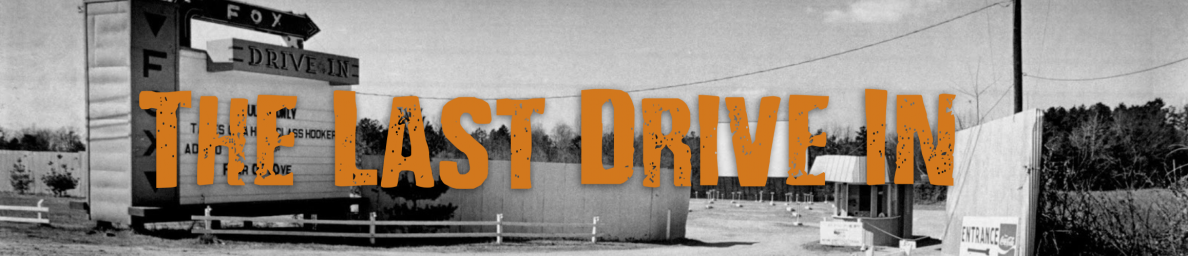
The Last Drive In: Let’s go to the snack bar!
Joey at the Drive In here… thinking it would be such a nice treat to offer up a brief yet deliciously fun post from the snack bar. What better way to enjoy an intermission between my long winded writing than to just get to the point and tickle your vintage TV taste buds with a little amuse-bouche!
TEN TASTY TELEVISION TRIVIA TID BITS TO TANTALIZE!
1) Lt.Columbo (Peter Falk) loves loves loves chili and he's very fond of health cookies!


2) Chief Ironside (Raymond Burr) eats chili and they all like rum crunchy ice cream

3) The Fugitive’s Richard Kimble (David Janssen) only drinks black coffee… he's usually on the run


4) The Golden Girls Dorothy Blanche, Rose and Sophia eat cheesecake.

5) Carroll O’ Connor is the inimitable Archie Bunker who likes either chicken croquettes or a tuna sandwich with an orange on the side and a Twinkie for desert!… in his lunch box.
And lovable Edith (Jean Stapleton) buys him Hhm hhm hhm ( Cling peaches) in heavy syrup when they’re on sale or serves up rice pudding with a drop of milk on top unless he doesn't ask for it. Dingbat!!!! And of course there's always beer…
6) Jim Rockford (James Garner) eats Tacos for breakfast… with no apologies!

7) Andy and Opie enjoy anything Aunt Bee cooks as long as it isn't those kerosene cucumber pickles. from The Andy Griffith Show
8) Beaver Cleaver will just not eat brussels sprouts but then again I think I'm the only one who loves them…
9) Harry Morgan as Officer Bill Gannon concocts the weirdest food combinations ever. Especially his recipe for BBQ sauce the secret ingredient is…- from Dragnet
10) The sublime chemistry of the Odd Couple’s Oscar Madison (Jack Klugman) eats anything with ketchup on it, and Felix Unger (Tony Randall) doesn't like pits pits pits in his juice juice juice… uh oh!
"MeTV Remembers the M*A*S*H Finale" Exclusive Broadcast Event
With Series Cast and Creators, Airing on Sunday, May 3
In honor of MeTV’s tribute to M*A*S*H here’s Hawkeye crying a river of liver!
And why say…. as long as we’re on the snacking subject if you’ve got any great additions to add, drop by The Last Drive In’s snack bar and let me know.
Your Everlovin’ Joey (MonsterGirl) saying hope you always enjoy the show!
Sunday Nite Surreal: Daughter of Darkness (1948) & Carnival of Sinners (1943)-The Right Hand of God/The Left Hand of the Devil

Carnival of Sinners 1943
Directed by the silent film era auteur Maurice Tourneur (father of Jacques Tourneur Curse of the Demon 1957, Cat People 1942, I Walked With a Zombie 1943, Out of the Past 1947 ), this fantasy-horror film creates a tumultuous Mephistophelean voyage of surreal and striking imagery. This film has fast become one of my favorite fantasy/horror films…

Carnival of Sinners or La Main Du Diable (The Devil’s Hand) is a brilliant and hilariously dark morality play about being careful what you wish for and what is the meaning of life and the pursuit of physical pleasure and earthly desires, if you must lose your eternal soul in the end.

With an incredible score by Roger Dumas that lends a magical soundtrack to the story!
Based on Gérard de Nerval’s novel, the film creates a hallucinatory world of monochromatic imagery, with noir-like edges & shadows, Gothic & theatrically macabre masks, and a gruesome narrative about a disembodied, charmed left hand. Palau’s amiable little grinning devil is perhaps one of my favorite portrayals of Old Nick as he reveals himself to others as a mild-mannered civil servant in a bowler hat when he is actually on a duplicitous mission to abscond with the souls of desperate men.


It opens with a small village tavern filled with people who an avalanche has detained. These characters are comical and colorful as they all want to eat and are suspicious of Roland, whom we haven’t been introduced to yet. As they wait to be fed, a strange man dressed in black carrying a wrapped package under his left arm, his immovable hand gloved in stiff black leather, storms into the tavern with a gust of secrets and urgency at his back. They immediately mistrust this man, as he is not amiable and does not wish to mix with them at all. He acts as if the devil himself is pursuing him.
Well, maybe he is… him. He is called on the phone by someone asking for him by name. Once at the phone, the lights go out, and when they come back on and the chaos settles, the package is missing. He panics, of course.


It is a tradition at this tavern for Monsieur Notary to tell unbelievable stories. They plead with Roland Brissot to tell them what has brought him here. And so he begins to relate an incredible story.
Pierre Fresnay (The Man Who Knew Too Much 1934, Le Corbeau -The Raven 1943) is French artist Roland Brissot, who can’t get the girl or sell a painting until one night after Irène (Josseline Gaël) storms out of the little cafe frustrated with him for not being a success and a bore, Mélisse the chef (Noël Roquevert ) brings over a bottle of wine and offers to help the down and out painter. He tells Roland that he possesses a Talisman and that he’d like to sell it to him for merely one sou. That it would bring him great riches, love, and success!
When Roland follows him up to his room, he shows him a small wooden box; inside the curious box is an animated severed left hand. Mélisse explains to Roland that he purchased the Talisman a while ago, but he fears going to hell and wants to save his eternal soul, so he must pass this gift onto another man who is willing to buy it, fully knowing the contract and desiring to make Irène his own and stop doing portraits of dogs. Roland agrees and pays the sous to the cook. At that moment, Mélisse’s left hand is severed and mysteriously wedded to Roland’s left forearm, and he is now the new owner of the Talisman. Of course, all his wishes come true, and Irène returns in total awe of her man. He became a renowned painter with riches beyond his wildest dreams. But with all these cautionary fables, there is a kink in the chain. A chain that I will get back to in a short while.


A peculiar little man (Le petit homme– who is wonderfully enacted by Palau (Children of Paradise 1945, The Devil in the Flesh 1947, Le Corbeau 1943) is actually the devil himself who has been offering this deal for quite a while now and since it has been a year to the day that Roland made the wager of his immortal soul for the Talisman, he has come to collect.


From the moment Roland obtains the Talisman, women flock to him, his dog runs away in fear, and Irène cannot resist him to the point that he no longer can stand for her smothering love by the end.
The little man shadows his every move, playing little tricks on Roland so that he couldn’t possibly buy back his soul. He changes the time on the clock, he steals money so that Roland must scramble to put the fee together which doubles with every day that it’s come due. His life falls apart, his wife becomes less desirable to him and they become strangers, and all he wants is to be free of his left hand which is the harbinger of doom for him.


Will Roland Brissot find the next sinner to buy the Talisman from him… or will the Devil get his due?
As he relates his story, it unfolds as a marvelous dark fairytale, lensed with visual splendor dipped in a wonderful folkloric narrative and marvelous characters… including the other souls who lost their left hands and formed a special chain in the links of fate.


Roland’s journey is whimsical and harrowing. It was beautifully filmed by Arman Thirard, who photographed such masterpieces as Henri Georges Clouzot’s Diabolique 1955 and The Wages of Fear 1953—two of the best thrillers of all time!
Carnival of Sinners 1943 belongs with some of the great fixtures of ‘wagering your soul to the devil’, with William Dieterle’s The Devil and Daniel Webster 1941, and F. W. Murnau’s Faust 1926.
Roland has an enormous painting of Goya’s nightmarish diversion into hell hanging in his palatial mansion. It is the one of Colossus devouring his son. You must watch this film several times to catch all the wonderful details and devilish black humor!

[The Great Villain Blogathon] Blanche Fury: How the Beautiful People Dress
Dark Patroons & Hat Box Killers: 2015 The Great Villain Blogathon!

IT’S HERE AGAIN… THAT TINGLING ON THE BACK OF YOUR NECK BECAUSE THERE’S FOUL DEEDS AND MURDEROUS MACHINATIONS AFOOT…HOSTED BY SPEAKEASY… SHADOWS & SATIN… AND SILVER SCREENINGS… THE GREAT VILLAIN BLOGATHON OF 2015!

“Sometimes human places, create inhuman monsters.”
“• Stephen King, The Shining“What would an ocean be without a monster lurking in the dark? It would be like sleep without dreams.”
“• Werner Herzog“Monsters cannot be announced. One cannot say: ‘Here are our monsters,’ without immediately turning the monsters into pets.”
“• Jacques Derrida
DRAGONWYCK (1946)
Vincent Price – “I don’t play monsters. I play men besieged by fate and out for revenge…”

Price could always play ONE of the most cultivated, enigmatic, and beguiling villains at any time…

Gene Tierney as Miranda Wells: “Nicholas – you do believe in God?”
Vincent Price as Nicholas Van Ryn: “I believe in myself, and I am answerable to myself! I will not live according to printed mottoes like the directions on a medicine bottle!”
The chemistry between Price and Tierney is authentic and captivating. When Miranda Wells feels humiliated by the gaggle of high-class snobbish debutantes because she’s from the wrong end of the river, not from the Hudson but the Connecticut River bottom, Nicholas tells her she’s better than all of them and asks her to dance. He seems so gentle and human, but he has a dark and villainous side!


DRAGONWYCK 1946 was Vincent Price’s 18th film. He had previously appeared in The House of the Seven Gables 1940 as Shelby Carpenter opposite Gene Tierney in Laura 1944 and Leave Her to Heaven 1945, right after he appeared as the cold-blooded Dr. Richard Cross in Shock 1946.
Produced by Ernst Lubitsch uncredited and overseen by one of my favs– Writer/Director Joseph L Mankiewicz. This Gothic & dark romance is based on the novel by Anya Seton, with cinematography by Arthur C. Miller (The Ox Bow Incident 1943, The Razor’s Edge 1946, Whirlpool 1949, The Prowler 1951), Art Direction by Lyle Wheeler and Russell Spencer, Set Direction by the great Thomas Little. The lighting alone is a mixture of noir chiaroscuro and offers dramatic shadings of the best classical elements of horror. The narrative speaks of familial secrets and twisted vengefulness, not unlike Lewis Allen’s spooky debut masterpiece, The Uninvited 1944.


Added to the moodiness is the eerily haunting score by Alfred Newman with Orchestral arrangements by Edward B Powell. Edited by the keen eyes of Dorothy Spencer (Stagecoach 1939, The House Across the Bay 1940, Lifeboat 1944, The Ghost and Mrs.Muir, The Snake Pit 1948).
Costumes by Rene Hubert and Makeup by Ben Nye. The film bears shades of Hitchcock/de Maurier’s Rebecca 1940 and Robert Stevenson’s/Charlotte Brontë Jane Eyre 1943. Even a bit of de Maurier’s tautly suspenseful My Cousin Rachel 1952 directed by Henry Koster and starring Olivia de Havilland and Richard Burton. The book is a hell of a good read if you enjoy Gothic melodrama.
Gene Tierney and Vincent Price reunite after having appeared in Otto Preminger’s memorable film noir masterpiece, Laura, in 1944.

Here-Gene Tierney plays Miranda Wells, and Walter Huston is her devoutly Christian working-class father-Ephram Wells.


This scene foreshadows the dangerous path Miranda is willing to wander through, as she starts to break free of her puritanical upbringing and reach for a life of being a free spirit. Believing that Nicholas represents that freedom. But there is a hint of evil that her father can sense.
Vincent Price once again manifests a passionate yet conflicted antagonist Nicholas Van Ryn with a magnetism you cannot escape, yet you may despise his cruelty and his self-indulgent murderous arrogance.


Glenn Langan is the handsome yet vanilla Dr Jeff Turner, Anne Revere adds a depth of nurture as Abigail Wells-Miranda’s mother who is weary of her daughter’s intentions to marry such a powerful man.

Spring Byington is one of the maids-Magda. Connie Marshall is the young melancholy Katrina Van Ryn, Henry Morgan is Bleeker one of the farmers who challenges Van Ryn and fights back against the antiquated laws.
Vivienne Osborne plays wife Johanna Van Ryn. Jessica Tandy gives a marvelous performance as Miranda’s maid the feisty Peggy O’Malley. Trudy Marshall is Elizabeth Van Borden. Reinhold Schunzel is Count de Grenier, Jane Nigh is Tabitha. Ruth Ford is Cornelia Van Borden, David Ballard is Obadiah. Scott Elliot is Tom Wells and Boyd Irwin is Tompkins.
DRAGONWYCK 1946 is a Gothic suspense melodrama in the grand classical style. It even brushes against the edges of the classic horror film, not only because of the way it’s filmed, but there are certain disturbing elements to the story. The shadows and darkness that are part of the psychological climate work are almost reminiscent of a Val Lewton piece. There’s even a pale reference to that of a ghost story that is concealed, or I should say unrevealed, with the first Mrs.Van Ryn’s spirit playing the harpsichord, and the eerie phantom chords that add to the mystery and gloom that hang over the manor house.


With swells of atmospheric tension and darkly embroidered romance, there are just the right tinges of shadows and danger. This lush and fervent tale combines tragic Gothic romantic melodrama with the legitimate themes of social class struggle wrapped within dark secrets and suspense.
As always, Price conveys tragic pathos even as the story’s villain. He is a man who manifests layers upon layers of feeling: brooding, charming, sensual, intellectual, menacing, passionate, conflicted, self-loathing, and egomaniacal all at once.
One of my favorite roles will always be his embodiment of Corman/Poe’s Roderick Usher in House of Usher 1960.


The film also offers us the sublime acting skill and divine beauty of Gene Tierney as the heroine or damsel in peril, a simple farm girl living near Greenwich, Connecticut. She dreams of the finer things in life, swept up by the allure of a fairy tale existence, only to find out that her dream has become a nightmare.

Once Miranda receives a letter inviting her to come and visit Dragonwyck, she is perhaps at once young and naive when she arrives at the austere place to be a companion to Van Ryn’s despondent daughter Katrine, a lonely sort of isolated child. First triangulated by Van Ryn’s over-indulgent wife, Johanna, after her death, the two begin a whirlwind romance that leads Miranda to marry the imposing Nicholas Van Ryn.
Almost in the style of a Universal monster movie, the central focus is the mysterious mansion, surrounded by volatile thunderstorms and restless villagers who want to take action against their oppressors. The film works as a period piece, seeming to possess an added heaviness due to the provincial settings and underpinnings of class unrest, which lends itself to the bleak mood.


DRAGONWYCK’s villain or very human boogeyman is the inimitable and urbane Vincent Price, who holds sway over the locals as the patroon—lord of the land, as well as master of all he surveys and, of course, his new wife. Driven by his obsession with having a son, he is a brooding dark figure whose descent into drug-addicted madness comes to light like a demon who has escaped from a bottle.


Van Ryn is vain and contemptuous, scornful, condescending, and cruel. Eventually driven by his immense pride, love, and desire to murder his first wife, who is in the way of his ultimate legacy.
DRAGONWYCK is an interesting film that belies any one genre. As I’ve pointed out, beyond the dark melodramatic suspense elements, it’s every bit a horror film. It is also Joseph L. Mankiewicz’s directorial debut.

It was set during the nineteenth century when parts of New York were still founded as feudal estates. It’s a fascinating portrayal of the history of the 19th-century Upstate New York Dutch colonies and their struggles between the rich and poor against the reigning yet dying tradition of aristocratic rule over the small family farms, which were overseen by Patroons. A Patroon owns the large land grants along the Hudson River. They are descendants of the original Dutch patrons, “and they’re terribly rich and elegant.” –Miranda.
Yet, as in the case of Nicholas, they can be brutal and self-opportunistic landlords who collect the rent from these hard-working, exploited, and poor farmers.
This is what first impresses Miranda about Nicholas, his power and station in life. Her sister Tibby tells her she’s not anxious to leave home.

Miranda says, “That’s not fair, you know that I love you and Pa, all of you, and my home, it’s just that I try to be like everyone else, and want what I’m supposed to want. But then I start thinking about people I’ve never known and places I’ve never been. Maybe if the letter hadn’t come, I’d. Oh, I don’t know, I must be loony.”
Nicholas Van Ryn is a brooding and powerful aristocratic patroon who runs all matters with an iron hand. In the Nineteenth Century, the upstate New York counties were still dealing with a system run by these Patroons. There began a social uprising of the surrounding farmers who wanted more power over their land and a rule that would abolish the aristocracy that was a tribute to a dying past practice. Soon there would be an end to these ruling Estates.
As seen in Van Ryn’s maniacal demonstration of his being seated in an elaborate throne, he remains poised while collecting the farmer’s rent. Henry Morgan plays the tough and prideful farmer Klaus, who has brought nothing with him. “Not rent– nor tribute.”


When Nicholas’s first wife cannot bear him a son as heir to carry on the Van Ryn name, the wealthy and wicked Nicholas Van Ryn secretly plans to poison her with the help of an Oleander plant. Setting his sights on the younger, more beautiful cousin Miranda.

He then invites Miranda (Gene Tierney just naturally exudes a uniquely dreamy-eyed splendor) to come and visit Dragonwyck. She is an innocent girl fascinated by the urbane Nicholas but by the film’s climax, she becomes entrapped in the foreboding and bleak atmosphere of Dragonwyck, a place of secrets, sadness, and insanity.

Miranda is so taken with the idea of dancing the waltz and how fine a gentleman cousin Nicholas seems. Her father always reads passages from the Bible, and she hungers for adventure. Miranda craves the freedom to experience a better life.

Vincent Price is incredibly handsome as Nicholas. Mysterious, his deep blue eyes crystallize through the stark black and white film. He has a strong jawline, and possesses vitality”¦ at first, he is so charming. Nicholas-“The Breeze must feel wonderful indeed on a face as beautiful as yours, I imagine.”

The first meal at Dragonwyck is a grotesque scene in which his wife Johanna (Vivienne Osborne) shows herself to be a lugubrious sow, a glutton, and a spoiled child who now bores and disgusts her husband. He tells Miranda, “To my wife, promptness at meals is the greatest human virtue.”
Nicholas is already starting to reveal his cutting tongue by commenting on how his wife overeats and is not refined—a hint of his cruel nature.


At dinner, Johanna begins to nag him about bringing home the pastries from New York, the Napoleons, she appears to be a glutton, and though very pretty, a most unattractive portrayal of her character is given for the narrative’s purpose of Nicholas justifiably ridding himself of her so that he might pursue Miranda. In contrast to Johanna’s piggishness, Miranda is given a clear bowl of broth for her supper. The scene is set up so we feel a bit of sympathy toward Nicholas.
As Johanna shoves another bonbon into her mouth…


Cinematographer Arthur C. Miller frames the shot as Johanna is placed in between Nicholas and Miranda. His wife Johanna appears like a fairy tale character–the over-exaggerated plump wife who gorges herself on sweets while Nicholas and Miranda talk of love and loss. Miranda is wildly curious. He is withdrawn and pensive.


Nicholas plays the harpsichord. Miranda listens contentedly and then asks who the woman in the painting is. He tells her it’s his grandmother Aziel –“That’s a strange name” she looks like a frightened child.”
Miranda asks him to tell her more about his grandmother. Was it love at first sight?
Nicholas-“No Van Ryn does anything at first sight.” Miranda-“Oh, but she must have been happy to live here.” Miranda smiles, her face glowing. Nicholas adds, “As it turned out it didn’t matter, soon after her son was born she died. She brought this harpsichord with her from her home. She played it always.”
Johanna: “If you listen to the servants, they’ll have you believe she still does!” she laughs. But Nicholas quickly turns around to look at her. A dark shadow creeps along his brow, and his eyes raise.
Nicholas-“Fortunately, we don’t listen to either the servants or their superstitions.”


Magda (Spring Byington) tells Miranda about Nicholas’ grandmother from New Orleans, the woman in the portrait. That his grandfather never loved her, he never wanted her at all. He wanted their son. he kept her from him… He forbade her to sing and play. He broke her heart. And drove her.” Magda stops short”. “She prayed for disaster to come to the Van Ryns and she swore that when it came she’d always be here to sing and play”¦ She killed herself in this room.”
Magda asks-“Miss Wells, why have you come here? Do you think Katrine is in need of a companion? Miranda answers her, “Well, that would be for her father and her mother to decide.”
Magda says, “Don’t you think she’s in need of a father and a mother”¦ that was a silly question wasn’t it?”
The meddling maid pierces Miranda’s innocence with her honesty like venom–causing a bit of shock on Miranda’s face that usually seems as tranquil as a quiet lake of sparkling water.
“You like it here?” Miranda answers–“Of course, I do.” Magda comments- “Course you do, you like being waited on, I could see tonight it was the first time. You like peaches out of season. You like the feel of silk sheets against your young body. Then one day, with all your heart, you’ll wish you’d never come to Dragonwyck.”
The handsome young Dr. Turner (Glenn Langan) comes to take care of Johanna, who has taken to her bed.

He and Miranda sit and talk by the fire. He tries to imply that living at Dragonwyck has changed her, he tells her that the last time he met her he felt like they had so much in common. “Frankly right now I doubt you have any idea about the slightest thing to talk to me about.”
Johanna’s illness gets worse, of course, we know Nicholas has poisoned her. Lying in bed, she tells him that sometimes she thinks he hates her, but asks if they can go away together once she’s better. He says yes because he knows she’ll never get better. In fact, she will never leave that bed alive.

Continue reading “Dark Patroons & Hat Box Killers: 2015 The Great Villain Blogathon!”
“I am not a myth… I am at heart, a gentleman.” Marlene Dietrich
Virgins, Venuses, Miniskirts, Sorcerers, Pretty Poison, Peeping Toms & WomanEaters

It’s a psycho-sexual smorgasbord of cinematic thrills & filmic frissons! As women are in peril and perilous are some women!
RACHEL, RACHEL 1968 directed by Paul Newman.

Rachel Cameron: “I’m exactly in the middle of my life. This is my last… ascending summer. Everything else from now on is just rolling downhill into my grave.”
Joanne Woodward is the dowdy-looking emotional time bomb Rachel a 35-year-old school teacher who lives with her mother and needs to either break free or break down. Kate Harrington is fabulous as her mother, James Olson who was often cast as the male figure of desire in the 60s & early 70s psycho-sexual thrillers plays her lover Nick. The marvelous Estelle Parsons is her well-intentioned misguided friend Calla who has a budding lesbian attraction for her and Donald Moffat plays her dad.
I almost included this film with my compendium of cult films, though it is more melodrama than a crossing of noir, or psycho-sexual horror. The film works on the underlying premise that establishment culture has become like a sort of imprisonment to Rachel, reinforcing a repressive landscape and marginalizing the character of Rachel thus creating her own counter-culture reflecting the eroding of the American Dream and crumbling Idealism. (source American Cinema of the 1960s Themes and Variations Edited by Barry Keith Grant).

Rachel is the archetype of the repressed New England girl from a small town. Where everyone knows your business and it becomes impossible to breathe. One reviewer on IMDb called it “deep-level collective cultural phantoms” I particularly like that phrase. A suffocating lifestyle or stasis of life more aptly, Rachel is trapped by caring for her overbearing mother. and pulled to one side by the desire she has for Nick. Haunted by memories and collected damage over the years, she carries her emotional baggage til it is too heavy to bear.

A few very memorable scenes come to mind. Of course when Calla has the awkward revelation that she is in love with Rachel. But there is the bizarre church scene and several flashbacks that allude to her childhood trauma.

Will Rachel decide to free herself from the shackles of stifling conformity and become a liberated individual?
The film also co-stars the great Geraldine Fitzgerald as Rev. Wood.
Who was she? Sometimes she was a child skipping rope. Sometimes she was a woman with a passionate hunger. And one day the woman and the child came together…
who cares about a 35-year-old virgin?


VENUS IN FURS 1969 directed by Jesús Franco


In Istanbul, a jazz trumpeter Jimmy Logan (James Darren) finds the corpse of a beautiful woman named Wanda Reed (Maria Rohm–House of 1,000 Dolls 1967. The Blood of Fu Manchu 1968, Eugenie… Her Story into Perversion 1970, Count Dracula 1970) washed up on the beach.

Jimmy remembers her from the night before when he saw her at a party and then later as she was assaulted by the party’s host and two of his friends.

He winds up in Rio where he hooks up with Rita, played by Barbara McNair a singer who invites him to live with her and help him shake the nightmare off and stop thinking of Wanda.
Jimmy Logan: “She was beautiful, even though she was dead.”

Suddenly a woman appears who looks exactly like Wanda. Jimmy becomes obsessed and pursues her trying to get to the bottom of this mysterious woman.

The woman returns from the dead to take revenge on the group of wealthy sadists responsible for her death. The film also stars Margaret Lee, Dennis Price, and Klaus Kinski.
Frenzied, dream-like colorful excursion into the psycho-sexual mind of Jess Franco.

The coat that covered paradise, uncovered hell!
A Masterpiece of supernatural sex!

THE MINI SKIRT MOB 1968 directed by Maury Dexter

Driven by jealousy, Diane McBain plays Shayne the jilted leader of a female motorcycle gang whose sociopathic and ruthless nature instigates a sadistic reign of terror against her ex-lover Rodeo Cowboy Jeff Logan and his new bride Connie (Sherry Jackson)
Stars Jeremy Slate, Diane McBain, Sherry Jackson, Patty McCormack, and Harry Dean Stanton.


Patty McCormack not beating a little boy to death with her tap shoe.
THE SORCERERS 1967 directed and screenplay by Michael Reeves (Castle of the Living Dead 1964, Witchfinder General 1968).


Set in the atmosphere of the mod 60s of London —Boris Karloff is a subtly imposing looking more time-worn elderly Professor Marcus Monserrat scientist and hypnotist extraordinaire who has discovered the secret of mind control, and the ability to become empathic with the object of their desire.
Monserrat and his wife Estelle (Catherine Lacey-stage actress who was a regular performer with the Old Vic Company from 1951-went on to play eccentric spinsters-) can literally share sensations, thoughts, and feelings of the subjects they wish to control.

Ian Ogilvy is the shady swinger Mike Roscoe who falls into their trap and allows them the excitement of experiencing what he does, virtually enjoying the self-indulgence of being young again. But as usual, power corrupts and greedy Estelle begins to crave devouring Roscoe and the pleasure it gives her. Roscoe begins to lose control of himself, mind, and body as the battle of wills ensues with the power-hungry old bird trying to experience ‘kicks’ vicariously through the unlucky chap. Co-stars Elizabeth Ercy and Susan George.


 Boris Karloff, He Turns Them On…He Turns Them Off…to live…love…die or KILL!
PRETTY POISON 1968 directed by Noel Black

When a mentally disturbed young man Dennis Pitt (Anthony Perkins) tells a pretty girl that he’s a secret agent, she believes him and murder and mayhem ensue. Anthony Perkins’s character of Dennis Pitt is every bit more of an emotional enigma as the young man with a pathological imagination who is an outlier in society. Released from an institution he gets a regular job at a lumber yard. But he meets the All-American Cheerleader squeaky clean blonde apple pie Sue Ann Stepaneck (Tuesday Weld) who just might be even more disturbed than Dennis. He informs her that he’s working undercover for the CIA and enlists her in helping him on his case. Dennis cannot help but live in his fantasy world. She is a stone-cold sociopath with ulterior motives.

As she manipulates his vulnerabilities into committing acts of dangerous vandalism and eventually murder, she is in control of this Folie à deux
Co-stars Beverly Garland as Sue Ann’s Mama.
She’s such a sweet girl. He’s such a nice boy. They’ll scare the hell out of you.
Did you ever see two kids like Dennis and Sue Ann? We think not…
…Wait till you see what they did to his aunt – the night watchman – to her mother.
What brought a nice kid like Sue Ann to a shocking moment like this?

PEEPING TOM 1960– directed by Michael Powell–

Powell had been known for his very barbed visual style.
The background story behind Mark Lewis’ madness/murder compulsion.
Mark Lewis-focus puller on Arthur Baden’s new film The Walls Are Closing In-he also moonlights as a photographer of racy pictures on the West End. He is smitten with 21-year-old Helen Stephens (Anna Massey) and they are carrying on a very civil and sweet courtship. Almost child-like which is probably what kept Helen safe from Mark’s darker side.


What Helen doesn’t know is that Mark has a blade hidden in the armature of his tripod, and stabs the object of his desire, filming their deaths, as a surrogate for his past abuse. When he was a young boy his father, a biologist researching the effects of fear on children, ‘the physiology of fear’ used to film Mark continuously like a mouse in a maze, throughout his childhood, subjecting him to various fear-inducing incidents as his experimentation.


Voyeurism and psycho-sexual compulsion drive this very startling horror/suspense film starring Karl Böhm, as Mark Lewis who works as a cameraman at a British film studio. His fetish is to kill women with his camera tripod while filming their death. It’s not hard to envision that the tripod is a surrogate for his phallus, and the act of stabbing them with it is his act of penetration. A mirror is fixed to the tripod so that the women can see the expression on their own faces right before death, to witness their own fear.

Unfortunately in the way, Psycho with its subversive themes propelled Hitchcock’s status to auteur, the controversial Peeping Tom ended Michael Powell’s career with all the reviled reviews.
Nothing, nothing nothing… has left me with such a feeling of nausea and depression as I got this week while sitting through a new British film called Peeping Tom… Mr Michael Powell (Who once made such outstanding films as Black Narcissus and A Matter of Life and Death) produced and directed Peeping Tom and I think he ought to be ashamed of himself. The acting is good. The photography is fine. But what is the result? Sadism, sex and the exploitation of human degradation- Daily Express
Mark has had a very traumatic upbringing by his father who used his own son in experiments of the effects of fear and self-loathing. Well, they produced a son who is a sexual sadist who makes his female victims watch their own deaths-specifically the expression of terror on their faces right before death. Co-stars Moira Shearer, Anna Massey, and Brenda Bruce as Dora. Absolutely chilling for 1960. Bohm’s Mark Lewis almost elicits sympathy due to his childhood psycho-trauma. Much like Anthony Perkins’ Norman Bates and his fateful childhood.


The gist of why this film shook up the British film industry at a time when they were trying to tone it down was the idea of this gruesome ‘snuff’ filmmaker getting off on sublimating his own sexual impotence by finding victims to penetrate with his camera or gaze. The way Otto Heller sets up our participation as voyeurs make it doubly uncomfortable to watch the killings. For example. Mark takes a red-bloused prostitute up to her room. His camera with its several lensed eyes like an insect about to prey is concealed, the whirring is cloaked inside his duffel bag. See they even had kill bags back then. As she leads him upstairs he throws an empty box of Kodak film in the garbage. Not cigarettes, or a box of condoms, but still the very sexual instrument in his mode of arousal + fixtion+ object/spectacle +gaze =murder. Also turning their own destroyed images back on themselves is quite disturbing–It’s a kinky and interesting little detail. Otto Heller also added a wonderful detail to the film as Mark’s private ‘viewing room’ was bathed in a sanguinary red tone.

Director of Photography was Otto Heller, Art Director- Arthur Lawson, and Editor Noreen Ackland.
Anna Massey plays Helen Stephens, Maxine Audley is Helen’s mother Mrs Stephens who while blind senses that there is something off about Mark, Moira Shearer is Vivian, and Nigel Davenport is Sergeant Miller.
Can you see yourself in this picture? Can you imagine yourself facing the terror of a diabolical killer? Can you guess how you’d look? You’ll live that kind of excitement, suspense, and horror when you watch “Peeping Tom”.

THE WOMAN EATER 1958 directed by Charles Saunders


A mad scientist Doctor Moran (George Coulouris) captures women and feeds them to his carnivorous tree with tentacle-like branches that only have a taste for the ladies preferably young ones, this in turn gives him a serum that helps bring the dead back to life.

Because the tree gets fed its nourishment, it provides the evil doctor with a liquid that restores life to the dead. So naturally the first woman you would want to be resuscitated would be a good housekeeper, right? No… She goes all Rochester’s crazy wife Bertha on the place, you know the violently insane first wife of Edward Rochester; moved to Thornfield and locked in the attic and eventually commits suicide after setting fire to Thornfield Hall in Jane Eyre., that sort of way! and ruins everything…
It’s really just a silly B movie from the 50s that finds unique ways to destroy beautiful women by way of mad science or mad obsession.

The film also stars Robert MacKenzie, Norman Claridge, and Marpessa Dawn as a ‘native’ girl. Jimmy Vaughn as Tanga, Sarah Leighton as Susan Curtis, and Vera Day as Sally.


“No Beautiful Woman is Safe!
See the nerve-shattering Dance of Death!
See the Woman Eater ensnare the beauties of two continents!
See the hideous arms devour them in a death embrace?”
Your Everlovin’ MonsterGirl saying hope you stay on the good side of the camera and watch out for those strange large plants at Home Depot!
Sunday Nite Surreal- Eye of the Devil (1966) The Grapes of Death!
“Catherine it’s our belief in something… that makes that thing… for a moment, or forever-DIVINE…” -Phillippe de Montfaucon
EYE OF THE DEVIL (1966)

Directed by J. Lee Thompson (Blonde Sinner 1956, Tiger Bay 1959, Cape Fear 1962, The Reincarnation of Peter Proud 1975) the outre surreptitious Eye of the Devil (1966) is an atmospheric smorgasbord of uncanny & haunting images encircled by the air of clandestine and provocative underlying forcefulness. With ease, the film pulls you into an esoteric world of ancient rites and beliefs and primal fears and urges to prevail against or more aptly in honor of the pagan notion of the rule & reign of the old ways, and the dominant elementals. It’s a bit of a cryptic occult meditation on reverence, immortality, sacrifice, and reaping what you sow.


Niven is urbane and resolute in his stature as Patriarch of the French family who comes home to the ancestral chateau to tend to the vineyards, (the past season’s crop has suffered) and take his rightful place during the rites of the ceremonial harvest. Phillipe must not only observe the deadly family secrets that have survived for centuries but more horrifying than that, it must continue to be passed down to his children.

Eye of the Devil works so well to capture our ideologies by the throat partly because of the convincing performances by the enormously talented cast who inhabit this secret world, Deborah Kerr, David Niven, Flora Robson (Beast in the Cellar 1970 ) as Phillipe’s Great Aunt Countess Estell, Donald Pleasence as a malefic cleric Pere Dominic with a shaved head and solemnity, David Hemmings, Sharon Tate, and Emlyn Williams.
Both Sharon Tate and David Hemmings play two beautiful yet sinister figures lurking about. David Hemmings went on to do Michelangelo Antonioni‘s Blow Up (1966) and Sharon Tate whose first movie this was, went on to do Roman Polanski’s originally called Dance with The Vampires, now called The Fearless Vampire Killers, a comedic romp through the classical vampire story, though a little numbing possessed a few hilarious moments.Â
The film is an adaptation of Philip Lorain’s novel Day of the Arrow.
Once again absolutely stunning visuals frame the picture by cinematographer Erwin Hillier.

Erwin Hillier combined with director J. Lee Thompson’s directing style is a tense and well-focused gaze creating a closed world of authentic dis-ease. Beautifully photographed with slight suggestions of The Wicker Man. There is an intoxicating ambiance perfectly underscored by the simplistic yet alluring music by composer Gary McFarland. Hillier’s close-ups capture fertile images of evil & arcane sensuality.
David Niven is the Marquis Philippe de Montfaucon who is the owner of a historic Vineyard. When a dry season hits the harvest he is summoned to the castle Bellenac. Deborah Kerr plays his wife-Catherine de Montfaucon who is told to remain in Paris with the children, but she follows him anyway. And for her trouble, she is assailed in the woods by very ominous figures in hoods which make for a very potent scene… which does not cease even up to the end’s shocking climactic conclusion.

The opening frames are quick cuts that utilize the sound of a speeding train, cut away frames between reveal shots of a sharp arrow, we hear the train sirens, a lavish cocktail party in high society, an old world-looking bearded man on the train, the arrow is raised- it pierces the heart of a white dove, the woods are filled with hazy black hooded figures, eerie and ominous they stand by the trees. A cross of branches is set on fire. Close up on Sharon Tate then close up on Hemmings then the screen goes black and the credits roll"¦..
It's a post-modern and riveting way to open a film with an esoteric narrative "¦the film’s title is set against the speeding to train its windows like eyes themselves staring back at us.
When Phillippe the Marquis arrives in Bellenac the villagers all seem to revere him, lifted their hats to him, head downward, humbled and proud. He meets up with the cleric Pere Dominic (Donald Pleasence) the mood and furnishings give one the idea of an Orthodox Christian sect.
Some thought he would not return to Bellenac the butler knew he would return"¦ Phillippe asks how about your father?

"I’ve never doubted the path you have chosen" Phillippe-"What makes you think I've chosen it?"
Pere Dominic-"You came back didn't you."
The priest places an elaborate amulet on the table. Phillippe picks up the amulet Dominic tells him "I think you have chosen it Phillippe, my son."
Family friend Jean-Claude Ibert (Edward Mulhare) sits by the fireplace in Paris talking about Phillippe’s trip back to Bellenac. Catherine tells him the first time she was there after their wedding she says it was the most frightening place almost as though they were back in the Middle Ages. Jean-Claude tells her that Phillippe had always been obsessed with the place as if he was trying to solve its diabolical secret.
Once at the castle, Philippe seems distant as if he is following a mysterious compulsion guided by the pervading force of a cult that recognizes ancient pagan rituals, and perhaps sacrificing his own life in order to save the vineyard. Catherine can do nothing to change her somnolent husband’s mind to leave and come back with her and the children to Paris.


Both Sharon Tate as the luminous Odile de Caray and David Hemmings as the impish Christian de Caray play two beautiful yet otherworldly and sinister figures lurking about with bows and arrows. Turns toads into doves, and is fixated on the children.
Odile mesmerizes both Jacques and Antoinette. She asks if they believe in magic, then she demonstrates her powers by changing a frog on a lily pad into a dove. Could she be using the art of hypnosis to create an illusion?
Catherine does not want her brother Christian to kill any more doves on the property and isn’t happy to see her influence over her children. It begins to rain. But Odile tells her that they are not life-giving clouds and that they will pass quickly. Catherine asks why she is at Bellenac. Odile tells her that she and her brother come there often… Then Christian appears and shoots an arrow into a tree right next to Catherine. The siblings wander through the landscape like other-worldly minions.
Phillippe begins to pull away consciously from his wife and children, he tells her to take them and leave. She pleads with him to come home with her and that she can help him. In a sense, it’s all begun and even if she tries to make a fuss afterward, no one will either believe her or come forward to help her.
She says he must be mad, that he’s dying for nothing, walk away from this stupid evil.

“I’m dying for what I believe.”
“No one can help me, not even you. You don't understand you could never understand”
He is preparing for a glorious pilgrimage of the soul. He is beyond being reached. He is prepared for the festival of ‘The Thirteen Days” or rather The Thirteen Dancers…
Alain de Montfaucon (Emlyn Williams) tells Catherine that he expects to be a living God and that Pere Dominic is more than part of it… He is all of it. He is a Pagan. And Bellenac is… A Fortress of Heresy…
IMDb fun fact:
Originally Kim Novak was cast in the role of Catherine de Montfaucon. Filming began in the fall of 1965 in France. Near every scene had been filmed when Kim Novak fell from a horse and wasn’t able to complete her scenes. Deborah Kerr was hired to take over and every scene that featured Miss Novak had to be re-shot with her replacement.


HAVE A SO-REAL SUNDAY NITE- FROM YOUR EVERLOVIN’ MONSTERGIRL!

Classic Hollywood Birthdays
Happy Birthday Claire Bloom… ironically enough- we’re watching The Haunting tonight so we’ll see Theo in velvet once again. 18 Years ago , we had our first date watching The Haunting because it was both our favorite films. Wendy’s commentary was from a lighting designers perspective and mine was from loving Gothic classic horror films…. Thanks Claire Bloom for bringing us together 18 years ago today…. Love Joey
4 Outstanding Actresses: It’s 1964 and there’s cognitive commotion!


“The question isn’t who’s going to let me; it’s who is going to stop me.” – Ayn Rand.
Cognition-(noun) The mental action or process of acquiring knowledge and understanding through thought, experience, and the senses.” A result of this: a perception, sensation, notion, or intuition.

These 4 particular films seem to be part of a trend of films that deal with either women’s brewing emotional turmoil or in the case of Jean Seberg’s Lilith- a creeping organic madness, perhaps from childhood trauma that is not delved into.
Let’s consider women either in distress or the oft-used “hysterical’ trademark that summons every neurotic ill associated with women. With these 4 films, it’s the same root problem: Why should society determine what counts as an emotional problem? This is especially true for women as if she were the engendering source of a specific kind of female mayhem, the creator of the tumult itself… Capable of giving birth, does she also give birth to a certain kind of madness directed inwardly or aimed outward at society and its unyielding ethical questions?
It’s not that I think Barbara Barrie is troubled because she falls in love with a black man. It’s that the world is troubled by her decision. Because of her choice, a society inherently cruelly punishes her by taking away the one thing she had personal power over, to remove her child from her life. Although she has a wonderful relationship with Frank, both are being judged and condemned.


The judge awards custody of her little girl to the biological father even though he is not the better parent. Not too long ago, women could be hospitalized just for being menopausal, based on what their husbands said.
Women were at the mercy of white male society’s judgment. So if a white woman loves and marries a black man in the volatile climate of the civil rights 60s, it would absolutely cause turmoil and quite the commotion.

All these women experience cognitive commotion but are not necessarily crazy. One Potato Two Potato is about the societal impositions forced upon an interracial couple and the strain of a child custody battle forcing her to qualify herself as a good mother. The sentiments of the time, the courts, and society, in general, are disempowering Julie through her motherhood.
This inflicts an agonizing torture on Barbara Barrie’s character Julie. Barrie’s performance as well as Bernie Hamilton as a man whose own masculinity is tested, tears me up inside…
A white woman, Julie Cullen, falls in love with Frank Richards, a black man, against the will of everyone around them, including his parents, who think he should stick with his own kind. Eventually, Frank’s mother and father come around and embrace Julie and her daughter, who considers Martha and William her grandparents.
Julie has a son with Frank…and suddenly is being faced with a white judge deciding on who will gain custody of her little girl from a previous marriage to a man, Joe Cullen, who abandoned them years ago. Not til he finds out that she is being raised by a black man does he rise to take action and gain custody of his daughter.
This is a courageous story to relate to in 1964. Barrie’s anguish is one that is not self-inflicted, there is no mental disorder or neurotic dilemma yet it would challenge anyone who dares to be truthful and follow their heart in a world where many people must hide who they are. A beautiful love story that becomes tainted by the stain of ingrained hatred and ignorance. And causes ruination to a happy family. Barbara Barrie’s performance as Julie Cullen Richards is nothing short of intuitively astounding.

Just for funzies, I wanted to paint some contrast into the mix, therefore pointing to films that truly deal with women and mental illness. More than cognitive commotion, they’re unstable, non compos mentis, deranged, knife-wielding, murderous femmes, traumatized, delusional dames… or all out CRAZY NUTS!!!!!!!!!
And…
I’ll probably write about all these films mentioned–the women on the verge of a nervous breakdown or already on the shoulder of the weary road of life with all four tires flat at some point. I’ll consider Charles Vidor’s Ladies in Retirement 1941 where Ida Lupino has to take care of her two dotty sisters, Elsa Lanchester and Edith Barrett, as the Creed sisters… They’re wonderfully cuckoo!!! I did a little piece on this gem a while back…
Robert Siodmak’s The Dark Mirror 1946 with Olivia de Havilland playing twins Terry & Ruth Collins, Gene Tierney gorgeous yet cunningly homicidal in Leave her To Heaven 1945, Laraine Day is totally unhinged in The Locket 1946, Joan Crawford as Louise Howell has a nightmare filled flashback in Curtis Burnhardt’s Possessed 1947.
“she is shown as alienated and stricken with psychological torture”– {source Marlisa Santos The Dark Mirror; Psychiatry and Film Noir
Then again, in Anatole Litvak’s story, actually set in a mental institution with Olivia de Havilland stuck in The Snake Pit 1948, Vivian Leigh is the consummate delusional Blanche DuBois in Tennessee Williams’ A Streetcar Named Desire 1951… Marilyn Monroe gives a riveting performance as the deranged babysitter–(oh god kid just be quiet for Nell) in Roy Ward Baker’s Don’t Bother to Knock 1952, Joanne Woodward is in emotional conflict with three different personalities all herself…In The Three Faces of Eve 1957.

Eleanor Parker gives a stunning portrayal of multiple personality disorder in Hugo Haas’ Lizzie 1957, I’ve written about Liz Taylor almost getting her frontal lobe sucked out at the request of her domineering Aunt -(Katherine Hepburn) just to hide her son’s sordid secret life in Suddenly, Last Summer 1959, Jean Simmons tries to find happiness in a loveless marriage that isn’t her fault in the engrossing Home Before Dark 1958, Ingmar Bergman’s Striking minimalist piece about mental turmoil in his beautifully photographed Through a Glass Darkly 1961, William Castle’s groundbreaking gender-bending Homicidal 1961.


Carroll Baker is a traumatized rape survivor in Something Wild 1961 and what I found to be a misogynist romp wasting several wonderful actresses who were offered these humiliating roles in The Chapman Report. In particular, Clare Bloom deserved better with her talent -as a nymphomaniac struggling with her sexual desires until she ultimately commits suicide in The Chapman Report 1962 and good old William Castle’s once again with his Strait-Jacket 1964 starring one of the ultimate Grande Dames Joan Crawford this time wielding an axe in addition to her nightmarish flashbacks.
Now… none of the 4 women I am covering here are homicidal or dangerous, all these women are experiencing a psychic struggle with issues that speak from their place in the world as women… who are defining somehow in their own way, what their identity means to them… Well, perhaps Lilith is a bit more volatile in terms of how she wields her sexuality and influences men & women! But she is a divine innocent albeit-nymphomaniac living in a dreamy world of her own –not a homicidal vamp who devours men and spits them out… She is innocent without malice. The men do the damage to themselves…
“And her eye has become accustomed to obvious ‘truths’ that actually hide what she is seeking. It is the very shadow of her gaze that must be explored”--Luce Irigaray

Beautiful Poison: Jean Simmons in Angel Face (1953) & Gene Tierney in Leave Her To Heaven (1945)

Seance on a Wet Afternoon 1964

And of course the two titans of Grande Dame Guignol fêtes courtesy of Robert Aldrich…
What Ever Happened to Baby Jane? 1962 & Hush… Hush, Sweet Charlotte 1964


There’s always Hitchcock’s Marnie (1964), showcasing an unstable female in distress brought on by childhood trauma. Considering Hitch’s lavish colors and overt psychological embellishments that have created a pulpy romanticized landscape, which at times obfuscates the mental turbulence rather than letting it surface on its own. I chose to set this film aside and instead include the more off-the-beaten-path of psychological leanings pictures. 1964 seemed to be one hell of a year for Women in Distress by virtue of the female psychological crisis, once again to reiterate -not the ‘hysteria’ kind, mind you.”

“From the socially conservative 1950s to the permissive 1970s, this project explores the ways in which insanity in women has been linked to their femininity and the expression or repression of their sexuality. An analysis of films from Hollywood’s post-classical period (The Three Faces of Eve (1957), Lizzie (1957), Lilith (1964), Repulsion (1965),Images (1972) and 3 Women (1977)) demonstrates the societal tendency to label a woman’s behavior as mad when it does not fit within the patriarchal mold of how a woman should behave. In addition to discussing the social changes and diagnostic trends in the mental healthprofession that define “appropriate” female behavior, each chapter also traces how the decline of the studio system and rise of the individual filmmaker impacted the films’ ideologies with regard to mental illness and femininity.”
— from FRAMING FEMININITY AS INSANITY: RE PRESENTATIONS OF MENTAL ILLNESS IN WOMEN IN POST-CLASSICAL HOLLYWOOD by Kelly Kretschmar
WOMEN ON THE VERGE… OF A BREAKTHROUGH!

Psyche 59 (1964)

The Pumpkin Eater 1964

One Potato Two Potato 1964

Lilith 1964

THE WOMEN!!!
Barbara Barrie

Patricia Neal

Anne Bancroft

Jean Seberg

LET’S BEGIN WITH…!
Alison Crawford (Patricia Neal) –“Love has to stop somewhere along the line, otherwise it’s almost “like committing suicide. “
PSYCHE 59 (1964) – Alexander Singer (A Cold Wind in August 1961 with Lola Albright and Scott Marlowe) directs the remarkable Patricia Neal as Alison Crawford, a woman struck down with a form of psychosomatic or hysterical blindness. Alison is aware that the affliction is all in her mind since the doctors can’t find anything organically wrong with her sight. Her ‘hysterical blindness’ and memory loss of the events leading up to her accident follows a fall down the stairs while she is pregnant. When she awakens, she is unable to see.

What is happening for Alison is that she is subconsciously blocking out the truth about her husband and her younger, coquettish sister Robin.
She is now living a very quaint life with her husband, played by the austere Curd Jürgens (I love him as the devilishly urbane concert pianist Duncan Mowbray Ely in The Mephisto Waltz, 1971).


Aside from her intense husband Eric, Alison’s very sexually charged sister Robin (Samantha Eggar) has now come to live with the couple after a divorce. Robin hovers very close to Eric like a carrion bird waiting to pick the bones of Alison’s troubled marriage. While Alison doesn’t have any cognitive memory of what led up to her fall, it’s obvious to us that she can sense the strong attraction between her husband and younger sister. At one time, her younger sister Robin and Eric had been involved before Alison caught and married him. Robin hasn’t stopped lusting after him. Slowly, Alison’s memory comes back as the flashes and images of what she experienced right before she lost her sight literally come into view.
Singer builds the tension in the air slowly, methodically, until it all comes to a head against the skillfully contained cinematography by Walter Lassally (The Loneliness of the Long Distance Runner, 1962, Zorba the Greek, 1964, To Kill a Clown, 1972).
IMDb tidbit-Patricia Neal was offered the lead in The Pumpkin Eater, but it was not 100% confirmed she would get the role. She then opted, to her later regret, to make Psyche 59 (1964) instead, since it was an official offer.
Neal gives a restrained yet powerful performance of a woman who is trapped in self-imposed darkness by her fear of the truth.
There is very subtle theme of self-brutality that exists for each of the characters, Alison’s self-imposed sightlessness, Eric’s indignant stoicism is palpable as he walks through the story like a trapped stray dog, He is agitated by Robin’s presence because he can not resist her.
Robin, her younger sister, must have been quite young at the time of her relationship with Eric, which begs the question of appropriate behavior on his part. Robin constantly asserts a seductive influence on Eric right in front of the disadvantaged Alison.

She is both a hyper-sexual narcissist and a bit self-destructive at the same time; either way, she gets off on playing the seductress, torturing Eric, right in front of her sister, dark sunglasses, and delicate pout. Although Alison suffers from blindness, she maintains a certain dignity that, although all three characters seem like she is, one of the trapped animals in a psycho-melodramatic forest, we get a sense that she will one day regain her freedom and spread her wings and fly away from it all, truth in hand.


Based on the novel by Françoise des Ligneris, with a screenplay by Julian Zimet (who wrote Horror Express 1972 and one of the best atmospheric little horror obscurities The Death Wheelers 1973 formally called Psychomania about a group of British motorcycle thugs and their pretty birds who dabble in the occult. Beryl Reid and George Sanders being one of their relatives, learn the secret of immortality. But you have to die first to obtain it.)
Psyche 59 is an interesting psychological mood piece, almost post-modernly impressionistic with its stark and polished black and white photo work. And Patricia Neal who had just won an Oscar for her role as Alma Brown in Hud 1963 and gave a command performance in 1957 as Marcia Jeffries in A Face in the Crowd is just exceptional as Alison who is trying to navigate the dark world surrounding her.


The film is strange and at times subtly cruel yet Neal’s character relies on our visual journey which becomes quite painful at times yet beautiful as she begins to emerge. In the film, Patricia Neal’s relationship with Curd Jürgens has an eerie parallel to real-life marriage to writer/spy Roald Dahl, but I don’t want to get into the sensationalized tidbits of public people’s wreckage.
The film also stars Ian Bannen as Robin’s poor, befuddled boyfriend, Elspeth March, and Beatrix Lehmann as Alison’s staunch, science fiction-reading grandmother—I wish I had one of those!


Continue reading “4 Outstanding Actresses: It’s 1964 and there’s cognitive commotion!”