Ages from the famous ‘boiler scene’ as the tormented Aunt Fanny in Welles’ superior to Citizen Kane’s The Magnificent Ambersons. Fanny to the self-obsessed & spoiled Georgie “It’s not hot!!! it’s cold, the plumbers disconnected it… I wouldn’t mind if they hadn’t…! I wouldn’t mind if it burned!!!”
Â
A simple and wholesome beginning… Agnes Robertson Moorehead was born on December 6th, 1900 in Clinton, Massachusetts. Her mother was a mezzo-soprano and her father was a Presbyterian minister whose work eventually moved the family to St. Louis, Missouri. She started her acting career on stage at the age of 3, and by the time she was 12, she was active in the St. Louis Municipal Opera as a dancer and singer. She went to college for biology at Muskingum College in Ohio but remained active in acting. After college, she moved to Wisconsin (her family was now in Reedsburg, Wisconsin), and taught drama and English at local schools. She earned a Masters in English at the University of Wisconsin in Madison. Agnes eventually would earn a doctorate from Bradley University.
My partner Wendy and I happened to have lived in Madison for a wonderful 8 years while she was in grad school at the University of Wisconsin. I wrote my favorite album Fools & Orphans while living on Starkweather Creek on the East side of town. So Agnes’ presence there is all the sweeter to me…
To earn the money she would need, not only to eat but to build toward her dream of heading to New York City and acting school, she taught English, Speech, and Ancient History at Centralized High School in Soldiers Grove. Teaching was something she maintained a strong affection for.
When she eventually saved enough money to get to New York City she audition for the American Academy of Dramatic Arts in the summer of 1926- she was accepted. I’m reading Charles Tranberg’s wonderful book, she talks about starving herself, being grateful for enough loose change to buy a buttered roll from the Automat "¦
Afterward, she moved to New York City and enrolled in the American Academy of Dramatic Arts. Agnes studied with Charles Jehlinger at The (AADA) American Academy of Dramatic Arts, where he taught people that ‘imagination’ is the key!
Not making it on Broadway during the 30s, she used her marvelous voice to make a name for herself in the media of radio. She began performing as many as six shows each day. During her radio performances, she met Orson Welles, and Joseph Cotton and the three formed the famous Mercury Players Theatre. Agnes made her film debut in 1941 in Orson Welles' "˜Citizen Kane'. She went on to play vital, high-spirited saucy & strong female roles in film and television eventually landing the iconic role as "Endora"on the popular & timelessly beloved television show "Bewitched" (1964-1972). She was married twice but eventually lived alone, enjoying solitude. She died quietly away from friends and the public, from lung cancer that had spread from her Uterus, she succumbed in 1974 in Rochester Minnesota. With Agnes’ work ethic, she had maintained a busy schedule though drained and tired from the illness, performing hours on the stage and doing television appearances until she could no longer manage.
IMDb tidbit- Agnes’ death from cancer is often linked to other actors and crew members who worked on The Conqueror (1956). Including Susan Hayward, John Wayne and director Dick Powell, to name a few. The conspiracy theory behind the strong beliefs are that they were exposed while on location at the site which received heavy fallout from nuclear testing at the (then) Nevada Proving Grounds.
Fiercely private. Considered not beautiful because of her ‘hawk-like’ face. I would boldly beg to disagree. Agnes Moorehead has a beauty that transcends the quaint and lovely upturned nose. She has a regal beauty as if royalty runs in her veins, with a sage otherworldliness and a voice like a chameleon that can change its tone and tenor to fit her myriad characterizations. I wish she and hope she knew that although she was THE consummate character actress for the ages, she too was as beautiful as any other leading star with a deep & fiery magnetism that draws you in ~
Agnes had that spark in her since she was a very little Agnes, embodying, manifesting & emoting like the characters from the books she read and from the theater. Her adoring father or mother would find her re-enacting scenes in her room!
Here’s a beautifully written snapshot of Agnes Moorehead by The Red List– data base by Romuald Leblond & Jessica Vaillat
“Wanting to become a comedian from a young age – her mother had become accustomed to discovering her daughter in her imaginary world and often asked her: "˜Who are you today, Agnes?' - Agnes Moorehead appeared regularly on Broadway stages during the late 1920s. She rapidly became a celebrated radio actress and joined Orson Welles's Mercury Theater on the Air from 1940. In 1941, Orson Welles offered the "˜Fabulous Redhead' her first film role in Citizen Kane as the cruel and bitter mother of the lead role. The part soon shaped the other roles Agnes Moorehead would be offered while they privileged heartless authoritarian or neurotic women such as the menacing aunt of Johnny Belinda, in 1948. In 1943, on the radio, the American comedian delivered one of her most legendary performances in Sorry, Wrong Number for which she created an exhausting and dynamic presentation – "˜radiant and terrifying'. In 1964, she was cast as Samantha Steven's sarcastic and buoyant mother, in Bewitched and, although she disliked the rapid pace of television series, the show helped install the actress in the pantheon of American pop culture icons. Quite an irony for a woman who didn't "˜particularly want to be identified as a witch.”
Agnes Moorehead went on from her imaginative childhood musings to play some of the most colorful characters on stage, radio, film, and television- perhaps her persona had been ‘shaped by Citizen Kane’but Agnes obviously had a range of emotions and archetypes she could readily tap into as she is a natural, authentic artist… making her a cultural icon recognized by so many people & an even a new generation of avid fans!
Agnes -[commenting on the “Method” school of acting] “The Method school thinks the emotion is the art. It isn’t. All emotion isn’t sublime. The theater isn’t reality. If you want reality, go to the morgue. The theater is human behavior that is effective and interesting.” –from Charles Tranberg’s book I Love the Illusion: The Life and Career of Agnes Moorehead
Tranberg’s book is a wonderful read, he discusses from the beginning, the wealth of material he found at the historical society at the University of Wisconsin’s Historical Society. It is a marvelous place with marble floors worn down by years and the warm & musty smell of bygone years, the building holds the archives of so many historical documents and films. For Agnes Moorehead, 159 boxes of material to be precise. He was not just a fan of Endora but her performances on old-time radio in which she really shined. His book hints that her fire and brimstone Rev. John Moorehead with his sermons had a bit of the frustrated actor in the man, and why Aggie felt drawn to theater in the first place. He also read Shakespeare to the children. Her mother Molly was the boisterous outgoing flamboyant one who lived to be 106 and died in 1990"¦ always saying what was on her mind, unless it was a strictly personal subject… sound familiar?
He also writes about Agnes' spirituality and religious devoutness. That is "˜wasn't a gimmick or publicity stunt'she really was a devoted Christian. It might cause heads to tilt, how such a fundamentalist woman would pick a career where she would be surrounded by creative types, often gay people that would become her friends. And though she was not thrilled with the idea of playing a witch, she certainly conjured the most iconic embodiment of the vexing & colorful Endora.
Elizabeth Montgomery and Agnes Moorehead publicity shot Bewitched -courtesy of The Red List
“Lavender is just pink trying to be purple” she paraphrased Proust… by Quint Benedetti from his book- (My Travels with) Agnes Moorehead: The Lavender Lady: (more BEWITCHING than Endora)– he goes onto to say, “And now I can see all the hues of her personality in that statement: the royalty, the naivete, the selfhishness, the piercing intuition and sometimes the astonishing lack of it (her two marriages), the phoniness and the irrepressible humanity it contained, the coldness and the longing to be warm and sometimes the warmth, the insecurity and the yearning to be loved, the human simplicity touching greatness. Agnes Moorehead in a way did what so many actor and actresses never did. She left her mark on society both as an actress and as a person.” Benedetti knew Agnes Moorehead for ten years and was her personal assistant for five of those years.
In her long & unforgettable career – Agnes Moorehead’s film debut as Charles Foster Kane’s picture of stoic motherhood, the bitter and icy cold Mary Kane.
Stoic Motherhood-Mary Kane in Orson Welles’ Citizen Kane (1941).
She went on to play the emotionally tortured Aunt Fanny in what Charles Transberg rightly refers to Orson Welles’ The Magnificent Ambersons as "˜a mangled masterpiece' I would give anything to see the footage that RKO hacked to pieces"¦ and the ending that should have been, where Fanny is playing cards in the boarding house with the other old maids. The more nihilistic coda that RKO feared would turn the public off in the midst of WWII.
Aunt Fanny-“I know what you’re gonna do… you’re gonna leave me in the lurch…”The Magnificent Ambersons (1942) directed by Orson Welles co-starring Joseph Cotton. Agnes Moorehead plays poor Aunt Fanny-Image courtesy of The Red List.Georgie (Tim Holt), Uncle Jack (Ray Collins), and Aunt Fanny- The milk and cake indulgence scene. Jack tells Georgie later after teasing her “Can’t think of anything Aggie does have except her feelings for Morgan.”Fanny-“Can't you see that I approve of what you're doing?” Georgie (Tim Holt)-“What the heck is wrong with you” Fanny-“Oh you're always picking on me, always"¦ ever since you were a little boy.” Georgie-“Oh my gosh”Fanny- “You wouldn't treat anybody in the world like this, except old Fanny Old Fanny you say nobody but Old Fanny so "¦ I'll kick her! Nobody will resent it. I'll kick her all I want to and you're right, I haven't got anything in the world since my brother died. Nobody nothing.”
Agnes Moorehead as the heartless & cruel Mrs. Reed who sends young Jane away to Thornfield in Jane Eyre-aside from mothers, aunts spinsters & old maids, Moorehead performs her first evil character! in director Robert Stevenson’s adaptation of Jane Eyre (1943).
Agnes Moorehead in Mrs. Parkington directed by Tay Garnett, 1944- courtesy The Red List.Humphrey Bogart and Agnes Moorehead in Dark Passage directed by Delmer Daves, 1947.Agnes Moorehead in The Women in White directed by Peter Godfrey, 1948-courtesy of The Red List.James Stewart, Agnes Moorehead, and June Allyson in The Stratton Story directed by Sam Wood, 1949- courtesy The Red ListAgnes Moorehead for Government Girl directed by Dudley Nichols, 1943-courtesy The Red List.Agnes Moorehead as Countess Zoe and Hedy Lamarr as Princess Veronica in Her Highness and the Bellboy (1945). Agnes Moorehead publicity shot for The Lost Moment directed by Martin Gabel, 1947.courtesy of-the red list-Edward G. Robinson and Agnes Moorehead in Our Vines Have Tender Grapes directed by Roy Rowland, 1945.Agnes Moorehead with Moira Shearer in Story of Three Loves: The Jealous Lover directed by Gottfried Reinhardt, 1953.Rock Hudson, Jane Wyman, and Agnes Moorehead in All That Heaven Allows 1955 directed by Douglas Sirk.Agnes Moorehead and Tallulah Bankhead in Main Street to Broadway directed by Tay Garnett, 1953. Vincent Price and Agnes Moorehead as mystery writer Cornelia Van Gorder in The Bat directed by Crane Wilbur, 1959.Agnes Moorehead and Tyrone Power on the set of Untamed directed by Henry King, 1955-courtesy of The Red List.Agnes Moorehead and Kim Novak in Jeanne Eagels directed by George Sidney, 1957.Agnes Moorehead as the kindly Warden Bond and Eleanor Parker in Caged directed by John Cromwell, 1950 One of THE best women in prison films : courtesy of The Red List.Agnes Moorehead as the irascible Velma Cruthers in Robert Aldrich’s Grand Dame Southern Gothic follow-up to What Ever Happened To Baby Jane? (1962).
Stage: Agnes began touring in George Bernard Shaw's Don Juan in Hell (1951) & revival 1973, Gigi 1973 co-starring with Alfred Drake.
Charles Boyer, Agnes, and Sir Cedric Hardwicke in the stage production of Don Juan in Hell.Agnes Moorehead in Don Juan in Hell on Broadway, 1952- Image courtesy of The Red List.
Agnes Moorehead in Don Juan in Hell on Broadway, 1952-Image courtesy of The Red List.Agnes Moorehead in the stage version of the musical Gigi, 1973-image courtesy of The Red List
Selected Radio:– Mercury Theater founded with Orson Welles- Mysteries in Paris, The Gumps, The New Penny, The March of Time (1967-38), The Shadow (1937-39), The Mercury Theater of the Air (ensemble) The Campbell Playhouse, The Cavalcade of America (1938-41), Mayor of the Town
Lionel Barrymore and Agnes Moorehead for The Mayor of the Town, NBC Radio, 1943. For 7 years Moorehead would perfect her persona as the Mayor’s grousy housekeeper Marilly, a little of Marilly would emerge again as part of her Velma in Hush… Hush, Sweet Charlotte 1964.
(1942-49), Suspense (1942-1960.) And of course, in 1945 she played the women-in-peril-(in bed) Mrs. Stevenson in the CBS radio mystery program Suspense- Sorry, Wrong Number, which became “radio’s most famous play.”Â
According to Charles Tranberg, Agnes was offered a supportive role in the film version starring Barbara Stanwyck, saying that she wisely turned it down, coming to understand that she would always be considered a ‘character actress’ and not a leading lady. This would influence her decision to focus more on the stage, beginning with her affiliation with the acclaimed Don Juan in Hell and later her very popular one-woman show.
On December 10, 2008 Celebrating Moorehead's 108th anniversary on Turner Classic Movies- Moira Finnie writing for Movie Morlocks published a wonderful interview with Tranberg when asked if Agnes enjoyed both the mediums of radio and stage, he answered "I think she liked the challenges offered by all he mediums she worked on. The stage because it's proximity in front of an audience. Radio because she had to create a complex characterization without being seen and could use her voice in many different ways. Film because it offered her the opportunity to visualize a characterization. Television because of its intimacy."
Agnes Moorehead and Orson Welles with The Mercury Theater’s radio production of Dracula
Moira Finnie’s piece is wonderfully insightful and witty. While watching David O Selznick's Since You Went Away (1945) "It struck me for the hundredth time that the presence of Agnes Moorehead in many classic and not so classic films was often what gave a movie a spine."
"She proved her versatility throughout her career. She arranged her aquiline features accordingly to convey a believable briskness, sometimes comforting, sometimes disapproving. She most often appeared as a pragmatic presence in many films that have etched themselves on our collective memory."
Moira Finnie aptly says it perfectly, honing in on the essence of what truly makes Agnes Moorehead such a powerful performer, "The actress could shift her characterizations easily from vinegary disapproval to warmly compassionate to richly detailed portraits of good and evil women."
Selected Films– Citizen Kane 1941 (Mary Kane), The Magnificent Ambersons 1942 (Fanny), The Big Street 1942 (Violet Shumberg), Journey into Fear 1943 (Mrs. Mathews), Jane Eyre 1944 (Mrs.Reed), Since You Went Away 1944 (Mrs. Emily Hawkins), Dragon Seed 1944 (Third Cousin’s Wife), The Seventh Cross 1944 (Mme. Morelli), Mrs Parkington 1944 (Baroness Aspasia Conti), Our Vines Have Tender Grapes 1945 (Bruna Jacobson) Dark Passage 1947 (Madge Rapf) The Lost Moment 1947 (Juliana Borderau), Summer Holiday 1948 (Cousin Lily), The Woman in White 1948 (Countess Fosco), Johnny Belinda 1948 (Aggie MacDonald-nominated best supporting actress) The Great Sinner 1949 (Emma Getzel), Caged 1950 (Ruth Benton progressive Prison Warden), Captain Blackjack 1950 (Mrs. Emily Birk), Fourteen Hours 1951 (Christine Hill Cosick) , Showboat 1951 (Parthy Hawks), Magnificent Obsession 1954 (Nancy Ashford), All That Heaven Allows 1955 (Sara Warren), The Left Hand of God 1955 (Beryl Sigman), The Revolt of Mamie Stover 1956 (Bertha Parchman), Jeanne Eagels 1957 (Nellie Neilson), Raintree County 1957 (Ellen Shawnessy), The Story of Mankind 1957 (Queen Elizabeth I), Night of the Quarter Moon 1959 (Cornelia Nelson), The Bat 1959 (Cornelia van Gorder) Pollyanna 1960 (Mrs. Snow), Twenty Plus Two 1961 (Mrs. Eleanor Delaney) How the West Was Won 1962-(Rebecca Prescott), Who’s Minding the Store? 1963 (Mrs. Phoebe Tuttle), The Singing Nun 1966 (Sister Cluny)
Nominated four times for Best Actress in a Supporting Role for The Magnificent Ambersons (1942), Mrs. Parkington (1944),Johnny Belinda (1948), and of course as Velma in director Robert Aldrich’s Hush… Hush, Sweet Charlotte (1964)
Velma Cruthers and Charlotte Hollis in Robert Aldrich’s Grand Dame Southern Gothic thriller Hush… Hush, Sweet Charlotte 1964.
It is the vitriolic, cantankerous yet loyal & righteous companion Velma to Bette Davis’ tragic Southern Gothic has- been belle Charlotte that won my heart. Moorehead brought to life a raw and rugged plain quality of humanness that touched me so deeply, as did Davis’ incredible performance.
How impressed I was with her pantomime in The Invaders credited as "˜The Woman' in Rod Serling’s sociological anthology fantasy series Twilight Zone"¦ Moorehead had no dialogue in the episode yet she demonstrated so much art and emotion from her ‘primal woman’s body language.
Credited as The Woman… here Agnes plays The Primal woman in Rod Serling’s The Invaders episode of The Twilight Zone aired on Jan. 27, 1961.Moorehead’s use of body language and her knowledge of pantomime brought to life primal undomesticated women from ‘a’ planet terrorized by invaders who didn’t need to speak one word to convey her fear or instinct self-preservation.
She did win a Golden Globe Award for Best Supporting Actress -Laurel Award 2nd place for Top Supporting Performance for Hush… Hush, Sweet Charlotte 1964.
For many people, she will be remembered as Endora, Samantha, and Darrin Steven's (the fabulous Dick York) caustic ill-provoking mother-in-law from the netherworld. who hands down the legacy of being Bewitched"¦ from 1964-1972. Initially, Moorehead had turned down the role of Endora, and it wasn’t until Elizabeth Montgomery herself asked the actress to join the cast, never expecting it to last more than one season!
Agnes Moorehead, Elizabeth Montgomery, and Dick York in Bewitched.
Moorehead did her string of horror films in the 70s that featured many fine actresses who had played fine ladies in their day, only to find Grand Dame Guignol roles waiting for them on the other side of fabulous fame…
What’s The Matter With Helen 1971 Curtis Harrington’s wonderful horror of personality psycho-drama where Aggie plays an Aimee Semple McPherson-type character called Sister Alma co-starring with friend Debbie Reynolds and the incomparable Shelley Winters!
Here’s Aggie as Delilah the ill-tempered heiress whose relatives all want their grimy hands on her millions! It’s a 70s horror gem
And then there’s always the campy & gruesome Dear Dead Delilah 1972 she plays Delilah Charles, and appeared in Night of Terror 1972 a tv movie of the week… & Frankenstein: The True Story 1973.
This slideshow requires JavaScript.
Some very special clips of the immortal Aggie!
The much talked about ‘boiler scene’ Agnes as Aunt Fanny from The Magnificent Ambersons (1942)
Mary Kane the picture of stoic motherhood in Orson Welles’ Citizen Kane (1941)
Agnes as Baroness Conti in Mrs. Parkington (1944)
Agnes as Aggie MacDonald in Johnny Belinda (1948)
Agnes as Warden Bond with poor Eleanor Parker in prison noir classic Caged (1950)
Agnes as mystery writer Cornelia Van Gorder in The Bat (1959)
Agnes as Madame Bertha Parchman in The Revolt of Mamie Stover (1956)
Agnes as Mme. Morelli in The Seventh Cross (1944)
Agnes as the indomitable Velma Cruthers in Hush… Hush, Sweet Charlotte (1964)
Agnes as The Primal ‘Woman’ in a short clip -The Invaders ep. of The Twilight Zone 1961
Agnes as the vexing but always colorful Endora in television’s popular series Bewitched
With all my love & admiration, Agnes Moorhead… You are one of a kind! -Love, Joey
The Criterion Blogathon is hosted by three truly prolific bloggers, and I want to thank them for allowing me to join in paying tribute to the collection of landmarks, art-house & original films from around the globe! Hosted by Aaron at Criterion Blues, Kristina at Speakeasy, and Ruth at Silver Screenings!
When they started to hint that this blogathon was going to be BIG… none of us had any idea just how BIG!!!! BIG was!
Criterion Eerie Cinema of the 60s -‘That Haunting Feeling!‘
The trend of classical Gothic ghost stories in a decade of disorder…
“When we are young we read and believe the most fantastic things. When we grow older and wiser we learn with perhaps a little regret that these things can never be. We are quite, quite wrong!” –Noel Coward, Blithe Spirit
Is all that we see or seem… But a dream within a dream?”– Edgar Allan Poe – A Dream Within a Dream
“I don’t belong in the world”– Mary Henry-Carnival of Souls 1962
Carnival of Souls (1962)was produced & directed by Herk Harvey who originally shot industrial & educational geographical shorts and found himself traveling all over the United States. He came across some inspiring locations when he decided to try his hand at an intellectual horror story. When he stumbled onto the abandoned Pavilion in Utah, which at one time was a grand party spot in the earlier part of the century, between the corrosive salt water air and the years of neglect, Harvey knew that he had found the right place to film his arty horror film.
Saltair Pavilion: Historical photograph
Carnival of Souls doesn’t rely on its sparse dialogue to tell its story, for it’s the visual cues and the spasms of unreality that become the narrator. Mary Henry (Candace Hilligoss) is a ‘liminal’ wanderer, a heroine who is in a state of transition and occupies both sides of a threshold between reality & oblivion.
When Mary experiences bouts of her non-existence in public places, where people act as if she isn’t there, and when all noises and sounds go away and she is stuck in a silent world… she can touch a tree and the chirping of birds re-connects her to reality. This image represents the liminal space she occupies. But don’t get smart alecky with me, I know the difference between a liminal and a tree limb! just a co-incidence people just a co-incidence…
After having several unfortunate misdealings with corrupt distribution houses like Hertz Lion on its initial release, and small indie companies that packaged the film as part of a collection of B-Movie horror box sets in 1989. In 2000 Carnival of Souls received its rightful induction into the Criterion Collection when they put this beautifully artistic horror gem in their extraordinary catalog.
Herk Harvey was a devotee to Ingmar Bergman and more specifically his cinematographer Sven Nykvist (The Virgin Spring 1960, Through a Glass Darkly 1961 Persona 1966, Pretty Baby 1978, The Postman Always Rings Twice 1981, The Unbearable Lightness of Being 1988). Harvey tried to impart this inspiration to his camera guy Maurice Prather, in terms of how he envisioned lighting the film.
Here’s a dismissive description of our female heroine aside from ‘misfit heroine’ which at least the character sees herself as an ‘outsider’… going through some life altering surreal journey … from Roger Ebert in 1989:“The movie stars Candace Hilligoss, one of those worried blonds like Janet Leigh in Psycho (1960)…
When women have something praying on their minds , it’s called worry, or if she takes that worry further and voices her anxiety, it’s called hysteria. If the same situation befell a man, he’d be a courageous loner trying to find his way through a challenge. No look of worry on his face. It would be called ‘determination.’
Film critic Roger Ebert also had this to say about Carnival of Souls back during it’s revival in 1989. “Carnival of Souls” is a odd obscure horror film that was made on a low budget in 1962 in Lawrence Kansas., and still has an intriguing power. Like a lost episode from “Twilight Zone”, it places the supernatural right in the middle of everyday life and surrounds it with ordinary people. It ventures to the edge of camp, but never strays across the line taking itself with an eerie seriousness.”…{….} And another effective moment when she’s in a car on a deserted highway and the radio only picks up organ music.”
Harvey came up with the story but it was scripted by writer John Clifford, who fashioned his hallucinatory version of the story as a psychological funhouse ride in the same mold of Rod Serling’s anthology series, Twilight Zone. I got the same vibe myself when re-viewing the film, as it reminded me of the Hitch-Hiker episode with Inger Stevens. You can see the correlation between the heroine falling into a nether space that mimics life’s mundane locations, yet something is quite off — between her reality and the connection to those places. The tone of Carnival of Souls is somber and the colors are monochromatic which allows for the emergence of the “Man” to project even more supremacy over the mood and motion because of the lack of grey areas. He stands out superbly as the film’s boogeyman. Carnival of Souls is a story that doesn’t rely on elucidating or crucial dialogue. It is driven by eerie & arresting visual cues.
Carnival of Souls is a hauntingly gritty, menacing, and ethereal nightmarish journey that our ‘misfit heroine’ (source -Jarenski) -archetype Mary Henry must roam through in order to find her place in the world… it is a visual and sensory-driven allegory. Mary Henry straddles the plain between reality and unreality, life & death, belonging & alienation, an outcast who is “unfit for the mundane world.” The film works based on the premise that Mary is unusual, an outcast, or an outsider. Even the people surrounding her act jittery, a bit bewildered, and uncomfortable by her strange manner.
Gene Moore was responsible for the score that consists of REUTER ORGAN with exposed pipes. He had access to the Reuter Organ Factory and became inspired to use it as the musical undercurrent of the calliope. It also gave Harvey the idea to use this motif as Mary Henry’s profession, and place of employment. With all the organ inflections and swells it is only Mary and us, who ever hear the magnificent instrument playing, filling out all the nuanced spaces without intruding, it is subtle and multi-layered for such a powerful instrument, that works well with the macabre carnival atmosphere.
The art and set direction are literally the real locations that Harvey and Clifford felt inspired by. They would sneak the crew in to film before getting booted out. The amusement park Pavilion called the Saltair, was shot in Great Salt Lake City Utah.
With the exception of Candace Hilligoss who trained in New York City as a method actor under the tutelage of Lee Strasberg, and character actor Sidney Berger as the lascivious neighbor John Lindon, the rest of the cast is virtually unknown non-actors. Herk Harvey had requested that they scout for an accomplished New York Actress, and they found Hilligoss! Although Harvey refused to give Hilligoss any cues or background motivation for her character. She, like the other players had no rehearsals nor were they allowed or given any re-takes.
Herk Harvey himself plays the ever-present ‘the Man’ as he is credited, who is the sinister presence that stalks Mary throughout the film. He creates an unsettling presence like the lurking archetype of ‘Death.’
Both Herk Harvy and John Clifford evaluated the final film saying that it had the art-house feel that they were shooting for, in their words “The visual style with an Ingmar Bergman look & the mood of a Jean Cocteau film.” with a supernatural theme.
The film could also be viewed slightly in the realm of a Neo-Realist work, ‘Post WWII, Italy working under the constraints of a war torn nation, they were filmed in real locations with non-professional actors.’ -Gary J. & Susan Svehla
Carnival of Souls attains a gritty naturalism, with the non-created sets or the use of recognizable actors, except for Candace Hilligoss who wasn’t even given any direction about her character’s motivation! ironic for a method actor who trained under the master Lee Strasberg… Hilligoss’ state of un-ease was authentic…
The makeup for what I’m calling the ‘Dead Ensemble‘ came about because of budgetary restrictions. Using egg whites, yes egg whites, what happened as a happy accident was a chilling & effective look of rotting flesh and the pale gray glow of death. The egg whites created a pasty grey and flaky tone due to the use of B&W film stock.
To get permission to film the car plunging into the Kaw River in Kansas, the film crew had to agree to pick up the tab for any repairs to the bridge. In fact, the police attempted to arrest Harvey for attempted murder til Harvey showed it to be a simulation for their film and not a real accident.
Filming the entire movie in a month much of the footage was executed with guerrilla-like shooting tactics because they would have to get in and out of the settings, grab the few shots on that location due to not having permits to be there, or close the streets for filming! Most of the audio was post-dubbed, so it was an impossible task to get the syncing just right.
Sadly, With all the financial problems and the lack of recognition that the film failed to get initially turned both Herk Harvey and John Clifford off from making another picture.
The film opens on a street in a Midwestern heartland town where three young women in a car are being challenged to a drag race by a gang of young hoodlums. When the driver agrees, the girls begin to tear up the road and head over the very narrow bridge. All three including Mary Henry (Hiligoss) plunge off the bridge into the murky waters below. As the car falls beneath the clouded river, the film’s credits ripple over the surface of the water, creating an eerie prelude to the story.
This image strikes me as a portrait of Americana- a photo that Shelby Lee Adams might have taken. The menfolk almost looming as apathetic vultures over the car wrecked in the river below
another similar view -the men looking down on Mary Henry -objectification & a silent pronouncement from the patriarchy!
The sole survivor, Mary emerges from the cold river, drenched like a drowned and rotting water lily, smeared and splattered in mud. When the rescue party arrives on the scene, local townspeople are there, and the police work on raising up the submerged car, Mary walks out of the water staggering onto the jetty. Mary is asked about the other two women in the car but she tells them that she doesn’t remember anything. Mary just walks away from the scene of the accident.
As if the entire ordeal was just a dream you wake from to find that it isn’t real, it hasn’t happened, Mary walks away and returns to her job at the organ factory. She tells her boss that she has decided to make a change in her life. She has taken a position as a church organist in another city in Utah. When her co-workers gossip about Mary’s decision they remark in a bit of foretelling dialogue, giving away some dreary foreshadowing of things to come for Mary, “If she’s got a problem, it’ll go right along with her.”
“Mary it takes more than intellect to be a musician"¦ put your soul into it.”
Mary leaves town, she drives past the scene of the accident. She begins to experience a sense of panic, of trepidation washing over her, but she makes it across the bridge safely. It’s nighttime, she’s driving by herself and she sees the abandoned pavilion which instantly sparks her interest. But when she reverts her gaze back to the road she sees directly in front of her a vision of the pale-faced stranger whose sinister presence startles her, and for a moment she veers off the road. Managing to gain back control of the car she makes it onto the road and continues driving til she gets to the gas station.
The only music Mary can get on the car radio is organ music…
Once there, she is haunted by either strange hallucinations or actual supernatural contact with a sinister man (Herk Harvey) with a macabre pale dead face in an off-rack suit and then a tuxedo. The monochromatic frames work to intensify the look of the ‘Man’ who literally appears to be part of the seducing void & darkness moving around Mary.Mary meets her new landlady at the boarding house where she’s taken a room, near the church where she’ll be the organist. The minister tells her that the congregation would be interested in meeting their new organist but she coldly replies to him. “If they say I’m a fine organist that should be enough.”“We have an organist capable of stirring the soul” sure but consider the fact that she’s a ‘lost’ soul herself!
the ‘Man’ appears at the church looking strangely at the stained glass panel, what is he thinking? it’s an interesting juxtaposition of the image of a pious figure being gazed at by the figure of ‘death’
Mary feels cut off from the world and is believed to be crazy by the people she encounters. She also becomes drawn to a decaying old amusement park where the ‘Man’ who visits her hallucinations, escorts her into a waltz of the dead in the empty ballroom. Meantime, the police are back at the scene of the accident pulling up the wreckage of the car from the river. Mary is pursued by the sleazy roomer at the boarding house, John Linden who’s got plans on getting Mary in the sack!
From CRITERION The Liner notes by Bruce Kawin–there are fun references to other movie titles like "Call it Orpheus meets An Occurrence at Owl Creek Bridge–organ
there are similarities.. After the accident she plays the church organ without any religious conviction and has a date without desire, She is accused of having no soul. She feels cut off and doesn't know why and to find out the reason is to be destroyed : To synchronize with and , quite literally meet her fate.
Mary can see Saltair Pavilion from her bedroom window.
The film is filled with signals and omens that forewarn that something has shifted in Mary’s life either through her dreams or her new reality. John Clifford’s script seems inspired by the old expressionist fantasy dramas and Harvey’s direction allows the atmosphere to embrace a weird style, that could easily have been a silent film. Carnival of Souls depends much on visual cues and a quirky narrative filled with curiosity, honesty, and repressed primal fear.
Once Mary walks away from the commotion of the accident she drives to a local garage for assistance. She sees the ‘Man’ and flees on foot. (This is very reminiscent of the Twilight Zone episode called The Hitchhiker starring Inger Stevens being stalked by what looks like a hobo, but just might be death himself trying to take her back with him.)
Inger Stevens is Nan Adams in The Hitch-Hiker episode of Rod Serling’s brilliant anthology sci-fi/fantasy show The Twilight Zone The Hitch-Hiker aired on Jan. 22, 1960.
On Mary’s day off she goes shopping, and in the midst of a retail transaction she becomes disconnected from her surroundings. First people refuse to acknowledge her as if she’s not there. (great idea for a film effect right M Night Shyamalan? yeah as I was saying) Then Mary begins to lose her sense of hearing. Nothing seems to make noise, there isn’t a sound to be heard.
While shopping in the department store, the people around Mary act as if she isn’t there. As if she were a ghost…Â
“Why can’t I hear anything?”
Mary becomes hysterical when she thinks the older gentleman at the water fountain is the ‘Man’ Dr. Samuels tells her she’s hysterical and that she should control herself…
She flees to the tranquility of the city park and leaves the urban stresses behind her, and suddenly her senses start coming back to her. Once she lays her hands on a tree trunk the natural world lets her in again. She can hear birds chirping and becomes connected to reality again. But this is only shortly lived as it lasts briefly before, she thinks she sees the ‘Man’ standing by the water fountain. Mary becomes hysterical. Dr. Samuels comes to her aide and tells her she’s hysterical and to control herself. He takes her to his office across the street.
Mary- “It was more than just not being able to hear anything, or make contact with anyone. It was as though, as though for a time I didn't exist. As though I had no place in the world. No part of the life around me.” Dr. Samuels-"And then you saw this, this man?" He tells her that perhaps the Man represents a ‘guilt’ feeling. She tells him that it's ridiculous. Mary "Well I know one thing. If my imagination is playing tricks on me, I'm gonna put a stop to it!" He tells her she's strong-willed. She tells him that she's survived if that's what he means. He tells her that the Pavilion holds some kind of meaning to her. She's going out there alone and proving that it’s just her imagination.
She tells him she has no interest in being with other people. She also figures that her unease is somehow connected to the abandoned Carnival/Pavilion. So fixated on it is she, that she feels compelled to return there and try to exorcise these recent terrors. While visiting it during daylight she interprets it as a harmless place. But… she is unaware of the ‘Man’ lying beneath the surface of the water… waiting for her.
Mary is cast under the spell of the lurking dead and the strange draw to the abandoned & desolate Saltair.
“Profane"¦ sacrilege What are you playing in this church. Have you no respect Do you feel no reverence? Well, I feel sorry for you"¦ and your lack of soul. This organ and the music of this church these things have meaning and significance to us. I assumed they did to you. (to Mary it was just a job) But without this awareness, I'm afraid you cannot be our organist. In conscious I must ask you to resign.”
At Church Mary is compelled to play the organ like a feverish madwoman, beyond the control of her hands, she hits the keys and creates dark progressions. Her music becomes malevolent on the pipe organ (Much like Siobhan McKenna’s Emmy in Daughter of Darkness 1948) As Mary strokes the keys inflamed, overcome and aroused by the inexplicable desire, she sees images of the ‘Man’ and the others, the dead ensemble rising from the water, then waltzing at the Pavilion, moving in a quick pace, toward her. The jump cuts are very effective as if they create the illusion of the dead ones hurling themselves at her. The minister interrupts Mary’s day-mare he cries ‘Sacrilege’ and he dismisses her from her post at the church.
CRITERION liner notes: All the music with the exception of the jukebox is the organ.
“The organ is the music of Mary's mind and of the world in which she finds herself. the world as a gain the way things are. It may be that she imagines her story in her own terms. With a soundtrack as cold as she is said to be, or that she "˜really' lives for awhile in a world where the dead intrude. The underscoring and the underwater undead make it likely that what we see and hear is her windscreen. But the horror film can have it both ways.”
“An alternate world and an imagined one. Aside from the music the most artistically daring element of this film-one that defies a central convention of the horror genre -is its flight from romanticism , it's concentration not on a foaming monster or on the hammering bosom of a Hammer heroine, but on a cold fish. If she is a magnet for the Gothic , there is nothing exciting or sexy about it. The thrills of this carnival are cold ones…. bits of death.”
The ‘Man’ continues to pursue Mary, she sees him everywhere, even while she’s playing the organ. The minister shows Mary around town and she asks him to accompany her to the Pavilion. Strange too, Mary can see it from her bedroom window.
When she returns to the rooming house Mary has to rebuff the seedy lecherous John Linden (Sidney Berger) who keeps trying to insinuate himself into Mary’s apartment. She also sees the ‘Man’ again.
Mary is fixated on the Pavilion in the way Eleanor Lance (Julie Harris) is fixated on Hill House. The Pavilion has become a catalyst, a place of connection to Mary who til now has been literally disconnected from the living world. The old rusted machinery of the ballroom and the rusted collapsing spiral staircase reveal the old is enticing both women who don’t belong in this world that is new and young and vibrant. Both Eleanor and Mary Henry exist in a dust-filled space of detachment and estrangement.
Mary accepts a date with her sleazy predatory neighbor Lindon but refuses to drink, dance, or be held close. They go back to her room, she sees John’s face become the ‘Man’s’ reflection in the mirror. The next morning she checks out of the rooming house, determined to leave this town behind. She is detained by car trouble. Dropping off the car at the gas station even proves to be an ominous affair.
Having been fired, and wanting to leave town, the car is in the garage, she goes to the bus depot, but can't buy a ticket because no one hears or sees her. She tries to get onto the bus, but the dead ensemble is inside laughing and approaching her She tries to get on the train, but they close the gate on her. She runs, and there is a motorcycle cop, but he pulls away, as does the taxi cab that doesn't see her"¦she runs the organ and the heels of her shoes, in a frenzy, her inner monologue why can't they hear me, why can't I hear anything.
Trying to buy a bus ticket people walk right over her, but the teller doesn’t acknowledge her. She is invisible to the world.She tries to get onto the train. they close the gait in her face. She is not there…Mary screams… “Why can’t anybody hear me!!!”
She attempts to buy a bus ticket and becomes separated from the world again, so she attempts to just get on the bus. Jumping through the open door of the idling bus, she is confronted by the passengers, the dead ensemble.
She meets with Doctor Samuels again in his office. He sits and listens with his back to her, she tells him “I don’t belong in the world” As the psychiatrist turns to answer her, it is revealed to be the ‘Man’ sitting in the chair. Mary screams… and wakes up in the garage. For a moment Mary is allowed to acknowledge the experience as a dream.
Mary to Doctor Samuel’s chair back -“You’ve got to tell me what to do!”
Mary drives away from town, directly to the Pavilion. The outside lights are illuminating the dead ensemble dancing. Mary sees herself as one of them. She’s dancing with the ‘Man’, caught in his embrace. The quick cuts create a frenetic dizzying night torment. The dead ensemble begins to chase Mary onto the sand by the beach. Then the scene changes to the austere sky and the bleached-out white of daylight.
There she is haunted by strange visions involving the pasty-faced wraith who continues to be a menacing force. Mary is disconnected from the natural world, and the people around her experience her as odd perhaps even crazy. Even the most ordinary and mundane places like church, retail shops, parks, train stations, and doctor’s offices are not safe as the pale-faced wraith that shadows her seems to be everywhere.
It is this feeling of isolation & being alienated by the world that draws Mary to the eerie abandoned Pavilion. At the Pavilion she is escorted by the ‘Man’ to come join the dance with the ‘pale-faced pushing up Daisy’s gang’ in the empty ballroom.
The quick cuts of the ‘Man’ are appropriately horrifying because of the lack of grey tones, he appears with a ghastly pasty white face in dark contrast to his evening wear and the dark corners in which he appears to be occupying.
The power in the Pavilion comes on and the festive lights come up in the ballroom -the dead ensemble in their evening attire are waltzing. She sees herself as one of them, she is dancing with the ‘Man’- she screams and runs but they chase her down to the beach. Now it’s daytime, the cold light of day at the Pavilion-slipping in and out of a dream, reality, darkness & light or belonging of terror.
We see the police, the minister of the church, and the locals investigating Mary’s disappearance. Mary’s car is still at the Pavilion. There are many sets of footprints leading down toward the beach and then… they end abruptly.
Is she trapped between the world of the dead or the world of the living? Mary Henry avoids death throughout the film as she is stalked and seduced by the pale-faced ‘Man’ with the mocking gaze and the ‘Lifeless Mob’, the ‘Dead Ensemble’ but it might just be a tryst she’ll have to show up for eventually…
Just to recap- The opening prelude shows us Mary rising from the cold waters of the river, her hair splattered with mud, she staggers onto the river bank passing the rescue party. She moves awkwardly as she emerges. It is perhaps the most powerful scene in Carnival of Souls, as Mary Henry is indifferent toward ‘rescue’ or ‘deliverance.’ The extraneous attempt is mocked by the reality that Mary doesn’t seek salvation and soon will embark on a nightmare journey trying to find her way out of purgatory. She is lured to the deserted Pavilion, trying to exorcise the nightmarish wraiths that stalk her even in the stark light of day.
The filmfell into obscurity for a while because of a bad deal struck with the corrupt Hertz-Lion Company to distribute the film in small theaters, which either didn’t understand or didn’t care to embrace Harvey/Clifford’s vision for the film. So Hertz Lion packaged it as a B-Movie venue exclusively, and playing at drive-ins in the Southeastern U.S., not allowing its intended urban city Indie arty audience to see it. The Company also kept the profits then went out of business in 1964. Leaving Harvey and Clifford unpaid, the film lab who struck the release print unpaid as well.Carnival of Souls was edited for release to be used as double billing. The film was butchered by Hertz Lion, sacrificing mood and the script’s intelligibility for the sake of a shorter print, which would be easier to distribute.
Now you may suppose that the film’s continuity was sacrificed by this, yet Carnival of Souls does not seem to suffer from lack of atmosphere, unique camera work, or said continuity, the film still deserves the art-house label as Herk Harvey and John Clifford originally intended.
Even after ‘it languished in obscurity due to the dubious distribution strategy by the corrupt Hertz Lion Company and despite all the cuts and edits from the original film, Carnival of Souls has gained a tremendous cult following,
It’s one of my favorite classical horror films of the 60s! Many of us discover this horror gem on late nite television with its spooky programming like Chiller Theater, Creature Feature, and Night Fright on WOR Channel 9 in New York… all of which I was nourished on as a really young horror fan in the 60s & 70s.
Candace Hilligoss was frustrated with Herk Harvey because he gave her NO motivation for her character, and little to no explanation for Mary’s actions. Coming from the method school of acting, this created a conflict with her role, yet the blank stare and the disconnection to the narrative inadvertently or unconsciously created the no-affect heroine that propelled Mary even further into a netherworld caught between reality and unreality. Sound and silence. Visibility and imperceptibility. Mary Henry walks through the film perplexed and alienated.
Hilligoss would appear in one more horror picture from the 60s Corpse of the Living Dead (1964) a gruesome horror whodunit with a heavy dose of cynicism and sadism, Del Tenney style.
Carnival of Souls has a visual narrative that is somewhat like a dark poem, or a funeral dance.
I’ve read an interesting essay that touches on a corollary between Carnival of Souls and Robert Wise’s 1963 ghost story The Haunting based on Shirley Jackson’s novel, The Haunting of Hill House. From Hidden Horror the chapter on Carnival of Souls by Prof. Shelly Jarenski- They make a few interesting comparisons. Such as the prelude… “… And we who walk here… walk alone.” in my malleable childhood mind, both the prelude and the coda stayed with me like a creepy lullaby or maudlin soliloquy. Jarenski says “The film’s core themes are encapsulated in that line uttered by the misfit heroine Eleanor Lance.”
Jarenski also mentions that ‘Eleanor seemed happiest becoming a ghost, belonging to the house.’
Words like ‘we’ or ‘walking’ does create an “ominous ambiguity.“ That Eleanor will either join the collection of lost souls in Hill House or be doomed to walk alone for all eternity in ‘isolation and despair.’
Jarenski asserts that Carnival of Souls can be understood as a corollary to the more ceremonious and celebrated The Haunting because “It portrays what being part of the community of the dead, while simultaneously feeling utterly alone, looks like.”
Source From: More Things Than are Dreamt of- they point out the idea that The Haunting is much more than just a ghost story. As Shirley Jackson wrote in her novel, “During the whole underside of her life, ever since her first memory Eleanor had been waiting for something…”
Because of the key player Eleanor Lance not being a professional para-psychologist or a willing believer, what surfaces during the story’s reveal is that we are witnesses not just to a haunting, but a lonely woman, a disillusioned spinster, most likely a virgin who is yearning for release.
Mary Henry is also an isolated outcast, drawn to something possibly nefarious, but it’s something better than being a nothing, or being invisible around regular people… “I have no desire for the close company of other people.”
Mary Henry goes through portends and psychic spells that tamper with her senses, spells that are jarring and utterly frightening. The idea of abject ‘horror’ as with The Haunting (1963) or Daughter of Darkness (1948)doesn’t necessarily prove or disprove the existence of a supernatural force behind the fear that is awakened. The apprehension of evil, the supernatural or the fine line between life and death are made a disturbing odyssey as we aren’t sure what is happening to Mary or us. The disturbing tone as Jarensky puts it, is ‘atmospheric oddness.’ The oddness that is familiar in Robert Wise’s The Haunting as Hill House’s angles were all ‘odd’ leaving one to feel that there is one big distortion as a whole. Mary Henry has been shifted off the mortal plain, journeying through a dizzying quagmire of nocturnal terrors or daytime sensory ordeals and alienation from the world.
I’ve made my own connection with another stunning picture that deals with the fine line between death and life, reality and unreality. I’m talking about Tim Robbins in Jacob’s Ladder (1990) where the hero also takes a grotesque and frighteningly nightmarish journey from life… through death…
So is it a ‘death journey’, a collective hallucination, or is Mary Henry going mad?
From the booklet notes of CRITERION by Bruce Kawin
“In Carnival of Souls (1962) one place is allowed to be blatantly creepy: The Amusement park where ghosts rest under the water and rise to dance. The rest of the world appears both normal and somehow wrong and part of what is wrong about it -and within stand encompassing it- it the liminal protagonist , Mary Henry (Candace Hilligoss) For she has gone wrong , and in the world with her. It may be her subjective world, as in the Cocteau and Bergman films that producer -director Herk Harvey and screenwriter John Clifford admired, but it is ours as long as we are in the theater, and it look too much like the real world outside the theater for comfort.
Mary Henry could also be said to be the archetypal “alienated heroine’, ‘the misplaced heroine’ or as Jarenski calls it ‘the misfit heroine’ who also feels like she lives on the fringes of society, with no place she truly belongs.
Now this is where Mary Henry and her queer mannerism, church organ playing that becomes almost diabolically fevered, and the peculiar magnetism to either attract men or repel them still puts me in mind of director Lance Comfort’s Daughter of Darkness (1948) concerning the odd Irish lass Emily ‘Emmy’ Beaudine (Siobhan MacKenna) Emmy too, was the church organist, who aroused every man in the county with a supernatural allure, yet she repelled dogs, horses and the womenfolk. And, when a man did want to go further she would scratch their eyes out or murder them in a fevered rage. Emmy is a wild thing, driven out of town for being one of the devil’s own. When Emmy played the organ, she became entranced not unlike Mary Henry, often she would lose herself in long drawn out musical conflagration to darkness. But was it supernatural or a monstrous feminine morality play about women’s primacy?
Both women, provocative and strange possess the power to attract and repel, with Emmy’s boxer and Mary’s neighbor Linden. Mary plays the organ with a “pragmatic irreverence.” When the minister admonishes her, calling it ‘sacrilege’ she leaves her town “I am never coming back!“
The parishioners talk behind her back,“If she’s got a problem, it’ll go right along with her.“
But even as Mary is seen as renegade, wicked, or immoral she still doesn’t seem comfortable in her own skin, not as much as the people on the periphery of her world are. Those who inhabit the tenuous wall between life & death.
When Mary states that she feels separate from other people, we are dropped into a scene where the outside world that invades and surrounds her, loses all its sound. It is a marker of how she is cut off from the world.
Julia Kristeva the scholar who expanded brilliantly on Freud’s postulations on the subconscious & fear in his The Uncanny describes something that is pervasive through Carnival of Souls. The film takes the mundane, the familiar, and these familiar points of reference, department stores, city parks, train stations and brightly sunlit beaches, suddenly become ‘out of place’ This is what happens to Mary Henry as she bares witness to the manifestation of the uncanny. She experiences a ‘profound psychological disturbance’ that is virtually impossible to describe.
As Jarensky says, “Everything seems familiar to her, and yet she feels an inexplicable sense of separateness.”
With each time the sinister and other-worldly ‘Man’ shows himself to Mary, the film begins to spiral into a nightmarish hazy Kaleidoscope of eerie unreality. It not only seems like an assault on Mary, it makes us really uncomfortable as well, causing us anxiety.
Carnival of Souls has an enduring eerie charm that has sustained its cult status for years. Part of what works so well for this unique film is the lack of direction Hilligoss got from Herk Harvey leaving her as authentically lost as her character Mary Henry wandering through a netherworld too frightening to navigate. Low budget, filled with happy accidents that when viewed in retrospect bares the look of an art-house horror though unintentional the low-grade quality creates a haunting appeal…
excerpt from – the song “Juno” appears on Jo Gabriel’s album ‘The Amber Sessions’
The song ‘Nightdigging’ appears on Jo Gabriel’s album Hunting Down the Ceremony
excerpt from – The song ‘Be My Deity’ appears on Jo Gabriel’s album The Unreachable Sky
Here’s a cheeky mini tribute of Lugosi’s best death scenes by Robin Bailes
Dear Bela-It’s not the cape that makes the man… you’ll always be an elegant beautiful man & the only true DRACULA… still mesmerizing us after all these years!
Horror cinema was at it’s spooky peak in the 1930s~ the era gave birth to some of the most iconic figures of the genre as well as highlighted some of the most beautiful & beloved heroines to ever light up the scream, oops I mean screen!!!!
We all love the corrupted, diabolical, fiendish and menacing men of the 30s who dominated the horror screen- the spectres of evil, the anti-heroes who put those heroines in harms way, women in peril, –Boris, & Bela, Chaney and March… From Frankenstein, to Dracula, from The Black Cat (1934), or wicked Wax Museums to that fella who kept changing his mind…Jekyll or was it Hyde? From the Mummy to that guy you could see right through, thank you Mr. Rains!
Last year I featured Scream Queens of 40s Classic Horror! This Halloween – – I felt like paying homage to the lovely ladies of 30s Classic Horror, who squealed up a storm on those stormy dreadful nights, shadowed by sinister figures, besieged by beasts, and taunted with terror in those fabulous frisson-filled fright flicks… but lest not forget that after the screaming stops, those gals show some grand gumption! And… In an era when censorship & conservative framework tried to set the stage for these dark tales, quite often what smoldered underneath the finely veiled surface was a boiling pot of sensuality and provocative suggestion that I find more appealing than most contemporary forays into Modern horror- the lost art of the classical horror genre will always remain Queen… !
Let’s drink a toast to that notion!
The Scream Queens, Sirens & Heroines of 1930s Classic Horror are here for you to run your eyes over! Let’s give ’em a really big hand, just not a hairy one okay? From A-Z
A British beauty with red hair who according to Gregory Mank in his Women in Horror Films, the 1930s, left England for Hollywood and an MGM contract. She is the consummate gutsy heroine, the anti-damsel Irena Borotyn In Tod Browning’s campy Mark of the Vampire (1935)co-starring with Bela Lugosi as Count Mora (His birthday is coming up on October 20th!) Lionel Atwill and the always cheeky Lionel Barrymore… Later in 1958, she would co-star with Boris Karloff in the ever-atmospheric The Haunted Strangler.
Mark of the Vampire is a moody graveyard chiller scripted by Bernard Schubert & Guy Endore (The Raven, Mad Love (1935) & The Devil Doll (1936) and the terrific noir thriller Tomorrow is Another Day (1951) with sexy Steve Cochran & one of my favs Ruth Roman!)
The film is Tod Browning’s retake of his silent Lon Chaney Sr. classic London After Midnight (1927).
The story goes like this: Sir Karell Borotin (Holmes Herbert) is murdered, left drained of his blood, and Professor Zelin (Lionel Barrymore) believes it’s the work of vampires. Lionel Atwill once again plays well as the inquiring but skeptical police Inspector Neumann.
Irena (Elizabeth Allan) and Professor Zelen (Lionel Barrymore) hatch an intricate plot to trap the murderers!
Once Sir Karell’s daughter Irena ( our heroine Elizabeth Allan) is assailed, left with strange bite marks on her neck, the case becomes active again. Neumann consults Professor Zelin the leading expert on Vampires. This horror whodunit includes frightened locals who believe that Count Mora (Bela in iconic cape and saturnine mannerism) and his creepy daughter Luna (Carroll Borland) who trails after him through crypt and foggy woods, are behind the strange going’s on. But is all that it seems?
Elizabeth Allan (below center) and Carroll Borland as Luna in Tod Browning’s Mark of the Vampire (1935).Elizabeth Allan and Carroll Borland in Mark of the Vampire (1935).
Directed by the ever-interesting director Maurice Elvey(Mr. Wu 1919, The Sign of Four, 1923, The Clairvoyant 1935, The Man in the Mirror 1936, The Obsessed 1952) Elizabeth Allan stars as Daisy Bunting the beautiful but mesmerized by the strange yet sensual and seemingly tragic brooding figure- boarder Ivor Novello as Michel Angeloff in The Phantom Fiend! A remake of Alfred Hitchcock’s first film about Jack the Ripper… The Lodger (1927) starring Novello once again.
Ivor Novello is the strange & disturbing Michel Angeloff. Elizabeth Allan is the daughter of the landlords who rent a room to this mysterious fellow who might just be a serial killer. Daisy Bunyon falls captivated by this tormented and intense young man…A.W. Baskcomb plays Daisy’s (Elizabeth Allan)father George Bunting and Jack Hawkins is Joe Martin the regular guy in love with Daisy.Michel Angeloff (Ivor Novello) to Daisy Bunting (Elizabeth Allan) “Stay away from me… don’t ever be alone with me…{…} -You trust me, no matter whatever I’ve done?”
There is a murderer loose in London who writes the police before he strikes with a sword cane, he signs his name X. It happens that his latest crime occurs on the same night that the Drayton Diamond is stolen. Robert Montgomery as charming as ever, is Nick Revel the jewel thief responsible for the diamond heist, but he’s not a crazed murderer. The co-incidence of the two crimes has put him in a fix as he’s now unable to unload the gem until the police solve the murders.
Heather Angel is a British actress who started out on stage at the Old Vic theatre but left for Hollywood and became known for the Bulldog Drummond series. While not appearing in lead roles, she did land parts in successful films such as Kitty Foyle, Pride and Prejudice (1940), Cry ‘Havoc’ (1943), and Lifeboat (1944). IMDb notes -Angel tested for the part of Melanie in Gone with the Wind(1939), the role was given to Olivia de Havilland.
Heather Angel possessed a sublime beauty and truly deserved to be a leading lady rather than relegated to supporting roles and guilty but pleasurable B movie status.
The L.A Times noted about her death in 1986 at age 77 “Fox and Universal ignored her classic training and used her in such low-budget features as “Charlie Chans Greatest Case and “Springtime for Henry.”
Her performances in Berkeley Square and The Mystery of Edwin Drood were critically acclaimed… More gruesome than the story-lines involving her roles in Edwin Drood, Hound of the Baskervilles or Lifeboat put together is the fact that she witnessed her husband, stage and film directer Robert B. Sinclair’s vicious stabbing murder by an intruder in their California home in 1970.
Heather Angel in Berkeley Square (1933) Image courtesy Dr. Macro
Heather Angel is Beryl Stapleton in this lost (found negatives and soundtracks were found and donated to the British Film Institute archives) adaptation of Sir Arthur Conan Doyle’s Sherlock Holmes thriller Originally serialized in The Strand magazine between 1901 and 1902.
In this first filmed talkie of Doyle’s more horror-oriented story, it calls for the great detective to investigate the death of Sir Charles Baskerville and solve the strange killing that takes place on the moors, feared that there is a supernatural force, a monstrous dog like a fiend that is menacing the Baskerville family ripping the throats from its victims. The remaining heir Sir Henry is now threatened by the curse.
Douglass Montgomery as Neville Landless and Heather Angel as Rosa Bud in the intensely superior rare gem The Mystery of Edwin Drood (1935)
Mystery of Edwin Drood (played by David Manners) is a dark and nightmarish Gothic tale of mad obsession, drug addiction, and heartless murder! Heather Angel plays the beautiful and kindly young student at a Victorian finishing school, Rosa Bud engaged to John Jasper’s nephew Edwin Drood. The opium-chasing, choir master John Jasper (Claude Rains) becomes driven to mad fixation over Rosa, who is quite aware of his intense gaze, she becomes frightened and repulsed by him.
The brooding & malevolent Rains frequents a bizarre opium den run by a menacing crone (Zeffie Tilbury), a creepy & outre moody whisper in the melody of this Gothic horror/suspense tale!
Valerie Hobson plays twin sister Helena Landless, the hapless Neville’s sister. (We’ll get to one of my favorites, the exquisite Valerie Hobson in just a bit…) When Neville and Helena arrive at the school, both Edwin and he vies for Rosa’s affection. When Edwin vanishes, naturally Neville is the one suspected in his mysterious disappearance.
Though I’ll always be distracted by Baclanova’s icy performance as the vicious Cleopatra in Tod Browning’s masterpiece Freakswhich blew the doors off social morays and became a cultural profane cult film, Baclanova started out as a singer with the Moscow Art Theater. Appearing in several silent films, she eventually co-starred as Duchess Josiana with Conrad Veidt as the tragic Gwynplaine, in another off-beat artistic masterpiece based on the Victor Hugo story The Man Who Laughs (1928)
Tod Browning produced & directed this eternally disturbing & joyful portrait of behind-the-scenes melodrama and at times the Gothic violence of carnival life… based on the story ‘Spurs’ by Tod Robbins. It’s also been known as Nature’s Mistress and The Monster Show.
It was essential for Browning to attain realism. He hired actual circus freaks to bring to life this quirky Grand Guignol, a beautifully grotesque & macabre tale of greed, betrayal, and loyalty.
Cleopatra (Baclanova) and Hercules (Henry Victor) plan to swindle the owner of the circus Hans, (Harry Earles starring with wife Frieda as Daisy) out of his ‘small’ fortune by poisoning him on their wedding night. The close family of side show performers exact poetic yet monstrous revenge! The film also features many memorable circus folks. Siamese conjoined twins Daisy & Violet Hilton, also saluted in American Horror Story (Sarah Paulson another incredible actress, doing a dual role) Schlitze the pinhead, and more!
Anyone riveted to the television screen to watch Jessica Lange’s mind-blowing performance as Elsa Mars in American Horror Story’s: Freak Show (2014) will not only recognize her superb nod to Marlene Dietrich, but also much reverence paid toward Tod Browning’s classic and Baclanova’s cunning coldness.
( BTW as much as I adore Frances McDormand, Lange should have walked away with the Emmy this year! I’ve rarely seen a performance that balances like a tightrope walker, the subtle choreography between gut-wrenching pathos & ruthless sinister vitriol. Her rendition of Bowie’s song Life on Mars…will be a Film Score Freak feature this Halloween season! No, I can’t wait… here’s a peak! it fits the mood of this post…)
“You Freaks!!!!”Gooba Gabba… I guess she isn’t one of us after all!
here she is as the evil Countess/duchess luring poor Gwynplain into her clutches The Man Who Laughs (1928).
The incredible Vintage Everyday shares some fabulous photos & credits of the Master, Alfred Hitchcock behind the scenes and on the set…
The auteur who told Dick Cavett, when asked why he thinks people go to the movies to be frightened, he said that they liked “Dipping their toe in the cold waters of fear…”
Nan Grey… (Yes Lili in Dracula’s Daughter, don’t come any closer Nan Grey), would like to share a few clips & trailers with you in honor of this upcoming Halloween! from 1930s-1960s… here’s a few rare gems that glow in the darkness!
Tod Browning directs this tale of revenge and weird science. Lionel Barrymore is framed for a crime he didn’t commit. He escapes from Devil’s Island and joins the strange Rafaela Ottiano as Melita together creating a killer force of miniature people!
George Macready is Dr. George Winson whose wife summons a supernatural power while he’s lying on his deathbed, to save him. Suddenly the menacing Lilyan Gregg (Rose Hobart) appears to answer Mrs. Winson’s plea. George recovers but Lilyan has now taken control!
Kurt Neumann directs this tale of science gone wrong, creating a woman from hell!
Dr. Dan Scott (Jack Kelly) and Dr. Richard Bach (Albert Dekker) inject the dying Kyra Zelas (Mari Blanchard) without her consent, (bad bad Men Doing Science!) with a formula which saves her life , yet ultimately turns her into a Monstrous Female who’s both wicked & immortal!
Director Gordon Hessler is at the helm of this British suspense thriller with an eerie tinge of the supernatural! The film has a flavor of an Alfred Hitchcock Presents considering Hessler played a huge part in the television series! A tale of betrayal, murder and vengeance from the grave. But is all what it seems… The film contains an elaborate plot, with many twists and turns along the way. Fate will decide in the end…Wonderful obscure horror/thriller from the 60s!…
Raymond Garth (Gary Merrill) kills his wealthy sickly harping wife Ellen (Georgina Cookson) so he can carry on with her young niece Christine (Rachel Thomas).
Your EverLovin MonsterGirl saying Cheers & Happy Almost Halloween!
THE SILENT YEARS: When we started not giving a damn on screen!
THE GODLESS GIRL (1929) CHAIR SMASH courtesy of our favorite genius gif generator- Fritzi of Movies Silently.
In celebration of our upcoming Anti Damsel Blogathon on August 15 & 16, I had this idea to provide a list of bold, brilliant, and beautiful women!
There was to be no indecent exposure of the ankles and no SCHWOOSHING! Not in this Blogathon baby!
From the heyday of Silent film and the advent of talking pictures to the late "˜20s to 1934 Pre-Code Hollywood, films were rife with provocative and suggestive images, where women were kicking up a storm on screen… The end of the code during the early 60s dared to offer social commentary about race, class, gender, and sexuality! That’s our party!
In particular, these bold women and the screen roles they adopted have become legendary. They sparked catchy dialogue, inspired fashion trends, or just plain inspired us… Altogether there are 111 of SOME of the most determined, empowered, and uniquely fortified femmes of classic film…!
First of course I consulted the maven of all things splendid, shimmery, and SILENT for her take on silent film actresses and the parts that made them come alive on the immortal screen…. Fritzi at Movies Silently has summoned up thesefabulous femmes…
1) Rischka (Pola Negri) in The Wildcat (1921) Ernst Lubitsch’s hyperactive Dr. Seussian comedy is worth seeing for the sets alone but the best part is Pola Negri’s Rischka, a young bandit queen who is terrorizing the mountains. She meets the local Lothario during a robbery and by the end of the scene she has stolen his heart. And his pants. 2) The Countess (Pola Negri) in A Woman of the World (1925) Anyone who thought going to Hollywood would tame Pola Negri’s wild side had another thing coming. In this film, she plays a countess whose skull tattoo causes an uproar in Anytown, USA. The film also features a romance between Negri and the stuffy local prosecutor, who soon finds himself on the receiving end of her bullwhip. Not a metaphor. 3) Lulu (Lois Wilson) in Miss Lulu Bett (1921) Independent women weren’t always given to violence and thievery. In the case of Lulu, she is a single woman trapped in two Victorian social conventions: spinster and poor relations. During the course of the film, she rejects both titles, learns her own self-worth, and empowers herself to enter into a healthy relationship with the local schoolmaster. Tasty feminism!4) Zaida (Bebe Daniels) in She’s a Sheik (1927) Silent movie audiences enjoyed reversals of gender tropes. The Rudolph Valentino vehicle The Sheik (1921) had been a smash hit and had spawned many rip-offs and parodies. (kidnapping = love = box office!) In this case, a warrior princess falls for a French officer and decides the most sensible course of action is to abduct him for the purpose of marriage. Sadly, this comedy seems to be one of many silent films that are missing and presumed lost.5) Eve (Leatrice Joy) in Eve’s Leaves (1926) Another gender reversal comedy, Eve’s Leaves features twenties fashion icon Leatrice Joy as a tomboy sailor who finds the perfect man while ashore on business. She ends up saving the day– and her favorite dude in distress– through quick thinking, a knowledge of knots, and a mean right hook.6) Ossi (Ossi Oswalda) in The Doll (1919) Ernst Lubitsch featured another feisty heroine in this surreal comedy. Our hero wishes to dodge marriage but cannot gain his inheritance without a bride. A plan! He will buy a lifelike doll from a famous toymaker and marry that. What he doesn’t know is that the doll was broken, the toymaker’s daughter has taken its place and she means to teach the reluctant bridegroom a lesson. Oswalda’s mischievous antics are a delight.7) Molly (Mary Pickford) in Sparrows (1926) Mary Pickford was America’s Sweetheart during the silent era and audiences adored her fearless heroines. Molly is one of her boldest. She’s an orphan raised in a Southern swamp who must rescue a kidnapped infant. The epic final race across the swamps– complete with alligators– is still harrowing to behold.8) Helen (Helen Holmes) in A Lass of the Lumberlands (1916) Helen Holmes was an action star who specialized in train-related stunts and adventure. In this 1916 serial, she saves the day on numerous occasions and even saves her love interest from peril on the train tracks. (It should be mentioned that the Victorian “woman tied to the train tracks” cliche was incredibly rare and usually treated with ridicule in silent films.) This is another movie that is missing and presumed lost.9) Diana Monti (Musidora) in Judex (1916) Not all the empowered women in classic films were heroines. In the case of Musidora, her most famous roles were as criminal. She was the deadly thief/hit-woman Irma Vep in Les Vampires and then took on the titular caped crusader in Judex. Smart, stealthy, and likely to slip a stiletto between the ribs… in short, a woman not to be trifled with.10) Helen (Miriam Nesbitt) in The Ambassador’s Daughter (1913) This short film from Thomas Edison’s motion picture studio features espionage and a quick-thinking heroine. She tracks down spies at the embassy, follows her suspect, and manages to steal back the documents that he purloined from her father. Not at all bad for a film made seven years before the Nineteenth Amendment was ratified.11) Cornelia Van Gorder (Emily Fitzroy) in The Bat (1926) It’s a dark and stormy night and a murderous costumed villain means to recover stolen loot in an isolated mansion. What is an elderly woman to do? Take up her trusty pistol and investigate, of course! She also wields a dry wit and keeps cool under pressure. The Bat doesn’t stand a chance.12) Catherine the Great (Louise Dresser) in The Eagle (1925) As mentioned above, Rudolph Valentino specialized in aggressive wooing but he finds the shoe on the other foot in this Russian romance. Louise Dresser is a kick as the assertive czarina who knows what she likes and goes for it.
Now to unleash the gust of gals from my tornadic mind filled with favorite actresses and the characters that have retained an undying sacred vow to heroine worship… In their private lives, their public persona and the mythological stardom that has & still captivates generations of fans, the roles they brought to life, and the lasting influence that refuses to go away…!
Because they have their own unique rhythm to the way they moved through the world… a certain kind of mesmerizing allure, and/or they just didn’t give a hoot, a damn… nor a flying fig!
“The most courageous act is still to think for yourself. Aloud”-Coco Chanel
Stars like Bette Davis, Barbara Stanwyck, Joan Crawford, and Ida Lupino managed to keep re-inventing themselves. They became spirited women with an inner reserve of strength and a passion for following their desires!
Barbara Stanwyck posing with boxing gloves!
The following actresses and their immortal characters are in no particular order…!
13. Phyllis Dietrichson (Barbara Stanwyck) Double Indemnity (1944) set fire to the screen as one of the most seductive femme fatales"” a dame who made sunglasses and ankle bracelets a provocative weapon. She had murder on her mind and was just brazen enough to concoct an insurance scam that will pay off on her husband’s murder in Double Indemnity (1944). Walter Neff (Fred MacMurray) is the insurance guy who comes around and winds up falling under her dangerous spell"¦ Walter Neff: "You'll be here too?" Phyllis: " I guess so, I usually am." Neff: "Same chair, same perfume, same ankle?" Phyllis:  "I wonder if I know what you mean?" Neff: "I wonder if you wonder?" 14. Marie "Slim" Browning in To Have and Have Not (1944) Lauren Bacall walked into our cinematic consciousness at age 19 when Howard Hawks cast her as Marie "Slim" Browning in To Have and Have Not (1944). A night club singer, (who does a smoking rendition of Hogie Carmichael's "˜How Little We Know") She's got a smooth talking deep voiced sultry beauty, possesses a razor-sharp wit to crack wise with, telling it like it is, and the sexiest brand of confidence and cool. Slim has the allure of a femme fatale, the depth of a soul mate and the reliability of a confidant, and a fearless sense of adventure. Playing across Bogart as the jaded Captain Harry Morgan who with alcoholic shipmate Eddie (Walter Brennan ) runs a boating operation on the island of Martinique. Broke they take a job transporting a fugitive running from the Nazis. Though Morgan doesn't want to get involved, Slim is a sympathizer for the resistance, and he falls in love with her, while she makes no bones about wanting him to with all the sexual innuendo to heat things up! Slim: “You know you don’t have to act with me, Steve. You don’t have to say anything, and you don’t have to do anything. Not a thing. Oh, maybe just whistle. You know how to whistle, don’t you, Steve? You just put your lips together and… blow.”15. Margo Channing (Bette Davis) All About Eve (1950) In all Bette Davis' films like (Jezebel (1938) Dark Victory (1939) The Letter (1940) Now, Voyager (1942)), she shattered the stereotypes of the helpless female woman in peril. Davis had an unwavering strength, fearlessly taking on the Hollywood system and embracing fully the moody roles that weren't always "˜attractive.' Davis made her comeback in 1950, perhaps melding a bit of her own story as an aging star in All About Eve. Margo must fend off a predatory aspiring actress (Anne Baxter as Eve Harrington) who insinuates herself into Margo's territory. Davis manifests the persona of ambition and betrayal which have become epic… “Fasten your seat belts, it’s going to be a bumpy night." 16. Margaret DeLorca / Edith Phillips (Bette Davis) plays the good twin/bad twin paradigm in Dead Ringer (1964). Edith is a struggling working-class gal who owns a nightclub, and Margaret is her vein and opportunistic twin who stole her beau Frank away and married into a wealthy lifestyle. On the night of his funeral, Edith shoots Margaret in a fit of vengeful pique, then assumes her identity with ironic results. Davis again proves even though she commits murder, she can manifest a pathos like no one else"¦ Margaret DeLorca: You really hate me, don’t you? You’ve never forgiven me in all these years.” Edith Phillips: “Why should I? Tell me why I should.” Margaret DeLorca: “Well, we’re sisters!” Edith Phillips: “So we are… and to hell with you!”
17. Jane Hudson (Bette Davis) in What Ever Happened to Baby Jane? (1962) is a forgotten alcoholic former child star living in a faded Hollywood mansion with her invalid sister Blanche (Joan Crawford), herself an aging Hollywood star. They punish each other with vicious mind games, temper tantrums, and repressed feelings of revenge and jealousy. Jane is a tragic tortured soul whose life becomes "˜ugly' because she’s been shunned and imprisoned by a fatal secret to which sister Blanche holds the key. What makes Jane such an empowered figure are the very things that have driven her mad. Jane's itching for a comeback and is ready to dance and sing her way back into everyone's heart! Jane has a child-like innocence that gives her that ambition and pure drive to see herself back on the stage. She believes it. While other people might laugh at her behind her back, Jane's repressed rage also leaves room for joy. She's an empowered aging actress who refuses to give up the spotlight"¦ Good for you Jane, now put down that hammer and feed Blanche something edible"¦ Davis delivering yet another legendary line… Blanche: “You wouldn’t be able to do these awful things to me if I weren’t still in this chair.” Jane: But you *are*, Blanche! You *are* in that chair!” 18. Alma Brown (Patricia Neal), in Hud (1963): Playing against the unashamed bad boy Hud Bannon (Paul Newman), Alma is a world-weary housekeeper who drips with a quiet stoic sensuality and a slow wandering voice that speaks of her rugged womanly charm. The philandering Hud is drawn to Alma, but she's too much woman for him in the end… Hud Bannon: “I’ll do anything to make you trade him.” Alma Brown: “No thanks. I’ve done my time with one cold-blooded bastard, I’m not looking for another.”
19. Sugarpuss O'Shea (Stanny) in Ball of Fire (1941) is just that, a sexy ball of fire and a wise-cracking night club singer who has to hide out from the mob because her testimony could put her mobster boyfriend Joe Lilac (Dana Andrews) away for murder! Some nerdy professors (including Gary Cooper) want to exploit her to study slang and learn what it's like to speak like real folk and does she turn their world upside down? Sugarpuss O’Shea: [needing help with a stubborn zipper] "You know, I had this happen one night in the middle of my act. I couldn’t get a thing off. Was I embarrassed!" https://thelastdrivein.com/2013/07/21/edward-dmytryks-walk-on-the-wild-side-1962-at-the-doll-house-when-people-are-kind-to-each-other-why-do-they-have-to-find-a-dirty-word-for-it/
20. Jo Courtney (Barbara Stanwyck) in Walk on The Wild Side (1962). Jo runs the New Orleans bordello called The Doll House with an iron hand"” when anyone steps out of line she knows how to handle them. Stanwyck had the guts to play a lesbian in 1962, madly in love with Hallie Gerard (Capucine). Stanwyck's Jo Courtney is elegant, self-restrained, and as imposing as Hera in tailored suits. Having to be strong in a man’s world, her strong instinct for survival and the audacious will to hold onto Hallie brings her world to a violent conclusion"¦Â "Oh, you know me better than that Hallie. Sometimes I've waited years for what I wanted."   21. Marie Garson (Ida Lupino) in High Sierra (1941) Roy “Mad Dog" Earle has been pardoned from a long prison term. Marie, a rough around the edges taxi dancer, finds herself resisting her attraction to this brutal gangster, forming a very complicated dynamic with a second mobster who wants to pull off a high-stakes robbery. Marie is a force of nature that bristles from every nerve she purely musters in this tale of doom-fated bad boys, but more importantly here"¦ A woman can raise a rifle with the best of them! Marie Garson “Yeah, I get it. Ya always sort hope ya can get out, it keeps ya going.”
22. Lilli Marlowe (Ida Lupino) in Private Hell 36 (1954) This rare noir gem is written by the versatile powerhouse Ida Lupino who also plays Lilli Marlowe. Lilli has expensive tastes. After getting caught up in an investigation of a bank heist, she falls in love with the blue-collar cop Cal Bruner (Steve Cochran). Cal has secretly stashed away the missing money from that bank heist and then begins to suffer from a guilty conscience. Lilli's slick repartee is marvelous as Cal and his reluctant partner Jack Farnham (then husband Howard Duff) focus on her, hoping she'll help them in their investigation. Lilli's tough, she's made it on her own and isn't about to compromise now"¦ Cal may be falling apart but Lilli knows what she wants and she always seems to keep it together! Lilli Marlowe: “Ever since I was a little girl, I dreamed I’d meet a drunken slob in a bar who’d give me fifty bucks and we’d live happily ever after.”23. Constance Porter (Tallulah Bankhead) in Lifeboat 1944. It's WWII and Connie is a smart-talking international journalist who's stranded in the middle of the Atlantic Ocean with an ensemble of paranoid and desperate survivors. Eventually, her fur coat comes off, her diamond bracelet and expensive camera get tossed into the sea. But she doesn't give a damn, she can take the punishment and still attract the hunky and shirtless (yum) John Kodiak"¦ survival's just a state of mind"¦ and she does it with vigor and class and a cool calm! Connie Porter: “Dying together’s even more personal than living together.” 24. Berenice Sadie Brown (Ethel Waters) The Member of the Wedding 1952. Berenice doesn't take any crap. She’s in charge of the brooding, temperamental tomboy Franky Addams (Julie Harris) who feels like an outsider. Berenice’s kitchen is a place of wisdom as she tries to bestow some life lessons, to a child who is a wild and longing little soul"¦ Berenice is the only steady source of nurturing and a strong pair of shoulders to lean on"¦ Thank god Franky/Harris didn't start having her droning inner monologues until The Haunting (1963). Frances ‘Frankie’ Addams: [throws the knife into the kitchen door] “I’m the world’s greatest knife thrower.” Berenice Sadie Brown: [when Frankie threatens her with a knife] “Lay it down, Satan!” 25. The Bride (Elsa Lanchester) Bride of Frankenstein (1935) The Bride might be one of the first screen women to rabidly defy an arranged/deranged marriage. She's iconic,  memorable, and filled with glorious hiss!.. because The Bride may have come into this world in an unorthodox way, but she'll be damned if any man is going to tell her who to love! James Whale isn't the only one who brought about life in this campy horror masterpiece"¦ Elsa Lanchester manifested The Bride with a keen sense of fearsome independence. No matter whether the Monster demands a Mate, The Bride isn't ready and willing. Lanchester always took daring roles that were larger than life because she had a way of dancing around the edges of Hollywood conventions. Charming, hilarious, and downright adorable even with the wicked lightning-struck hair and stitches and deathly pale skin! the bride-"Hiss"¦Scream"¦”
26. Hildy Johnson (Rosalind Russell) in His Gal Friday (1940) Hildy is a hard-bitten reporter for New York City's The Morning Post. She's just gotten back from Reno to get a divorce from her louse of a husband who happens to also be her boss Walter Burns (Cary Grant). Hildy's anxious to break ties with her manipulative ex-husband who just isn't ready to let her leave the job or their marriage so she can marry straight-laced Bruce (Ralph Bellamy)"¦ and he'll do so by any means. But she's nobody's fool"¦ and if she stays it's because she's made up her mind to embrace Walter's crazy antics"¦ Hildy Johnson: [to Walter on the phone] “Now, get this, you double-crossing chimpanzee: There ain’t going to be any interview and there ain’t going to be any story. And that certified check of yours is leaving with me in twenty minutes. I wouldn’t cover the burning of Rome for you if they were just lighting it up. If I ever lay my two eyes on you again, I’m gonna walk right up to you and hammer on that monkeyed skull of yours ’til it rings like a Chinese gong!” https://thelastdrivein.com/2014/04/23/when-the-spider-woman-looks-two-glorias-wicked-love-close-ups-old-jewels-the-sympathetically-tragic-villainesses-of-sunset-blvd-1950-and-draculas-daughter-1936/
27. Norma Desmond (Gloria Swanson) in Sunset Boulevard (1950) There's just no one quite like Norma Desmond. It's 1950's decadent Hollywood, the heyday of the Silent Era long gone"¦ and a true screen icon, a sympathetic soul, fights her way to a comeback. brought to life by Gloria Swanson. Swanson, who knew very well what it was like to be a screen goddess railing against fading away, creates an atmosphere of fevered madness. She's a woman whose desires are punished by an industry and the men who hold the reigns. But Norma doesn't give a damn she'll always be ready for that eternal close-up"¦ Yet another memorable phrase is turned and a legend both on and off screen is reborn. Joe Gillis: “You’re Norma Desmond. You used to be in silent pictures. You used to be big.” Norma Desmond: “I *am* big. It’s the *pictures* that got small.” 28. Karen Stone -(Vivien Leigh) in The Roman Spring of Mrs. Stone (1961) Karen Stone has the misfortune of being a 50-year-old actress. There's no place in the theatre for an old woman of 50. On the way to Italy with her husband who is much older than she, he dies of a heart attack on the plane. Karen decides to settle in Rome and live a quiet life of solitude in her magnificent villa. Contessa Magda Terribili-Gonzales (Lotte Lenya) is an opportunistic Madame who employs charming young gigolos to wine, dine, and bleed dry wealthy older women. She introduces Paolo di Leo (Warren Beatty) to Karen in hopes that it will bring about a showering of riches from this great American lady. Karen has no use for her old theatre friends, the status, and the game of staying on top. She enjoys the serenity of her life at the villa. Yet she is shadowed by a young Italian street hustler's mysterious gaze. At first, Karen is reserved and cautious but soon she allows Paolo to court her, and the two eventually begin an affair. Karen is aware Paolo is using her for her money, but her passion has been released. She is using him as well. But when his mood begins to sour and he turns away, Karen finds him with a younger wealthy upcoming starlet that he is already sizing up as his next meal ticket"¦ The fling ends but Karen has taken back the power of attraction and sexual desire, and turns the usual stigmatizing dichotomy on its head, while it was okay when she was a younger woman married to a much older man, she takes a younger male lover Karen Stone: “You see… I don’t leave my diamonds in the soap dish… and when the time comes when nobody desires me… for myself… I’d rather not be… desired… at all.” 29. Maxine Faulk (Ava Gardner) in Night of the Iguana (1964). Maxine is a personification of the loner. She is sexually, morally, and socially independent from opinion. When Ava was cast as the "earthy widow" the director said her "feline sexuality" was perfect for one of Tennessee Williams' "hot-blooded ladies." Maxine runs a quiet out-of-the-way tourist oasis in Mexico. When a busload of provincial middle-aged ladies break down, Maxine has to host Judith Fellowes (Grayson Hall) a repressed lesbian, her gaggle of ladies who lunch, and Sue Lyon, a Lolita who is chasing Rev. T. Lawrence Shannon (Richard Burton) a defrocked alcoholic priest, that Maxine would like to become better acquainted with. Once Hannah Jelkes (Deborah Kerr) and her elderly grandfather arrive, the atmosphere seems to shift and Shannon is confronted with questions of life and love. Everyone at the hotel has demons and the rich and languid air seems to effect everyone"¦ Maxine waits patiently for Lawrence to realize that they could have a passionate life together if he'd stop torturing himself"¦ Gardner’s scene dancing in the ocean with the two young men is daring and provocative and purely Ava Garnder- Judith Fellowes: [Yelling at Shannon] “You thought you outwitted me, didn’t you, having your paramour here cancel my call.” Maxine Faulk: “Miss Fellowes, honey, if paramour means what I think it does you’re gambling with your front teeth.” Ava Gardner | Maxine Faulk in Night of the Iguana 1964.30. Maude (Ruth Gordon) in Harold and Maude (1971) There is no one quite like Ruth Gordon. She's a sage, a pixie filled with a dreamy light that shines so bright from within. You can't help but believe that she was as effervescent off-screen as she was on screen. Maude has a transcendent worldview and a personal dogma to live life to the fullest and not waste time with extraneous matters. She believes everyone should be themselves and never mind what other people think"¦ What else can you say about a character that vocalizes as much wisdom as any of the great and insightful spiritual leaders? Maude and Ruth both have tenacity, vivacity, and perspicacity"¦Â Maude: “Harold, *everyone* has the right to make an ass out of themselves. You just can’t let the world judge you too much.” — Maude: “I should like to change into a sunflower most of all. They’re so tall and simple. What flower would you like to be?” Harold: “I don’t know. One of these, maybe.” Maude: “Why do you say that?” Harold: “Because they’re all alike.” Maude: “Oooh, but they’re *not*. Look. See, some are smaller, some are fatter, some grow to the left, some to the right, and some even have lost some petals. All *kinds* of observable differences. You see, Harold, I feel that much of the world’s sorrow comes from people who are *this.”
34. Catherine ‘Cay' Higgins (Ruth Roman) in Tomorrow is Another Day (1951). Catherine is a tough dance hall girl who isn't afraid to get herself dirty. She goes on the lam for the sake of self-preservation when her new love interest Bill Clark (Steve Cochran) is wrongfully accused of killing her abusive pimp"¦ and geez he's just gotten out of prison after a long stretch. Cay is ballsy, extremely earthy, and exudes an inner strength that is so authentic it's hard not to believe she could take one on the chin and still keep going. She embodies an indestructible sort of sex appeal, a powerfully passionate and self-assertive woman you'd want to be with you if you're ever on the lam"¦ Catherine ‘Cay’ Higgins: “You worked a whole day just to dance a minute at Dream Land? Bill Clark: It was worth it.” 35. Mona Stevens (Lizabeth Scott) Pitfall (1948) Mona is a sultry dewy blonde fashion model with a low simmering voice in the greatest tradition of the noir femme fatale. Forbes falls for her, and they begin to see each other, though she unwittingly starts the affair without knowing he's married. It's a recipe for disaster because ex-cop turned private dick J B MacDonald (Raymond Burr) is psychotically obsessed with Mona and will set things up so Forbes goes down. Mona is a tough cookie, who unfortunately keeps attracting the wrong men. But she can take on any challenge because she's got that noir frame of mind. She's a doll who can make up her own mind and can hold a gun in her hand as easily as if it were a cigarette. Mona "You're a little man with a briefcase. You go to work every morning and you do as you're told."36. Lady Torrence (Anna Magnani ) in The Fugitive Kind (1960) Lady is an earthy woman whose passions run like a raging river & her emotions and truths flow freely on the surface clear and forceful. She is a shop owner in Louisiana who is stoically existing in a brutal marriage to her cruel and vindictive husband Jabe (Victor Jory) who's bedridden and dying of cancer. Lady dreams of building a confectionary in the back of the store. Along comes Marlon Brando as Valentine "Snakeskin' Xavier, a guitar-playing roamer who takes a job in the shop. Lady's jaded loneliness and Valentine's raw animal magnetism combust and the two begin a love affair. And Lady suddenly sees possibility again and her re-awakened passion empowers her to live her dreams. Lady-"Let's get this straight, you don't interest me no more than the air you stand in."37. Egle (Anna Magnani) "¦ And the Wild Wild Women (1959) Egle is the toughest inmate at this Italian prison for women. When Lina (Giulietta Masina) is convicted of a wrong felony charge, Egle takes her under her hardened wing and tutors her in the ways of crime. Egle is an instigator, she's volatile and inflammatory and stirs up quite a riot at times. She's got no fear. She is a tougher-than-nails, armpit-washing dame who just could care less about anyone else's comfort or freedom. She's a woman who has built up a tough exterior long enough that she truly is made of steel. The only thing that may betray that strength is at times the past sorrow or suffering that swims in her deep dark eyes.38. Serafina Delle Rose (Anna Magnani) in The Rose Tattoo (1955) As the tagline states "˜Seething with realism and frankness!"You can't get any other kind of performance from Magnani, her passionate soul is right up front, on her face, and in her movements like a wild animal, she moves so freely. Serafina is a perpetual grieving widow filled with fire, playing against another actor (Burt Lancaster) whose bigger-than-life presence comes her way to bring about a lighthearted romance"¦ Serafina is a seamstress in a small New Orleans town. She lives with the memory of her dead husband as if he were a saint. She mourns and wears black to show she is still committed to her man, even after he's been killed by police while smuggling drugs for the mafia hidden in the bananas in his truck. With the presence of the local Strega or witch (Serafina gives deference to these things illustrating that she is of an older world of ancient feminine magic and empowerment), and her wandering goat, the town of fish wives & gossips who point, stare judge, wail and cackle with their unkind insults put Serafina it forces her to fight for every last bit of dignity. Serafina gives deference to these things illustrating that she is of an older world of ancient feminine magic and empowerment. Once she learns her dead husband Rosario Delle Rose (who had a rose tattoo on his chest) was having an affair, the spell that leaves her imprisoned by mourning, breaks and awakens her will to celebrate life once again. She is stubborn, & passionate, and she has a strength that commands the birds out of the trees. Serafina “We are Sicilians. We don't leave girls with the boys they're not engaged to!” Jack "Mrs Delle Rose this is the United States.” Serafina “But we are Sicilians, and we are not cold-blooded!”39. Martha (Elizabeth Taylor) in Who's Afraid of Virginia Woolf? (1966) Martha who is the archetypal Xanthippe and George (Richard Burton) are a middle-aged couple marinated in alcohol, using verbal assaults, brutal tirades, and orgies of humiliation as a form of connecting to one other. All the characters spew biting blasphemous satire and are each neurotic in their own ways. But Martha is a woman who spits out exactly what she wants to say and doesn't hold back. It's an experiment in at-home couple's therapy served with cocktails, as they invite Nick and Honey (George Segal and Sandy Dennis) to join the humiliating emotional release. In the opening of the film Martha arrives home and does a nod to Bette Davis while also condemning her own personal space and the state of her marriage, as she says "What a dump.""I swear to GOD George, if you even existed I'd divorce you.”– Martha: "You're all flops. I'm the Earth Mother, and you are all flops."
42. Julie Kohler (Jeanne Moreau) in The Bride Wore Black (1968) Julie Kohler is on a mission of revenge for the men who accidentally shot her husband on their wedding day outside the church. It was a short marriage"¦ Julie finds a maniacal almost macabre sort of presentation to her theater of revenge, she moves through the film with the ease of a scorpion. But there's dark humor and irony (in François Truffaut’s homage to Hitchcock) running through the narrative. Like a good mystery thriller, it utilizes very classic iconographic motifs. Julie is a captivating figure of sadness and passion put out at the height of its flame. Once passion for her late husband, and now passion for revenge. It's playful and sexy and Moreau is utterly brilliant as the resourceful Julie Kolher who creates a satirically dire & elaborate, slightly Grande Guignol adventure of a vengeful woman on a crusade to exact poetic justice where the system has failed. Coral: “Permit me to make an impossible wish?” Julie Kohler: “Why impossible?” Coral: “Because I’m a rather pessimist.” Julie Kohler: “I’ve heard it said: “There are no optimists or pessimists. There are only happy idiots or unhappy ones”. —Julie-"It's not a mission. It's work. It's something I must do" Priest"“"Give it up""¨ Julie"“"That's impossible, I must continue til it's over""¨Priest"“"Have you had no remorse in your heart?"¦ don't you fear for your soul?""¨Julie-"NO"¦ no remorse, nor fear.""¨Priest-"You know you'll be caught in the end""¨Julie-"The justice of men is powerless to punish, I'm already dead. I stopped living the moment David died. I'll join David after I've had my revenge." 43. Alraune ten Brink -Brigitte Helm as Alraune 1928. A daughter of destiny! Created by Professor Jakob ten Brinken (Paul Wegener) Alraune is a variation on the Shelley story about a man and his womb envy- which impels him to create a humanoid figure from unorthodox methods. A creation who does not possess a soul. He dared to violate nature when he experiments with the seed (sperm) of a hanged man and the egg of a prostitute. Much like James Whale's Frankenstein who sought the secrets of life, Alraune is essentially a dangerous female whose origin is seeded from this socially constructed "˜deviance’ of the hanged criminal and the whore (the film proposes that a whore is evil- I do not) Mixing the essence of sin with the magical mandrake root by alchemist ten Brinken he is seeking the answer to the question of an individual’s humanity and whether it be a product of nature or nurture. Alraune stumbles onto the truth about her origin when she reads the scientist's diary"¦ What could be more powerful than a woman who isn't born with the sense of socially ordered morality imposed or innate? Is she not the perfect femme fatale without a conscience, yet"¦ A woman who knows she is doomed to a life without a soul, she runs away with her creator’s love-sick nephew, leaving Professor ten Brinken, father figure, and keeper- alone.44. Rachel Cooper (Lillian Gish) in Night of the Hunter (1955)"I've never been in style, so I can never go out of style."–Lillian Gish. There are certain images that will remain with you long after seeing masterpieces like Night of the Hunter. Aside from Harry Powell and Mitchum's frightening portrayal of an opportunistic sociopath, beyond the horror of what he is, the film is like a childhood fairy tale. It's a cautionary tale about the boogeyman but it's also a story about the resilient spirit and far-reaching imagination of children. And those who are the guardian angels of the world. One of the most calming and fortifying images- is that of Rachel Cooper (Lillian Gish) protecting the children from harm, holding the rifle, and keeping watch like a wonderful fairy godmother elected by fate to guard those little ones with her powerful brand of love"¦ There's just something about Gish's graceful light that emanates from within and the character she manifests in the righteous Rachel Cooper"¦. Rachel Cooper: “It’s a hard world for little things.”
51. Carol Richman (Ella Raines) in Phantom Lady 1944 Carol Richman risks her life to try to find the elusive woman who can prove her boss (Alan Curtis) didn’t murder his wife. The unhappy guy spends a fateful evening with a woman he has picked up in a bar. He doesn't know her name but she wears an unusual hat, which might be a clue for Carol to try and track down. Carol's got so much guts, she puts herself in harm’s way so many times but she's fearless just the same. Even when she meets the super creepy jazz drummer Cliff Milburn, who obviously is manic and might just be a sadist in bed, (if his drumming is any indication.) Plus there's always the deranged sculptor Jack Marlow (Franchot Tone) who seems to be a menacing force. Cliff Milburn (Elisha Cook Jr) “You Like Jive?” Carol "˜Kansas' Richman "You bet, I'm a hep kitten." 52. Pam Grier is Coffy 1973 Okay okay tho I’m sneaking in past the 1970 cut-off"¦ I'm a woman who doesn't give a damn and nods to one of the greatest ’70s icons"¦ Pam Grier set the pace for strong female heroines that laid the groundwork for all the others to follow… so she gets a nod from me! She plays a nurse who becomes a vigilante in order to get justice against the inner-city drug dealers who are responsible for her sister's overdose"¦ Coffy sets the bar high for strong female characters who wouldn't back down, and who possessed a strength that is meteoric and a force to be reckoned with. A beautiful, resourceful, intelligent -a strikingly irrepressible image that will remain in the cultural consciousness for an eternity. Arturo Vitroni: “Crawl, n*gger!” Coffy: [pulls out gun] “You want me to crawl, white mother fucker?” Arturo Vitroni: “What’re you doing? Put that down.” Coffy: “You want to spit on me and make me crawl? I’m gonna piss on your grave tomorrow.” 53. Charlie (Teresa Wright), in Shadow of a Doubt (1943) Charlie is tired of small-town life with her parents and annoying younger sister. She's a girl starved for new adventures, longing for something exciting to happen, to stir up her life. Careful what you wish for"¦ She's overwhelmed with joy when her beloved Uncle Charlie (Joseph Cotton) decides to pay the family a visit. But something isn't quite right with her idol, he begins to exhibit a strange sort of underlying hostility and troubling secret nature"¦ Her mother's (Patricia Collinge) younger brother is actually a sadistic serial killer who preys on rich widows by marrying them, then strangling them! He's so charming and charismatic that women can't help being drawn to him. But young Charlie begins to see through his facade. Why would he cut out the news headline in the paper about a murderer who kills rich women? It all begins to take shape, and unfortunately, Uncle Charlie can't afford to have his favorite niece spill the beans. What's remarkable about young Charlie is that for a girl who fantasizes and indulges herself in things of a more romantic nature, she's pretty darn brave in the self-preservation department since no one else in the family believes her suspicions that he's The Merry Widow killer. And she might just have to go rogue and wind up killing him in self-defense"¦ Young Charlie: “Go away, I’m warning you. Go away or I’ll kill you myself. See… that’s the way I feel about you.” Constance Towers & Virginia Gray.
54. Kelly (Constance Towers) in The Naked Kiss (1964) The opening of the film is one of the most audacious entrances in early exploitation cinema, as Kelly confronts her pimp who has shaved off her hair and stolen her money. Kelly brutally pummels the rat with her handbag. Stripped of her hair she looks like a mannequin signifying her as the "˜object' She is introduced to us from the opening of the narrative as a fighter. Kelly manages to fit into the quaint new town of Granville she's made her home until the perverse true nature of Granville's benefactor is exposed. Grant (Michael Dante) possesses a dark secret that Kelly stumbles into and ultimately explodes into scandal. The story is a minefield of social criticisms and hypocrisy that allow Kelly to rise above her persecution by the local cop Griff (Anthony Eisley) who isn’t averse to taking Kelly to bed himself or frequenting Madame Candy's (Virginia Gray) high-class "cat house' yet he's above reproach. Griff tells Kelly it’s a clean town and he doesn't want her operating there. But Kelly wants out of the business. She's great with disabled children at the hospital and just wants a fresh start. Until she exposes the truly deviant secret about Grant and winds up accused of his murder. Kelly initially walks the fine line of being the "˜whore' of the story, the one who needs redemption only to have the narrative flip it around and more importantly it's the town that must be redeemed because of it is jaundiced complacency from the long-kept secrets of the wealthy Patriarchal family that owns and run it. Kelly is a powerful protagonist because she kicks down the door of hypocrisy and judgment. Kelly also shatters the limitations that are placed on women. There exists a displaced female rage that started to become articulated later on with ‘feminist parable’ films during the late 60s and 70s. In the end, she no longer is labeled or objectified, or persecuted. She is embraced as a savior. Kelly's got a reserve of strength and a great sense of self. To me, she ends up being a heroine who rather than redeems herself becomes the catalyst for cleansing the "˜white middle-class' town of its hypocrisy… Kelly (talking to Capt. Griff Anthony Eisley)"I washed my face clean the morning I woke up in your bedroom!"
55. Velma (Agnes Moorehead) in Hush Hush Sweet Charlotte (1964) Velma is Charlotte's trusted companion. She shows a lot of gumption when Cousin Miriam (Olivia de Havilland) shows up trying to gaslight poor Charlotte who's suffered enough at the grotesque and tawdry way she lost her fiancee, and how she lived under the oppressive thumb of her father (Victor Buono). Velma wasn't nary shy a bit to face off with Cousin Miriam, that intimidating gold-digging she-devil in Park Avenue clothes. (From de Havilland’s own wardrobe) Velma always says it like it is, and tries to be a trusted friend to Charlotte even when the whole town shuns her as a crazy axe murderess. We all need friends who would either help you hide the body, or at least defend you against an accusing mob"¦ either way. I'm pretty sure Velma could have taken Miriam if she didn't have Joseph Cotton’s help on her side"¦ And we can't forget Mary Astor's firebrand performance as Jewel Mayhew"¦ Jewel Mayhew: “Well, right here on the public street, in the light of day, let me tell you, Miriam Deering, that murder starts in the heart, and its first weapon is a vicious tongue.”– Velma Cruther talking to Cousin Miriam: “O you’re finally showin’ the right side of your face. Well, I seen it all along. That’s some kinda drug you have been givin’ her. Isn’t it? It’s what’s been making her act like she’s been. Well, Ah’m goin’ into town and Ah’m tellin’ them what you have been up to.”
This post is a collaboration between Fritzi of Movies Silently and me, Joey, here on the Last Drive In.
We offer you a spirited sampling of totally empowered, take-the-reigns film characters who were anything but damsels in distress! Â
1. Helen (Miriam Nesbitt) in The Ambassador’s Daughter (1913)
1. Helen (Miriam Nesbitt) in The Ambassador’s Daughter (1913): This short film from Thomas Edison’s motion picture studio features espionage and a quick-thinking heroine. She tracks down spies at the embassy, follows her suspect and manages to steal back the documents that he purloined from her father. Not at all bad for a film made seven years before the Nineteenth Amendment was ratified.
2. Helen (Helen Holmes) in A Lass of the Lumberlands (1916)
2. Helen (Helen Holmes) in A Lass of the Lumberlands (1916): Helen Holmes was an action star who specialized in train-related stunts and adventure. In this 1916 serial, she saves the day on numerous occasions and even saves her love interest from peril on the train tracks. (It should be mentioned that the Victorian “woman tied to the train tracks” cliche was incredibly rare and usually treated with ridicule in silent films.) This is another movie that is missing and presumed lost.
3. Diana Monti (Musidora) in Judex (1916)
3. Diana Monti (Musidora) in Judex (1916): Not all the empowered women in classic film were heroines. In the case of Musidora, her most famous roles were as criminals. She was the deadly thief/hit-woman Irma Vep in Les Vampires and then took on the titular caped crusader in Judex. Smart, stealthy and likely to slip a stiletto between the ribs… in short, a woman not to be trifled with.
4. Ossi (Ossi Oswalda) in The Doll (1919)
4. Ossi (Ossi Oswalda) in The Doll (1919): Ernst Lubitsch featured another feisty heroine in this surreal comedy. Our hero wishes to dodge marriage but cannot gain his inheritance without a bride. A plan! He will buy a lifelike doll from a famous toymaker and marry that. What he doesn’t know is that the doll was broken, the toymaker’s daughter has taken its place and she means to teach the reluctant bridegroom a lesson. Oswalda’s mischievous antics are a delight.
5. Lulu (Lois Wilson) in Miss Lulu Bett (1921)
5. Lulu (Lois Wilson) in Miss Lulu Bett (1921): Independent women weren’t always given to violence and thievery. In the case of Lulu, she is a single woman trapped in two Victorian social conventions: spinster and poor relation. During the course of the film, she rejects both titles, learns her own self-worth and empowers herself to enter into a healthy relationship with the local schoolmaster. Tasty feminism!
6. Rischka (Pola Negri) in The Wildcat (1921)
6. Rischka (Pola Negri) in The Wildcat (1921): Ernst Lubitsch’s hyperactive Dr. Seussian comedy is worth seeing for the sets alone but the best part is Pola Negri’s Rischka, a young bandit queen who is terrorizing the mountains. She meets the local Lothario during a robbery and by the end of the scene she has stolen his heart. And his pants.
7. The Countess (Pola Negri) in A Woman of the World (1925)
7. The Countess (Pola Negri) in A Woman of the World (1925): Anyone who thought going to Hollywood would tame Pola Negri’s wild side had another thing coming. In this film, she plays a countess whose skull tattoo causes an uproar in Anytown, USA. The film also features a romance between Negri and the stuffy local prosecutor, who soon finds himself on the receiving end of her bullwhip. Not a metaphor.
8. Catherine the Great (Louise Dresser) in The Eagle (1925)
8. Catherine the Great (Louise Dresser) in The Eagle (1925): Rudolph Valentino specialized in aggressive wooing but he finds the shoe on the other foot in this Russian romance. Louise Dresser is a kick as the assertive czarina who knows what she likes and goes for it.
9. Cornelia Van Gorder (Emily Fitzroy) in The Bat (1926)
9. Cornelia Van Gorder (Emily Fitzroy) in The Bat (1926): It’s a dark and stormy night and a murderous costumed villain means to recover stolen loot in an isolated mansion. What is an elderly woman to do? Take up her trusty pistol and investigate, of course! She also wields a dry wit and keeps cool under pressure. The Bat doesn’t stand a chance.
10. Eve (Leatrice Joy) in Eve’s Leaves (1926)
10. Eve (Leatrice Joy) in Eve’s Leaves (1926): Another gender reversal comedy, Eve’s Leaves features twenties fashion icon Leatrice Joy as a tomboy sailor who finds the perfect man while ashore on business. She ends up saving the day– and her favorite dude in distress– through quick thinking, a knowledge of knots and a mean right hook.
11. Molly (Mary Pickford) in Sparrows (1926)
11. Molly (Mary Pickford) in Sparrows (1926):Â Mary Pickford was America's Sweetheart during the silent era and audiences adored her fearless heroines. Molly is one of her boldest. She's an orphan raised in a Southern swamp who must rescue a kidnapped infant. The epic final race across the swamps"“ complete with alligators"“ is still harrowing to behold.
12. Zaida (Bebe Daniels) in She’s a Sheik (1927)
12. Zaida (Bebe Daniels) in She’s a Sheik (1927): Silent movie audiences enjoyed reversals of gender tropes. The Rudolph Valentino vehicle The Sheik (1921) had been a smash hit and had spawned many rip-offs and parodies. (kidnapping +Â love = box office success!) In this case, a warrior princess falls for a French officer and decides the most sensible course of action is to abduct him for the purpose of marriage. Sadly, this comedy seems to be one of many silent films that is missing and presumed lost.
12. Gilda Carson-Erickson (Dorothy Mackaill) Safe in Hell (1931 pre-code
13. Gilda Carson/Erickson (Dorothy Mackaill) Safe in Hell (1931): Gilda is a complex cigarette smoking call girl who is laid back about her status as a working girl. When a friend calls her up to meet a guy whose wife is out of town she tells her "Okay, I'll go right into my dance." When Gilda is accused of murdering the man who rapes her, she flees New Orleans and seeks refuge in the Caribbean. But even there she is surrounded and must fend off criminals and sleaze balls especially the local police chief who threatens her freedom. On and off the screen actress Dorothy Mackaill pushed against the boundaries of virtue and stirred up a lot of social-incorrectness.
"Who has the good times, the swell clothes, the excitements"¦ We do! And not because we're portrayed as nice girls, no! because we're smoking, drinking, dancing and being made love to."
13. The Bride (Elsa Lanchester) Bride of Frankenstein (1935)
14. The Bride (Elsa Lanchester) Bride of Frankenstein (1935): The Bride might be one of the first screen woman to rabidly defy an arranged/deranged marriage. She's iconic, Â memorable and filled with glorious hiss!.. because The Bride may have come into this world in an unorthodox way, but she'll be damned if any man is going to tell her who to love! Elsa Lanchester manifested The Bride with a keen sense of fearsome independence. No matter whether the Monster demands a Mate, The Bride isn't ready and willing. Lanchester always took daring roles that were larger than life because she had a way of dancing around the edges of Hollywood convention. Charming, hilarious and downright adorable even with the wicked lightning struck hair and stitches and deathly pale skin!
"Hiss"¦Scream"¦.”
15. Hildy Johnson (Rosalind Russell) in His Gal Friday (1940)
15. Hildy Johnson (Rosalind Russell) in His Gal Friday (1940): Hildy is a hard-bitten reporter for New York City's The Morning Post. She's just gotten back from Reno to a get a divorce from her louse of a husband who happens to also be her boss Walter Burns (Cary Grant). Hildy's anxious to break ties with her manipulative ex-husband who just isn't ready to let her leave the job or their marriage so she can marry straight-laced Bruce (Ralph Bellamy)"¦ and he'll do so by any means. But she's nobody's fool"¦ and if she stays it's because she's made up her mind to embrace Walter's crazy antics"¦ Hildy [to Walter]: “Now, get this, you double-crossing chimpanzee: There ain’t going to be any interview and there ain’t going to be any story. And that certified check of yours is leaving with me in twenty minutes. I wouldn’t cover the burning of Rome for you if they were just lighting it up. If I ever lay my two eyes on you again, I’m gonna walk right up to you and hammer on that monkeyed skull of yours ’til it rings like a Chinese gong!”Â
16. Charlie (Teresa Wright), in Shadow of a Doubt (1943)
16. Charlie (Teresa Wright), in Shadow of a Doubt (1943): Charlie is tired of small-town life with her parents and annoying younger sister. She's a longing for something exciting to happen, & overwhelmed with joy when her beloved Uncle Charlie (Joseph Cotton) decides to pay the family a visit. But something isn't quite right with her idol, he begins to exhibit a strange sort of underlying hostility and troubling secret nature"¦ Her mother's younger brother is actually a sadistic serial killer who preys on rich widows by marrying them, then strangling them! But young Charlie begins to see through his facade. She may be a girl who indulges in romantic fantasy she’s got a strong resource for self preservation and since no one else in the family believes her suspicions that he's The Merry Widow killer. And she might just have to wind up killing him in self-defense"¦
“Go away, I’m warning you. Go away or I’ll kill you myself. See… that’s the way I feel about you.”
17. Phyllis Dietrichson (Barbara Stanwyck) Double Indemnity (1944): set fire to the screen as one of the most seductive femme fatales"” a dame who made sunglasses and ankle bracelets a provocative weapon. She had murder on her mind and was just brazen enough to concoct an insurance scam that will pay off on her husbands murder in Double Indemnity (1944). Walter Neff (Fred MacMurray) is the insurance guy who comes around and winds up falling under her dangerous spell"¦ Walter: “You'll be here too?"
Phyllis: " I guess so, I usually am."
Walter: "Same chair, same perfume, same ankle?"
Phyllis: Â "I wonder if I know what you mean?"
Walter: "I wonder if you wonder?"
18. Constance Porter (Tallulah Bankhead) in Lifeboat 1944.
18. Constance Porter (Tallulah Bankhead) in Lifeboat (1944): It's WWII and Connie is a smart-talking international journalist who's stranded in the middle of the Atlantic ocean with an ensemble of paranoid and desperate survivors. Eventually her fur coat comes off, her diamond bracelet and expensive camera gets tossed in the sea. But she doesn't give a damn, she can take the punishment and still attract the hunky and shirtless (yum) John Kodiak"¦ survival's just a state of mind"¦ and she does it with vigor and class and a cool calm!Â
“Dying together’s even more personal than living together.”Â
19. Margo Channing (Bette Davis) All About Eve (1950)
19. Margo Channing (Bette Davis) All About Eve (1950): In all Bette Davis' films like (Jezebel (1938) Dark Victory (1939) The Letter (1940) Now, Voyager (1942)), she shattered the stereotypes of the helpless female woman in peril. Davis had an unwavering strength, fearlessly taking on the Hollywood system and embracing fully the moody roles that weren't always "˜attractive.' Davis made her comeback in 1950, perhaps melding a bit of her own story as an aging star in All About Eve. Margo must fend off a predatory aspiring actress (Anne Baxter as Eve Harrington) who insinuates herself into Margo's territory. Davis' manifests the persona of ambition and betrayal which have become epic…Â
“Fasten your seat belts, it’s going to be a bumpy night."Â
20. Rachel Cooper (Lillian Gish) in Night of the Hunter (1955)
20. Rachel Cooper (Lillian Gish) in Night of the Hunter (1955): There are certain images that will remain with you long after seeing masterpieces like Night of the Hunter. Aside from the frightening portrayal of an opportunistic sociopath, the film is like a childhood fairy tale. It's a cautionary tale about the boogeyman but it's also a story about the resilient spirit and far reaching imagination of children, and those who are their guardian angels of the world. One of the most calming and fortifying images is that of Rachel Cooper (Lillian Gish) protecting the children from harm, holding a rifle and keeping watch like a wonderful fairy god mother elected to guard those little ones with her powerful brand of love"¦ There's just something about Gish's graceful power that emanates from the righteous Rachel Cooper"¦.
“It’s a hard world for little things.”
21. Serafina Delle Rose (Anna Magnani) in The Rose Tattoo (1955) As the tagline states "˜Seething with realism and frankness!"Magnani’s her passionate soul is up front, on her face, and in her movements. Like a wild animal she moves so freely as Serafina, who is perpetual grieving widow filled with fire. Serafina, a seamstress in a small New Orleans town, still mourns her dead husband Rosario Delle Rose (who had a rose tattoo on his chest) as if he were a saint, even after he was killed by police for smuggling drugs for the mafia. Burt Lancaster’s bigger-than-life presence comes her way bringing about lighthearted romance.
Serafina honors an older world of ancient feminine magic and empowerment), so the local Strega (or witch) with her wandering goat, and the town full of wives and gossips who stare and judge, cackling with unkind insults, forces Serafina to fight for every last bit of dignity. Once she learns her dead husband was having an affair, the spell that imprisoned her with mourning breaks and she awakens to celebrate life once again. She is stubborn, passionate, and she has a strength that commands the birds out of the trees.
Serafina: "We are Sicilians. We don't leave girls with the boys they're not engaged to!" Jack: "Mrs Delle Rose this is the United States."
Serafina "But we are Sicilians, and we are not cold-blooded!"
22. Anna Lucasta (Eartha Kitt) in Anna Lucasta (1958)22. Anna Lucasta (Eartha Kitt) in Anna Lucasta (1958): Young Anna is rejected by her sanctimonious father Joe played to the hilt by Rex Ingram. While the rest of the family wants Anna to come home, her self-righteous father can't resist demonizing his daughter, with an underlying incestuous desire that he is battling. Anna takes the cliched road of the fallen woman and becomes a good time gal who meets Danny (Sammy Davis Jr.) a cab driving sailor who is as smooth as silk and as fiery as molten lead. Though there is an underlying sadness because of the estrangement with her father, Anna possesses a strong sense of self, and exudes a fiery passion that cannot be denied"¦ She isn't a bad girl, she had to find her own way and again, it often leads to taking control of who you love and how you love. She and Sammy have a smoking hot chemistry on screen, and Kitt is a powerful woman who made that road her own"¦
23. Kelly (Constance Towers) in The Naked Kiss (1964)
23. Kelly (Constance Towers) in The Naked Kiss (1964): The opening of the film is one of the most audacious entrances in early exploitation cinema as Kelly confronts her pimp who has shaved off her hair and stolen her money. She brutally pummels the rat with her handbag. Stripped of her hair, looking like a mannequin (signifying her as an "˜object'), ahe is introduced to us as a fighter. She manages to fit in to her quaint new town of Granville until the perverse secret about the Granville's benefactor is exposed. Kelly stumbles onto Grant’s (Michael Dante) dark secret that ultimately explodes in scandal.
Kelly is persecuted by local cop Griff (Anthony Eisley), who assumes she’s still a prostitute. Griff tells Kelly that it's a “clean town” and he doesn't want her operating there, although he isn't adverse to taking Kelly to bed himself or frequenting Madame Candy's (Virginia Gray) high class "cat house' acting like he's above reproach. But Kelly wants out of the business. She takes a job at a children’s hospital and brings joy and a special brand of love. Grant woos her, but before they reach their wedding day, Kelly stumbles onto Griff’s deviant secret and winds up accused of his murder. The story is a mine field of social criticisms and hypocrisy. Kelly initially starts out as the "˜whore' of the story; as the one who needs redemption. But it's the town that must be redeemed of it is jaundiced complacency. Kelly is a powerful protagonist, because she kicks down hypocrisy and judgement, shattering the limitations that are placed on women. In the end she no longer is labeled or objectified or persecuted. She is embraced as a savior, a heroine who becomes the catalyst for cleansing the "˜white middle-class' town of it's hypocrisy…
"I washed my face clean the morning I woke up in your bedroom!"
24. Rosemary Woodhouse (Mia Farrow) in Rosemary's Baby (1968): Rosemary has a fearless defiance in an ordinary world that becomes an unsafe space of paranoia. Aside from guarding her body and motherhood against intruders, Rosemary has an open mind, a delicate brand of kindness although troubled by a catholic upbringing that haunts her, she is still "˜too good' and too independent to taint. She winds up taking life and the life of her baby on her own terms. Mia Farrow’s Rosemary Woodhouse is an indomitable image of striking resiliency. A heroine who takes on an entire secretive cult of devil worshipers entrenched in the high society of NYC. That takes a lot of guts, people!"¦ And Ruth Gordon is a meddling old New York busybody who just happens to be a modern day witch. As Minnie Castavets she does what she wants. She is empowered with her quirky style and her beliefs, as wicked as they may be"¦And her wardrobe is bold, kitschy, and fabulous! “Pain, begone, I will have no more of thee!”
25. Julie Kohler (Jeanne Moreau) in The Bride Wore Black (1968): Julie Kohler is on a mission of revenge for the men who accidentally shot her husband on their wedding day outside the church. Julie has a maniacal almost macabre sort of presentation to her theater of revenge, she moves through the film with the ease of a scorpion. But there's dark humor and irony running through, like a good mystery thriller. Julie is a captivating figure of sadness and passion put out at the height of it's flame. Once passion for her late husband, and now passion for revenge. It's playful and sexy and Moreau is utterly brilliant as the resourceful Julie Kolher. She creates a satirically dire and elaborate, and slightly Grande Guignol adventure of a vengeful woman on a crusade to exact poetic justice where the system has failed.
Coral: “Permit me to make an impossible wish?” Julie: “Why impossible?” Coral: “Because I’m a rather pessimist.” Julie: “I’ve heard it said: There are no optimists or pessimists. There are only happy idiots or unhappy ones.”
Here’s to those Empowered Women of Silent & Classic Film! — Your Ever-Lovin’ JoeyÂ


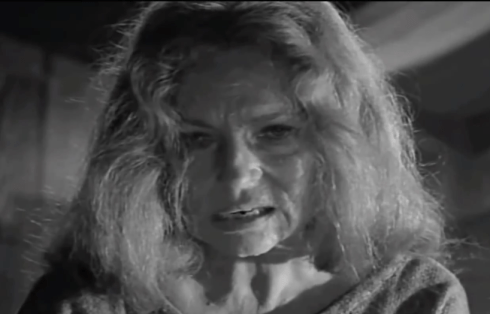


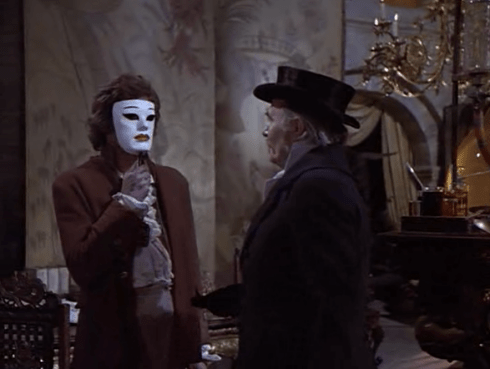


![Anna Lucasta (1958) | Pers: Eartha Kitt, Sammy Davis Jr | Dir: Arnold Laven | Ref: ANN040AE | Photo Credit: [ United Artists / The Kobal Collection ] | Editorial use only related to cinema, television and personalities. Not for cover use, advertising or fictional works without specific prior agreement](https://i0.wp.com/thelastdrivein.com/wp-content/uploads/2015/07/tumblr_lvnaeyvi341r1a8w8o1_500.jpg?ssl=1)


