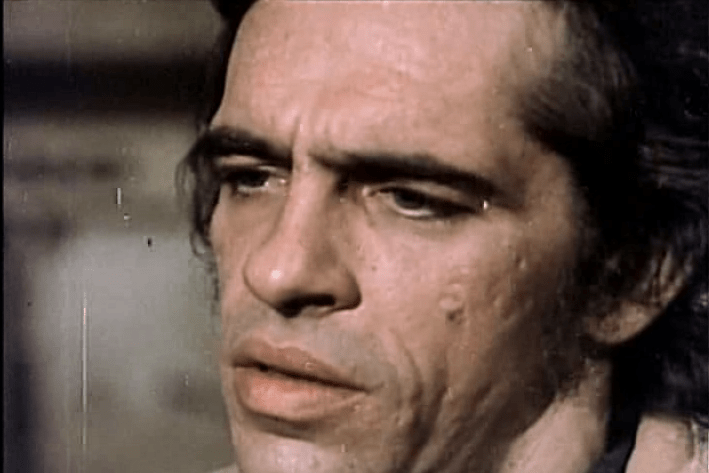
From the Vault- Russ Meyer’s The Seven Minutes 1971

THE SEVEN MINUTES 1971

seven_minutes_poster_02

The Seven Minutes 1971 is based on a novel by Irving Wallace. Directed by provocateur Russ Meyer (Lorna 1964), Faster, Pussycat, Kill! Kill! & Mudhoney(1965) with a screenplay by Richard Warren Lewis and an uncredited Manny Diez. This film comes on the heels of his hit at FOX with Beyond the Valley of the Dolls 1970. (Dolls with a screenplay by Roger Ebert) Meyer and Fred Mandl (Checkmate, The Munsters, The Twilight Zone, The Fugitive) create a great visual romp with the cinematography. The opening titles roll over the first almost seven minutes of the film as we hear the ticking of a clock…

????????????????????????????????????????????????????????????????????

With a very unusual cast of character actors starring Wayne Maunder as Mike Barrett, and Marianne McAndrew  (Hello Dolly 1969, The Bat People 1974) as Maggie Russell. Philip Carey (I’ve always been amazed at how much he reminds me of Charlton Heston) as District Attorney Elmo Duncan.

CapturFiles_67
Phillip Carey has always reminded me of Charlton Heston in stature and mannerism- a great underrated character actor…

The awesome Jay C. Flippen as Luther Yerkes, Edy Williams as Faye Osborn, Lyle Bettger as Frank Giffith, Stanley Adams as Irwin, Jackie Gayle as pornographer Norman Quandt, Ron Randell, Charles Drake, Olan Soule and John Carradine as Sean O’Flanagan, Harold J. Stone and Yvonne De Carlo as Constance Cumberland.

Boris Karloff’s Thriller The Remarkable Mrs Hawk: A Modern Re-telling of Homer’s Odyssey, Circean Poison with a Side of Bacon.

John Carradine
the ubiquitous John Carradine. I could watch him in anything… he tickles me…
YVonne
the beautiful Yvonne de Carlo here as Constance Cumberland movie actress.
Yvonne de Carlo
love love love that Yvonne de Carlo- a kindly beauty (I met her on the set of Laugh-In at the Westbury Music Fair in the 70s while taping the show live… She was an absolute gem, warm-hearted and filled with tangible grace.)

Music by Stu Phillips (Quincy M.E.) with Lionel Newman supervising. BB King sings Seven Minutes.

‘The Seven Minutes’ refers to an artistically erotic banned book published thirty-five years ago in Paris, that essentially opens up the floodgates for the public discourse about pornography, censorship, violence against women, and the dual standards during a time when morality was ambiguous. You know, just like today.

the titles

CapturFiles_1

CapturFiles

CapturFiles_2
Argo Book Stores clerk played by Robert Maloney… arrested for knowingly selling smut… convenient scapegoat for the cause.
CapturFiles_3
Charles Drake plays vice cop Kellogg entrapping the poor Mr. Fremont book seller for being a clerk where an allegedly filthy book is being sold.

CapturFiles_4

A bookstore clerk is indicted for selling obscene material which leads to a court trial. There is also the question as to whether this licentious book actually led to the rape of a young girl. The film is part trial based as the defense lawyers try to hunt down any clues that would prove the author of the book was not a smut merchant but trying to express an artistic viewpoint that can not be silenced by censorship.

CapturFiles_58
Wayne Maundy as Michael Barrett’s defense attorney for bookseller Fremont

The author and the mystery surrounding their identity are key to the plot. Meyers does a high-spirited job of developing this narrative with engrossing scenes that portray a society of zealots and self-serving neophytes in turmoil with themselves. All amidst a groovy 70s palate that’s nostalgic and filled with a colorful verisimilitude.

The film opens with some great 70s devil may care by composer Stu Phillips. At first, we see a beauty chasing her dog passed a small storefront. The story reveals that the vice bureau is staking out the ARGUS bookstore, as Sgt Kellogg (Charles Drake) walks in with his cigarette box tape recorder ready to entrap the clerk for selling smut. He asks the young bookseller for something ‘brand new -unusual, ‘something you wouldn’t find in an ordinary library.’ The clerk (Robert Maloney) just tells him to look around, the jackets tell the story pretty well.

Kellogg casually asks for one particular book on display The Seven Minutes by JJ Jadway and the bookseller repeats the title ‘Oh yeah” Kellogg remarks, “That’s a pretty sexy cover ain’t it?” As Kellogg ogles the pretty blonde talking to the young clerk who tells him she’ll see him later.

Sargent Kellogg (Charles Drake) “You read it?” Clerk -“The new addition at least… the first one was banned thirty-five years ago.” Kellogg- “How come it was banned?” Clerk– “Cause it was considered obscene” Kellogg- “Do you think the book’s obscene?” Clerk– “Why don’t you buy the book and find out for yourself.” “How much is it?” ” $7.30 with the tax.”

“Wrap it up… You the manager around here?” Clerk-“Yeah, the day manager.” Kellogg-“Who do I bring it back to if I don’t like it” The clerk answers– “Fremont, Ben Fremont.” Kellogg waves.

Kellogg’s partner is tape-recording the conversation from the car. “Took you long enough.” “Literary conversations take a little doing, we better start comparing, same jacket same title, same publisher, same publishing date, and copyright… Let’s pay Mr. Fremont another visit.”

They arrest him for knowingly selling obscene matter which is a misdemeanor in the state of California. And this starts the ball rolling in this film. As the powers that be, seek out district attorney Duncan who feels that The Seven Minutes would be found obscene if taken to court.

seven_minutes mike and faye
Mike and Faye Osborne are bed pals. She’s the spoiled daughter of an influential father.
CapturFiles_12
Cars the way they used to look… oh those were the days.
CapturFiles_11
never had one of these… but I know people who did! cool…70s memorabilia. Even the brown striped sheets.

CapturFiles_14

CapturFiles_63
the hair and the groovy chick appear later on at a funky club but I couldn’t resist putting her in the visual time capsule with the Volkswagon bug and the phone and Selleck…teehee.
CapturFiles_15
Mr Selleck don’t you look fine! He plays the publisher’s son Phil Sanford of Sanford Publishing. 

Check out that cherry Volkswagon and Corvette, check out that cool 70s phallus phone, Check out that really young Tom Selleck as the publishing guy… who calls hot shot attorney Michael Barrett (a very cool Wayne Maunder) who is representing the publisher Phil Sanford (Tom Selleck) who’s in a panic about the book clerk Fremont going to jail for selling one of Sanford House’s books.

The tower of self-righteousness Elmo Duncan the D.A. (Phillip Carey) wants to be propelled into the Senatorial seat in California. The powers that be who want him to become Senator conspire to exploit this contrived issue of corruption & decency so Duncan has a powerful platform to run on. This elite cabal wants to build a state-wide case in which Elmo Duncan can fight the ‘Smut Merchants.’

CapturFiles_17
Defense Attorney Mike Barrett tries to appeal to district attorney Duncan.
CapturFiles_18
District Attorney Duncan looms large as the figure of ethical fortitude.
CapturFiles_28
the secret cabal setting up the scenario for Duncan to influence public opinion and win the election. Stanely Adams, Olan Soule & Jay C. Flippen

They have a political agenda to stamp all youthful violence incited by salacious material in reading matter and films, and so this cause has become the lynchpin with which they hope to win an election, making ‘The Seven Minutes’ the subject of their campaign.

Meanwhile, a violent rape takes place involving the son Jerry (John Sarno) of a wealthy advertising tycoon Frank Griffith (Lyle Bettger) who owns a copy of The Seven Minutes and was present at the time of the assault committed by his psychotic friend, the one who actually commits the brutal rape.

CapturFiles_30

CapturFiles_31

CapturFiles_32

CapturFiles_33

CapturFiles_34

CapturFiles_35

CapturFiles_37

CapturFiles_41

CapturFiles_43

The rape scene is handled with quick cuts interwoven with Wolf Man Jack doing his thing on the air. It’s all very frenetic as the soundtrack “love train” is sung by Don Reed.

The prevailing secret surrounding pathetic Jerry Griffith (John Sarno) is that he’s been emasculated by his domineering father and now can’t get it up, so he’s impotent sexually and in helping Sheri Moore (Yvonne D’Angers) while she’s being attacked by his violent friend.

Jerry takes the blame for the rape and refuses to talk about it, thereby implicating himself as an impotent sissy and allowing the lynch mob and voyeurs to assert that Jerry would not have committed such an act if The Seven Minutes hadn’t been available to him. Duncan is now convinced that a clean boy wouldn’t have done the crime if it weren’t for the availability of the dirty book.

CapturFiles_27
this is Shawn ‘baby doll’ Devereaux -well it sure ain’t Tennessee Williams and Elia Kazan’s vision of Carroll Baker is it…

These hypocritical old cronies have young girls of their own on the side, watching pornography while salivating at the mouth. Yerkes has a girlfriend he calls ‘baby doll’ who dances provocatively for these guys. She’s got ample boobs (It is a Russ Meyer film after all) hanging out of her 70’s style yellow hot pants. Amidst the interesting subject matter Shawn ‘Baby Doll’ Devereaux gyrates and inserts herself into the frame to show us the hypocrisy of these old farts who condemn others for their own personal agenda all the while being the worst kind of purveyors of sinful behavior.

CapturFiles_66
the wealthy Frank Griffith that wants all this smut taken out of the reach of impressionable teens like his son. What’s carefully framed by Meyers playing in the background is a porn film that the men have been reviewing and enjoying way too much-we witness the HYPOCRISY.

Russ Meyer had his own dealings with censorship so the subject is probably of very personal substance for him. He does a fantastic job of pointing out the duality of persuasions. And he builds the story really well here. Showing the belligerence by equal sides of the coin toward a moral center and a society ripping at the shreds of personal freedom to express, create and destroy.

Wayne Maunder The Seven Minutes

Whether you’re an avid Russ Meyers fan or just think you might like to venture into the complex questions the film evokes, presented in that real 70s style The Last Drive In weeps for most days, it’s a film worth watching, even just to spot the few character actors that pop up on the screen like baby doll’s and Faye Osborne’s (Yvonne & Edy) eh hems… well you know… the cleavage shot!

What appears on the surface as a controversy surrounding a banned book that contains alleged salacious material-The defense evokes some good examples of Henry Miller’sTropic of Capricorn’ or, D.H. Lawrence’s ‘Lady Chatterley’s Lover’, etc.

What manifests is an interesting commentary on censorship, masculinity, and the spurious connection between perceived immoral content and violence in society.

CapturFiles_60

CapturFiles_40

Manhood and masculinity is a texture that is not necessarily used as the theme in the story, but let me tell you it is all-pervasive with images of Duncan heaving his heavyweights as he sweats and works out in front of Mike, spouting his holier-than-thou rhetoric. It was almost masturbatory.

He gave Michael that “politician’s holier than thou number” Duncan was hostile while he pumped weights in front of the intellectual Mike Barrett. Dueling of masculinity and the question of causality with pornography and violence against women.

Duncan talks to a church official about ‘freedom’ Duncan– “We only want to penalize those who would corrupt it.”

Duncan and his reprehensible comrades belong to a group called Strength Through Decency.

CapturFiles_59

The acronym STD... was this intentional? Probably. It’s hilarious as these types of organizations do spread like a social disease. They’re against lust, motorcycles, homosexuals, and lesbians. All the factors that made the 70s so dangerous of course. Those lustful lesbians on motorcycles riding down 5th Avenue in NYC wreaking havoc with our delicate morality. Why I’m surprised we all survived it…

So as much as the words “smut merchants’ are bandied around, and the question of censorship takes priority in full view, the underlying sub-context is the posturing of masculinity and the double standard of sexism & classism and who gets to play and who must obey.

CapturFiles_48

CapturFiles_51

CapturFiles_52

CapturFiles_53

CapturFiles_65

orange orbs
Marianne McAndrews is fabulous as Maggie Griffith. I really dig those orange orbs… truly the light fixtures I mean…

yvonnedecarlo courtroom

I won’t get into the story behind the mystery or the trial, the story behind Jerry’s impotence, the elitism, or the ultimate reveal about the author of The Seven Minutes. The media frenzy that occurs feeds on the sensationalism of the situation who condemn the book but want to hear about the details of rape victim Sherri’s violation.

Is The Seven Minutes a beautiful novel about a woman’s awakening or really filthy trash? You’ll have to find out… but I’ll say that Russ Meyer’s The Seven Minutes is a great addition to the socially conscious sexually charged films of the late 60s & 70s like Roger Vadim’s Pretty Maids All In a Row, and Robert Thom’s  Angel, Angel Down We Go 1969…

Your ever-loving MonsterGirl.

MonsterGirl’s – Sunday Nite Surreal: Silent Night, Bloody Night (1972) “You can’t see me but I can see you”

“The mansion… the madness… the maniac… no escape.

Silent Night, Bloody Night (1972)

Alternative title: “Night of the Dark Full Moon”

This is perhaps one of my favorite classic horror films of the 1970s—a gloomy tale of incest, madness, depravity, and revenge. I’ve chosen not to give away any of the plot twists or reveal the secrets of the story. I will not spoil the ending for those who haven’t seen this obscurely surreal gem.

Though many consider the film a cult hit, it’s still obscure and deserves a first look for those who might be interested in seeing it or who are drawn to the newly discovered beautiful moments that occur in such a low-budget horror film.

CapturFiles_1

Directed by Theodore Gershuny (Sugar Cookies 1973), Silent Night Bloody Night 1972 was actually filmed in 1970 but not released until ’72. Contrary to some people’s beliefs, Silent Night Bloody Night predates Bob Clark’s Black Christmas by four years. Silent Night Bloody Night plays like an eerie and odd nightmare. I know it gets compared to Clark’s Black Christmas, which is an undisputed masterpiece, but Silent Night Bloody Night was filmed in 1970 and came out two years before. It has its own very unique story to tell.

CapturFiles_1a
Woronov acts as a sort of tour guide/witness, narrating the opening sequence, telling of Butler’s death on the day before Christmas 1950, to the gruesome story that unfolds surrounding the Butler house and its legacy.“One last time I’ve got to see this ground one last time… It’s beautiful now as if nothing had happened here. {…}For twenty years that house lay empty, exactly as Wilfred had left it.”

Based on Jeffrey Konvitz’s story, he wrote yet another of my top favorite horror classics of the 70s, The Sentinel, starring the superb Burgess Meredith as a very cheeky devil. I read both books, which were equally chilling, back when reading the novel was as thrilling as going to see it on the big screen. Silent Night, Bloody Night is being re-released on DVD on December 10th, restored from 35mm. This excites me indeed! My copy has already been pre-ordered.

CapturFiles_2

What made Silent Night, Bloody Night so richly evocative for me was its uniquely creepy and unselfconsciousness. Dealing with heavy themes, it managed to come across as a startling, fairy tale-like bit of bloodletting with an authentic 70s flair. I don’t need a more hideous version of this movie with hacked body parts as a way to reintroduce this story. This does not frighten me, nor disturb me in a good way. I imagine it might become like every other violent blood show with effects and body violations that will detract from the moodiness of the original.

Silent Night, Bloody Night kicks off with a bang—literally—when old Wilfred Butler is found dead, burned outside his imposing mansion in a small New England town on Christmas Eve, 1950. Decades later, his estranged grandson, Jeffrey, inherits the estate, insisting on selling it off, which brings in a slick city lawyer, John Carter, and his assistant, Ingrid. The local town council is eager to buy the supposedly haunted place for a steal, but as night falls and John and Ingrid decide to spend the night in the house, things go completely off the rails. They’re brutally murdered in their bed by an unseen killer, plunging the town into panic just as Christmas is about to begin.

From there, the film unravels into a tangled web of mystery, violence, and old family secrets. The killer starts making eerie phone calls under the name “Marianne,” summoning townsfolk to the mansion, where they’re picked off one by one, crimes involving axes, candlesticks, and a lot of cleverly staged suspense. Jeffrey shows up, only to find he’s walked into a nightmare. He connects with Diane, the mayor’s daughter, and together, piecing clues from newspaper archives and scribbled notes, they dig into the Butler family’s dark past.

We slowly learn, through an intense sepia-toned flashback, that Wilfred Butler not only lost his wife and committed his daughter Marianne to the house-turned-asylum but fathered a child with her under horrific circumstances. The mansion’s time as a mental institution saw more cruelty, with the staff partying and indulging while the inmates, neglected and abused, finally revolt in a bloody uprising, a sequence as nightmarish as it is tragic.

That legacy of trauma simmers right up to the present. As bodies start piling up, the sheriff, Tess the switchboard operator, and mute newspaperman Charlie Towman, among them, it comes out that the killer is none other than Wilfred himself, who faked his fiery death years ago. He’s been lurking nearby, his life defined by vengeance and unspeakable guilt over what happened in his house. The inmates (Towman, Tess, and the rest) who brutally killed his beautiful Marianne have been living in the town as the respectable people who run the place. In the final chaotic confrontation, both Jeffrey and the mayor are killed, but Diane manages to shoot Wilfred, ending his bloody spree.

The dust settles months later, as Diane returns to watch the mansion—haunted by so many secrets—finally demolished. It’s the kind of ending that’s more mournful than triumphant, really: you get the sense that knocking the house down can’t quite erase the legacy of what happened there. The film wraps all this up in a chilly, Gothic atmosphere, mixing a murder mystery with slasher and haunted house vibes. Silent Night, Bloody Night is part family curse, part small-town horror, and part cautionary tale about the secrets we bury and bodies that refuse to stay hidden.

Patrick O’Neal opens the original film by playing a brief role as a big-shot realtor John Carter who gets axed to pieces in bed with his lover. Cult film star Mary Woronov plays Diane Adams daughter of the Mayor. Walter Klavun is the town Sheriff, Bill Mason.

CapturFiles_3

CapturFiles_4

CapturFiles_5

CapturFiles_6

CapturFiles_8

CapturFiles_9

John Carradine plays mute curmudgeon Charlie Towman, who publishes the weekly newspaper. Apparently, his croaks and grunts were dubbed in afterward. Walter Abel (Fury 1936, Mr. Skeffington 1944) plays Mayor Adams. And Fran Stevens plays Tess Howard, who operates the switchboard.

Plus, the film is set against the backdrop of an assortment of Andy Warhol’s acting “Factory.” Mary Woronov was once married to director Theodore Gershuny, supporting players Ondine, Candy Darling, Kristen Steen, Tally Brown, Lewis Love, filmmaker Jack Smith, and artist Susan Rothenberg. Character actor Philip Bruns plays the patriarch of the estate, now deceased, the eccentric Wilfred Butler.

CapturFiles_12

CapturFiles_14

James Patterson, who plays Grandson Jeff Butler (Lillith 1964, In The Heat of the Night 1967), died of cancer shortly after the principal shooting was completed. They substituted Patterson’s voice with another actor. Patterson’s Grandson, Jeff, has a sort of veiled flirtation with Woronov, the mayor’s daughter.

CapturFiles_13

CapturFiles_15

CapturFiles_30

CapturFiles_16

Henry Shrady’s art direction was responsible for the wonderful sense of claustrophobic ambiance that becomes part of the pervasive madness he created later on with Jack Palance’s and Martin Landau’s hilariously frightening performances in Alone In The Dark in 1982. Shrady also did (Cry Uncle 1971, and Squirm 1976).

In a small rural New England town, (I recently lived in New England for two years and can tell you that writer Stephen King has his pulse on a very real provincial and closed society that keeps its secrets and its turmoil quietly buried underneath the pristine beauty of the landscape) Wilfred Butler, played by Philip Bruns, is the patriarch who reigned over his estate secluded,  away from the small town, dies on Christmas Eve 1950 as he runs from the place set on fire.

CapturFiles_28

The film’s prologue shows Wilfred Butler running from the mansion, enveloped by flames. Then we are dropped into the present day. Patrick O’Neal, who plays real estate agent Jack Carter, comes to the small town of East Willard in order to finalize the sale of the Butler house with the town elders. Who are the four sullen and strangely nervous bunch? The excellent casting and presence of these somewhat distressed characters add a nice layer to the creepiness that builds. Fran Stevens as Tess Howard is perfect. Abel as the Mayor, the ubiquitous Carradine as the mute bell-ringer Towman, and Walter Klavun as Sheriff Mason are equally well suited to play this strange and secretive quartet.

Carter reeks of sophistication and arrogance. When Carter arrives at the house with his gorgeous lover Ingrid (Astrid Heeren), as they carry on while spending the night in the house, ultimately, they get themselves hacked up by a mysterious intruder with an axe.

Grandson Jeffrey Butler comes to town as well to sell off the estate. The locals begin to appear agitated, and just to make the story a bit edgier, there’s a nearby insane asylum inmate who has escaped and is on the prowl.

CapturFiles_23

CapturFiles_3

CapturFiles_18

CapturFiles_1
“Tess… I’ve come back,” says the creepy whispering voice on the phone.

CapturFiles

Once opulent and inhabited by Wilfred and his young daughter Marianne, the Butler house has been uninhabited and abandoned for years. Twenty years after tragedy struck the Butler estate, horrible events begin to unfold again during the Christmas season. Grandson Jeffrey, who has inherited his grandfather’s creepy place, now wishes to sell it. The town elders are also insistent on buying the Butler house, too, with a strange urgency.

But as Christmas approaches, an unmistakable sense of menace creeps through the old mansion and the town itself. A deadly and unbalanced presence haunts both its shadowy halls and quiet streets. One by one, the four prominent townsfolk drawn by their own secrets or summoned by something darker, find themselves lured back to the old house to be butchered. There, in a grim inversion of holiday cheer, they meet violent and untimely ends, each murder peeling back another layer of the town’s genteel facade and exposing the rot that’s been festering beneath for decades.

CapturFiles_17

Although the film has the appearance of a 1970s’ low-budget’ feature, what has emerged for me as I revisit these films with a sense of nostalgia and the clarity of retrospection is that many obscure films like this one can be considered thrift store classics, minimalist masterpieces because of their sparsely framed environments, authentically offbeat characters, and a realism that doesn’t get covered up by opulent set pieces and star billing. The scratchy, gritty, low lighting creates an eerie darkness and creates its own unease. The film is a pauper’s painting: Beauty and ingenuity flourishing where extravagance is absent.

Still, Silent Night Bloody Night is undoubtedly one of the most atmospheric horrors of the 1970s, like Let’s Scare Jessica To Death. It’s a self-contained world of distorted truths, hysteria, a claustrophobic bit of vintage nihilism, and yet again, a tone of subverted American values.

As the flashback unfolds in Silent Night, Bloody Night, it reveals the mansion’s ghastly second life as a mental institution—a supposed refuge that quickly became a place of deep suffering and profound mistreatment. The story peels back the veneer of holiday celebrations to show doctors and staff feasting and drinking, oblivious or indifferent to the pain in the rooms above, as the patients languish in their cages and cells.

This sequence says a lot about the failures and cruelties of institutional psychiatry: those in power are insulated by privilege and self-indulgence, turning the mansion into a prison of neglect, while at the same time, the most vulnerable are left unheard and abused. The celebration held by the doctors, with its grotesque air of normalcy, underscores just how easily cruelty can hide behind routine and ritual.

Eventually, the mounting resentment and trauma boil over, leading to a rebellion—an eruption of violence that is both horrifying and deeply cathartic. The patients, driven beyond endurance, rise against their oppressors in a sequence shrouded in sepia tones and haunted silence, with the caretakers’ complacency and gluttony ultimately sealing their fate.

Wilfred Butler’s narration captures this chilling contrast:

“Oh I knew that they would gorge themselves into a stupor that afternoon… it was their celebration; I expected no less. Since they had come into my house, they had acted as if they owned it—they had behaved like poor relations, half guilty but finally unable to control their appetites… after dinner, they danced and drank as they usually did.”

We aren’t thinking, “Will the characters survive?” because every aspect of the story sort of lies within the looming darkness as it circles back on the reveal. We’re left to be frightened for ourselves and the creeping dread. The question of escape doesn’t enter into it. The question of ‘what is really going on here?’ does, and it becomes progressively disturbing as we learn the history and the tragedy.

CapturFiles_33

CapturFiles_34

CapturFiles_35

CapturFiles_36

CapturFiles_37

CapturFiles_38

CapturFiles_39

CapturFiles_40

silent-night-bloody-night

This is one of the most memorable flashbacks of 70s horror films for me. It is performed in murky sepia and with a wide-angle lens to add to it a sickly, decrepit tone of the archaic mournfulness of a disturbing past. As it shows us what happened long ago at the Butler Estate in the 1930s, it’s one grotesque fête. For me, it’s a creepy, claustrophobic sequence that is unforgettable, and for those post-modern junkies, it’s filled with Warhol minions.

CapturFiles_31

CapturFiles_24

CapturFiles_32

Gershuny and Adam Giffard frame the plot from the POV of the mysterious killer stalking the house and the townsfolk. Once again, the film predates Bob Clark’s Black Christmas with its use of the point-of-view of Billy, that film’s psychopathic stalker, the freakishly terrifying voice on the phone, and, of course, the grisly murders.

Patterson, who plays Jeff Butler’s grandson, was dying of cancer at the time. He has an interestingly defined face, like Tommy Lee Jones, partially a type of sensuous ugly, and just a bit menacing.

CapturFiles_26

CapturFiles_19

CapturFiles_20

The townsfolk’s secret is finally revealed. They are not the upstanding citizens they pretend to be. They wanted to purchase the house so they could rid themselves of the history of the place. One by one, they are knocked off by the mysterious black gloved killer.

On his way to investigate the mansion, Sheriff Bill Mason stops by Wilfred Butler’s disturbed grave. There, the killer ambushes him and beats him to death with a shovel, leaving his body at the cemetery.

Tess Howard, the switchboard operator, meets her end when, lured by an eerie, whispering voice over the telephone, she ventures alone into the darkness of the mansion. She’s bludgeoned to death inside the foyer, smacked with a candlestick by the unseen killer.

John Carradine’s character, Towman the mute newspaperman, who constantly rings his bell to grab the others’ attention, although he doesn’t utter a word, exudes a cantankerousness. Charlie Towman is killed when, after having his hands severed by the killer, he blindly stumbles into the road and is fatally run over by Jeffrey’s car.

Summoned to the mansion, Mayor Adams arrives armed with a rifle, ready for confrontation. In the chaos that follows, both he and Jeffrey Butler open fire on each other and are killed in the shootout.

It’s all gruesome and opaque, making this film a uniquely satisfying chiller.

Diane grabs Jeffrey’s revolver and shoots Wilfred Butler—her grandfather and the actual murderer- three times, sending him tumbling down the stairs and ending his murderous rampage. The film ends with Diane as the sole survivor, watching in subdued shock as the haunted Butler mansion is finally demolished, its secrets and the horror that gripped the town buried beneath the rubble. The chilling sense remains that, while the house is gone, the scars of its dark history endure just beneath the surface.

The film possesses some truly effective, grisly death scenes: axe murders and uncomfortable themes. I won’t call this film a slasher flick, though it is referred to as such at times. What is characteristic of 70s atmospheric horror stories is that they emerge more potent in retrospect than when they were initially viewed. I credit this to a sense of unselfconscious filmmaking. Some low-budget horror films possess a natural eeriness that is allowed to come to the surface. Therefore, it forms an organic, horrifying realism and sense of dread.

CapturFiles_25

CapturFiles_27

CapturFiles_41

James Plumb remade Silent Night, Bloody Night in 2013, released as Silent Night, Bloody Night: The Homecoming.

CapturFiles

Merry Bloody Christmas from your EverLovin’ 70s MonsterGirl!

Heroines & Scream Queens of Classic Horror: the 1940s! A very special Drive In Hall–ween treat!

Evelyn Ankers
promo shot for The Wolf Man- Evelyn Ankers

THE WOMEN OF CLASSIC HORROR: THE 1940S!

You could say that Evelyn Ankers is still the reigning queen of classical 1940s horror fare turned out by studios like RKO, Universal, and Monogram. But there was a host of femme scream tales that populated the silver screen with their unique beauty, quirky style, and/or set of lungs ready to wail, faint, or generally add some great tone and tinge to the eerie atmosphere whenever the mad scientist or monster was afoot. Some were even monstrous themselves…

For this upcoming Halloween, I thought I’d show just a little love to those fabulous ladies who forged a little niche for themselves as the earliest scream queens & screen icons.

ELSA LANCHESTER 1902-1986

I’m including Elsa Lanchester because any time I can talk about this deliriously delightful actress I’m gonna do it. Now I know she was the screaming hissing undead bride in the 30s but consider this… in the 40s she co-starred in two seminal thrillers that bordered on shear horror as Mrs. Oates in The Spiral Staircase 1945 and a favorite of mine as one of Ida Lupino’s batty sisters Emily Creed in Ladies in Retirement 1941

I plan on venturing back to the pre-code thirties soon, so I’ll talk about The Bride of Frankenstein, as well as Gloria Holden (Dracula’s Daughter, Frances Dade (Dracula) and Kathleen Burke (Island of Lost Souls) Gloria Stuart and Fay Wray and so many more wonderful actresses of that golden era…

Elsa Lanchester in The Spiral Staircase
Elsa Lanchester as Mrs.Oates in director Robert Siodmak’s The Spiral Staircase 1945
Annex - Lupino, Ida (Ladies in Retirement)_01
The Sister Creed in Ladies in Retirement 1941 starring Elsa Lanchester, Ida Lupino, and the wonderful Edith Barrett (right)

ANNE NAGEL  1915-1956

Anne Nagel
the playfully pretty Anne Nagel.
Anne Nagel & Lon Chaney Man Made Monster Promo photo
Anne Nagel & Lon Chaney Jr in a promo shot for Man Made Monster
Anne Nagel, Lon Chaney & Lionel Atwill Man Made Monster
Anne Nagel was strapped to the slab and at the mercy of the ever-mad Lionel Atwill. Here comes the glowing Lon Chaney Jr! in his electric rubber suit in Man Made Monster!

The depraved mad scientist Lionel Atwill working with electro biology pins gorgeous red-headed Anne Nagel playing June Lawrence, to his operating slab in Man Made Monster 1941. Lon Chaney Jr. comes hulking in all aglow as the ‘Electrical Man’ which was his debut for Universal. He carries Anne Nagel through the countryside all lit up like a lightning bug in rubber armor. Man Made Monster isn’t the only horror shocker that she displayed her tresses & distresses. She also played a night club singer named Sunny Rogers also co-starring our other 40’s horror heroine icon Anne Gwynne in the Karloff/Lugosi pairing Black Friday in 1940.

She played the weeping Mrs.William Saunders, the wife of Lionel Atwill’s first victim in Mad Doctor of Market Street 1942. And then of course she played mad scientist Dr Lorenzo Cameron’s (George Zucco’s) daughter Lenora in The Mad Monster 1942. Dr. Cameron has succeeded with his serum in turning men into hairy wolf-like Neanderthal monsters whom he unleashes on the men who ruined his career.

Anne Nagel and Lionel Atwill Mad Doctor of Market Street
Anne Nagel and Lionel Atwill Mad Doctor of Market Street.

Poor Anne had a very tragic life… Considered that sad girl who was always hysterical. Once Universal dropped her she fell into the Poverty Row limbo of bit parts. Her brief marriage to Ross Alexander ended when he shot himself in the barn in 1937, and Anne became a quiet alcoholic until her death from cancer in 1966.

Anne Nagel Lon Chaney Lobby Card

Lon Chaney Jr and Anne Nagel Man Made Monster

the-mad-monster-glenn-strange-left-everett

anne
Dr. Cameron’s daughter Lenora (Anne Nagel) discovers the wolf-like man in his laboratory in The Mad Monster.
Hairy beast The Mad Monster
Glenn Strange as Petro the Hairy man in The Mad Monster 1942.

black-friday-bela-lugosi-anne-nagel-everett

Annex - Lugosi, Bela (Black Friday)_01

1940 UNIVERSAL
the sultry Anne Nagel and Bela Lugosi in Black Friday 1940 photo courtesy Dr. Macro.

MARTHA VICKERS- 1925-1971

Martha Vickers
the beauty of Martha Vickers.

Martha was in noir favorites The Big Sleep 1946 & Alimony 1949. This beauty played an uncredited Margareta ‘Vazec’s Daughter’along side Ilona Massey as Baroness Elsa Frankenstein and the marvelous older beauty Maria Ouspenskaya as Maleva the gypsy! in Frankenstein Meets the Wolf Man 1943. Then she played heroine Dorothy Coleman in Captive Wild Woman 1943 and Miss McLean in The Mummy’s Ghost 1944.

Originally Martha MacVickar she started modeling for photographer William Mortenson. David O Selznick contracted the starlet but Universal took over and put in her bit parts as the victim in Frankenstein Meets the Wolf Man and in other ‘B’ guilty pleasures like Captive Wild Woman & The Mummy’s Ghost. She was also the pin-up girl for WWII magazines.

Martha also starred in other noir features such as Ruthless 1948 and The Big Bluff 1955. She was Mickey Rooney’s third wife.

Annex - Bogart, Humphrey (Big Sleep, The)_04
Martha Vickers and Humphrey Bogart in The Big Sleep photo courtesy of Dr. Macro.
Martha Vickers and Lon Chaney in Frankenstein Meets the wolf man
Martha Vickers and Lon Chaney in Frankenstein Meets the Wolf Man.
Martha Vickers and John Carradine in Captive Wild Woman
Martha VIckers
I just can’t resist Vicker’s sex appeal here she is again… Wow!

JANICE LOGAN 1915-1965

Though Logan made very few films including Opened By Mistake 1940, her contribution to women who kick-ass in horror films and don’t shrink like violets when there’s a big bald baddie coming after you with a net and a bottle of chloroform, makes you a pretty fierce contender even if you are only 7 inches tall! As Dr. Mary Robinson (Janice Logan), Logan held it all together while the men were scattering like mice from the menacing google eyed Dr. Cyclops played superbly by Albert Dekker.

FAY HELM  1909-2003

johncarradine14
Fay Helm as Nurse Strand with John Carradine in Captive Wild Woman.

Fay Helm played Ann Terry in one of my favorite unsung noir/thriller gems Phantom Lady 1944 where it was all about the ‘hat’ and she co-starred as Nurse Strand alongside John Carradine in Captive Wild Woman. Fay played Mrs. Duval in the Inner Sanctum mystery Calling Dr. Death with Lon Chaney Jr. 1943

Ella Raines and Fay Helm in Phantom Lady
Ella Raines and Fay Helm in Phantom Lady.

Fay Helm plays Jenny Williams in Curt Siodmak’s timeless story directed by George Waggner for Universal and starring son of a thousand faces Lon Chaney Jr in his most iconic role Larry Talbot as The Wolf Man 1941

Fay as Jenny Williams: “Even a man who is pure in heart and says his prayers by night, may become a wolf when the wolfbane blooms and the autumn moon is bright.”

Fay was in Night Monster 1942. Directed by Ford Beebe the film starred Bela Lugosi as a butler to Lionel Atwill a pompous doctor who falls prey to frightening nocturnal visitations. I particularly love the atmosphere of this little chiller with its swampy surroundings and its metaphysical storyline.

Dr. Lynn Harper (Irene Hervey- Play Misty For Me 1971) a psychologist is called to the mysterious Ingston Mansion, to evaluate the sanity of Margaret Ingston, played by our horror heroine Fay Helm daughter of Kurt Ingston (Ralph Morgan) a recluse who invites the doctors to his eerie mansion who left him in a wheelchair.

Fay gives a terrific performance surrounded by all the ghoulish goings on! She went on to co-star with Bela Lugosi and Jack Haley in the screwball scary comedy One Body Too Many (1944).

night-monster-1

Irene Hervey as Dr. Lynn Harper –Night Monster 1942.

Night Monster
Fay Helm in Night Monster.
Fay Helm with Bela the gypsy in The Wolf Man
Fay Helm with Bela the gypsy in The Wolf Man.

LOUISE CURRIE 1913-2013

ape-man-1943-g

Ape Man Bela and Louise Currie

Ape Man and Louise stairs

Bela Lugosi as half ape half man really needed a shave badly in The Ape Man 1943, and Louise Currie and her wonder whip might have been the gorgeous blonde dish to make him go for the Barbasol. One of the most delicious parts of the film was its racy climax as Emil Van Horn in a spectacle of a gorilla suit rankles the cage bars longing for Currie’s character, Billie Mason the tall blonde beauty. As Bela skulks around the laboratory and Currie snaps her whip in those high heels. The film’s heroine was a classy dame referred to as Monogram’s own Katharine Hepburn! She had a great affection for fellow actor Bela Lugosi and said that she enjoyed making Poverty Row films more than her bit part in Citizen Kane! And I would be remiss if I didn’t mention that she appeared in several serials, from both Universal & Republic like The Green Hornet and Captain Marvel.

Tom Weaver in his book Poverty Row HORRORS! described The Ape Man as “a Golden Turkey of the most beloved kind.”

Louise Currie followed up with another sensational title for Monogram as Stella Saunders in Voodoo Man 1944 which again features Lugosi as Dr. Richard Marlowe who blends voodoo with hypnosis in an attempt to bring back his dead wife. The film also co-stars George Zucco as a voodoo high priest and the ubiquitous John Carradine as Toby a bongo-playing half-wit “Don’t hurt her Grego, she’s a pretty one!”

Voodoo Man
Pat McKee as Grego, Louise Currie, John Carradine, and Bela Lugosi in Monogram’s Voodoo Man 1944.
Voodoo Man
the outrageous Voodoo Man 1944

Continue reading “Heroines & Scream Queens of Classic Horror: the 1940s! A very special Drive In Hall–ween treat!”

Boris Karloff’s anthology tv series: It’s a THRILLER!

universalblogathon-knotts

SILVER SCENES IS HOSTING THE UNIVERSAL BLOGATHON! SO I THOUGHT I’D BRING OUT THE UNIVERSAL TELEVISION PRODUCTION OF BORIS KARLOFF’S ANTHOLOGY… LET ME ASSURE YOU, IT’S A THRILLER!!! VISIT SILVER SCENES AND CHECK OUT ALL THE WONDERFUL CONTRIBUTIONS TO THIS HALLOWEEN CELEBRATION!

Classic TV Blog Association is hosting the MeTV Summer of Classic TV Blogathon

Me-TV Summer of Classic TV Blogathon Logo

Thriller-graphic

“I think the title leaves the stories wide open to be based on melodrama not violence or shock. They’ll be stories about people in ordinary surroundings and something happened to them. The whole thing boils down to taste. Anybody can show you a bucket of blood and say-‘This is a bucket of blood’, but not everyone can produce a skilful story”Boris Karloff (1960)

boris intro parasite mansion

At the bottom of this feature, you will find links to my older Thriller posts. Some of my favorite episodes- as well as 4 newly covered episodes in brief for the MeTV Summer of Classic TV Blogathon!-Masquerade, Parasite Mansion, Mr.George, and The Purple Room!

From the show’s opening iconic musical score, you know something deliciously sinister is about to occur. The word THRILLER appears against a fractured white web-like graphic title design quite a bit in the style of Saul Bass. The discordant piano and horn stabs of modern jazz already bring you into the inner sanctum of menacing storytelling. As Boris would often say as a precursory welcome, “Let me assure you ladies and gentlemen, as sure as my name is Boris Karloff, this is a thriller.”

Boris Karloff’s Thriller was an anthology series that ran from 1960-1962. It included 60 minute B&W episodes, 67 in all, that were expected to compete with The Twilight Zone ’59-’64 and Alfred Hitchcock Presents ’55-’62.

Thriller was filmed on the same network and sound stage as Alfred Hitchcock Presents. Producer Writer & Director Douglas Benton claims though not hearing it directly that Hitchcock resented Thriller, as he considered Hubbell Robinson encroaching on his territory.

Alfred Hitchcock Presents 1955

Benton states, “Actually we weren’t doing the same thing he was, he was doing some very sophisticated ‘twist’ material. Hitchcock was doing the sort of thing that they started out to do on Thriller… We {Frye, Benton et al} came along and improved the ratings considerably and got a tremendous amount of press and Hitchcock didn’t like the competition. I don’t think he ever came out and said ‘get rid of ’em’ but he did allow them to enlarge his show from -a half hour to an hour, and that made it more difficult for us to stay on.” {source: Boris Karloff-More Than A Monster The Authorized Biography by Stephen Jacobs}

The series was developed by Executive Producer Hubbell Robinson program director and then executive vice president at CBS who was responsible for dramatic shows like Studio One & Playhouse 90 and produced Arsenic and Old Lace (tv movie ’69) with Lillian Gish & Helen Hayes. Boy oh boy would I like to get my hands on a copy of that!

Bob+Crane+Helen+Hayes+Lillian+Gish
Lillian Gish, Helen Hayes with Bob Crane rehearsing for Arsenic and Old Lace ’69

In 1959 he left CBS to start his own production company, Hubbell Robinson Productions. Robinson had said “Our only formula is to have no formula at all,” endeavoring that each week’s episode would not be like the week before, bringing viewers one-hour feature pictures that were “consciously and deliberately striving for excellence. {…}Each plot will be unique, unusual.” Robinson {source: Boris Karloff-More Than A Monster The Authorized Biography by Stephen Jacobs}

Also on board were producers William Frye, Fletcher Markle & Maxwell Shane (The Mummy’s Hand ’40, Fear in the Night ’47) who added their vision of a superior mystery & horror anthology for MCA’s Revue Studios which would conform to the trend of anthology series’ featuring a host to introduce each week’s story.

The format had somewhat ambivalent themes, leaving the show’s narrative straddling both genres of crime melodrama and tales of the macabre. But… either of these atmospheres created by some of the best writers, directors, and players delivered a highly intoxicating blend of both, remaining a powerful anthology with unique dramatic flare.

boris karloff thriller

Karloff loved the title for the show, “It’s an arresting title. And it does not tie you to one type of show. You can have suspense and excitement, without getting into violence {…} There will be none of the horror cliches on this programme {…} we will deal with normal people involved in unusual situations.”

Boris Karloff was very critical of horror for the sake of horror, during Thriller’s run,“We’re in an era of insensate violence. Today it’s shock, so-called horror and revulsion. I think the idea is to excite and terrify rather than entertain. The story is muck for the sake of muck. The over emphasis of violence on screen and tv has reached the point of being utterly absurd… That’s one thing you won’t find on Thriller-violence for the sake of violence, shock for the sake of shock.”{source:Boris Karloff-More Than A Monster The Authorized Biography by Stephen Jacobs}

Dark Legacy
Boris’ prelude to Dark Legacy
capturfiles_167
Boris Karloff presents The Hungry Glass
Boris intro Hayfork and Bill-Hook
Boris Karloff introduces Hay-fork and Bill-Hook

Not only was there an unmistakable atmosphere to each of Thriller’s episodes, the stories themselves were lensed in a unique way that was very ahead of its time. The actors brought a serious attitude to their characters and the plot development and didn’t treat them as merely short pulp stories as fodder for the tv masses. This was an intelligent show, and the presence of Boris Karloff added a charming and cerebral primacy to the show’s narration. It was like being tucked in by your remarkable grandfather who loved to tell a good spooky tale to you right before bedtime. I’ve said this plenty, I wish Boris Karloff had been my grandfather. Everyone who has ever worked with Karloff had nothing but glowing praise for the great and gentle man. He exuded a quiet grace and was the consummate professional taking every part seriously and extremely generous with his time even as he suffered from his physical limitations. Karloff had been getting on in years and his grand stature was riddled with arthritis causing his legs to bow.

Actress Audrey Dalton said, “Just the perfect gentleman. A terribly British, wonderful wonderful man.” Actor Ed Nelson who was dying to work with Karloff said, “He was a very gentle man” Douglas Benton had said, “Boris Karloff-God, what a lovely man.”

CapturFiles_1
Karloff as Clayton Mace the phony mentalist in The Prediction

While filming The Prediction the scene at the end when he must lie down in the pool of rainy water and die, Karloff asked director John Brahm “Is this the best way for the camera?” who said, “Yes, it is but good lord you don’t have to lie there and have gutter water coursing up your britches like that!”  Karloff replied, “Oh yes I do! This is my work. I insist.” {source: Boris Karloff-More Than A Monster The Authorized Biography by Stephen Jacobs}

Every installment of the show offered us a chance to see Karloff as he enters the Thriller stage as a sage Fabulist delivering us the evening’s program with a refined articulation of philosophy and captivating storytelling encapsulated in a compelling little prologue, often infused with its own brand of dark humor.

capturfiles_82-1

capturfiles_152

capturfiles_561

Continue reading “Boris Karloff’s anthology tv series: It’s a THRILLER!”

More Men Doing Science….!

Continue reading “More Men Doing Science….!”

Boris Karloff’s Thriller The Remarkable Mrs Hawk: A Modern Re-telling of Homer’s Odyssey, Circean Poison with a Side of Bacon.

Of Circean poison and intoxicating things. When dealing with The Gods, the result is suffering.

The Remarkable Mrs. Hawk (air date December 18, 1961)

Starring Jo Van Fleet as Mrs. Cissy Hawk, John Carradine as Jason Longfellow, Paul Newlan as Sheriff Tom’Ulysses’ Willetts, Hal Baylor as Pete Gogan, and Bruce Dern as Johnny Norton. Directed by John Brahm and adapted to the screen by Donald Sanford from a story by Margaret St Clair

“What beast-molding Drakaina [Kirke] shall he [Odysseus] not behold, mixing drugs with the meal, and beast-shaping doom? And they, hapless ones, bewailing their fate shall feed in the pig styes, crunching grape stones mixed with grass and oil cake. But him the drowsy root shall save from harm and the coming of Ktaros [Hermes].”

Here is yet another favorite episode in the Thriller canon that always brings a smile to my face, even having seen it a number of times over the years. One of the most memorable and striking attributes that most of Karloff’s macabre little theatrical plays possess is an uncannily vivid sense of place, despite them having been filmed on a sound stage at Universal Studios.

Not only is this particular episode so effective because of Jo Van Fleet’s performance as the modern-day witch but it’s also due to the presence of the ubiquitous John Carradine, whose facial expressions alone can be so accentuated by his acrobatic facial expressions that make him so uniquely entertaining to watch not to mention listening to his Shakespearean elucidations, hard-bitten insights, and crafty machinations.

Not unlike the great Burgess Meredith. These actors both, use their faces as their canvas.

It’s a very interesting idea to take mythology and place it in a southern Gothic rural setting, alongside the carnival which adds a layer of mystique.

There’s a great scene that utilizes theatrical anachronism wonderfully. Cissy Hawk carries the bowl, or ‘Circe’s cup’ the night she feeds the pigs grapes and turns Johnny back into a man for a while. An ancient rite on modern rural farm land.

Another thing that’s notable is her wand is a plastic back scratcher!

The mixture of the playful score, clarinet, flute, and the grunts and groans and deep bassy string swells in contradiction adds such a maniacally macabre touch to the episode.

Perhaps it’s just good writing and set design that forges a perfect landscape for each story’s central theme to thrive. Mrs. Hawk is one of those contributions that offers just the right meat, from the perfect theatrical marrow. Continue reading “Boris Karloff’s Thriller The Remarkable Mrs Hawk: A Modern Re-telling of Homer’s Odyssey, Circean Poison with a Side of Bacon.”

The Face of Marble (1946) An Odd John Carradine Obscurity with an “Identity Crisis”

The Face of Marble (1946) Directed by William Beaudine (Ghosts on the Loose and Bela’s The Ape Man and Billy the Kid VS Dracula)


Screenplay Michel Jacoby Original Story William Thiele and Edmund Hartmann.

Since I’d like to be a John Carradine completest I was very thrilled to get the chance to finally watch The Face Of Marble. Carradine whom I adore so much that I could virtually watch the man eat a tuna sandwich with a cup of coffee and I’d be content because Carradine has such a wonderfully sublime complexion.

Expecting such as the case with The Man Who Turned To Stone, that the horrific side effects of the unusually well intended Dr Charles Randolph’s experimenting with re-animation of dead people, that said dead people would appear to have well…. FACES OF MARBLE!!!!!!!!! not Faces of Pallor.

The guy looks more like he belongs in a German 80s New Wave music video.

I’m not saying that I didn’t enjoy the film, as it had some interesting atmospherics and again, Carradine always brings something wonderful to the table. It’s just that this offering from Monogram Pictures, sort of suffered from a severe identity crisis!

The Face of Marble didn’t know what kind of film it was supposed to be. Frankenstein, The Man They Could Not Hang, Isle Of The Dead, The Hound of the Baskervilles, I Walked With a Zombie, Ghosts On The Loose, Dracula, The 4D Dog? or a variation on White Zombie. And even though it predates The She Creature the end of the film is pretty much the same with footprints in the sand that lead into the ocean, the waves breaking against the shore with no sign of Elaine or Brutus.

The character of Maria reminds me more of the superstitious old women Madame Kyra who suspected the beautiful Ellen Drew of being a “Vorvolaka” a Greek sort of succubus or vampire in Val Lewton’s Isle of the Dead (1945)

John Carradine plays the kindly Dr Charles Randolph who has moved to an isolated house on the coast somewhere to pursue his experimentation in reviving dead bodies. Unlike most mad scientist’s who are narcissistic Megalomaniacs Dr Randolph is more like the kindly altruistic humanitarian type that Boris Karloff often played who is truly looking to help mankind with his discovery. He is assisted by a clean-cut young man Dr. David Cochran played by Robert Shayne. Dr Randolph isn’t even one of those tyrants who forces David to work with him, by threatening either his death or worse the life of his girlfriend. At one point he accepts David’s wishes to go home with Linda. So Randolph doesn’t fall into the evil mad scientist trope, just an altruistic good-natured scientist who wants to help all of humanity by bringing them back to life if let’s say they drown or fall out of a building, you know help a poor dead person out. Continue reading “The Face of Marble (1946) An Odd John Carradine Obscurity with an “Identity Crisis””

The Unearthly (1957) “Here’s to youth, here’s to eternity” John Carradine the ubiquitous actor

The Unearthly (1957)

The Unearthly was directed by Brooke L Peters (IMDb has the director listed as Boris Petroff) and scripted by Jane Mann and Geoffrey Dennis. The film stars the ubiquitous character actor John Carradine, the sultry Allison Hayes, the mammoth Tor Johnson, Myron Healey, Marilyn Buferd, Arthur Batanides, and Sally Todd.

John Carradine with his characteristic cello-like voice plays Dr. Charles Conway, the archetypal mad scientist who has developed a 17th artificial gland. Conway believes he has discovered the secret to eternal youth and immortality. Dr. Conway revels “I can prolong life for thousands of years, perhaps forever this 17th gland is the secret of youth.”

The Face of Marble (1946) An Odd John Carradine Obscurity with an “Identity Crisis”

The voluptuous Allison Hayes (Attack of The 50 Foot Woman 1958, The Undead ) plays Grace Thomas, a woman who has suffered a nervous breakdown and is brought to Dr. Conway’s house for a rest cure. Grace has been tricked by her doctor, Dr. Loren Wright (Roy Gordon) who’s been working with Conway, by procuring the victims and ensuring they do not have any living family members who can trace them. Dr. Wright slips up when he doesn’t realize that Grace has a father. The plan is to take her coat and handbag and fake her suicide.

Myron Healy is Mark Houston an undercover cop posing as an escaped convict, that Lobo finds lurking on the grounds. Dr. Conway having heard the description of the man threatens to call the police but offers Mark sanctuary because he is a perfect specimen to experiment on. Houston is purposely posing as the escaped murderer in order to infiltrate Conway’s operation.

Tor Johnson as Lobo once again (Bride of The Monster and Plan 9 From Outer Space) is a giant with the mind of a child who is the caretaker, bodyguard, and overall man-servant to Dr. Conway.

Dr. Conway and his icy assistant Sharon Gilcrest (Marilyn Buferd) are experimenting on these human guinea pigs trying to find the secret of eternal youth.

Also, there is the unfortunate Jedrow, stuck in a cataleptic state, with a huge gash in his neck where the 17th gland was implanted. It’s sweet when Lobo washes his face with a wet rag. He somewhat looks like the Man Who Turned To Stone or an extra from Carnival of Souls.

Dr. Conway’s home is a front for his experiments, seemingly a sanatorium for neurotics. While his guests/patients are Danny Green (Arthur Batanides) an edgy drug addict, and Sally Todd is Natalie Anders suffering from chronic sex appeal?

They all think that Conway is actually trying to help them get over whatever affliction they’re supposedly troubled by. Sharon is drugging their milk and secreting them away for the glandular transplants.

Unfortunately, his operations have failed, only creating monstrous and insane mutants that wind up locked away in his basement dungeon.

Sally reads trashy romance novels and flirts with all the men, even Lobo, who mumbles Pretty Girl like a 2-year-old. Danny is a cranky rageaholic whose temper tantrums are irritating.

Mark and Grace discover that Conway has experimented on Natalie turning her into a horrifically scarred version of herself. Together with Danny, they stop Conway’s experiments, but ultimately as is typical it is one of Dr. Conway’s own creations that kills him. And his assistant Sharon is taken away by the police. Grace and Mark go off into the sunset.

Some memorable quotes:

“In science, there have always been some necessary sacrifices”– Dr. Conway
“The unearthly  In science nothing is taken for granted.”-Dr. Conway
“Here’s to youth, here’s to eternity.”
“Alright I wear a leather jacket and I’m not a midget, so what?” -Mark Houston
“I’m a scientist, thinking is my business.”-Dr. Conway

Thriller with Boris Karloff: 14 Episodes in Brief

1)The Purple Room-airdate October 25,1960-Rip Torn inherits Black Oak Mansion from his recently deceased uncle, but with one condition;he must live in the house for one full year. Patricia Barry and Richard Anderson (The Night Strangler , The Six Million Dollar Man) play his cousins who lure him into spending one night in the haunted Purple Room! Black Oak Mansion makes use of Universal’s Psycho house.

2) Fingers Of Fear-aired Feb 21 1961-This disturbing and psychologically progressive episode deals with a child killer.It opens with a stark and chilling scene of an elementary school teacher chasing a ball (bouncing balls are usually foreboding of an impending shock! )from the playground only to discover the body of a mutilated little girl in the shrubs. The police start looking for an overweight brutish man, and a mentally ill man fitting the description starts to fear that he will be arrested for the crime. This starts a series of events that are filmed with a taut and thoughtful narrative until the shocking climax where the real murderer is caught. The final scene is quite disturbing when the killer violently attacks a doll, thinking it is a little girl. Directed by Jules Bricken, but could have been filmed by Sam Fuller. Highly recommend Fuller’s The Naked Kiss.

3)The Ordeal of Dr Cordell airdate March 7 1961-A doctor, Frank Cordell, played by Robert Vaughn ( The Man From U.N.C.L.E)trying to find the cure for nerve gas accidentally stumbles onto a chemical vapor that stirs a murderous uncontrollable rage in him, every time he hears a bell. This episode taps into Robert Louis Stevenson’s 1886 short story The Strange Case of Dr. Jekyll and Mr.Hyde as Cordell modulates between these dueling personalities.

4) Parasite Mansion airdate April 25 1961-Pippa Scott plays a woman who wrecks her car, then gets shot at and faints only to awaken in an old dark house inhabited by an extremely strange family that are beset by the fear of a family “secret” in the form of violence that has plagued their home and family for three generations. Poltergeists,telekinesis,stigmata,alcoholism, insanity, backwoods vengeance and family dysfunction all play themselves out at the hands of Granny brilliantly acted by the incredible Jeanette Nolan, Beverly Washburn as Lollie ( Spider Baby ).Written by Donald S. Sanford and directed by Herschel Daugherty.

5) Mr George airdate May 9 1961-After a little girl loses both her parents, she is left in the care of her last remaining relatives, a sociopathic provincial trio who plan to kill her for her inheritance. But the child has a special guardian, a ghost named Mr George who is watching out for her safety at every turn.Written by Sanford, and directed by Ida Lupino. Virginia Gregg, Howard Freeman and Lillian Bronson as Adelaide the simple minded sister apropos of a Tennessee Williams character. The musical dynamic to this episode in particular is it’s own character within the plot. it seems to guide the narrative masterfully through a childlike lens.

6) Terror In Teakwood airdate May 16 1961-A concert pianist obsessed with being the greatest living pianist, takes extreme measures to improve his abilities.Guy Rolfe (Mr Sardonicus) plays Vladimir Vicek the tormented musician who goes to drastic and unholy ends to achieve greatness.Hazel Court plays Leonie his beautiful wife. Directed by Paul Henreid. Bette Davis’s love interest and doctor in Now Voyager. Perhaps my favorite film of the great Ms Davis! The theme is very reminiscent of The Hands Of Orlac . Also stars Charles Aidman.

7) What Beckoning Ghost airdate September 18 1961-Judith Evelyn plays Mildred Beaumont, a woman, yet another concert pianist, recovering from a heart attack,goes downstairs one night hearing a funeral dirge, and has a vision of her own dead body lying in repose in an open coffin.She faints and upon awakening is told by her husband and sister that she has started having memory lapses and hallucinations. Are they trying to drive her crazy or to her grave? Written by Donald Sanford from a story by Harold Lawlor first published in Weird Tales (July 1948) and directed by Ida Lupino. photo right Reggie Nalder from Terror in Teakwood.

8) The Premature Burial airdate October 2 1961-loosely based on Poe’s story, Sidney Blackmer (Roman Castavet the patriarchal warlock in Rosemary’s Baby ) plays a cataleptic man who suffers a seizure and is mistakenly buried alive. His doctor friend Boris Karloff breaks into the crypt and saves his life. After being revived by the galvanic battery! Blackmer becomes obsessed with this never happening again. However his young wife Patricia Medina and her artist lover Scott Marlowe are more interested in his inheritance. This episode has a wonderfully morbid tone to it.

9) The Weird Taylor airdate October 16 1961-Writer Robert Bloch brings this macabre story to life directed by Herschel Daugherty.

An abusive husband and bitter man, a tailor is asked to make a special suit of clothes for a wealthy man. The tailor doesn’t know that the man has accidentally caused his son’s death during one of his black mass rituals.The father’s only goal now is to bring his son back to life and having paid one million dollars for a rare book on sorcery which has the formula for creating a suit that if worn can bring back the dead!.George Macready is wonderful as the mournfully obsessed father.Henry Jones is Erik Conrad the angry tailor who doesn’t know what he’s getting himself into.

10) God Grante That She Lye Stille airdate October 23 1961-In 1661 a woman is burned at the stake for being a witch. She swears that her spirit will avenge her death. 300 years later,a girl descendant from the witch returns to her ancestral home and begins having to fight off the ghost of the witch who is now trying to possess her very body and soul! Henry Daniell plays Vicar Weatherford the descendant of the man who burned the witch 300 years prior.

11)Masquerade airdate Oct 30 1961-A young couple, a writer and his droll wife are on their honeymoon down south after being caught in a thunderstorm, stop at a house to seek shelter. This episode is laced with a lyrical quality and much campy humor.What they find, is a bizarre family led by John Carradine ( love him!) Jed Carta who taunts the couple with local stories about the Henshaw Vampire. Is the family a family of vampires?cannibals or just a bunch of psychopaths who kill wayward visitors for their valuables?Tom Poston as Charlie Denham, and Elizabeth Montgomery (Bewitched)as Roz Denham.The banter between the cast is so enjoyable. Pictured here John Carradine as Jed Carta sharpening his butcher’s knife.

12)The Return Of Andrew Bentley airdate Dec 11 1961-in 1900’s Ellis and Sheila Corbett arrive at the home of his Uncle Amos an occult enthusiast, who reveals that he is dying and plans on leaving everything to them as long as they remain in the house, never to leave and to keep vigil on his crypt in order to protect his eternal slumber from the mysterious Andrew Bentley and his minion demon that follows him around like a ghoulish pet.Written by Richard Matheson and directed by John Newland who also plays Ellis. Antoinette Bower is Sheila and Reggie Nalder is Andrew Bentley. Nalder is another actor with a very distinct face.

13)The Remarkable Mrs Hawk airdate Dec 19 1961-Mrs Hawk runs a pig farm. Best hogs in the county.She also goes through handy men like Kleenex. They all seem to disappear without a trace. When the last hired hand to go missing, it stirs curiosity in his friends,so they set out to investigate the goings on. Turns out that the lady is the Greek Goddess Circe who is masterful at turning men into swine! John Carradine plays “Jason” Longfellow, Paul Newlan as Sheriff ” Ulysses” Willetts and Jo Van Fleet as the remarkable Mrs Hawk. Directed by John Brahm and written by Donald S Sanford. The original script http://www.geocities.com/emruf7/hawk.htm

14) The Storm airdate January 22 1962-Nancy Kelly ( The Bad Seed’s mother ) as Janet Wilson after finding the body of a dead woman in the trunk in her cellar, is then stalked by a killer during one terrible stormy night! Directed by Herschel Daugherty.

A few other of my favorite episodes are~Dialogues With Death, Well Of Doom ,The Last of The Summervilles , Hay Fork and Bill-Hook, What Beckoning Ghost, A Wig for Miss Devore and The Closed Cabinet.

Boris Karloff’s Thriller 1960s television series

Thriller-graphic

From the show’s opening iconic musical score, you know something deliciously sinister is about to occur. The word THRILLER appears against a fractured white web like graphic title design quite a bit in the style of Saul Bass. The discordant piano and horn stabs of modern jazz already bring you into the inner sanctum of menacing story telling. As Boris would often say as a precursory welcome,“Let me assure you ladies and gentlemen, as sure as my name is Boris Karloff, this is a thriller.”

boris karloff thriller

Boris Karloff’s THRILLER was an anthology series that ran from 1960-1962. It included 60 minute B&W episodes, 67 in all, that were expected to compete with The Twilight Zone and Alfred Hitchcock Presents.

Thriller ad

The series was developed by Executive Producer Hubbell Robinson and producers William Frye, Fletcher Markle  & Maxwell Shane for MCA’s Revue Studios. The format was somewhat plagued by two ambivalent themes, leaving the show’s narrative straddling both crime melodrama and tales of the macabre genres. But… either atmospheres created by some of the best writers, directors and players delivered a highly intoxicating blend of both.

“I think the title leaves the stories wide open to be based on melodrama not violence or shock. They’ll be stories about people in ordinary surroundings and something happened to them. The whole thing boils down to taste. Anybody can show you a bucket of blood and say-‘This is a bucket of blood’, but not everyone can produce a skilful story”-Boris Karloff (1960)

Karloff starred in five episodes: The Prediction, The Premature Burial, The Last of the Somervilles, Dialogues With Death, and The Incredible Doctor Markesan.

Many of the stories were based on writing taken from Weird Tales and scripted by that magazine's contributors such as Robert Bloch (author of the novel Psycho) who wrote one of my favorite episodes The Cheaters as well as adapting his story The Weird Tailor.

Other contributing writers were Donald S. Sanford, Richard Matheson, Barré Lyndon and August Derleth John Kneubuhl, Alan Caillou, Robert Hardy Andrews, Charles Beaumont, Robert Arthur, William D. Gordon, Jay Simms and Wilkie Collins.

THRILLER had an incredible line up of serious dramatic players. Leslie Nielsen, Mary Astor, Rip Torn, Patricia Barry, Richard Anderson, Martin Gabel, Cloris Leachman, Fay Bainter, Victor Buono, Audrey Dalton, Alan Caillou, Elisha Cook, Robert Lansing, Mary Tyler Moore, Beverly Garland,Warren Oates, Werner Klemperer, Harry Townes, Jack Weston, Paul Newlan, Ed Nelson, Mildred Dunnock, Phyllis Thaxter,William Shatner, Elizabeth Allen, Guy Stockwell, Susan Oliver, Nehemiah Persoff, Torin Thatcher, Marlo Thomas, Robert Vaughn, John Ireland, Pippa Scott, Jeanette Nolan, Guy Rolfe, Hazel Court, Lloyd Bochner, Brandon DeWilde, Sidney Blackmer, George Macready, Tom Poston, Constance Ford, Elizabeth Montgomery, John Carradine, Edward Andrews, Estelle Windwood, Bruce Dern, Jo Van Fleet, Jane Greer, Richard Long, Ursula Andress, Lillian Bronson, Reta Shaw, Dick York, Howard McNear, Richard Carlson, Nancy Kelly, John Fiedler, Linda Watkins, Martita Hunt, George Grizzard, Robert Middleton, Natalie Schafer, James Griffith, Bethel Leslie, Patricia Medina, Richard Chamberlain, Sarah Marshall, Conrad Nagel, Reggie Nalder, Henry Jones, Russell Johnson, Natalie Trundy, Diana Millay, Philip Carey, Kathleen Crowley, Susan Oliver, J. Pat O’Malley, Judith Evelyn, Tom Helmore, Robert Vaughn, Virginia Gregg, Scott Marlowe, Judson Pratt, Marion Ross, Antoinette Bower, Jocelyn Brando, William Windom, George Kennedy, Abraham Sofaer, Monte Markham, Patricia Breslin, Charles Aidman and so many other great character actors.

Ida Lupino Looking Through Movie Camera
Ida Lupino directed Last of the Summervilles, The Lethal Ladies, The Bride Who Died Twice, La Strega, The Closed Cabinet, and What Beckoning Ghost? Guillotine, Mr. George, and Trio for Terror

The series drew much of its artist edge because of the directors who contributed their stylistic observations of the storytelling like Robert Florey, a French Screenwriter who was responsible for contributing to The Outer Limits, Alfred Hitchcock Presents, and The Twilight Zone as well as assistant director on Murders In The Rue Morgue and the 1946 film The Beast With 5 Fingers yet another take of the Orlac saga. John Brahm directed the 1944 version of The Lodger and Hangover Square. Much of the overall tone of the series combined elements of film noir and classical horror. The shadowy gray-toned cinematography created so much of the atmospherics for some of the most memorable episodes in the series. Pigeons From Hell is yet another story adapted from Weird Tales Magazine. This episode was directed by John Newland of One Step Beyond, a television series consisting of half-hour episodes that were purported to be based on true paranormal events. Some other notable directors who contributed their work to the series were the ever-versatile Ida Lupino, Arthur Hiller, Lazlo Benedak, (The Wild One ’53) Hershel Daugherty, Paul Henreid, Douglas Heyes, and Jules Bricken.

THRILLER’S musical compositions seemed to be sculpted perfectly for each episode, underscoring the haunting and poignant quality of each story in such an evocative way that the music itself became integral to the narrative. The subtly intrinsic emotional quality in each of the arrangements help forge a climate of the distinctive theater of dramatic and unearthly chills.

thriller music

Jerry Goldsmith, Morton Stevens & Pete Rugolo  wrote some of the most vivid and beautiful melodies for the series. I was inspired by the episode God Grante That She Lye Stille, to name a song on my album Fools and Orphans after it.

Henry Daniell, who in addition to his marvelous face, had a wonderfully theatrical voice, plays the 17th-century reincarnation of his ancestor Vicar Weatherford in God Grante She Lye Stille. He condemns the witch Elsbeth Clewer to be damned to the fires of hell and burn at the stake. Memorable is his invocation “God Grant That She Lye Still.” in that measured and lucidly flowing tone of his.”Thou shall not suffer a witch to live!”

CapturFiles
Henry Daniell in God Grant That She Lye Stille.

Daniell would inhabit several striking characters in the series, including Dirk van Prinn the alchemist in The Cheaters.

jane_eyre-04
Henry Daniell as the cruel headmaster in Jane Eyre 1943.

thriller04

I’ll be writing about some of my favorite episodes in depth because THRILLER was so ahead of its time in terms of the serious and artful risk-taking of the various directors on board, the incredibly spellbinding storytelling and dialogue, inspired set & art design, experimental cinematography, dramatic performances, and evocative musical scoring.

Together the confluence of all these elements contributed to a show that often pushed the boundaries of what you might expect from a 1960s television series. Its moody, compelling, and haunting quality, has not been duplicated on any other anthology series of its type to date. Although I also feel passionate about The Outer Limits for much of the same reasons, a show philosophizing on morality with a very science fiction lens. I plan on covering that series in depth as well. Alfred Hitchcock Presents & The Alfred Hitchcock Hour was a fabulous mystery series that also merged noir with suspense. This is another show I’ll be talking about in the future. Yet THRILLER holds a special fascination for me, partly due to my enduring love for Boris Karloff.

Somehow THRILLER seemed to encapsulate its own Gothic methodology and mythos.

The sets had a uniquely eerie landscape and their own vitally uncanny, bizarre, and shadowy environment. Not unlike the way Val Lewton seemed to create his own unique cycle of supernaturally themed shadow plays for RKO.

The show still evokes chills and Gestalt responses in me even after having watched these episodes a hundred times over.

Also notable is Jack Barron’s make-up on the series, including The Incredible Doktor Markesan~

So please stay tuned as I journey back to Boris Karloff’s Thriller and wander through some of my most treasured episodes I’d love to share with you!

Also notable is Jack Barron’s make-up on the series, including Doktor Markesan

thrillerpic

a few scenes from a most groundbreaking & thrilling series!

A Wig for Miss Devore
A Wig for Miss Devore – Patricia Barry & Linda Watkins.
capturfiles_263
The Storm-Nancy Kelly.
capturfiles_431
What Beckoning Ghost?-Judith Evelyn.
Fingers of Fear
Fingers of Fear- Robert Middleton.
Mr George
Mr.George- Virginia Gregg and Lillian Bronson.
Masquerade
Masquerade – John Carradine, Tom Poston, and Elizabeth Montgomery.
capturfiles_420
Rose’s Last Summer– Mary Astor.
Parasite Mansion
Parasite Mansion- James Griffith and Jeanette Nolan.
Pigeons from Hell
Pigeons From Hell– Ottola Nesmith.
Prisoner in the Mirror
Prisoner in the Mirror – Lloyd Bochner.
The Cheaters
The Cheaters- Mildred Dunnock.
cm-capture-27
The Ordeal of Doctor Cordell-Robert Vaughn.
the grim reaper
The Grim Reaper– himself.
the hollow watcher
The Hollow Watcher– Audrey Dalton.
the hungry glass
The Hungry Glass– William Shatner and Joanna Heyes.
The Premature Buriel
The Premature Burial- Sidney Blackmer.
The Purple Room
The Purple Room.
the remarkable mrs hawk
The Remarkable Mrs. Hawk– Jo Van Fleet.
the weird tailor
The Weird Tailor- Sandra Blake & Hans the Mannequin.
The Incredible Doktor Markesan
The Incredible Doktor Markeson – Boris Karloff.
Doktor Markeson
Doktor Markeson
Karloff_sign_1
There are 2 episodes listed that never made it to the screen- A Secret Understanding and The Black-Eyed Stranger.

Season One –

thriller_banner2

Season Two